
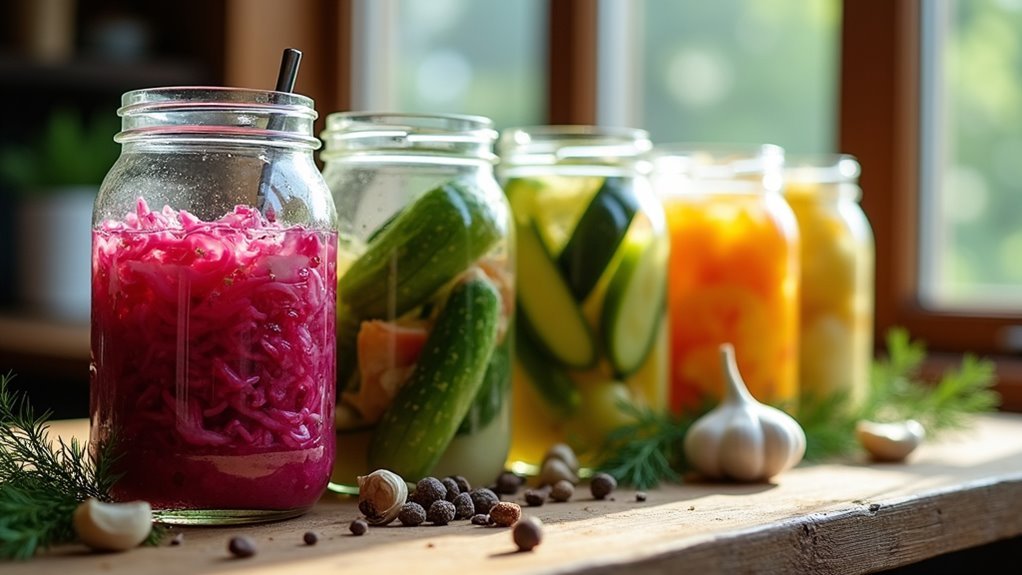
To restore gut health with lacto-fermented vegetables, choose salt-fermented options over vinegar-based products to retain live probiotics. Start with one to two tablespoons daily, allowing your microbiome to adapt gradually. Store these foods at 32-40°F to preserve beneficial bacteria and extend shelf life. Combine different varieties like kimchi, sauerkraut, and pickles for maximum microbial diversity. Never heat lacto-fermented foods, as high temperatures destroy up to 90% of probiotics. These strategic approaches reveal your gut’s healing potential.
Choose Salt-Fermented Vegetables Over Vinegar-Based Products

When you’re shopping for fermented vegetables, you’ll want to reach for salt-fermented vegetables rather than their vinegar-based counterparts. Salt-fermented options retain beneficial probiotics and live cultures that support your gut health, while vinegar products lose these advantages through pasteurization.
Look for labels stating “naturally fermented” or jars showing visible bubbles—these indicate active probiotics essential for digestive health.
Visible bubbles in fermented vegetable jars signal live probiotics that actively support your digestive health and gut microbiome balance.
Lacto-fermentation enhances nutritional value by increasing vitamins and minerals while preserving natural flavors. Salt acts as a natural preservative, promoting healthy bacteria growth while inhibiting harmful pathogens.
This creates a safer, more nutritious product that supports gut microbiome diversity. Regular consumption of these naturally fermented vegetables can improve your digestive system and reduce various health risks through enhanced gut function.
Start With Small Portions to Allow Your Gut Microbiome to Adapt
Your digestive system needs time to adjust when you first introduce lacto-fermented vegetables into your diet. Starting with small portions allows your gut microbiome to gradually adapt to the influx of probiotics without overwhelming your system.
Begin with just a tablespoon or two of fermented vegetables to minimize potential digestive discomfort.
Research shows that sudden increases in probiotic intake can cause bloating and gas, making gradual introduction essential for better tolerance. This approach lets you assess individual reactions to specific live cultures and find options that work best for your gut health.
Consistently consuming modest amounts enhances overall gut microbiome diversity, which is vital for ideal digestion and immune function.
Small servings help your body integrate these beneficial bacteria effectively.
Maintain Proper Storage Temperature to Preserve Live Probiotics
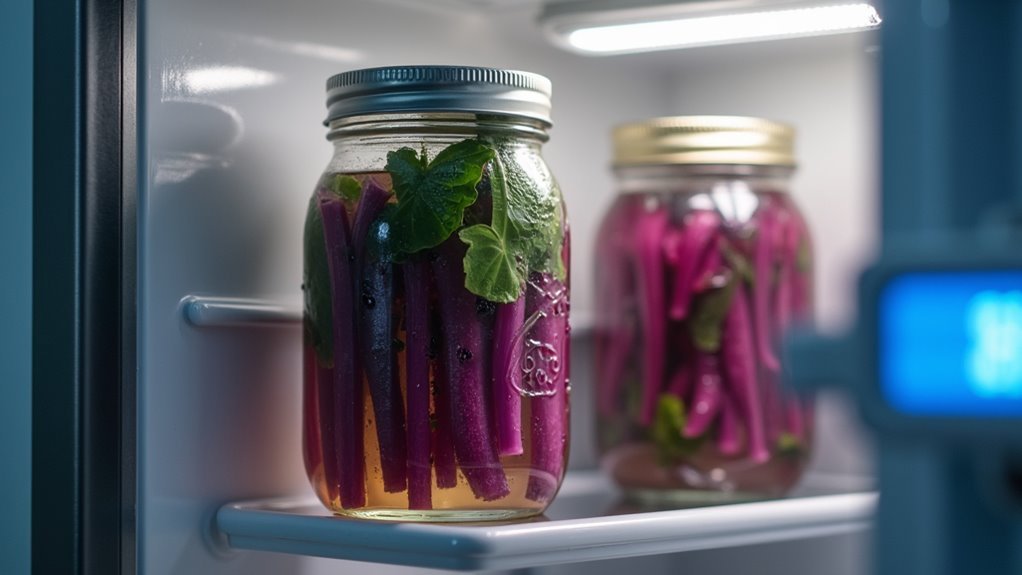
Temperature control becomes your most critical factor in preserving the live probiotics that make lacto-fermented vegetables so beneficial for gut health.
You’ll need to maintain your storage temperature between 32°F to 40°F (0°C to 4°C) to keep those live bacteria thriving. Higher temperatures accelerate spoilage and reduce microbial viability, diminishing the gut health benefits you’re seeking from fermented vegetables.
Proper refrigeration slows the fermentation process while allowing flavors to develop naturally. You should check your refrigerator temperature regularly to guarantee ideal conditions for your lacto-fermented vegetables.
When you preserve them correctly, you’ll maintain both probiotic content and overall quality, extending shelf life for several weeks. This attention to storage temperature protects your investment in gut health.
Combine Different Fermented Vegetables for Maximum Microbial Diversity
While proper storage preserves your fermented vegetables’ probiotic content, diversifying your selection amplifies the gut health benefits exponentially. Combining kimchi, sauerkraut, and pickles introduces unique strains of probiotics that work synergistically to enhance your healthy gut microbiome.
Each variety contributes distinct beneficial bacteria through different fermentation processes, creating ideal microbial diversity throughout your digestive tract.
You’ll maximize nutrients and fiber intake while supporting immune function when you include colorful fermented vegetables in your meals. Different colors indicate varying phytonutrients that further boost gut health.
Research confirms that diverse fermented foods lead to improved digestion and reduced inflammation. The varied microorganisms collaborate to balance your gut microbiome more effectively than single-source probiotics, making combination consumption essential for ideal digestive wellness.
Avoid Heating Lacto-Fermented Foods to Protect Beneficial Bacteria
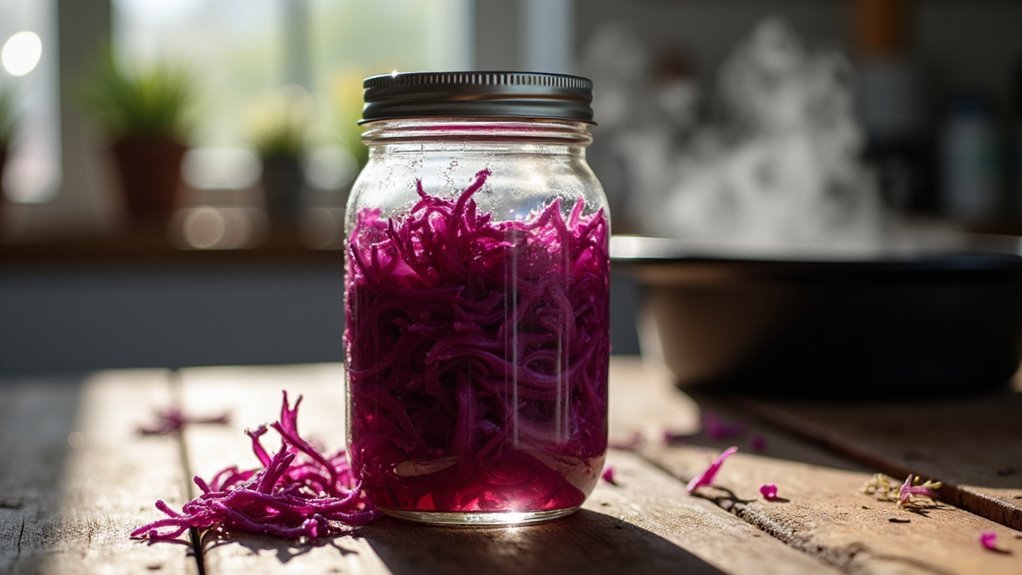
Although lacto-fermented vegetables offer remarkable gut health benefits, exposing them to heat destroys the very probiotics that make them so valuable. When you heat these foods, you’ll kill up to 90% of the beneficial bacteria that support your digestive system.
The live cultures in lacto-fermented vegetables can’t survive high temperatures, which eliminates their probiotic power.
To maximize these health benefits, you should consume lacto-fermented foods raw or at room temperature. Add them as toppings to your meals or enjoy them as side servings rather than cooking them into dishes. This approach preserves the integrity of the beneficial bacteria your gut needs.
Always check labels for “live and active cultures” to guarantee you’re getting authentic lacto-fermented products that maintain their probiotic value.
Frequently Asked Questions
How Long Does It Take to Heal Your Gut With Fermented Foods?
You’ll notice initial improvements in your digestion within weeks, but fully healing your gut with fermented foods typically takes several months to a year, depending on your condition’s severity and consistency.
How to Ferment Vegetables for Gut Health?
You’ll create a salt-water brine, pack clean vegetables tightly in sterilized jars, keep them submerged under brine, ferment three to five days at room temperature, then refrigerate for ideal gut health benefits.
What Is the Fastest Way to Restore Gut Microbiome?
You’ll restore your gut microbiome fastest by eating diverse fermented foods like yogurt, kefir, and kimchi daily, adding prebiotic-rich garlic and onions, exercising regularly, and managing stress effectively.
Is It Okay to Eat Fermented Vegetables Every Day?
Yes, you can eat fermented vegetables daily for gut health benefits. Start gradually to avoid digestive discomfort, and watch your sodium intake since they’re often high in salt.


Leave a Reply