

Choose authentic fermented kimchi with live cultures rather than pasteurized versions for maximum probiotic benefits. Start with 1-2 tablespoons daily and gradually increase to avoid digestive discomfort. Consume kimchi consistently every day to deliver beneficial lactic acid bacteria that help seal your intestinal barrier. Pair it with prebiotic foods like garlic, onions, and bananas to feed the good bacteria. Store kimchi properly in airtight containers to preserve probiotic quality, and combine it with other fermented foods for enhanced microbiome diversity. The following strategies will transform your gut healing journey.
Choose Authentic Fermented Kimchi Over Pasteurized Versions

When you’re selecting kimchi for gut health benefits, you’ll want to prioritize authentic fermented varieties over their pasteurized counterparts.
Authentic fermented kimchi contains live probiotics essential for restoring your gut microbiome balance, while pasteurized versions lose these beneficial bacteria through heat treatment.
Live probiotics in fermented kimchi restore gut balance, while pasteurization destroys these essential beneficial bacteria through heat processing.
Look for labels indicating “naturally fermented” or “contains live cultures” to guarantee you’re getting maximum probiotic content.
Traditional fermentation processes naturally cultivate lactic acid bacteria, which are significant for supporting your digestive system and alleviating leaky gut syndrome symptoms.
While pasteurized kimchi offers longer shelf life, it sacrifices the living microorganisms your gut needs most.
Start With Small Portions to Avoid Digestive Overwhelm
Although kimchi offers powerful probiotic benefits for leaky gut, you’ll want to introduce it gradually to prevent digestive discomfort. Starting with small portions allows your digestive system to adapt slowly to the influx of probiotics, minimizing potential overwhelm.
Begin with just one to two tablespoons daily, then monitor your body’s response. This approach helps prevent gas or bloating that can occur when your system isn’t accustomed to high-fiber fermented foods.
| Week | Daily Amount | Purpose |
|---|---|---|
| 1-2 | 1-2 tablespoons | Initial tolerance test |
| 3-4 | 3-4 tablespoons | Gradual increase |
| 5-6 | 1/4 cup | Building adaptation |
| 7-8 | 1/3 cup | Continued progression |
| 9+ | 1/2 cup | ideal serving |
As your gut microbiome adapts to kimchi, you can gradually increase portions to achieve maximum probiotic benefits while maintaining digestive comfort.
Consume Kimchi Daily for Consistent Probiotic Benefits
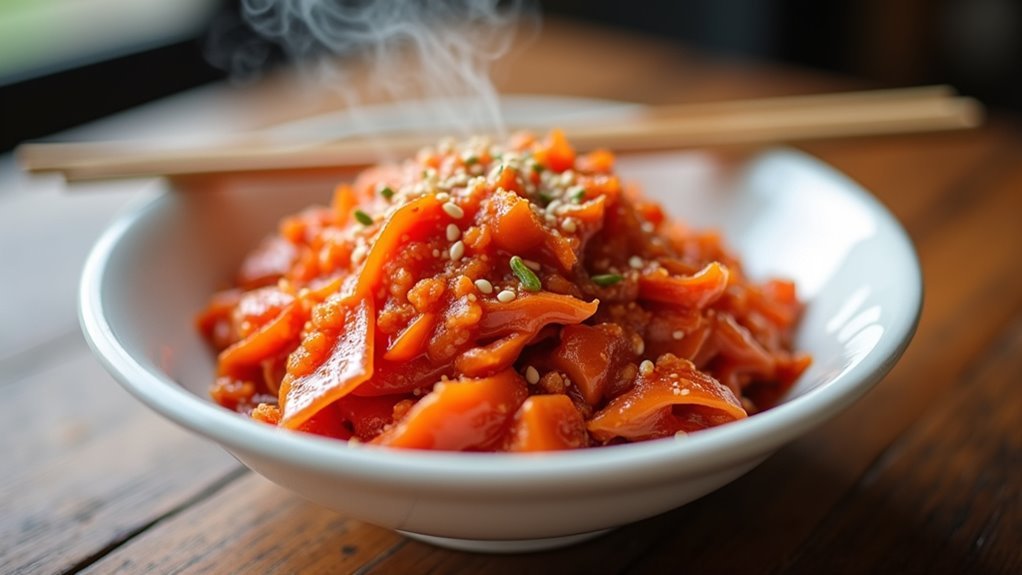
Since your digestive system thrives on routine, establishing a daily kimchi habit creates the consistent probiotic environment your gut needs to heal from leaky gut syndrome.
Regular consumption delivers beneficial lactic acid bacteria that restore microbial balance and reduce intestinal inflammation. You’ll maximize kimchi’s digestive health benefits by maintaining steady probiotic levels rather than sporadic intake.
Daily kimchi consumption considerably lowers markers of intestinal permeability while strengthening your immune system through improved gut health.
The fermented vegetables provide both probiotics and prebiotic fiber, creating a synergistic effect that feeds existing healthy bacteria.
Studies confirm that consistent probiotic intake from fermented foods like kimchi produces measurable improvements in leaky gut symptoms.
Make kimchi part of your daily routine to experience sustained digestive healing.
Pair Kimchi With Prebiotic-Rich Foods for Enhanced Gut Healing
While kimchi delivers powerful probiotics to your digestive system, combining it with prebiotic-rich foods creates an even more effective healing strategy for leaky gut syndrome.
You’ll maximize kimchi’s benefits by pairing it with garlic, onions, asparagus, bananas, and oats. These prebiotic-rich foods feed the beneficial bacteria from kimchi, enhancing their growth and activity in your gut.
This powerful combination works synergistically to improve your gut health by increasing short-chain fatty acid production, which strengthens your intestinal lining.
You’ll experience reduced inflammation, better nutrient absorption, and enhanced immune function. The prebiotics support kimchi’s fermentation process in your digestive tract, creating ideal conditions for healing leaky gut.
Include these prebiotic foods in meals alongside kimchi for maximum therapeutic impact.
Time Your Kimchi Intake With Meals for Better Tolerance
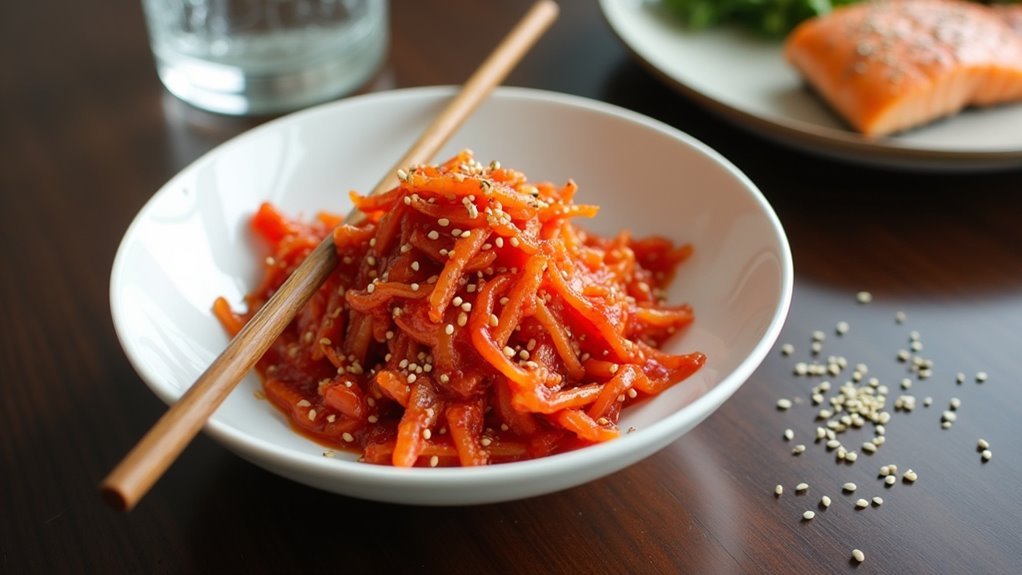
When you consume kimchi with your regular meals rather than on an empty stomach, you’ll experience better digestive tolerance and enhanced probiotic absorption. The probiotics work synergistically with food, helping break down nutrients while reducing potential discomfort that might worsen leaky gut symptoms.
Start by gradually introducing kimchi during meals to help your gut microbiome adjust to the increased probiotic load. This approach minimizes digestive distress while promoting gut health.
Pair kimchi with balanced meals containing fiber and healthy fats to maximize the probiotics’ effectiveness in reducing inflammation.
Focus on combining kimchi with protein and complex carbohydrates, as these combinations improve probiotic survival through your digestive tract. This strategic timing supports your gut’s healing process more effectively than consuming kimchi alone.
Make Your Own Kimchi to Control Fermentation Quality
When you make your own kimchi, you’ll have complete control over the fermentation quality that’s essential for leaky gut healing.
You can choose the freshest napa cabbage and organic ingredients while adjusting salt levels to create the ideal environment for beneficial Lactobacillus bacteria.
Choose Quality Ingredients
One powerful way to maximize kimchi’s probiotic benefits for leaky gut is making your own batch from scratch.
When you choose quality ingredients, you’re setting the foundation for a more potent fermented food that supports your healthy gut microbiome. Start with organic napa cabbage and fresh vegetables to eliminate preservatives and additives that can harm your digestive system.
These high-quality ingredients provide essential vitamins and minerals vital for improving gut health. Fresh garlic and ginger add powerful antimicrobial properties to your probiotic powerhouse.
You can also customize your recipe by adding prebiotic-rich carrots and green onions, which increase fiber content and feed beneficial bacteria. By controlling ingredient quality, you’re ensuring your homemade kimchi delivers maximum therapeutic value for healing leaky gut syndrome.
Control Salt Levels
Although commercial kimchi often contains excessive salt that can disrupt your gut healing journey, making your own batch puts you in complete control of sodium levels and fermentation quality.
When you control salt levels in homemade kimchi, you’re optimizing conditions for beneficial bacteria to thrive. Sea salt works best for preserving vegetables while promoting lactic acid bacteria growth essential for creating powerful probiotic foods.
Your fermentation process becomes customizable based on these strategic approaches:
- Reduce salt for longer fermentation – You’ll develop deeper probiotic content that nurtures your healing gut.
- Monitor fermentation timing – Shorter periods need higher salt to prevent spoilage and protect your investment.
- Adjust flavor intensity – Lower sodium creates milder tastes while supporting your healthy gut restoration goals.
Monitor Fermentation Time
Proper fermentation timing determines whether your homemade kimchi becomes a gut-healing powerhouse or falls short of its probiotic potential. You must monitor the fermentation time carefully, as these fermented vegetables typically need 3-7 days at room temperature to develop ideal probiotic species for gut health.
Taste your kimchi daily to assess flavor development and determine when it reaches your preferred tanginess level.
Temperature control is essential—warmer conditions around 70-75°F accelerate fermentation, while cooler temperatures slow it down. Always use clean utensils when sampling to prevent harmful bacteria contamination.
Once fermentation achieves your desired sourness and maximum health benefits, refrigerate immediately. This halts the process while preserving the probiotic content that supports your digestive system.
Store Kimchi Properly to Maintain Live Probiotic Cultures
Since kimchi’s probiotic benefits depend on maintaining live bacterial cultures, you’ll need to store kimchi properly to preserve these health-promoting microorganisms.
Place your kimchi in airtight containers and refrigerate immediately to slow down fermentation and maintain live probiotic cultures effectively.
Follow these essential storage practices to maximize your kimchi’s gut-healing potential:
- Keep it submerged – Always guarantee kimchi stays covered in its brine to prevent oxidation and preserve beneficial bacteria.
- Use clean utensils – Prevent contamination by using sterile spoons when scooping kimchi from containers.
- Avoid temperature fluctuations – Maintain consistent refrigerator temperatures to protect probiotic quality and potency.
Consume your kimchi within three months for peak flavor and probiotic effectiveness, as live cultures naturally decline over time.
Combine Kimchi With Other Fermented Foods for Microbiome Diversity
You’ll maximize your gut healing potential by pairing kimchi with other fermented foods like sauerkraut, kefir, and yogurt.
Each fermented food contributes unique probiotic strains that work together to create a more diverse microbiome than kimchi alone can provide.
This strategic combination helps crowd out harmful bacteria while amplifying the beneficial effects on your leaky gut symptoms.
Fermented Food Combinations
While kimchi offers powerful probiotic benefits on its own, combining it with other fermented foods creates a synergistic effect that dramatically enhances your gut microbiome diversity.
Each fermented food contains unique probiotic strains that work together to repair your leaky gut. You’ll maximize healing potential by incorporating multiple varieties into your daily routine.
Strategic fermented foods combinations that’ll transform your gut health:
- Kimchi + Greek yogurt or kefir – Creates a powerful probiotic punch that floods your intestines with healing bacteria.
- Kimchi + sauerkraut – Doubles your beneficial bacterial intake while adding satisfying crunch and flavor variety.
- Kimchi + miso soup – Delivers fermented soy probiotics alongside kimchi’s cabbage-based strains for complete microbiome support.
This diverse approach guarantees you’re feeding different bacterial families, creating the robust microbial community essential for sealing your intestinal barrier.
Maximizing Probiotic Strain Variety
Creating a powerhouse microbiome requires more than relying on kimchi alone—you need strategic combinations that introduce distinct probiotic families into your digestive system. Probiotics help restore balance when you combine kimchi’s Lactobacillus kimchii with yogurt’s Lactobacillus strains, sauerkraut’s unique bacteria, and kefir’s diverse cultures.
This targeted approach combats gut dysbiosis by flooding your intestines with healthy bacteria that work synergistically. Your leaky gut diet becomes exponentially more effective when you rotate different fermented foods throughout the week.
These diverse probiotic strains outcompete harmful bacteria while strengthening intestinal barriers. Each fermented food contributes specialized benefits—kimchi reduces inflammation, yogurt enhances nutrient absorption, and kefir boosts immune function.
This strategic variety creates gut resilience that single-source probiotics can’t match, accelerating your healing journey.
Monitor Your Body’s Response and Adjust Intake Accordingly
How does your body respond when you first introduce kimchi into your daily routine?
Start with small portions and monitor your digestive symptoms carefully, especially if you have existing gut health issues. Watch for gas, bloating, or discomfort after eating kimchi, then adjust your serving size based on what you observe.
Gradually increase your probiotics intake to 1-2 tablespoons daily, but pay attention to these essential signals:
Slowly build up to 1-2 tablespoons of probiotics daily while staying alert to your body’s important warning signs.
- Your energy levels shift dramatically – notice if you feel more vibrant or unexpectedly fatigued
- Your mood changes unexpectedly – track whether you feel calmer or more irritable
- Your gut health symptoms worsen – persistent discomfort means you need professional guidance
If adverse symptoms continue, reduce your intake or consult a healthcare professional for personalized advice.
Use Kimchi as Part of a Comprehensive Leaky Gut Protocol
You’ll maximize kimchi’s healing potential by incorporating it into a multi-category probiotic approach that includes diverse fermented foods and high-quality supplements.
Don’t rely on kimchi alone—pair it with an anti-inflammatory diet rich in omega-3 fatty acids, bone broth, and gut-healing nutrients like L-glutamine.
This all-encompassing strategy creates synergistic effects that accelerate your leaky gut recovery more effectively than any single intervention.
Multi-Category Probiotic Approach
While kimchi alone offers impressive gut-healing properties, you’ll achieve excellent results for leaky gut syndrome by incorporating it into a multi-category probiotic strategy. This all-encompassing approach combines kimchi’s natural lactic acid bacteria with complementary probiotic strains to maximize digestive health benefits.
Your multi-category protocol should include:
- Category 1: Fermented Foods – Kimchi provides diverse lactic acid bacteria that restore gut microbiome balance and lower intestinal permeability markers.
- Category 2: Yeast-Based Probiotics – Saccharomyces boulardii offers unique healing properties that work synergistically with kimchi’s bacterial strains.
- Category 3: Soil-Based Probiotics – These hardy organisms survive stomach acid better and complement kimchi’s prebiotic fiber content.
This strategic combination guarantees you’re addressing leaky gut from multiple angles, creating ideal conditions for intestinal barrier repair and long-term gut health maintenance.
Anti-Inflammatory Diet Integration
Beyond combining different probiotic categories, kimchi’s healing potential multiplies when you integrate it into an extensive anti-inflammatory diet protocol.
You’ll maximize gut health benefits by pairing kimchi with omega-3 rich foods like salmon and walnuts, plus anti-inflammatory powerhouses such as leafy greens and turmeric. This strategic combination creates synergistic effects that target leaky gut from multiple angles.
Kimchi’s probiotics work alongside its high fiber content, which feeds beneficial bacteria and promotes microbiome balance. The fermentation process produces bioactive compounds that enhance anti-inflammatory properties beyond standard probiotics.
You’ll notice improved digestive symptoms when kimchi becomes part of your thorough approach rather than a standalone solution. Regular consumption supports immune function while the diverse nutrients help repair gut lining damage associated with leaky gut syndrome.
Frequently Asked Questions
Is Kimchi Good for a Leaky Gut?
Yes, kimchi’s excellent for your leaky gut. You’ll benefit from its probiotics that restore gut balance, fiber that heals your intestinal lining, and anti-inflammatory compounds that reduce digestive discomfort while supporting overall gut health.
How Long Does It Take for Kimchi to Heal Your Gut?
You’ll typically notice kimchi’s gut-healing effects within 2-3 weeks of daily consumption. With consistent intake of 1-2 servings daily, you can expect significant improvements in leaky gut symptoms within 4-6 weeks.
What Is the Best Probiotic for Leaky Gut Syndrome?
You’ll want multi-strain probiotics containing Bifidobacterium, Lactobacillus, and Saccharomyces boulardii for leaky gut syndrome. Choose high-quality supplements with sufficient CFUs to effectively reduce intestinal permeability and restore your gut barrier function.
How Much Kimchi Should I Eat per Day for Probiotics?
You should start with 1-2 tablespoons of kimchi daily, then gradually increase to 1/2 to 1 cup per day. This’ll provide billions of beneficial probiotics while preventing digestive discomfort.


Leave a Reply