

Jerusalem artichokes boost your gut health because they’re loaded with 9-12 grams of inulin per serving, an exceptional prebiotic fiber that directly feeds beneficial bacteria like Bifidobacteria and Lactobacilli in your colon. When these bacteria ferment inulin, they produce short-chain fatty acids, especially butyrate, which strengthens your intestinal barrier, reduces inflammation, and prevents harmful substances from leaking into your bloodstream. Discover how this powerful fermentation process can transform your entire microbiome.
What Makes Jerusalem Artichokes a Prebiotic Powerhouse

Jerusalem artichokes pack a nutritional punch that transforms them into one of nature’s most effective prebiotic foods. You’ll find these tubers contain an impressive 9-12 grams of inulin per 100-gram serving, making them exceptional sources of this powerful soluble fiber.
Unlike other carbohydrates, your body can’t digest inulin, but that’s precisely what makes it so valuable for gut health. When you consume Jerusalem artichokes, the inulin travels directly to your colon, where it becomes food for beneficial bacteria like Bifidobacteria and Lactobacilli.
This prebiotic effect creates an ideal environment for these healthy microorganisms to flourish. As these beneficial bacteria ferment the inulin, they produce short-chain fatty acids, particularly butyrate, which reduces inflammation and strengthens your intestinal barrier while supporting overall digestive wellness.
Understanding Inulin and Its Role in Gut Health
At the heart of these remarkable digestive benefits lies inulin, a unique type of soluble fiber that functions differently from other dietary fibers you might consume.
Unlike regular fiber, your body can’t digest inulin, allowing it to travel intact to your colon where it serves as premium fuel for beneficial bacteria.
Inulin bypasses digestion completely, reaching your colon unchanged to nourish beneficial bacteria like premium fertilizer for your gut garden.
When your gut microbiome ferments inulin, it produces short-chain fatty acids like butyrate, which reduce inflammation and strengthen your intestinal barrier.
This process specifically promotes the growth of Bifidobacteria and Lactobacilli, creating a healthier microbial balance.
You’ll experience improved bowel movements, reduced constipation risk, and enhanced immune function.
How Jerusalem Artichokes Feed Beneficial Gut Bacteria

Every time you eat Jerusalem artichokes, you’re delivering a concentrated dose of inulin directly to your beneficial gut bacteria, creating an ideal feeding environment that transforms your digestive ecosystem.
This soluble fiber becomes the preferred fuel for essential microbes like Bifidobacteria and Lactobacilli, allowing their populations to flourish throughout your gut microbiome.
When your beneficial gut bacteria consume this inulin, they begin fermentation processes that produce valuable short-chain fatty acids, particularly butyrate.
These compounds strengthen your intestinal barrier while reducing harmful inflammation. You’ll notice improved bowel motility and relief from constipation as your digestive health improves.
The enhanced bacterial balance doesn’t just benefit your gut—it strengthens your immune system and reduces your risk of developing chronic diseases.
The Fermentation Process That Transforms Your Microbiome
When inulin from Jerusalem artichokes reaches your colon, it triggers a complex fermentation cascade that fundamentally reshapes your gut’s bacterial landscape. This prebiotic fiber becomes fuel for your beneficial gut bacteria, sparking an intricate biochemical transformation that enhances your microbiome’s diversity and function.
During fermentation, your gut bacteria break down inulin and produce powerful short-chain fatty acids that revolutionize your gut health:
- Butyrate production – Creates a protective barrier along your intestinal wall, visualize armor shielding your gut lining.
- Acetate synthesis – Flows through your bloodstream like healing messengers, reducing inflammation throughout your body.
- Propionate generation – Acts as metabolic fuel, energizing your liver and supporting healthy cholesterol levels.
This fermentation process cultivates beneficial Bifidobacteria and Lactobacilli, establishing a thriving ecosystem that strengthens immunity and optimizes digestion.
Short-Chain Fatty Acids: The Hidden Benefits of Jerusalem Artichokes
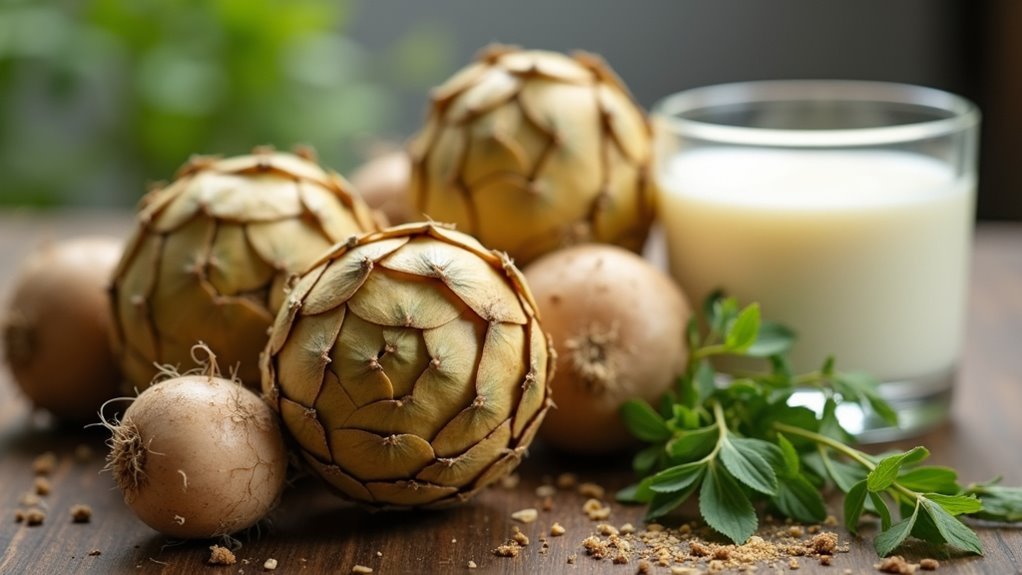
When your gut bacteria ferment the inulin from Jerusalem artichokes, they’re actually producing powerful compounds called short-chain fatty acids (SCFAs) that you can’t get from most other foods.
These SCFAs—butyrate, acetate, and propionate—work behind the scenes to fuel your colon cells, strengthen your gut barrier, and reduce inflammation throughout your digestive system.
You’ll discover that this fermentation process creates a cascade of health benefits that extend far beyond simple digestion.
What Are SCFAs
The fermentation process that occurs when you consume Jerusalem artichokes produces powerful compounds called short-chain fatty acids (SCFAs), specifically butyrate, acetate, and propionate.
These metabolic byproducts form when beneficial gut bacteria break down the inulin fiber found in Jerusalem artichokes during fermentation.
SCFAs act as cellular fuel for your colon while delivering remarkable health benefits:
- Fortress-like protection – They strengthen your intestinal barrier, creating an impenetrable shield against harmful substances.
- Fire-fighting action – Their anti-inflammatory properties extinguish digestive inflammation like water dousing flames.
- Command center control – They regulate immune function, orchestrating your body’s defense system with precision.
Regular consumption boosts SCFA production, enhancing your gut health while improving metabolic function and blood sugar control through enhanced insulin sensitivity.
SCFA Production Process
As Jerusalem artichokes travel through your digestive system, they bypass stomach acid and small intestine enzymes completely intact, arriving in your colon where the real magic begins. Your beneficial bacteria immediately recognize the inulin as their preferred fuel source and start the fermentation process. This bacterial feast transforms inulin into three essential SCFAs that revolutionize your gut health.
| SCFA Type | Primary Function | Gut Health Benefit |
|---|---|---|
| Butyrate | Fuels colon cells | Strengthens intestinal barrier |
| Acetate | Reduces inflammation | Enhances immune response |
| Propionate | Regulates metabolism | Improves gut motility |
The fermentation happens within hours, creating an acidic environment that promotes beneficial bacteria growth while inhibiting harmful pathogens. This continuous SCFA production cycle maintains ideal digestive function.
Health Impact Benefits
Beyond their role in fueling beneficial bacteria, SCFAs release a cascade of health benefits that extend far beyond your digestive tract. When you consume Jerusalem artichokes, their inulin content transforms into these powerful compounds that revolutionize your body’s functioning.
The prebiotic properties of inulin create remarkable changes throughout your system:
- Strengthened gut barrier – SCFAs fortify your intestinal lining, creating an impenetrable fortress against harmful pathogens.
- Enhanced immune system response – These short-chain fatty acids activate immune cells, boosting your body’s natural defense mechanisms.
- Improved satiety control – SCFAs signal fullness to your brain, naturally curbing overeating and supporting weight management.
Your gut microbiota flourishes with regular Jerusalem artichoke consumption, producing sustained levels of these beneficial compounds that protect and optimize your health.
Strengthening Your Intestinal Barrier With Natural Prebiotics
When you consume Jerusalem artichokes, you’re delivering a powerful dose of inulin directly to your gut, where this soluble fiber acts as superior fuel for beneficial bacteria like Bifidobacteria and Lactobacilli.
Jerusalem artichokes deliver a powerful dose of inulin that acts as superior fuel for your beneficial gut bacteria.
This prebiotic fiber kickstarts fermentation processes that produce short-chain fatty acids, particularly butyrate, which strengthens your intestinal barrier at the cellular level.
Your gut bacteria transform inulin into these protective compounds that repair and maintain the tight junctions between intestinal cells.
This fortified barrier prevents harmful substances from leaking into your bloodstream, reducing inflammation and supporting immune function.
Jerusalem Artichokes vs. Other Prebiotic Foods
The nutritional powerhouse of Jerusalem artichokes distinguishes itself remarkably from other prebiotic foods through its exceptional inulin concentration.
You’ll find these tubers contain 9-12 grams of inulin per 100 grams, considerably outperforming garlic and onions which offer just 1-10 grams per serving.
Here’s what sets Jerusalem artichokes apart for your gut health:
- Sweet, nutty flavor that makes eating prebiotics enjoyable, unlike the pungent taste of garlic or bland texture of oats
- Low glycemic index that won’t spike your blood sugar levels while nourishing beneficial bacteria
- Superior bacterial growth that increases Bifidobacteria and Lactobacilli more effectively than other prebiotic foods
You’re choosing a unique combination of taste and function that other prebiotic foods simply can’t match.
Reducing Inflammation Through Gut Microbiome Balance
While your gut houses trillions of bacteria that directly influence your body’s inflammatory responses, Jerusalem artichokes provide the specific fuel needed to tip this delicate balance in your favor.
The inulin in these tubers feeds beneficial bacteria like Bifidobacteria and Lactobacilli, creating a thriving gut microbiome that actively fights inflammation.
Jerusalem artichokes fuel beneficial gut bacteria like Bifidobacteria and Lactobacilli, building a powerful microbiome that naturally combats inflammation.
When these bacteria ferment inulin, they produce butyrate and other short-chain fatty acids that strengthen your intestinal barrier and reduce inflammatory markers throughout your body.
This process helps prevent leaky gut syndrome while modulating your immune responses.
Supporting Digestive Motility and Regularity
Beyond reducing inflammation, Jerusalem artichokes excel at keeping your digestive system moving smoothly and predictably. Their high inulin content feeds beneficial gut bacteria, which ferment this prebiotic fiber into short-chain fatty acids that strengthen your intestinal barrier.
This process enhances digestive motility while increasing stool bulk for easier elimination.
The high fiber content in Jerusalem artichokes works systematically to improve your bowel regularity through three key mechanisms:
- Feeding beneficial bacteria – Inulin nourishes good gut bacteria that produce digestive-supporting compounds
- Increasing stool volume – Fiber adds bulk to waste material, making it easier to pass
- Accelerating transit time – Enhanced motility moves food through your system more efficiently
Regular consumption creates a balanced microbiome that maintains consistent, comfortable digestive processes while preventing constipation naturally.
The Connection Between Jerusalem Artichokes and Immune Function
Since your digestive system houses approximately 70% of your immune cells, Jerusalem artichokes create a powerful connection between gut health and immune function through their prebiotic properties.
The inulin in Jerusalem artichokes feeds beneficial gut bacteria, which produce short-chain fatty acids like butyrate that strengthen your intestinal barrier and enhance immune response.
You’ll maintain a balanced microbiome that regulates inflammation and improves immune modulation when you consume these tubers regularly.
The antioxidants, including vitamins A, C, and E, reduce oxidative stress while supporting your body’s natural defenses.
Most importantly, Jerusalem artichokes help prevent dysbiosis—the bacterial imbalance that leads to immune dysfunction and chronic diseases.
This dual action makes them essential for peak immune health.
Optimal Dosage and Preparation Methods for Maximum Benefits
To harness Jerusalem artichokes’ full gut health potential, you’ll need to understand proper dosing and preparation techniques.
Starting with the right amount prevents digestive upset while maximizing prebiotic benefits, and choosing appropriate cooking methods can greatly impact how well your body tolerates these nutrient-dense tubers.
Let’s examine the specific daily intake recommendations and ideal preparation strategies that’ll help you incorporate Jerusalem artichokes safely into your diet.
Daily Dosage Guidelines
The ideal daily serving of Jerusalem artichokes sits at about one cup (150g), delivering 9-12 grams of inulin that’ll fuel your gut’s beneficial bacteria.
This daily dosage provides peak prebiotic properties without overwhelming your digestive system, especially when you’re new to foods with high inulin content.
Start small and gradually increase your intake to help your gut microbiome adapt.
Here’s how to visualize your progression:
- Week 1: Begin with 2-3 tablespoons, like adding a small handful of diced pieces to your salad.
- Week 2-3: Increase to half a cup, equivalent to about 4-5 medium Jerusalem artichoke slices in your soup.
- Week 4+: Reach the full cup serving, comparable to one medium-sized roasted Jerusalem artichoke alongside your main dish.
Regular consumption several times weekly maintains peak digestive health benefits.
Best Cooking Methods
Knowing your ideal serving size matters little if you’re not preparing Jerusalem artichokes in ways that maximize their benefits while minimizing digestive discomfort.
Start with small portions regardless of your cooking method to allow your gut to adjust gradually.
Steaming or boiling effectively breaks down inulin, reducing gas production while maintaining nutritional value. For enhanced digestibility, boil them in lemon juice to further break down problematic compounds.
Roasting with olive oil creates a sweet, nutty flavor while preserving prebiotic properties intact.
Raw Jerusalem artichokes work well thinly sliced in salads, providing crunch and maximum gut health benefits.
Each cooking method offers unique advantages for both taste and digestive tolerance.
Managing Digestive Side Effects While Building Tolerance
While Jerusalem artichokes offer impressive gut health benefits, their high inulin content can initially trigger uncomfortable digestive side effects like gas, bloating, and abdominal discomfort. You can build tolerance to Jerusalem artichokes while minimizing digestive discomfort by following a strategic approach.
Despite their remarkable prebiotic benefits, Jerusalem artichokes can cause gas and bloating until your digestive system adapts to their high inulin content.
Start small and gradually increase your intake over several weeks. This allows your gut microbiome to adapt to the inulin without overwhelming your system.
Here’s how to build tolerance effectively:
- Begin with pencil-eraser sized portions – Start with just 1-2 small pieces mixed into familiar dishes.
- Double your serving weekly – Gradually increase portions as your digestive system adapts.
- Pair with familiar fiber sources – Combine with other vegetables you already tolerate well.
Track your reactions and adjust accordingly to optimize both gut health benefits and comfort.
Frequently Asked Questions
Are Jerusalem Artichokes Good for Gut Health?
You’ll find Jerusalem artichokes excellent for gut health because they’re packed with inulin, a prebiotic fiber that feeds beneficial bacteria, produces healing short-chain fatty acids, and strengthens your digestive system naturally.
What Does Jerusalem Artichoke Do for the Body?
Jerusalem artichokes provide your body with inulin fiber that feeds beneficial gut bacteria, produces inflammation-fighting compounds, regulates blood sugar, supports weight management, and improves digestive function through enhanced bowel motility.
Are Jerusalem Artichokes Anti-Inflammatory?
Yes, Jerusalem artichokes are anti-inflammatory. You’ll benefit from their inulin content, which produces inflammation-fighting compounds called SCFAs in your gut. They’ll also boost your antioxidant levels, helping reduce systemic inflammation.
Is Jerusalem Artichoke a Probiotic?
No, Jerusalem artichokes aren’t probiotics. They’re prebiotics containing inulin fiber that feeds your beneficial gut bacteria. You’re consuming food for existing microorganisms rather than adding new live bacteria to your digestive system.



Leave a Reply