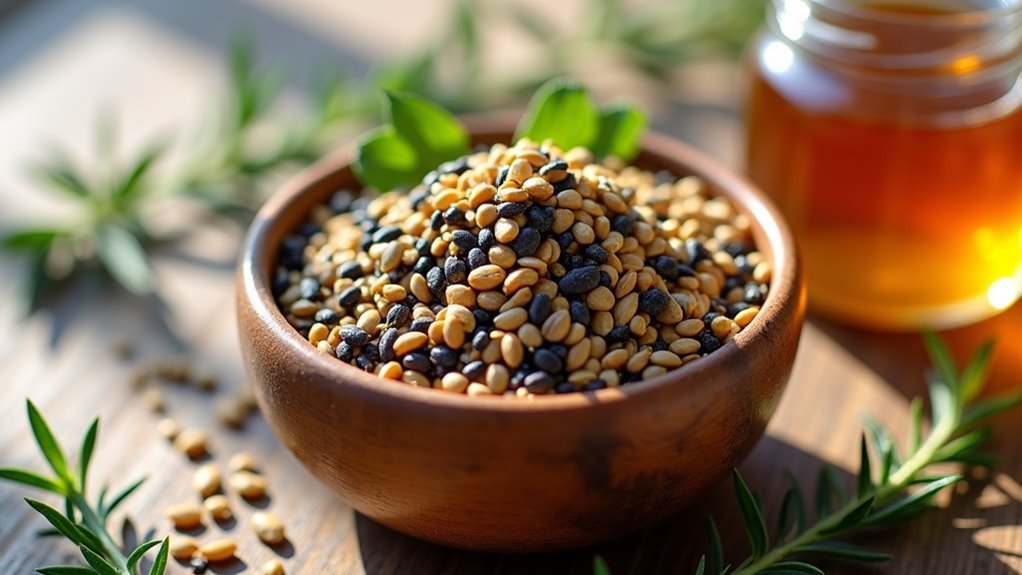
You can boost your energy by eating iron-rich seeds like pumpkin seeds, which contain 11.4 mg of iron per cup—over half your daily needs. Hemp seeds provide 8 mg per 100 grams along with complete proteins, while sesame seeds offer an impressive 14.6 mg per serving. Pair these seeds with vitamin C-rich foods like citrus fruits or strawberries to enhance iron absorption by 2-3 times. Discover the specific combinations that’ll maximize your energy levels.
Understanding Iron’s Role in Energy Production
When your body lacks sufficient iron, you’ll quickly notice the telltale signs of fatigue and diminished energy that come with compromised oxygen transport.
Iron serves as the foundation for hemoglobin production, the protein responsible for carrying oxygen throughout your bloodstream to every cell in your body. Without adequate iron levels, your cells can’t receive the oxygen they need for efficient energy metabolism, leaving you feeling weak and exhausted.
Understanding iron absorption becomes vital when you’re trying to boost your energy levels naturally.
Your body processes non-heme iron from plant sources like seeds differently than heme iron from meat. To maximize iron absorption from seeds, you’ll need to pair them with vitamin C-rich foods, creating a favorable environment for your body to utilize this essential mineral effectively.
The Science Behind Non-Heme Iron in Seeds
Plant-based sources present a unique challenge when it comes to iron absorption, as seeds contain non-heme iron that your body processes quite differently than the heme iron found in meat. While absorption of iron from seeds typically ranges from 2-20%, you can greatly improve these rates through strategic food pairing.
| Seed Type | Iron Content (mg/100g) | Absorption Rate | Enhancing Foods |
|---|---|---|---|
| Pumpkin Seeds | 11.4 | 2-20% | Citrus fruits |
| Sesame Seeds | 14.6 | 2-20% | Bell peppers |
| Chia Seeds | 7.7 | 2-20% | Strawberries |
| Flaxseeds | 5.7 | 2-20% | Tomatoes |
Although phytates in these iron-rich foods can inhibit absorption, pairing them with vitamin C-rich foods transforms this limitation into opportunity, maximizing your energy-boosting potential.
Pumpkin Seeds: Powerhouse of Iron and Magnesium
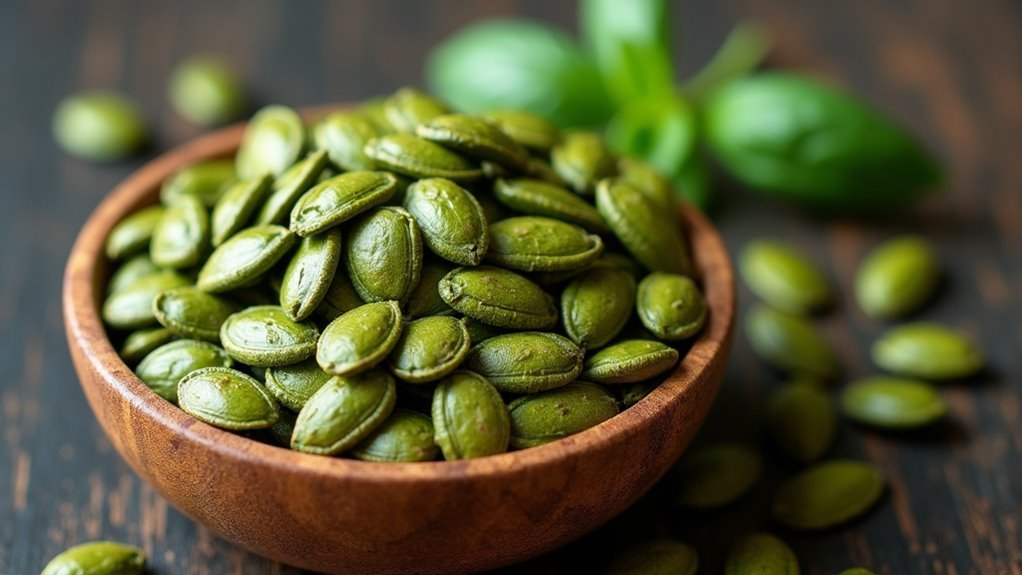
Nutritional powerhouses don’t come much better than pumpkin seeds when you’re seeking a natural energy boost. These small but mighty seeds pack an impressive 11.4 mg of iron per cup when dried, making them exceptional for boosting your iron intake.
Small but mighty pumpkin seeds deliver an impressive 11.4 mg of iron per cup, making them exceptional natural energy boosters.
You’ll also get about 150 mg of magnesium per 100-gram serving, which directly supports energy production and muscle function.
You can easily incorporate pumpkin seeds into your daily routine by adding them to salads, smoothies, or trail mixes. They’re loaded with healthy fats, protein, and antioxidants that contribute to sustained energy levels.
For maximum benefit, pair your pumpkin seeds with vitamin C-rich foods like citrus fruits or bell peppers to enhance iron absorption and amplify their energy-boosting potential.
Hemp Seeds for Sustained Energy and Iron Intake
While hemp seeds might be smaller than pumpkin seeds, they deliver an impressive 8 mg of iron per 100-gram serving along with complete protein containing all nine essential amino acids.
This powerful combination makes hemp seeds exceptional for maintaining steady energy levels throughout your day.
The healthy omega-3 and omega-6 fatty acids in hemp seeds support your energy metabolism and heart health.
You’ll maximize iron intake by pairing hemp seeds with vitamin C-rich foods, which enhances absorption considerably.
Here are three easy ways to incorporate hemp seeds:
- Blend into smoothies for a protein and iron boost
- Sprinkle on salads for added crunch and nutrients
- Mix into baked goods for sustained energy
Their versatility makes boosting your iron intake effortless while supporting consistent energy levels.
Chia Seeds: Tiny Iron-Rich Energy Boosters
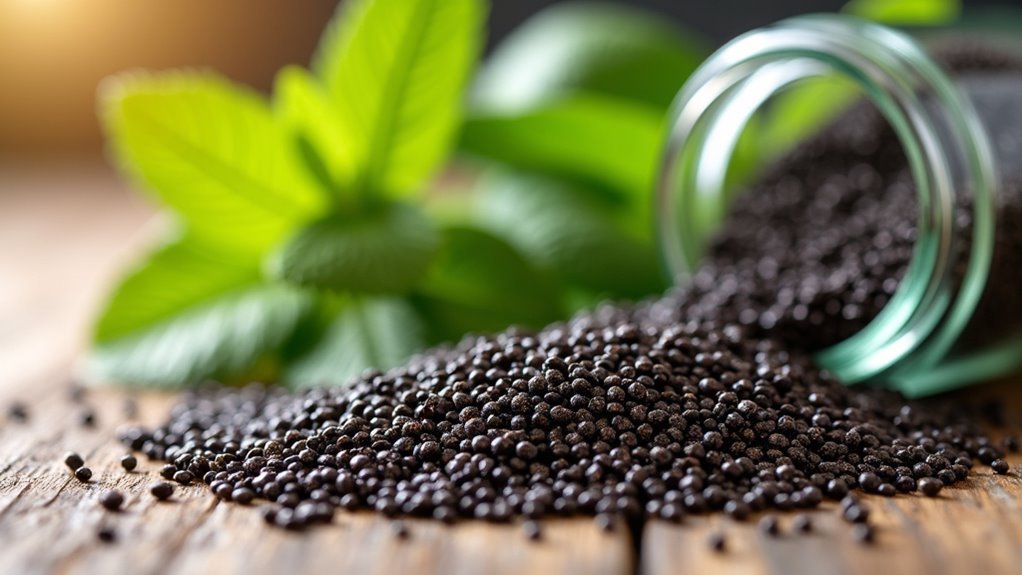
These nutritional powerhouses pack 5.73 mg of iron per 100-gram serving, making chia seeds an excellent plant-based option for boosting your energy naturally.
Beyond iron, you’ll benefit from their omega-3 fatty acids, fiber, and protein content, all supporting sustained energy levels.
Omega-3s, fiber, and protein work together in chia seeds to deliver consistent, long-lasting energy throughout your day.
What makes chia seeds particularly effective is their ability to absorb twelve times their weight in water, helping maintain hydration during physical activities.
You can easily incorporate these iron-rich seeds into smoothies, oatmeal, or baked goods for enhanced nutrition and flavor.
To maximize iron absorption, pair your chia seeds with vitamin C-rich foods like citrus fruits or strawberries.
This combination helps your body better absorb the non-heme iron, ensuring you get maximum energy benefits from these tiny nutritional gems.
Sesame Seeds and Their Iron Content Benefits
Sesame seeds deliver an impressive 14.6 mg of iron per 100-gram serving, more than doubling chia seeds’ iron content and ranking among the top plant-based iron sources available.
When you’re looking to boost energy naturally, sesame seeds offer exceptional nutritional value beyond their remarkable iron content.
These versatile seeds pack healthy fats, protein, and essential vitamins that support your overall health.
You’ll also benefit from their calcium and magnesium content, which enhances energy metabolism and helps your body utilize iron more effectively.
Three easy ways to incorporate sesame seeds:
- Sprinkle on salads for added crunch and nutrition
- Mix into homemade granola or energy bars
- Add to baked goods like muffins or bread
Regular consumption helps prevent iron deficiency while providing sustained energy throughout your day.
Sunflower Seeds for Daily Iron Requirements
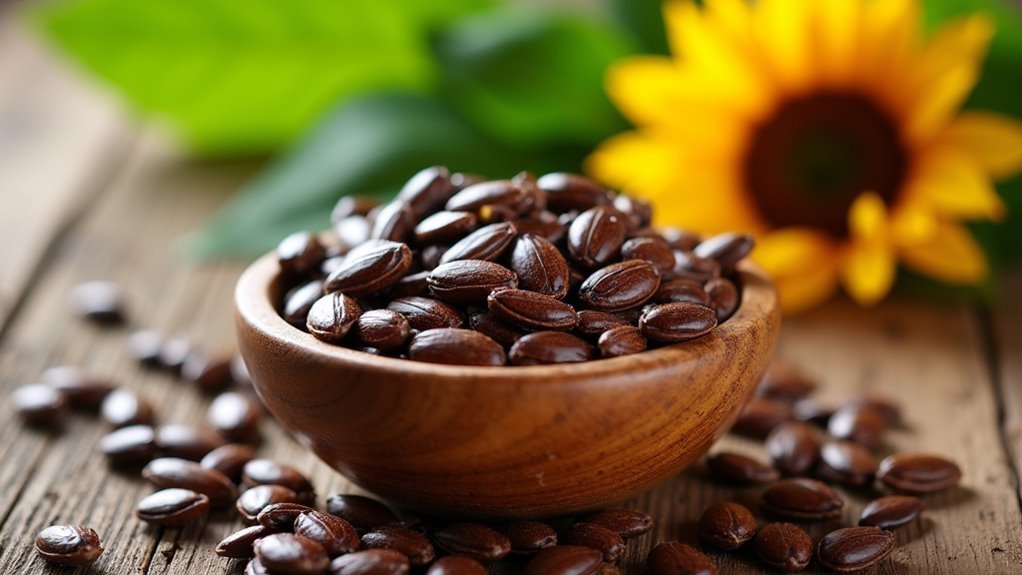
Sunflower seeds provide 3.8 mg of iron per 100-gram serving, making them a practical choice for meeting your daily iron needs without requiring massive portions.
These versatile seeds excel as non-heme iron foods, particularly benefiting vegetarians and vegans seeking plant-based iron sources.
You’ll gain more than just iron when consuming sunflower seeds. They deliver vitamin E, magnesium, and selenium, creating a nutrient powerhouse that supports sustained energy levels.
You can easily incorporate them into your routine by sprinkling them on salads, blending into smoothies, or eating as standalone snacks.
Maximize iron absorption by pairing sunflower seeds with vitamin C-rich foods like oranges or bell peppers. This combination enhances your body’s ability to utilize the non-heme iron effectively.
Flax Seeds: Omega-3s and Iron Combined
While sunflower seeds offer solid iron content, flax seeds deliver an impressive 5.3 mg of iron per 100-gram serving alongside powerful omega-3 fatty acids that support heart health and reduce inflammation.
You’ll find these tiny nutritional powerhouses particularly beneficial if you’re following a vegetarian or vegan diet, where plant-based iron sources become crucial for maintaining adequate intake.
Flax seeds boost your energy levels through their nutrient density, combining iron with healthy fats for sustained vigor.
Here’s how to maximize their benefits:
- Blend into smoothies for an easy morning iron boost
- Mix into baked goods to enhance meals’ nutritional value
- Sprinkle over cereals for convenient daily consumption
Regular flax seed consumption considerably contributes to your overall dietary iron requirements while providing additional health advantages.
Enhancing Iron Absorption With Vitamin C Pairing
You can greatly boost your body’s iron absorption from seeds by pairing them with vitamin C-rich foods like citrus fruits, bell peppers, or strawberries.
This strategic combination transforms the non-heme iron in seeds into a more bioavailable form that your body readily absorbs.
Smart pairing strategies, such as adding tomato paste to flaxseed dishes or eating sunflower seeds with vitamin C sources, maximize your dietary iron intake and support sustained energy levels.
Vitamin C Rich Foods
Many people don’t realize that what you eat alongside iron-rich seeds can dramatically boost your body’s ability to absorb this essential mineral.
Vitamin C acts as a powerful enhancer, increasing iron absorption rates by two to three times when consumed together.
The best vitamin C sources to pair with your iron-rich seeds include:
- Citrus fruits – oranges and grapefruits work perfectly in salads with sunflower or pumpkin seeds
- Tomato-based dishes – cooking spinach or broccoli with tomato paste creates an ideal iron-boosting combination
- Citrus vinaigrettes – drizzling lemon or orange-based dressings over seed-topped meals maximizes absorption
Simple combinations like sesame seeds with orange slices or a sunflower seed salad with citrus dressing can transform your body’s iron uptake efficiency.
Optimal Pairing Strategies
How can strategic food combinations turn ordinary iron-rich seeds into nutritional powerhouses? You’ll maximize iron absorption by pairing these nutrient-dense seeds with vitamin C sources.
Combine pumpkin seeds (11.4 mg iron per cup) with citrus fruits to enhance non-heme iron uptake.
Mix sunflower seeds (3.8 mg per 100g) with vitamin C-rich bell peppers for improved bioavailability.
Add flax seeds (5.3 mg per 100g) to smoothies containing strawberries or oranges for peak absorption.
You can pair sesame seeds (14.6 mg per 100g) with lime-juice guacamole to boost iron utilization.
Chia seeds (5.73 mg per 100g) work perfectly in fruit salads featuring kiwi or pineapple.
These strategic combinations guarantee your body absorbs more iron from iron-rich seeds, transforming simple snacks into energy-boosting nutritional powerhouses that combat fatigue effectively.
Daily Iron Requirements for Optimal Energy
Your daily iron needs aren’t one-size-fits-all—they vary greatly based on your age and gender.
Women aged 19-50 require 18 mg daily, while men in the same age range need only 8 mg to maintain ideal energy levels.
Children’s requirements differ too, with toddlers needing 7 mg and school-age kids requiring 10 mg to support their growing bodies.
Age-Specific Iron Needs
Iron requirements shift greatly throughout different life stages, making it essential to understand your specific daily iron needs for maintaining ideal energy levels.
Your age-specific iron needs vary greatly based on physiological changes and growth demands.
Women aged 19-50 need 18 mg daily iron due to menstrual blood loss, while men in the same age range require only 8 mg.
Pregnant women face the highest demands at 27 mg daily to prevent iron-deficiency anemia and support fetal development.
Key age categories for daily iron requirements include:
- Children (1-3 years): 7 mg daily for growth support
- Adolescents (9-13 years): 8 mg daily during development
- Adults over 51: 8 mg daily for both men and postmenopausal women
Understanding these variations helps you optimize your iron intake strategy.
Gender-Based Daily Requirements
When you’re determining ideal iron intake for sustained energy, gender plays an essential role in establishing your daily requirements.
As a woman aged 19-50, you’ll need 18 mg of iron per day in your daily diet due to menstrual losses and higher iron demands. If you’re pregnant, your needs increase considerably to 27 mg of iron per day to support fetal development and expanded blood volume.
Men aged 19-50 require only 8 mg of iron per day, reflecting their naturally lower iron losses.
After menopause, women’s requirements drop to match men’s at 8 mg daily. Understanding these gender-specific differences helps you identify appropriate sources of iron and adjust your intake accordingly.
Iron-rich seeds can provide valuable contributions toward meeting these targeted requirements for peak energy maintenance.
Signs Your Body Needs More Iron-Rich Foods
How can you tell if your body’s crying out for more iron? Your body sends clear signals when you’re not getting enough iron. Extreme fatigue and weakness are primary indicators of iron deficiency anemia, as iron’s essential for energy production and oxygen transport.
Watch for these key warning signs:
- Physical symptoms – Pale skin, dizziness, shortness of breath, and feeling constantly cold
- Neurological issues – Restless leg syndrome, irritability, and trouble concentrating
- Hair and oral changes – Hair loss and an inflamed tongue
Signs of anemia also include difficulty maintaining body heat due to affected metabolism.
If you’re experiencing several of these symptoms simultaneously, you mightn’t be getting enough iron from your current diet. Iron deficiency anemia develops gradually, so recognizing early warning signs helps you address nutritional gaps before they impact your daily energy levels considerably.
Creative Ways to Incorporate Seeds Into Meals
Since seeds pack impressive iron content into tiny packages, you’ll find countless opportunities to boost your daily intake without overhauling your entire diet. These versatile seeds transform ordinary meals into iron-rich powerhouses while adding delightful textures and flavors.
| Seed Type | Best Meal Addition | Iron Content |
|---|---|---|
| Sesame seeds | Salads | 3.5 mg per 2 tbsp |
| Pumpkin seeds | Morning smoothies | 2.5 mg per 1 oz |
| Hemp seeds | Sauces & dressings | 2.5 mg per 3 tbsp |
You can blend hemp seeds into creamy dressings, sprinkle chia seeds over your morning oatmeal, or incorporate flaxseeds into homemade muffins. Each option delivers substantial iron while enhancing your meals’ nutritional profile and taste experience.
Comparing Iron Content Across Different Seeds
While all iron-rich seeds offer valuable nutritional benefits, their actual iron content varies dramatically depending on the type you choose.
Understanding these differences helps you make informed decisions for supporting healthy red blood cells and energy levels.
Knowing iron variations between seeds empowers you to choose options that best support your blood health and energy needs.
When comparing iron content across different seeds, you’ll find significant variations:
- Sesame seeds lead the pack with 14.6 mg of iron per 100 grams, making them exceptionally rich in iron.
- Hemp and pumpkin seeds occupy the middle range with approximately 8-8.82 mg per 100 grams.
- Chia and flax seeds provide moderate amounts at 5.3-5.73 mg per 100 grams.
While sesame seeds contain nearly three times more iron than flax seeds, all these options contribute meaningfully to your daily iron intake when consumed regularly.
Maximizing Energy Through Strategic Seed Consumption
Beyond simply choosing iron-rich seeds, the timing and combination of your seed consumption can dramatically amplify their energy-boosting effects.
You’ll maximize absorption by pairing these seeds with vitamin C-rich foods like citrus fruits or bell peppers. Consuming iron-rich seeds during morning meals helps establish steady energy levels throughout your day.
Create powerful combinations by mixing sesame seeds with hemp seeds and chia seeds in yogurt or smoothies to boost energy while providing sustained fuel.
Space your seed consumption across multiple meals rather than consuming large amounts at once, as your body absorbs iron more efficiently in smaller doses.
This strategic approach to iron intake guarantees ideal utilization and prevents the afternoon energy crashes you’ve experienced.
Frequently Asked Questions
Which Seed Is Highest in Iron?
Sesame seeds contain the highest iron content at approximately 21 mg per cup when dried. You’ll get nearly double the iron compared to pumpkin seeds, which rank second at 11.4 mg per cup.
How Can I Get Energy Fast With Low Iron?
You’ll need quick iron absorption to boost energy fast. Eat sesame seeds with orange slices or add chia seeds to vitamin C-rich smoothies. The vitamin C enhances iron uptake for rapid energy improvement.
How Many Pumpkin Seeds a Day for Iron?
You’ll want to eat about 30-50 grams of pumpkin seeds daily to considerably boost your iron intake. That’s roughly 1-2 ounces, providing 2.5-4.4 mg of iron toward your daily requirements.
Is 2 Eggs a Day Enough Iron?
Two eggs daily provide only 1.2 mg of iron, which isn’t enough to meet your daily needs. You’ll need additional iron sources like legumes, seeds, or leafy greens to reach recommended intake levels.


Leave a Reply