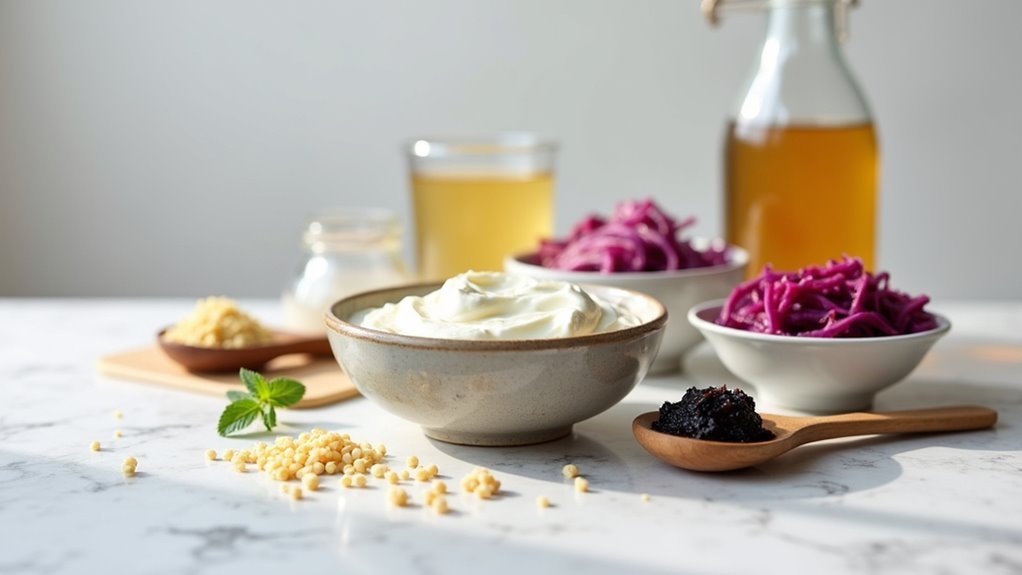
You’ll want to start with small amounts of fermented foods like yogurt, kefir, and sauerkraut, gradually increasing portions as your body adapts. Focus on strain-specific probiotics such as Lactobacillus rhamnosus GG for ulcerative colitis or Saccharomyces boulardii for Crohn’s disease. Combine these with prebiotic-rich foods like steel-cut oats and garlic to feed beneficial bacteria. Keep a detailed food log to monitor your body’s responses and tolerance levels. Following a systematic approach can optimize your recovery outcomes.
Understanding the Role of Probiotics in IBD Management
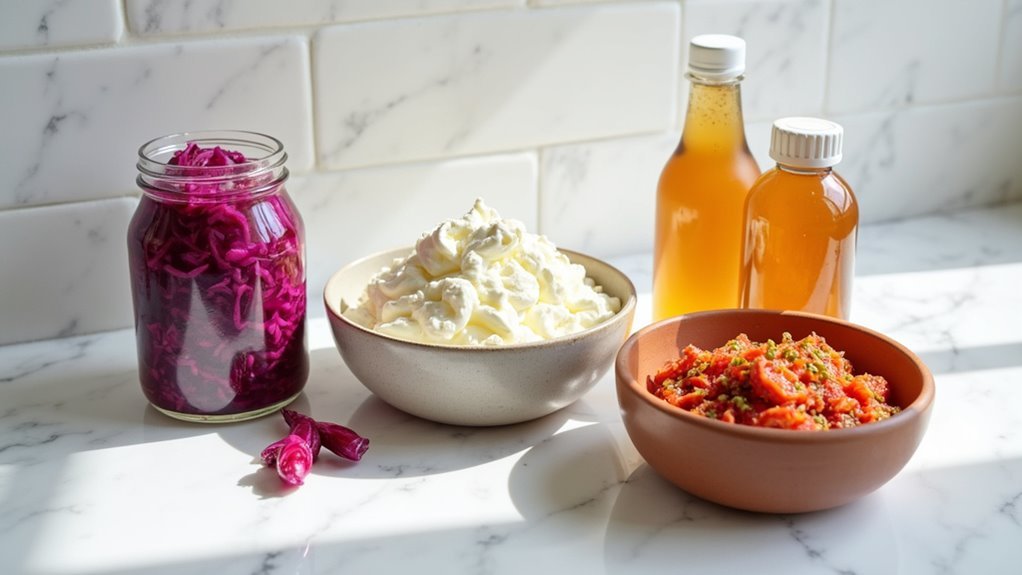
While inflammatory bowel disease can considerably disrupt your digestive health, probiotics offer a promising therapeutic approach by introducing beneficial live microorganisms that work to restore balance in your gut microbiome.
These beneficial bacteria, commonly found in fermented foods like yogurt and kefir, may reduce inflammation associated with IBD. Specific probiotic strains such as Lactobacillus GG have demonstrated potential in clinical studies to induce and maintain remission in ulcerative colitis while improving Crohn’s disease symptoms.
However, effectiveness varies by strain, making strain-specific selection vital for ideal results. You’ll want to consult your healthcare provider before incorporating probiotics into your inflammatory bowel disease management plan, as they can recommend the most suitable strains and dosages based on your individual health conditions.
Best Probiotic Foods for Inflammatory Bowel Disease
When you’re selecting fermented foods for IBD management, you’ll want to focus on options like yogurt, kefir, sauerkraut, and kimchi that contain specific probiotic strains proven to reduce gut inflammation.
Different bacterial strains offer unique benefits—some strengthen your intestinal barrier while others modulate immune responses, so understanding which strains work best for your condition is essential.
Your preparation methods matter too, as proper fermentation techniques and storage can preserve the live cultures that make these foods therapeutically effective for your digestive health.
Fermented Foods Selection
Five powerhouse fermented foods can considerably transform your IBD recovery journey by delivering targeted probiotic bacteria directly to your compromised gut microbiome.
Yogurt and kefir provide live cultures that restore bacterial balance essential for managing inflammatory bowel disease symptoms.
Kimchi, sauerkraut, and miso offer diverse beneficial strains that enhance gut health while reducing inflammation. These fermented foods demonstrate particular effectiveness in ulcerative colitis management, with specific strains helping maintain remission periods.
You’ll maximize health benefits by choosing high-quality options without added sugars or artificial ingredients. Regular consumption supports your immune system and may prevent IBD flare-ups.
When selecting fermented foods, prioritize those with multiple live strains and minimal processing to guarantee ideal probiotic delivery for your recovery.
Strain-Specific Probiotic Benefits
Targeted probiotic strains offer distinct therapeutic advantages for IBD management, with research identifying specific bacterial varieties that directly combat inflammation and restore gut microbiome balance. Different probiotic strains provide specialized benefits for inflammatory bowel disease, helping reduce symptoms through unique mechanisms.
| Probiotic Strain | IBD Condition | Primary Benefit |
|---|---|---|
| Lactobacillus rhamnosus GG | Ulcerative colitis | Maintains remission |
| Visbiome mixture | Ulcerative colitis | Induces/maintains remission |
| Saccharomyces boulardii | Crohn’s disease patients | Reduces stool frequency |
| L. helveticus R0052 | IBD (general) | Alleviates anxiety/depression |
| B. longum R0175 | IBD (general) | Improves mental health |
You’ll find these therapeutic probiotic strains in fermented foods like yogurt, kefir, and specific supplements. Understanding which strains target your specific condition helps optimize your recovery strategy and maximize therapeutic outcomes.
Food Preparation Methods
Knowing which probiotic strains benefit your IBD condition naturally leads to optimizing how you prepare these therapeutic foods to maximize their potency.
Your food preparation methods greatly impact the health benefits you’ll receive from probiotic-rich foods. Choose homemade versions of fermented foods like yogurt, kefir, and sauerkraut over store-bought options to eliminate harmful preservatives and additives that can irritate your digestive system.
When preparing non-fermented foods, use gentle cooking methods such as steaming or boiling to preserve their prebiotic content, which feeds beneficial bacteria in your gut.
You’ll enhance gut health by incorporating naturally fermented vegetables like kimchi and selecting kombucha varieties without added sugars. These careful preparation techniques guarantee you’re getting maximum therapeutic value from your probiotic foods.
Implementing the IBD-AID Diet With Fermented Foods
When you’re ready to implement the IBD-AID Diet, incorporating fermented foods becomes a cornerstone strategy for rebuilding your gut microbiome and managing inflammation. Start with small amounts of probiotic foods like yogurt, kefir, kimchi, and sauerkraut to monitor tolerance during your initial phase.
These beneficial gut bacteria work to restore microbial balance while reducing inflammatory responses in your digestive system. You’ll want to gradually increase portions as your body adapts. Regular consumption helps produce short-chain fatty acids, which nourish your colon cells and strengthen your intestinal barrier.
However, don’t proceed without consulting your healthcare provider or dietitian first. They’ll verify these fermented foods align with your specific dietary needs and tolerance levels, creating a personalized approach that maximizes your IBD recovery potential.
Phase-Based Integration of Probiotic Foods During Recovery
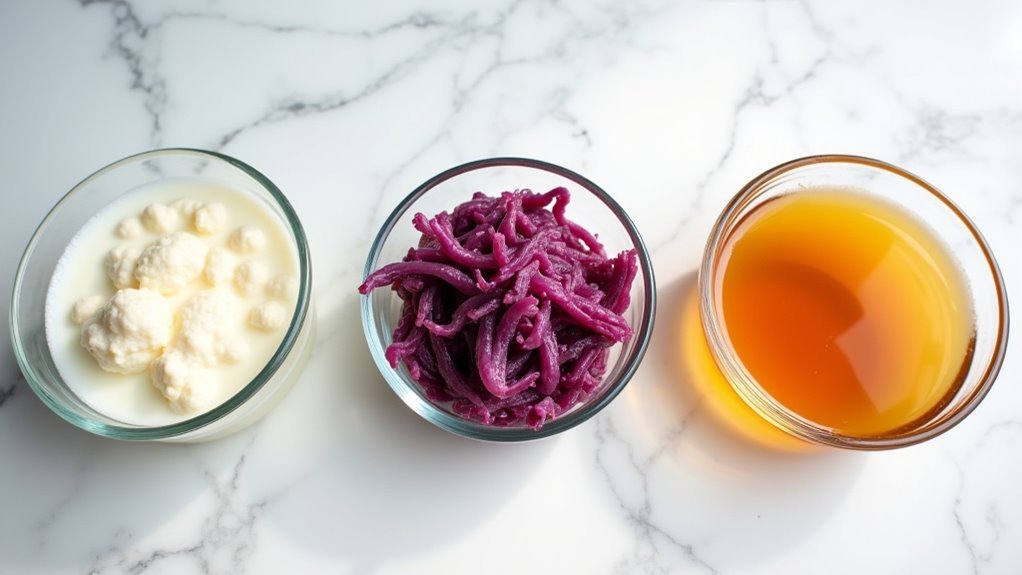
You’ll start Phase 1 with gentle, easily digestible probiotic options like plain yogurt and kefir that won’t aggravate your inflamed gut.
As your symptoms improve, you can progressively reintroduce more complex fermented foods through each phase, building tolerance gradually.
This systematic approach lets you expand your probiotic intake while monitoring how your body responds to each new addition.
Phase One Gentle Options
During active IBD flare-ups, your digestive system needs the gentlest possible introduction to probiotic-rich foods, making Phase One your foundation for gut healing.
These gentle options help restore gut flora without overwhelming your compromised digestive tract.
Focus on these easily digestible choices:
- Yogurt and kefir – Select varieties with live cultures that support the healing process while remaining gentle on inflamed tissue.
- Smoothies with yogurt – Blend soft fruits with probiotic yogurt for easier digestion and nutrient absorption.
- Soft fermented foods – Try pureed miso or well-cooked tempeh to introduce beneficial bacteria gradually.
You’ll need to monitor individual tolerance carefully, adjusting your intake based on symptom responses.
Start with small portions and increase gradually as your gut heals and tolerates these probiotic foundations better.
Progressive Food Reintroduction Strategy
Building on these gentle foundations, your recovery progresses through distinct phases that systematically expand your probiotic foods options.
The Progressive Food Reintroduction Strategy guarantees successful IBD recovery through careful monitoring and gradual advancement.
Phase 2 introduces more fibrous options like soft-cooked vegetables and kefir, supporting enhanced gut health while maintaining symptom management. You’ll monitor tolerance carefully before progressing.
Phase 3 welcomes diverse fermented items including kimchi and sauerkraut, plus higher-fiber choices that diversify your gut microbiome. This expansion strengthens your digestive system’s resilience.
Throughout each phase, maintain a detailed food log tracking symptoms and reactions. This documentation helps identify intolerances and guides necessary adjustments.
Consulting with a dietitian remains essential for personalized guidance, guaranteeing your reintroduction strategy stays balanced and appropriate for your individual recovery needs.
Combining Probiotics With Prebiotics for Optimal Gut Health
While probiotics alone offer significant benefits for IBD management, combining them with prebiotics creates a powerful synergy that maximizes your gut’s healing potential.
Prebiotics feed beneficial bacteria in your digestive system, helping them flourish and produce anti-inflammatory compounds that reduce IBD symptoms.
You’ll find prebiotics in foods like:
- Steel-cut oats and other soluble fiber sources
- Raw chicory root, garlic, and asparagus
- Jerusalem artichokes and onions
When you pair these prebiotic-rich foods with probiotic sources like yogurt and kefir, you’re creating an ideal environment for gut health restoration.
This combination improves stool consistency, reduces inflammation, and supports overall health.
Research shows this synergistic approach enhances microbiome balance more effectively than probiotics alone, leading to better IBD symptom management through your diet.
Monitoring Your Response to Probiotic Food Therapy

How can you tell if probiotic foods are truly helping your IBD recovery? Success requires systematic monitoring of your body’s responses.
Keep a detailed food log to track symptoms and identify which probiotic foods contribute positively or negatively to your progress. Note changes in bowel habits, bloating, and abdominal pain when introducing yogurt, kefir, or other fermented foods.
Introduce probiotic foods gradually, allowing several days between new additions to assess their effects on your individual tolerance.
Remember that consistency is vital—improvements may take weeks to manifest. Don’t expect immediate results.
Monitor patterns carefully and consult with your healthcare provider or dietitian to interpret your observations accurately.
They’ll help adjust your probiotic food intake based on your specific responses and tolerance levels for best IBD recovery.
Frequently Asked Questions
Should You Take Probiotics if You Have IBD?
You shouldn’t routinely take probiotics for IBD, but specific strains like Lactobacillus GG might help with ulcerative colitis symptoms. You’ll need to consult your healthcare provider first.
How Do I Heal My Gut With IBD?
You’ll heal your gut by following the IBD-AID diet’s three-phase approach, incorporating probiotic foods like yogurt, eating prebiotic-rich options, maintaining a food log, and keeping 80% compliance while allowing occasional deviations.
What Should I Eat After an IBD Flare Up?
Start with soft, easily digestible foods like pureed soups, smoothies, and yogurt. Gradually add probiotic-rich options like kefir, then slowly reintroduce fibrous foods while keeping a food log.
Can Probiotics Reduce Intestinal Inflammation?
You can reduce intestinal inflammation with probiotics like Lactobacillus GG and VSL#3, which help restore gut bacteria balance, enhance barrier function, and modulate immune responses, though effectiveness varies by strain and individual.


Leave a Reply