

Ginger reduces gut inflammation through its bioactive compounds gingerol and furanodienone, which directly target cellular pathways that trigger inflammatory responses. Gingerol blocks NF-κB pathways and suppresses pro-inflammatory cytokines like IL-1, TNF, and IL-6, while furanodienone activates your pregnane X receptor to regulate inflammatory responses and enhance tight junction proteins. These compounds strengthen your gut barrier integrity, activate AMPK pathways for tissue healing, and reduce oxidative stress—creating extensive anti-inflammatory effects that support your digestive health naturally.
The Science Behind Ginger’s Anti-Inflammatory Properties
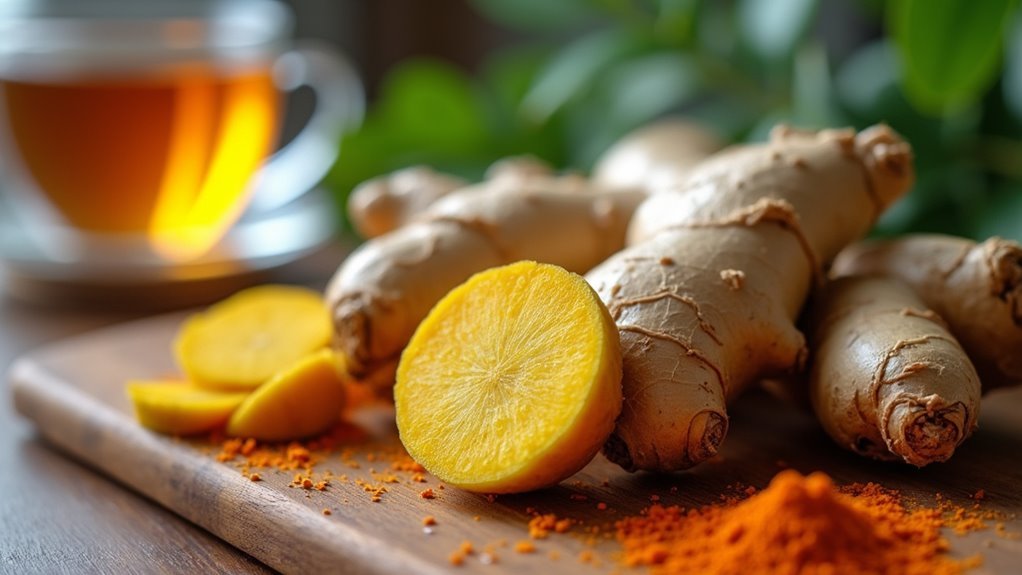
When you consume ginger, you’re introducing powerful bioactive compounds like gingerol and shogaol into your system that directly combat gut inflammation at the cellular level.
These ginger compounds work by inhibiting pro-inflammatory cytokines such as IL-1, TNF, and IL-6 in your immune cells. The anti-inflammatory properties extend beyond basic cytokine suppression—6-gingerol specifically decreases nitric oxide production and reduces inducible nitric oxide synthase levels in stimulated macrophages.
Ginger’s bioactive compounds target inflammatory cytokines IL-1, TNF, and IL-6 while reducing nitric oxide production in immune cells.
Your gut benefits further from furanodienone, another compound that interacts with the pregnane X receptor to suppress inflammatory responses while increasing protective tight junction proteins.
These mechanisms enhance your immune cells’ ability to manage inflammation and oxidative stress. Clinical studies demonstrate that 2000 mg daily can greatly reduce gut inflammation and dyspepsia in bowel disorder patients.
Furanodienone: The Key Compound Fighting Gut Inflammation
Among ginger’s therapeutic compounds, furanodienone stands out as a particularly powerful ally in your fight against gut inflammation. This remarkable compound works by interacting with your pregnane X receptor (PXR), which critically regulates inflammatory responses in your digestive system.
When you consume ginger containing furanodienone, it reduces pro-inflammatory cytokines that trigger gut inflammation while simultaneously enhancing tight junction proteins. These proteins maintain your intestinal barrier’s integrity, preventing harmful substances from penetrating and causing further inflammation.
Research demonstrates furanodienone’s significant anti-inflammatory effects in mice studies, positioning it as a promising therapeutic agent for inflammatory bowel diseases.
Unlike conventional treatments that suppress your immune system, furanodienone’s PXR modulation offers a natural approach to managing gut inflammation without compromising your body’s defense mechanisms.
How Pregnane X Receptor Activation Reduces Intestinal Inflammation
Understanding precisely how furanodienone’s PXR activation works reveals why this mechanism proves so effective against intestinal inflammation. When you consume ginger, furanodienone activates your pregnane X receptor, triggering a cascade of protective responses in your gut.
| PXR Activation Effect | Mechanism | Result |
|---|---|---|
| Cytokine Suppression | Blocks pro-inflammatory signals | Reduced gut inflammation |
| Tight Junction Enhancement | Increases barrier proteins | Stronger intestinal wall |
| Metabolic Modulation | Regulates substance processing | Improved therapeutic outcomes |
| Targeted Action | Specific receptor binding | Avoids immune suppression |
| Natural Approach | Bioactive compounds delivery | Safe inflammation control |
This targeted approach makes ginger’s bioactive compounds particularly valuable for managing inflammatory bowel disease, offering therapeutic benefits without conventional treatments’ immunosuppressive risks.
Gingerol’s Role in Suppressing Pro-Inflammatory Cytokines
When you consume ginger, gingerol actively blocks NF-κB pathways that would otherwise trigger widespread inflammation in your gut.
You’ll experience reduced TNF production as this powerful compound interferes with the cellular machinery responsible for generating these harmful inflammatory signals.
Blocking NF-κB Pathways
Since chronic gut inflammation often stems from overactive immune responses, targeting the molecular pathways that drive inflammatory cascades becomes essential for effective treatment. Gingerol addresses this by specifically blocking the NF-κB signaling pathway, which acts as a master regulator of inflammation in your gut.
When gingerol inhibits NF-κB activation, it creates a cascade of anti-inflammatory effects throughout your digestive system. This pathway normally triggers the production of harmful inflammatory molecules, but gingerol’s intervention disrupts this process.
| NF-κB Pathway Effect | Without Gingerol | With Gingerol |
|---|---|---|
| Pro-inflammatory cytokines | Elevated IL-1, TNF, IL-12 | Noticeably reduced |
| Oxidative stress | High ROS generation | Prevented ROS production |
| DNA integrity | Peroxynitrite damage | Protected from breaks |
Reducing TNF Production
Among the most damaging inflammatory molecules in gut disorders, TNF (tumor necrosis factor) stands out as a primary culprit that gingerol targets with remarkable precision.
When you consume ginger, its active compound 6-gingerol directly suppresses TNF production in LPS-stimulated macrophages, effectively putting the brakes on your body’s inflammatory cascade. This reduction occurs because gingerol modulates the NF-κB signaling pathway, which controls TNF expression and other inflammatory mediators.
You’ll also benefit from gingerol’s ability to decrease oxidative stress markers, creating a dual effect that further reduces TNF levels.
This powerful suppression of pro-inflammatory cytokines makes ginger particularly valuable for managing inflammatory bowel disease (IBD) symptoms, as lower TNF production translates to reduced gut inflammation and improved digestive health.
Inhibiting Inflammatory Cascades
Beyond TNF suppression, gingerol orchestrates a thorough shutdown of multiple inflammatory pathways that would otherwise perpetuate gut damage.
When you consume ginger, 6-gingerol specifically targets NF-κB and PI3K/Akt pathways, preventing them from triggering inflammatory responses. You’ll benefit from reduced IL-1 and IL-6 production, key inflammatory cytokines that damage intestinal tissue.
The compound also decreases nitric oxide production in your gut’s immune cells, lowering inflammation markers considerably. Additionally, gingerol’s anti-inflammatory properties extend to reducing oxidative stress throughout your digestive system.
Perhaps most importantly, it inhibits NLRP3 inflammasome activation, a critical inflammatory complex linked to various gastrointestinal disorders. This multi-pathway approach makes ginger exceptionally effective at controlling gut inflammation thoroughly.
Strengthening Gut Barrier Integrity Through Tight Junction Proteins
When your intestinal barrier weakens, harmful substances can leak into your bloodstream and trigger widespread inflammation.
Ginger compounds like furanodienone (FDN) combat this by strengthening gut barrier integrity through tight junction proteins. These proteins form essential seals between intestinal cells, preventing pathogens and toxins from penetrating your gut lining.
FDN works by activating the pregnane X receptor (PXR), which boosts production of these protective tight junction proteins. This enhanced barrier function reduces pro-inflammatory cytokine levels throughout your digestive system.
You’ll experience decreased gut inflammation as your intestinal walls become more resilient against harmful invaders.
This mechanism makes ginger particularly promising for managing inflammatory bowel disease (IBD).
Unlike conventional treatments that suppress immunity, ginger’s approach naturally fortifies your gut’s defenses without compromising your immune system’s ability to fight genuine threats.
Ginger Phenolics and Their Effects on Immune System Modulation
Ginger’s phenolic compounds orchestrate precise immune system adjustments that target inflammation without disrupting your body’s natural defenses. When you consume ginger phenolics like 6-gingerol and 6-shogaol, they directly modulate key immune cell functions to combat gut inflammation.
These compounds work by blocking inflammatory cytokines such as IL-1 and TNF in your macrophages while simultaneously reducing nitric oxide production. Your neutrophils benefit as ginger phenolics inhibit reactive oxygen species generation, preventing cellular damage.
Meanwhile, 6-shogaol specifically targets the NLRP3 inflammasome, reducing oxidative stress markers throughout your gastrointestinal tissues. Your dendritic cells also respond favorably, with ginger phenolics modulating their cytokine production patterns.
This multi-layered approach guarantees your immune system maintains its protective capabilities while actively reducing inflammatory responses that damage gut tissues.
AMPK Pathway Activation: Ginger’s Cellular Healing Mechanism
Activation of the AMP-activated protein kinase (AMPK) pathway represents ginger’s most sophisticated cellular repair mechanism for healing damaged gut tissues. When you consume ginger compounds like gingerol, they’ll trigger this powerful pathway that regulates your cellular energy and inflammation simultaneously.
| AMPK Function | Mechanism | Gut Health Benefit |
|---|---|---|
| Cytokine Inhibition | Blocks pro-inflammatory signals | Reduces gut inflammation |
| Mucosal Enhancement | Strengthens intestinal barrier | Improves tissue integrity |
| Autophagy Promotion | Removes damaged cells | Accelerates healing process |
Your body’s AMPK pathway activation creates a cascade of healing effects. It’ll suppress inflammatory cytokines while promoting autophagy—your cellular cleanup system that eliminates damaged gut cells. This dual action makes ginger particularly effective for managing inflammatory bowel disease (IBD) and restoring ideal digestive function naturally.
NF-κB Signaling Suppression and Inflammatory Response Control
When inflammation strikes your gut, ginger’s compounds target one of your body’s master inflammatory switches—the NF-κB signaling pathway.
By blocking this pathway’s activation, ginger effectively shuts down your cells’ production of pro-inflammatory messengers like IL-1, IL-6, and TNF that fuel ongoing intestinal damage.
This targeted suppression means you’re getting relief at the cellular level, where inflammation actually begins and spreads throughout your digestive system.
NF-κB Pathway Inhibition
While chronic inflammation wreaks havoc on gut tissues, ginger’s bioactive compounds directly target one of the body’s most influential inflammatory control centers: the NF-κB signaling pathway.
When you consume ginger, gingerol and shogaol actively suppress NF-κB activity, preventing the cascade of inflammatory responses that damage your intestinal lining. This inhibition dramatically reduces production of pro-inflammatory cytokines like IL-1, IL-6, and TNF in your gut tissues.
Research demonstrates that 6-gingerol specifically blocks LPS-induced NF-κB activation, explaining ginger’s powerful anti-inflammatory effects in gastrointestinal disorders.
Cytokine Production Reduction
Beyond blocking the NF-κB pathway itself, ginger’s compounds create a downstream effect that greatly reduces cytokine production throughout your digestive system. 6-gingerol and 6-shogaol directly suppress the secretion of inflammatory cytokines IL-1, TNF, and IL-6, which normally flood gut tissues during inflammatory flare-ups.
| Cytokine | Normal Function | Ginger’s Effect |
|---|---|---|
| IL-1 | Triggers inflammation | Highly reduced |
| TNF | Promotes tissue damage | Markedly suppressed |
| IL-6 | Sustains inflammatory responses | Significantly decreased |
Your immune system’s inflammatory responses become more controlled when ginger reduces nitric oxide production in activated macrophages. This creates therapeutic effects that extend beyond simple symptom relief—ginger actually modulates how your immune cells behave during digestive stress, creating lasting anti-inflammatory benefits for ideal gut health.
Comparing Fresh Ginger Vs Processed Forms for Maximum Anti-Inflammatory Benefits
Although both fresh and processed ginger offer anti-inflammatory benefits, fresh ginger delivers significantly higher concentrations of bioactive compounds that target gut inflammation more effectively.
When you choose fresh ginger over processed forms, you’re getting maximum levels of gingerol and phenolic compounds that provide superior anti-inflammatory properties. These bioactive elements are more potent in fresh ginger because they haven’t undergone drying or processing that can diminish their therapeutic value.
You’ll find that fresh ginger more effectively inhibits pro-inflammatory cytokine production, making it particularly beneficial for conditions like IBD.
While ginger powder offers convenience and longer shelf life, you’re sacrificing some potency. For maximum gut inflammation relief, incorporate freshly grated ginger into teas or meals to harness its full therapeutic potential.
Optimal Dosing and Preparation Methods for Gut Health
When you’re looking to harness ginger’s anti-inflammatory power for gut health, the key lies in getting your dosing and preparation right. Research shows ideal dosing starts at 2000 mg daily to effectively reduce inflammation and dyspepsia.
You’ll want to divide this throughout the day to maximize digestive support and enhance gastrointestinal motility.
Here are three effective preparation methods:
- Fresh ginger tea – Steep slices for maximum bioactive compounds like gingerols
- Ginger powder – Mix into smoothies or meals for convenient daily intake
- Divided doses – Split your daily amount across multiple servings
The anti-inflammatory properties work best with consistent, long-term use rather than sporadic consumption.
Fresh preparations typically deliver higher concentrations of beneficial compounds, but ginger powder offers practical convenience while retaining therapeutic benefits.
Clinical Evidence Supporting Ginger as Natural IBD Therapy
Since inflammatory bowel disease affects millions worldwide, researchers have turned their focus to ginger’s therapeutic potential as a natural treatment option.
Clinical trials reveal compelling evidence for ginger’s anti-inflammatory properties in IBD management. Studies demonstrate that 2000 mg daily markedly reduces inflammation and dyspepsia in IBD patients, offering symptom relief without the immune suppression risks of conventional treatments.
The therapeutic effects of ginger stem from its ability to enhance tight junction protein production, strengthening your gut barrier and preventing inflammatory responses.
Key compounds in ginger, particularly furanodienone, interact with pregnane X receptors to suppress pro-inflammatory cytokine production. This mechanism makes ginger a promising natural therapy for inflammatory bowel disease, especially as processed food consumption continues driving IBD incidence rates higher globally.
Frequently Asked Questions
Is Ginger Good for an Inflamed Gut?
Yes, ginger’s excellent for your inflamed gut. You’ll benefit from its gingerols and shogaols that reduce inflammation, enhance gastric motility, and relieve discomfort. It’s particularly effective for IBS and IBD conditions.
How Does Ginger Work in the Gut?
Ginger’s gingerol reduces your gut’s inflammatory cytokines while furanodienone activates receptors that strengthen your intestinal barrier. It enhances your digestive motility, manages oxidative stress, and helps maintain your gut’s protective tight junction proteins effectively.
How Long Does It Take Ginger to Reduce Inflammation?
You’ll notice ginger’s anti-inflammatory effects within hours, but significant reduction in gut inflammation typically occurs after several days to weeks of consistent daily intake around 2000mg, though individual responses vary.
Is Ginger Better Than Turmeric for Inflammation?
You’ll find ginger’s often more effective than turmeric for inflammation because it’s more bioavailable and works faster. Ginger provides immediate relief from acute inflammation, while turmeric requires higher doses and longer treatment periods.


Leave a Reply