
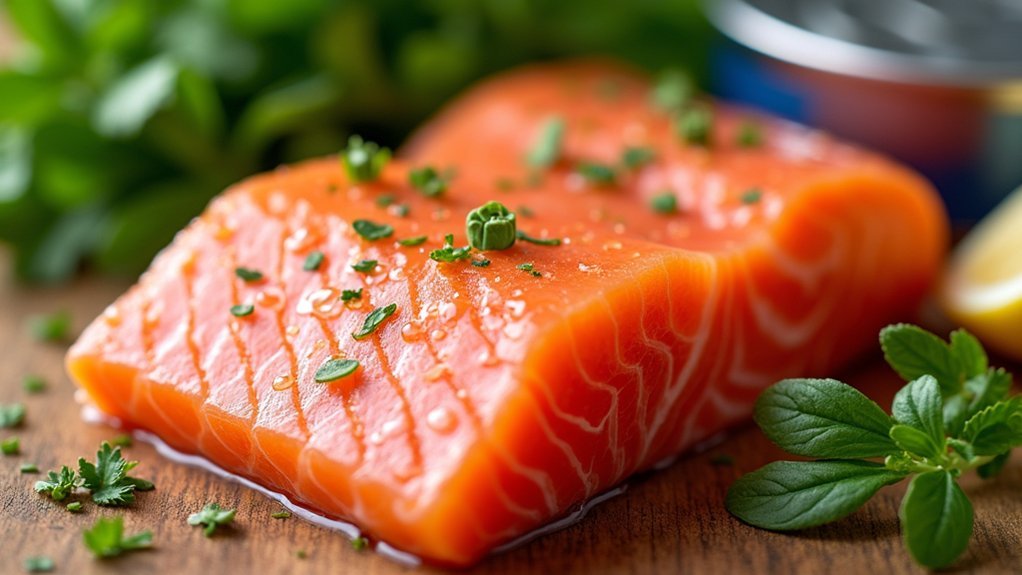
You’ll get considerably more joint-protecting omega-3s from fresh fish because canning’s high-temperature processing destroys up to 30% of these anti-inflammatory compounds. Fresh fish retains natural triglyceride-form omega-3s that your body absorbs more efficiently, plus essential minerals like phosphorus and magnesium that support bone health. You’ll also avoid the excessive sodium in canned varieties that can worsen joint inflammation and stiffness. The complete nutritional profile below reveals even more compelling advantages.
Superior Omega-3 Fatty Acid Preservation in Fresh Fish

When you’re choosing between fresh and canned fish for joint health, fresh fish typically delivers superior omega-3 fatty acid preservation. The high-temperature processing during canning degrades these essential fatty acids, reducing their anti-inflammatory benefits for your joints.
Heat treatment affects omega-3s because their double bonds are susceptible to oxidative degradation, making them vulnerable during retort sterilization.
If you handle fresh fish properly, it’ll maintain higher omega-3 levels compared to its canned counterpart. The quality of raw materials before processing also impacts final omega-3 content, but fresh fish doesn’t undergo the same intensive heat treatment that canned varieties experience.
Your joints benefit more when you choose fresh fish that’s been stored correctly in cool, dark conditions. However, canned fish does provide more calcium due to the soft, included bones that become edible during the canning process.
Enhanced Anti-Inflammatory Properties for Joint Relief
Beyond preserving omega-3 content, fresh fish delivers enhanced anti-inflammatory properties that directly target joint pain and stiffness.
You’ll benefit from higher bioavailability of EPA and DHA, potent compounds that inhibit inflammatory cytokine production. When you consume fresh fish at least twice weekly, you’re likely to experience reduced joint swelling and tenderness, particularly if you’re managing rheumatoid arthritis.
Fresh fish allows your body to absorb nutrients more efficiently than processed alternatives. The synergistic effects of various compounds work together to combat inflammation throughout your system.
Fresh fish maximizes nutrient absorption while multiple compounds work synergistically to reduce systemic inflammation more effectively than processed options.
Studies show you’ll see favorable changes in blood inflammation markers and lower disease activity scores. Research indicates that every additional portion of fish consumption is linked to measurable improvements in inflammatory markers. Unlike canned fish, fresh varieties don’t contain preservatives that can counteract anti-inflammatory benefits, giving you maximum therapeutic potential.
Natural Mineral Content Supporting Bone Health
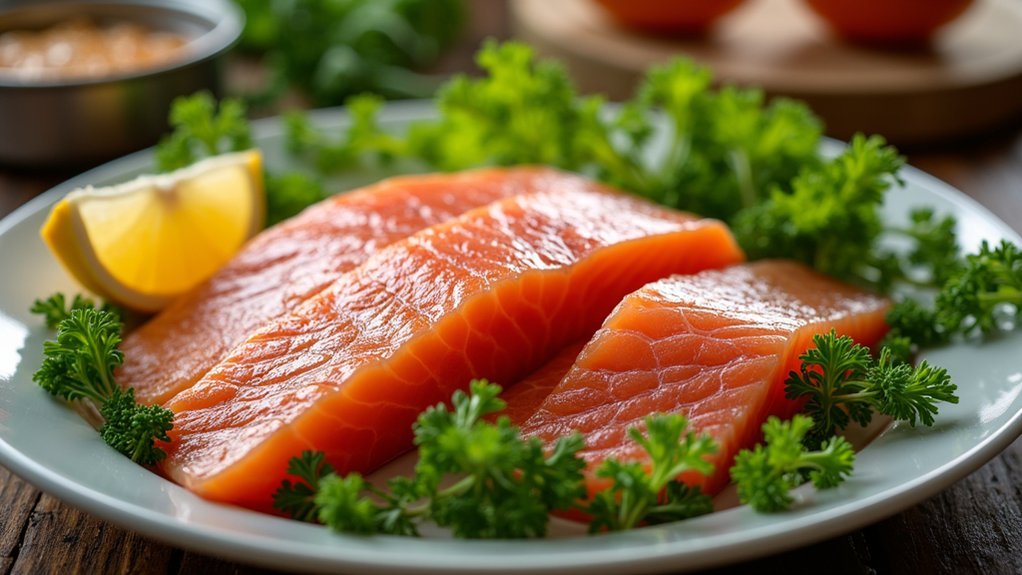
While fresh fish may contain lower calcium levels than canned varieties, it delivers a thorough array of essential minerals that directly support bone health and joint function. You’ll get phosphorus for bone formation, magnesium for density regulation, and potassium that maintains bone strength. Fresh fish also provides zinc, which aids bone healing and tissue repair.
| Mineral | Function | Benefit |
|---|---|---|
| Phosphorus | Bone formation | Strengthens structure |
| Magnesium | Density regulation | Improves mineralization |
| Zinc | Tissue repair | Accelerates healing |
Unlike canned fish, fresh varieties retain these minerals in their natural state without processing interference. You’re getting maximum bioavailability since heat processing and additives haven’t altered the mineral composition. Fresh fish must be consumed promptly to maintain quality and preserve these beneficial mineral levels. This natural mineral profile works synergistically to support your joint health more effectively.
Vitamin D Abundance for Stronger Joint Structure
Since vitamin D acts as an essential catalyst for calcium absorption, fresh fish delivers exceptional amounts of this bone-strengthening nutrient that directly fortifies your joint structure.
Wild-caught salmon provides nearly 1,000 IU per 3.5 oz serving, considerably more than canned alternatives that lose nutrients during processing. You’ll get superior vitamin D retention from fresh fish because it hasn’t undergone the heat treatments and preservation methods that reduce nutrient content in canned varieties.
Fresh fish offers better nutrient absorption due to its unprocessed nature, maximizing the vitamin D benefits for your joints. Mackerel stands out with 643 IU of vitamin D per serving, making it another excellent fresh fish choice for joint health.
The seasonal variations and natural diet of fresh fish also contribute to higher, more consistent vitamin D levels, giving your bones the support they need for prime joint integrity and strength.
Better Nutrient Absorption From Unprocessed Sources
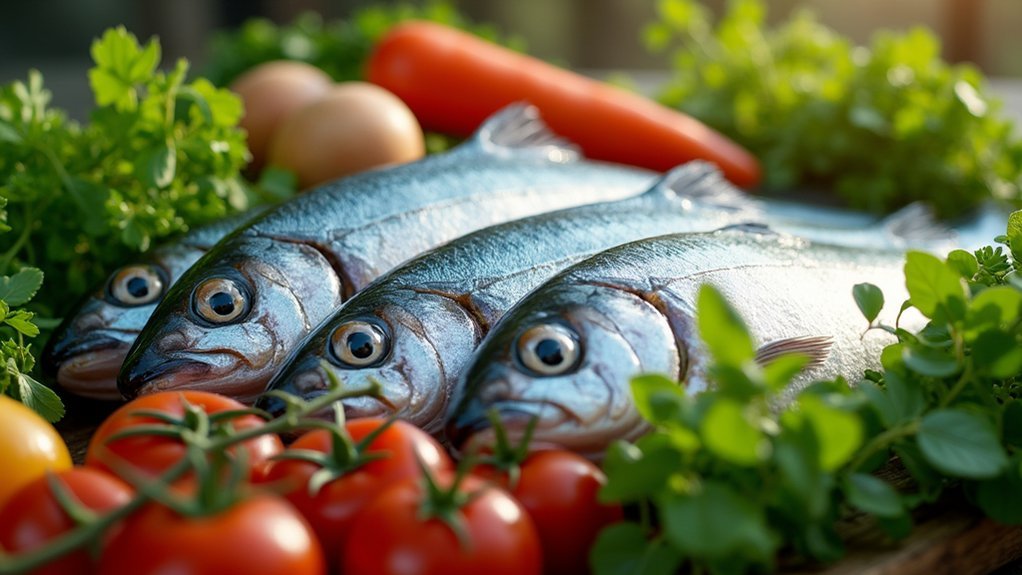
Fresh fish’s unprocessed nature creates a superior foundation for your body to extract and utilize nutrients effectively. Unlike canned alternatives, fresh fish doesn’t undergo high-heat processing that destroys delicate vitamins and deactivates natural enzymes essential for nutrient absorption.
Fresh fish’s unprocessed nature provides your body with a superior nutritional foundation compared to heavily processed canned alternatives.
You’ll retain more water-soluble vitamins like B12, which directly supports joint health. The bioavailability of omega-3 fatty acids remains higher in fresh fish since processing can denature proteins and alter their effectiveness.
Fresh fish’s intact natural matrix allows nutrients to interact efficiently, enhancing absorption rates. Without preservatives or added salts that interfere with nutrient uptake, your digestive system can access the full spectrum of joint-supporting compounds. Fresh fish also provides high-quality protein that works synergistically with omega-3s to support muscle health around joints.
This translates to better anti-inflammatory benefits and stronger joint support for your body.
Reduced Sodium Levels Protecting Joint Function
You’ll find that sodium levels play a vital role in joint health, with excess salt contributing to inflammation and fluid retention that can worsen arthritis symptoms.
Fresh fish naturally contains minimal sodium, while canned varieties often pack up to 10 times more due to added salt and brine used for preservation.
When you choose fresh over canned fish, you’re actively reducing your sodium intake and protecting your joints from the stiffness and swelling that high-salt diets can trigger. Look for low-sodium options when purchasing canned fish if fresh isn’t available, as these alternatives can help minimize the negative impact on joint health.
Sodium’s Joint Impact
Most Americans consume roughly 3,400 mg of sodium daily—nearly 50% more than the recommended 2,300 mg limit—and this excess salt intake creates a cascade of effects that can compromise your joint health.
High sodium drives inflammatory responses by affecting immune cell function, potentially increasing inflammation in your joints. Water retention from excess salt may increase pressure and swelling, contributing to joint discomfort.
Additionally, high salt intake’s associated with calcium loss from bones, indirectly increasing your risk of bone degradation over time. Sodium channels are also implicated in osteoarthritis pain pathways, suggesting salt intake could modulate pain signaling. Recent research has identified Nav1.7 sodium channels in cartilage-producing cells as key players in joint damage and osteoarthritis progression.
Cutting your salt intake helps reduce inflammatory risks, indirectly supporting joint health.
Fresh Fish Advantage
Given sodium’s detrimental effects on joint health, choosing fresh fish over canned varieties becomes a strategic move for protecting your joints.
Fresh fish typically doesn’t contain added salt, unlike canned versions that often include high-sodium preserving liquids. This reduced sodium intake helps prevent inflammation that can worsen joint conditions like arthritis.
You’ll also benefit from fresh fish’s superior nutrient retention. Without the high-pressure cooking process used in canning, fresh fish preserves more omega-3 fatty acids, which actively reduce joint inflammation.
The absence of preservatives means you’re getting fish in its most natural state, maximizing anti-inflammatory compounds that support joint health. Fresh fish also provides essential minerals that support overall joint function and mobility.
When you choose fresh over canned, you’re eliminating unnecessary sodium while boosting beneficial nutrients your joints need.
Absence of Harmful Preservatives and Additives
When you choose fresh fish over canned varieties, you’re avoiding a host of preservatives and additives that can trigger joint inflammation.
Fresh fish contains no synthetic preservatives like nitrates or nitrites, which are commonly added to processed foods and can form inflammatory compounds in your body.
You’ll also sidestep BPA exposure from can linings, which research links to chronic inflammation.
Canned fish typically contains considerably more sodium than fresh varieties, and excess salt promotes water retention that worsens joint discomfort.
Fresh fish naturally avoids MSG and other flavor enhancers occasionally found in processed fish products. Despite MSG being unfairly criticized and having no established harmful effects according to scientific studies, choosing fresh fish eliminates any concerns about flavor enhancers entirely.
For those with arthritis or joint sensitivity, fresh fish eliminates the risk of inflammatory reactions from sulfites, artificial colors, and other synthetic additives.
Peak Freshness Maximizing Therapeutic Benefits
Beyond eliminating harmful additives, fresh fish delivers nutrients at their peak potency, maximizing the therapeutic benefits for your joints.
When you consume fish shortly after catch, you’re getting vitamins and bioactive compounds at their highest concentration before processing degrades them. Fresh fish retains intact protein structures and natural enzymes that support better nutrient absorption in your body.
You’ll benefit from omega-3 fatty acids with minimal oxidation, ensuring maximum anti-inflammatory activity for your joints. However, canned salmon, sardines, and tuna also provide inflammation-fighting omega-3 fatty acids that can support joint health.
The unaltered nutrient combinations in fresh fish work synergistically, enhancing their joint-protective effects. Unlike canned varieties, fresh fish maintains its original fat profile without added oils or sodium that can interfere with therapeutic benefits, giving you pure, concentrated nutrition for superior joint health.
Controlled Mercury Exposure Through Careful Sourcing
While fresh fish offers superior nutritional benefits, you’ll need to navigate mercury exposure risks that vary considerably between species and sourcing methods. Mercury accumulates in predatory fish through bioaccumulation, making larger, older species riskier choices for your joint health regimen.
| Fish Type | Mercury Level (ppm) |
|---|---|
| Shrimp | 0.009-0.016 |
| Fresh Salmon | 0.022 |
| Canned Salmon | 0.014 |
| Light Tuna | 0.45 |
| King Mackerel | 0.73 |
You’ll minimize mercury exposure by choosing smaller, short-lived species like anchovies and shrimp. Avoid shark, swordfish, and king mackerel entirely. Check local fish advisories and select brands with transparent sourcing practices. Even within the same fish type, individual cans can show unpredictable mercury spikes that make it challenging to ensure consistent safety levels. This controlled approach lets you harness fish’s anti-inflammatory omega-3s while protecting against neurotoxic mercury accumulation.
Active Enzymes Supporting Digestive Health
Fresh fish delivers naturally occurring digestive enzymes like amylase, trypsin, and pancrelipase that your body can utilize to enhance nutrient breakdown and absorption.
These active enzymes work synergistically with your digestive system to maximize nutrient extraction from the fish itself and other foods you consume.
When you choose fresh fish over canned alternatives, you’re preserving enzymatic stability that processing destroys.
Canning involves high heat and storage conditions that deactivate these beneficial enzymes, reducing the fish’s digestive support potential.
Enhanced enzyme activity supports efficient nutrient absorption, which directly benefits joint health through better utilization of omega-3 fatty acids, proteins, and minerals. The activity of these digestive enzymes significantly impacts overall health and growth performance in biological systems.
This improved digestive efficiency also reduces inflammation and oxidative stress, creating ideal conditions for joint repair and maintenance while maximizing the nutritional value you receive.
Optimal Protein Quality for Cartilage Repair
When your body repairs damaged cartilage, it relies heavily on high-quality protein sources to provide the essential building blocks for regeneration. Fresh fish delivers superior protein quality compared to canned alternatives, making it your best choice for cartilage health.
Fresh fish contains type II collagen, the specific collagen type that’s vital for cartilage repair. You’ll also get essential amino acids that serve as building blocks for protein synthesis, directly supporting cartilage regeneration. Unlike adult human cartilage which lacks inherent healing ability, proper nutrition can support the body’s repair mechanisms.
- Enhanced bioavailability: Fresh fish provides better nutrient absorption and delivery to your cartilage tissues
- Superior amino acid profile: Complete essential amino acid composition supports ideal cartilage protein synthesis
- Higher nutrient retention: Less processing means you’re getting more cartilage-supporting vitamins and minerals
Fresh fish’s higher moisture content aids nutrient absorption, while its superior protein digestibility guarantees your body can effectively utilize these cartilage-repairing compounds.
Natural Antioxidant Retention Fighting Joint Damage
Your joints need antioxidants to fight inflammation and oxidative damage, and fresh fish delivers these protective compounds in their most potent form.
When fish gets processed and canned, the high-heat sterilization and lengthy storage periods destroy many of these delicate natural antioxidants like vitamin E and polyphenols.
You’ll get considerably more joint-protecting power from fresh fish since it retains these inflammation-fighting compounds that canning processes strip away. However, canned fish still provides high-quality protein and essential omega-3 fatty acids that support overall joint health.
Fresh Fish Antioxidants
Multiple powerful antioxidants work together in fresh fish to create a natural defense system against joint damage. When you choose fresh fish over canned options, you’re getting higher concentrations of selenium and other protective compounds that actively fight oxidative stress in your joints.
These antioxidants don’t just sit passively in your system – they work around the clock to:
- Reduce oxidative stress that causes joint pain and stiffness
- Protect cartilage cells from inflammatory damage that leads to deterioration
- Support immune function to prevent infections that can worsen joint problems
Fresh fish maintain their balanced nutrient profile better than processed alternatives, giving you maximum antioxidant power. This natural preservation means you’ll absorb more joint-protecting compounds with every serving. The omega-3 fatty acids in fresh fish are particularly crucial since these essential nutrients support body and brain function while fighting inflammation throughout your system.
Processing Destroys Protection
While fresh fish delivers powerful antioxidants intact, canning destroys these protective compounds through intense heat and oxidative exposure.
You’re losing vital omega-3 fatty acids that fight joint inflammation when high temperatures degrade these sensitive polyunsaturated fats during processing. The oxidation that occurs creates toxic by-products like hydroperoxides and aldehydes, which can actually promote inflammation rather than reduce it.
You’ll also miss out on naturally occurring antioxidant peptides that protect your cells against oxidative damage. Fresh fish contains fish by-products like scales, skin, and bones that are rich sources of these protective peptides, but processing eliminates their bioactive potential.
These bioactive compounds break down under canning’s intense heat, leaving you with considerably lower antioxidant activity compared to fresh fish. The thermal processing denatures proteins and peptides, stripping away their ability to quench free radicals and defend your joint tissues from oxidative stress.
Natural Compounds Preserved
Fortunately, fresh fish takes the opposite approach by safeguarding the very compounds that canning destroys. When you choose fresh fish, you’re getting natural antioxidants in their most potent form.
The minimal processing preserves polyphenols and maintains ideal omega-3 fatty acid balance, which directly fights inflammation in your joints.
Fresh fish’s natural antioxidant profile remains intact because it doesn’t undergo the harsh heat treatments that break down protective compounds. Fresh fish also provides additional protective nutrients like calcium, vitamin D, and selenium that support overall joint health and bone structure.
Your joints benefit from:
- Higher bioavailability of antioxidants due to minimal processing
- Enhanced vitamin retention including vitamin C and B12 for joint health
- Preserved polyphenols that reduce oxidative stress and inflammation
This natural preservation method means you’re getting maximum anti-inflammatory protection for your cartilage and joint tissues.
Bioavailable Nutrients Targeting Inflammation Pathways
When your body absorbs nutrients from fish, the bioavailability of these compounds directly determines their effectiveness in combating joint inflammation. Fresh fish delivers omega-3s in their natural triglyceride form, which your digestive system recognizes and absorbs more efficiently than processed alternatives.
The EPA and DHA from fresh fish integrate directly into your cell membranes, influencing signaling pathways that reduce inflammatory responses. However, sterilization processes can significantly reduce the retention of these beneficial fatty acids in canned alternatives.
You’ll also benefit from fresh fish’s complete nutrient profile working synergistically. Selenium enhances omega-3 absorption while supporting antioxidant defenses.
Vitamin D aids calcium metabolism for bone health. High-quality protein provides amino acids necessary for cartilage repair.
These bioactive compounds work together to target multiple inflammation pathways simultaneously, creating a more thorough anti-inflammatory effect than isolated nutrients can achieve alone.
Sustainable Sourcing Benefits for Long-Term Health
Choosing sustainably sourced fish doesn’t just protect ocean ecosystems—it directly impacts the long-term nutritional quality of the seafood you’re consuming for joint health.
When fish populations thrive in healthy marine environments, they develop ideal nutrient profiles, including higher concentrations of omega-3 fatty acids that reduce joint inflammation.
Sustainable practices guarantee you’re getting:
- Nutrient-dense protein from fish raised in uncontaminated waters with minimal pollutants
- Consistent omega-3 levels since healthy fish populations maintain better fatty acid profiles
- Long-term availability of high-quality seafood as sustainable sourcing prevents overfishing and ecosystem collapse
You’ll also support certification programs like MSC and ASC that assure responsible harvesting methods.
This means the anti-inflammatory benefits you’re seeking for joint health remain accessible for years to come, while protecting marine habitats from destruction. With seafood demand expected to rise by 30% by 2030, choosing sustainable options helps ensure these nutritional benefits continue to be available as populations grow.
Frequently Asked Questions
How Much More Expensive Is Fresh Fish Compared to Canned Options?
You’ll pay 3 to 4 times more for fresh fish compared to canned options. While a 5-ounce can costs around $2.39, you’re looking at about $8 for half a pound of fresh tuna.
What’s the Best Way to Store Fresh Fish to Maintain Joint Benefits?
You should store fresh fish immediately on ice or freeze it right after purchase. Keep it vacuum-sealed when possible, minimize air exposure, and consume within two days to preserve omega-3s effectively.
How Often Should I Eat Fresh Fish for Optimal Joint Health?
You should eat fresh fish at least twice weekly, with 3.5-ounce servings each time. This consistent frequency guarantees you’ll get sufficient omega-3s to reduce joint inflammation and maintain the anti-inflammatory effects.
Can I Freeze Fresh Fish Without Losing Its Joint-Supporting Properties?
You can freeze fresh fish without losing its joint-supporting properties. Freezing at very low temperatures locks in omega-3 fatty acids and other nutrients, maintaining the fish’s anti-inflammatory benefits for several months.
Which Fresh Fish Varieties Are Best for People With Arthritis?
You’ll want salmon, mackerel, sardines, tuna, and herring for arthritis management. These varieties pack the highest levels of EPA and DHA omega-3s, which effectively reduce joint inflammation and pain.
In Summary
You’ll maximize your joint health by choosing fresh fish over canned varieties. Fresh fish delivers superior omega-3s, enhanced anti-inflammatory compounds, and better nutrient absorption that directly targets joint pain and stiffness. You’re getting ideal protein for cartilage repair, natural antioxidants, and bioavailable nutrients that work more effectively in your body. Make the switch to fresh fish and you’ll notice the difference in your joint comfort and mobility.


Leave a Reply