
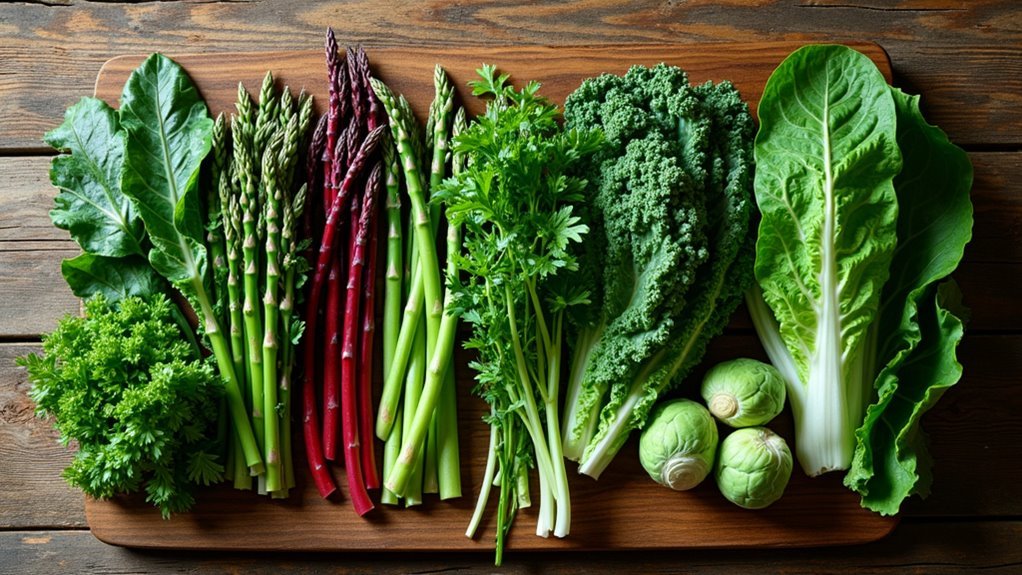
You’ll want to prioritize Swiss chard (214 mcg per cup) and collard greens (177 mcg per cup) as your top folate sources during pregnancy. Asparagus delivers 134 mcg per half-cup, while broccoli provides 104 mcg per cup. Don’t overlook romaine lettuce (64 mcg), bok choy (61 mcg), spinach (58 mcg), and kale (47 mcg per cooked cup). These nutrient-dense greens help you reach the recommended 400-800 mcg daily intake to prevent neural tube defects and support ideal fetal development throughout your pregnancy journey.
Spinach: The Folate Powerhouse for Expecting Mothers
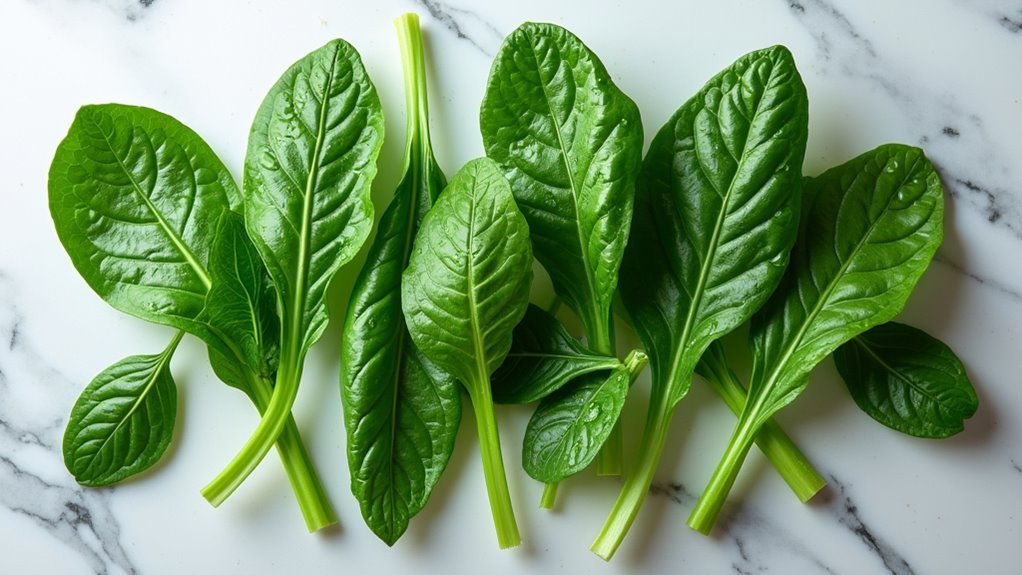
Pregnancy transforms your nutritional needs, making folate one of the most vital vitamins you’ll require. Spinach stands out as an exceptional folate powerhouse, delivering approximately 58.2 mcg per raw cup toward your recommended daily intake.
This leafy green doesn’t just stop at folate—it’s packed with essential vitamins A, C, and K that support your overall health during pregnancy.
Adequate folate intake from spinach helps prevent neural tube defects in your developing baby, making it essential during early pregnancy.
You’ll love spinach’s versatility—toss it in salads, blend into smoothies, or fold into omelets.
Beyond its folate content, spinach offers fiber for digestive health while remaining low in calories, making it a smart, healthy choice for expecting mothers.
Kale: Nutrient-Dense Superfood for Fetal Development
When you’re seeking a nutrient-dense superfood for your pregnancy journey, kale delivers exceptional value with approximately 47 mcg of folate per cooked cup. This powerhouse green supports healthy fetal development through its rich vitamin profile and inflammation-fighting antioxidants.
| Nutrient | Amount per Cup | Pregnancy Benefit |
|---|---|---|
| Folate | 47 mcg | Neural tube development |
| Vitamin A | 885 mcg RAE | Immune function support |
| Fiber | 2.6g | Prevents constipation |
You’ll benefit from kale’s vitamins A, C, and K, which strengthen your immune system while promoting ideal fetal growth. The high fiber content tackles pregnancy-related digestive issues, while antioxidants like quercetin reduce maternal inflammation. Including kale in your diet maximizes nutrient density without excess calories, making it perfect for maintaining healthy pregnancy nutrition.
Broccoli: Cruciferous Vegetable Rich in Essential B-Vitamins
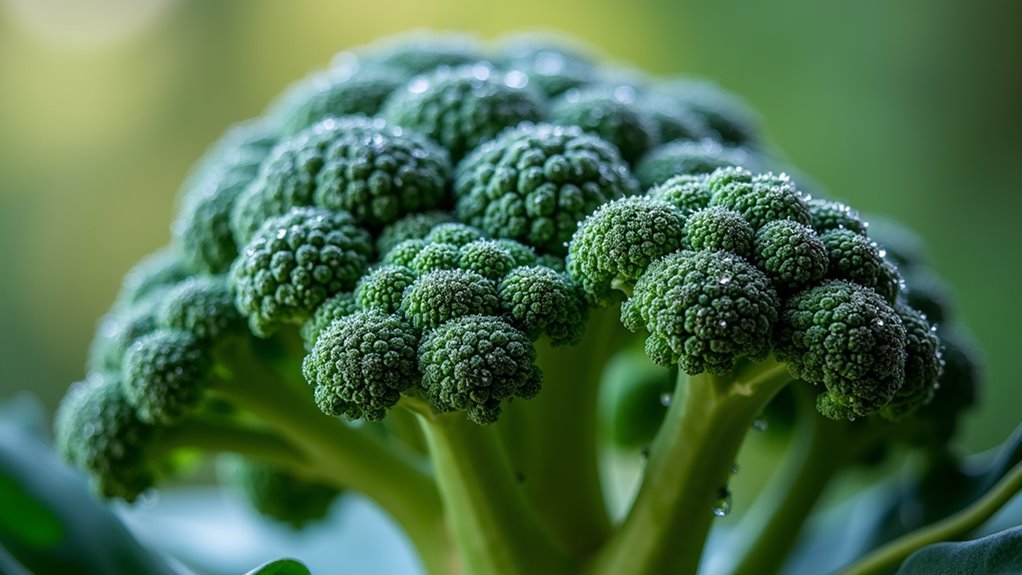
You’ll find broccoli packs an impressive 104 mcg of folate per cup, making it one of your best vegetable choices during pregnancy.
This cruciferous powerhouse doesn’t just deliver folate—it’s loaded with vitamin C, calcium, iron, and fiber that support both your health and your baby’s development.
Whether you eat it raw in salads or steam it for stir-fries, broccoli retains its nutrients and fits easily into your daily meals.
Folate Content Per Serving
Among cruciferous vegetables, broccoli stands out as an exceptional source of folate that you’ll want to include regularly in your pregnancy diet. Each serving delivers impressive nutritional value – one cup of raw broccoli provides 57 mcg of folate, meeting 14% of your daily needs.
When you cook it, a half-cup serving increases to 84 mcg, covering 21% of your Daily Value. This makes broccoli one of the most dependable greens for maintaining adequate folate levels during pregnancy.
You’ll also benefit from its vitamin C, vitamin K, manganese, and fiber content. Whether you’re eating it raw in salads, steamed, or sautéed, broccoli’s versatility guarantees you can easily meet your folate requirements throughout pregnancy.
Nutrient Dense Powerhouse
Broccoli’s reputation as a nutritional powerhouse extends far beyond its impressive folate content. This nutrient-dense cruciferous vegetable delivers essential vitamins that support your pregnancy journey. Beyond the 57 mcg of folate per cup, you’ll benefit from vitamins C, K, and A, plus fiber for prime digestion.
| Nutrient | Benefit | Why It Matters |
|---|---|---|
| Folate | Prevents neural tube defects | Protects your baby’s development |
| Vitamin C | Immune support | Keeps you healthy during pregnancy |
| Fiber | Digestive health | Combats pregnancy constipation |
| Sulforaphane | Anti-cancer properties | Long-term health protection |
Whether you enjoy broccoli raw in salads or steamed as a side dish, you’re investing in your baby’s healthy development while nourishing your own body with this versatile green superfood.
Preparation Methods Recommended
Getting the most out of broccoli’s folate content depends largely on how you prepare it. Smart preparation methods can maximize your folate intake while supporting a healthy pregnancy.
Steaming broccoli is your best cooking option, as it preserves the delicate B-vitamins that heat can destroy. Overcooking leads to significant nutrient loss, so aim for tender-crisp texture.
You’ll retain maximum folate by eating broccoli raw in salads or as crunchy snacks. This cruciferous vegetable that’s rich in folate also works wonderfully in quick stir-fries—just don’t overcook it.
Adding broccoli to soups during the final minutes of cooking preserves nutrients while enhancing flavor. Remember, gentle cooking methods protect the 104 mcg of folate per cup that makes broccoli so valuable during pregnancy.
Asparagus: Low-Calorie Green With High Folate Content
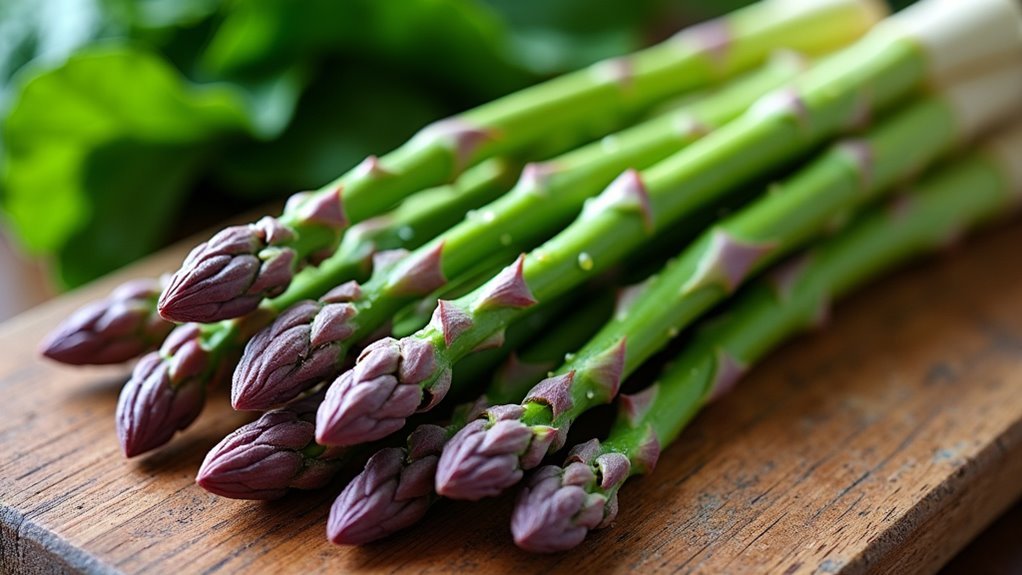
You’ll find asparagus delivers impressive folate levels while keeping calories remarkably low, making it a smart choice for your pregnancy nutrition plan.
This versatile green provides 134 mcg of folate per half-cup serving alongside essential antioxidants and fiber that support your digestive health.
Whether you’re grilling, steaming, or roasting asparagus, you can easily adapt preparation methods to suit your taste preferences and meal planning needs.
Folate Content Benefits
While asparagus offers a delicious and versatile addition to your pregnancy diet, it’s the impressive folate content that makes this low-calorie green truly shine. With approximately 85 mcg of folate per four spears, asparagus provides over 20% of your daily intake requirement of 400 mcg. This essential nutrient plays a critical role in preventing neural tube defects during early fetal development, making it crucial for your baby’s healthy growth.
Beyond folate, asparagus delivers additional nutrients including potassium and fiber, supporting your overall pregnancy nutrition goals. The antioxidants present in this versatile vegetable promote general health while keeping calories low.
You can easily incorporate asparagus into your meals through grilling, steaming, or roasting, ensuring you consistently meet your folate needs throughout pregnancy.
Nutritional Value Overview
When you’re looking for nutrient-dense foods that won’t add excessive calories to your pregnancy diet, asparagus stands out as an exceptional choice. This low-calorie vegetable contains just 20 calories per 100 grams while delivering essential vitamins and minerals your body needs.
A healthy serving of half a cup provides 134 mcg of folate, making it an excellent source of folate that helps prevent folate deficiency during pregnancy. Unlike some leafy greens, asparagus offers versatility in preparation while remaining high in folate.
You’ll also benefit from vitamins A, C, E, and K, plus antioxidants that support your overall health. The fiber content aids digestion, while potassium helps maintain healthy blood pressure levels throughout your pregnancy.
Preparation Methods Tips
Getting the most nutritional value from asparagus depends heavily on how you prepare it. To preserve folate and other essential nutrients, you’ll want to avoid boiling, which causes significant nutrient loss.
Instead, choose preparation methods that maintain asparagus’s nutritional integrity while enhancing flavor.
Here are the best ways to prepare asparagus for maximum folate retention:
- Steam or grill asparagus spears to preserve nutrients effectively
- Roast or sauté with olive oil after trimming tough ends for best flavor
- Add to salads or omelets to boost your folate intake creatively
These preparation methods guarantee you’re getting the full 134 mcg of folate per serving while supporting your overall health during pregnancy.
Fresh seasonal asparagus works best, though frozen varieties retain nutrients well.
Brussels Sprouts: Antioxidant-Rich Miniature Cabbages
Brussels sprouts pack a powerful nutritional punch for expecting mothers, delivering approximately 47 mcg of folate per half-cup serving when cooked. This folate content helps meet your daily requirements during pregnancy and may reduce the risk of neural tube defects in your developing baby.
These miniature cabbages aren’t just folate powerhouses—they’re loaded with antioxidants, especially kaempferol, which provides anti-inflammatory and anti-cancer properties.
You’ll also benefit from their high levels of vitamins C and K, supporting your immune function and bone health throughout pregnancy.
Brussels sprouts offer incredible versatility in meal preparation. You can steam, roast, or sauté them to create delicious side dishes that complement any pregnancy-friendly meal, making it easy to incorporate these nutrient-dense vegetables into your regular diet.
Romaine Lettuce: Crisp Greens Supporting Neural Tube Development
Crisp romaine lettuce delivers an impressive 64 mcg of folate per cup, making it one of the most accessible and convenient ways to boost your daily intake during pregnancy. This versatile green supports neural tube development while providing essential nutrients that benefit both you and your developing baby.
Romaine lettuce offers multiple advantages for expectant mothers:
- Low-calorie nutrition: Packed with vitamins A, C, and K alongside folate
- Versatile preparation: Easily incorporated into salads, wraps, and sandwiches
- Significant folate contribution: Helps you reach the recommended 400-800 mcg daily intake
You’ll find romaine lettuce’s mild flavor and satisfying crunch make it an effortless addition to your pregnancy diet.
Regular consumption helps reduce neural tube defect risks while supporting overall maternal health throughout your pregnancy journey.
Arugula: Peppery Leaves Packed With Pregnancy Nutrients
You’ll find arugula’s distinctive peppery flavor makes it an excellent addition to your pregnancy diet while delivering 47 mcg of folate per cup.
This nutrient-dense green doesn’t just support your baby’s neural tube development—it also provides vitamins A, C, and K that boost your overall health during pregnancy.
Understanding arugula’s nutritional benefits and how to safely incorporate it into your meals will help you maximize its pregnancy-supporting properties.
Nutritional Profile Benefits
When you’re searching for a flavorful way to boost your folate intake during pregnancy, arugula delivers both taste and nutrition in every peppery bite. This nutrient-dense leafy green provides 47 mcg of folate per cup, supporting your baby’s healthy development while satisfying your taste buds.
Arugula’s nutritional profile offers multiple pregnancy benefits:
- Essential vitamins – Rich in vitamins A, C, and K for immune function and overall health
- Bone-building minerals – Contains calcium and iron to support both mother and baby’s growing needs
- Low-calorie nutrition – Provides maximum nutrients with minimal calories for healthy weight management
You’ll find arugula’s distinctive peppery flavor enhances salads, smoothies, and cooked dishes while delivering critical nutrients. Its versatility makes meeting your pregnancy nutritional requirements both delicious and effortless.
Safe Consumption Guidelines
While arugula offers excellent nutritional benefits during pregnancy, you’ll want to follow proper food safety practices to maximize its advantages.
Always wash arugula thoroughly under cold running water to remove potential bacteria and pesticide residues. You can safely consume 1-2 cups daily as part of your leafy vegetables intake, contributing approximately 47-94 mcg toward your daily folate requirement of 400 mcg.
Store arugula properly in your refrigerator and use it within a few days of purchase for ideal freshness. Since you’ll need various nutrient-dense foods throughout pregnancy, rotate arugula with other folate-rich greens like spinach and kale.
If you’re taking prenatal vitamins, arugula provides additional natural folate to support your growing baby’s development.
Collard Greens: Traditional Southern Vegetable for Maternal Health
Although collard greens have deep roots in Southern cuisine, they’re gaining recognition nationwide as a nutritional powerhouse for expectant mothers. You’ll get approximately 177 mcg of folate per cooked cup, supporting healthy fetal development during pregnancy.
These robust greens deliver essential nutrients that benefit maternal health beyond folate:
- Vitamin powerhouse – Rich in vitamins A, C, and K for immune support and proper development
- Mineral content – Contains calcium and iron for strong bones and healthy blood production
- Digestive support – High fiber content promotes healthy digestive tract function and prevents constipation
You can easily incorporate collard greens into your pregnancy diet by sautéing them with garlic, steaming as a side dish, or adding them to hearty soups and stews for maximum nutritional benefit.
Swiss Chard: Colorful Stems and Leaves for Optimal Nutrition
Beyond its striking appearance with rainbow-colored stems, Swiss chard stands out as one of the most folate-rich vegetables available to expectant mothers. With 214 mcg of folate per cooked cup, this leafy green helps pregnant women meet their daily requirements while reducing neural tube defects risk in developing babies.
Swiss chard doesn’t just deliver folate—it’s packed with vitamins A, C, and vitamin K, plus magnesium that supports maternal health throughout pregnancy.
The colorful stems in red, yellow, and white varieties add visual appeal to your meals while providing diverse nutrients.
You’ll find Swiss chard incredibly versatile for cooking. Toss it into stir-fries, blend into soups, or add raw leaves to salads for maximum nutritional benefit.
Bok Choy: Asian Green Vegetable Supporting Healthy Pregnancy
Another powerhouse in the leafy green family, bok choy delivers 61 mcg of folate per cooked cup while offering expectant mothers a mild, versatile flavor that’s perfect for expanding their nutritional horizons.
Bok choy provides 61 mcg of folate per cup, making it an ideal nutritional addition for pregnant women seeking variety.
This Asian green vegetable supports healthy pregnancy through its impressive nutrient profile, containing essential vitamins A, C, and K, plus calcium and iron for optimal maternal health.
You’ll appreciate bok choy’s multiple benefits:
- Prevents neural tube defects – High folate content reduces developmental risks in your baby
- Aids digestion – Fiber helps combat pregnancy-related constipation
- Versatile cooking options – Easily incorporated into stir-fries, soups, and various dishes
Despite being low in calories, bok choy packs tremendous nutritional value that supports both you and your developing baby throughout pregnancy.
Frequently Asked Questions
What Foods Are High in Folate for Pregnancy?
You’ll find excellent folate sources in lentils, asparagus, spinach, and kale. These foods provide essential nutrients for your baby’s development. Don’t overlook broccoli and Brussels sprouts, which also contribute considerably to your daily folate needs.
Which Leafy Green Has the Most Folate?
You’ll find cooked spinach has the most folate among leafy greens, providing 263 mcg per cup. Raw romaine lettuce comes second with 64 mcg, while raw spinach offers 58.2 mcg per cup.
Which Folate Is Best for Pregnancy?
You’ll want natural folate from foods since it’s more bioavailable than synthetic folic acid. If you’ve got MTHFR gene mutations, methylated folate works best for absorption and supporting your baby’s development.
What Are the Best Super Greens for Pregnancy?
You’ll want to prioritize spinach, kale, and Swiss chard for maximum folate content. Add broccoli and asparagus for variety, as they’re packed with essential nutrients supporting your baby’s development during pregnancy.


Leave a Reply