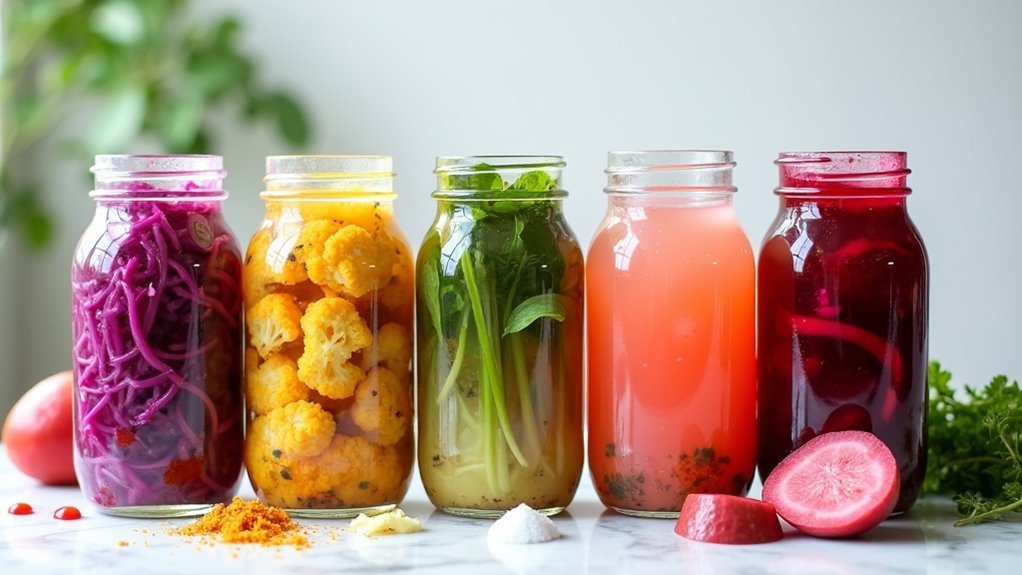
Cultured vegetables heal your gut dysbiosis through five powerful mechanisms: they flood your digestive system with live probiotics that restore beneficial bacterial populations, enhance nutrient absorption by increasing bioavailability of essential minerals like iron and zinc, produce short-chain fatty acids that repair your gut lining and reduce inflammation, decrease inflammatory markers including interleukin 6, and greatly boost your microbiome diversity for long-term digestive balance. These extensive benefits work together to transform your gut health naturally.
Restoring Beneficial Bacterial Populations Through Live Probiotics
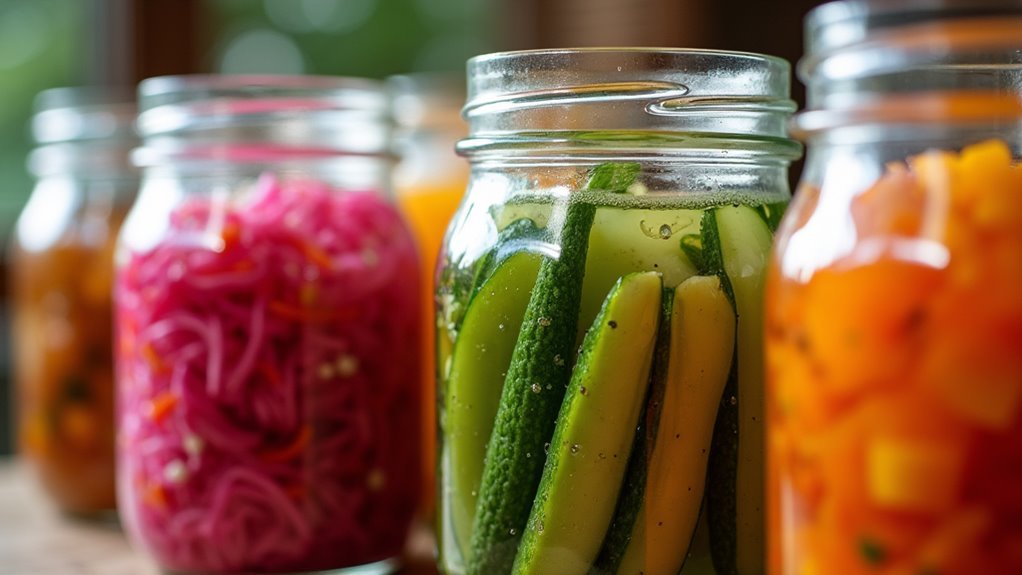
While your gut houses trillions of microorganisms, cultured vegetables like kimchi and sauerkraut deliver live probiotics that actively restore beneficial bacterial populations and promote a balanced microbiome.
These fermented foods contain naturally occurring microbial strains that work to combat dysbiosis by introducing diverse beneficial bacteria into your digestive system.
The fermentation process enhances probiotic availability, making cultured vegetables more effective than non-fermented options for gut health restoration.
When you regularly consume these foods, you’ll increase your gut’s microbial diversity, which is essential for maintaining ideal digestive function.
Studies show that incorporating fermented foods into your diet leads to significant improvements in gut health by suppressing harmful pathogenic microorganisms while strengthening populations of beneficial bacteria that support your overall wellness.
Enhancing Nutrient Absorption and Bioavailability
Beyond supporting bacterial balance, cultured vegetables greatly enhance your body’s ability to absorb and utilize essential nutrients. The fermentation process transforms these foods into nutritional powerhouses, increasing the bioavailability of vital minerals like iron and zinc compared to their raw counterparts.
When you consume cultured vegetables, you’re introducing probiotics that maintain your gut microbiome’s delicate balance. This bacterial harmony proves essential for ideal nutrient absorption, as beneficial microbes help break down complex compounds into forms your intestines can readily utilize.
These fermented foods also contain digestive enzymes that streamline nutrient uptake. Regular consumption improves gut permeability, allowing efficient absorption while reducing gastrointestinal inflammation.
You’ll maximize every vitamin and mineral from your meals when your digestive system functions at peak efficiency through cultured vegetable consumption.
Producing Short-Chain Fatty Acids for Gut Lining Repair

The beneficial bacteria from cultured vegetables work tirelessly in your colon, fermenting dietary fibers into powerful short-chain fatty acids (SCFAs) including butyrate, propionate, and acetate.
These SCFAs become essential fuel for your colonocytes, directly nourishing and repairing your gut lining while strengthening barrier function against harmful pathogens.
Butyrate stands out as particularly effective for gut lining repair, delivering potent anti-inflammatory properties that combat gut dysbiosis symptoms.
When you consume cultured vegetables regularly, you’re increasing your gut microbiota diversity, which amplifies SCFA production and enhances overall gut health.
The probiotics in fermented foods create a sustainable cycle: they produce more SCFAs, which reduce inflammation and promote healing, ultimately protecting you against gastrointestinal disorders linked to dysbiosis.
Reducing Inflammatory Markers and Immune Responses
Cultured vegetables deliver remarkable anti-inflammatory benefits that extend far beyond gut lining repair, actively reducing inflammatory markers throughout your entire body. When you consume fermented vegetables regularly, you’re introducing beneficial probiotics that considerably decrease 19 inflammatory proteins while modulating your immune responses. These cultured foods specifically target interleukin 6, a cytokine associated with chronic inflammatory conditions.
| Inflammatory Marker | Reduction Effect | Health Impact |
|---|---|---|
| Interleukin 6 | Considerably decreased | Reduced chronic inflammation |
| Immune cell activation | Less activation observed | Balanced immune responses |
| Gut microbial diversity | Increased diversity | Enhanced immune function |
| Systemic inflammation | Overall reduction | Protection against dysbiosis-related diseases |
Your gut microbiome becomes more diverse through fermented vegetables, creating a powerful defense against chronic inflammatory diseases linked to dysbiosis.
Increasing Microbiome Diversity for Long-Term Balance

While reducing inflammation represents just one facet of cultured vegetables’ impact on your health, their ability to markedly increase microbiome diversity creates the foundation for sustained gut wellness.
When you consume fermented foods like sauerkraut and kimchi, you’re introducing beneficial probiotics that actively enrich your gut’s microbial ecosystem. Research demonstrates that a diet rich in fermented foods significantly boosts gut microbiome diversity more effectively than fiber alone.
This enhanced diversity strengthens your microbiome’s resilience and adaptability, creating long-term balance that protects against chronic conditions. By regularly eating cultured vegetables, you’re investing in sustained overall health, as diverse microbial communities reduce inflammation and lower your risk of obesity, diabetes, and inflammatory diseases while promoting lasting gut wellness.
Frequently Asked Questions
What Are the Best Fermented Foods for Dysbiosis?
You’ll find kimchi, sauerkraut, kefir, miso, and tempeh are top choices for fighting dysbiosis. They’re packed with diverse probiotics that’ll restore your gut’s microbial balance and reduce harmful bacteria overgrowth effectively.
Are Fermented Vegetables Good for Your Gut?
You’ll find fermented vegetables excellent for gut health. They’re packed with probiotics that boost microbial diversity, reduce inflammation, and improve digestion while strengthening your immune system and creating a balanced microbiome environment.
What Foods Heal Dysbiosis?
You’ll heal dysbiosis by eating fermented foods like sauerkraut, kimchi, kefir, and miso. These provide beneficial probiotics that restore gut balance, increase microbial diversity, and reduce inflammation for improved digestive health.
How to Reverse Gut Dysbiosis?
You’ll reverse gut dysbiosis by incorporating fermented foods like sauerkraut and kimchi into your diet. These cultured vegetables boost beneficial bacteria, increase microbial diversity, and reduce inflammation better than high-fiber diets alone.


Leave a Reply