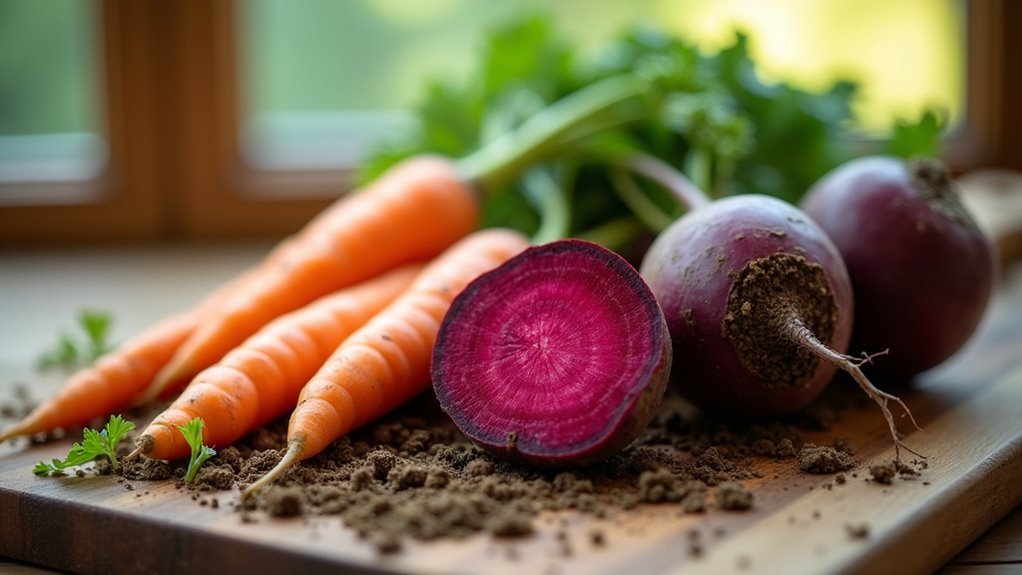
You can heal gut inflammation by eating raw beets to maximize betalain absorption, which targets harmful inflammatory markers like CRP and TNF-alpha. Ferment carrots and beets together to create probiotics that repair your intestinal lining while their combined 7.8g of fiber per cup feeds beneficial bacteria. Choose raw over cooked beets since they retain 20% more folate and higher nitrate levels for superior anti-inflammatory effects. These strategies will transform your digestive health when implemented correctly.
How Betalains in Beets Reduce Inflammatory Markers in Your Digestive System

When you consume beets, the vibrant betalains responsible for their deep red color actively combat inflammation throughout your digestive system by targeting key inflammatory markers like C-reactive protein (CRP) and tumor necrosis factor-alpha (TNF-a).
These anti-inflammatory properties make beetroot particularly effective against chronic inflammation that disrupts digestive health. Studies show that regular beetroot intake markedly reduces these harmful markers, leading to improved gut health and fewer gastrointestinal symptoms.
The betalains work by restoring balance to your gut microbiome, promoting beneficial bacteria growth while suppressing inflammation-causing harmful bacteria.
This dual action helps prevent digestive issues and enhances overall gastrointestinal function, making beets a powerful ally for your digestive system’s long-term health.
The Power of Fermented Carrots for Healing Gut Lining Damage
While beets offer powerful betalain compounds for gut health, fermented carrots provide a complementary approach by delivering targeted probiotics that directly repair and strengthen your damaged intestinal lining.
The fermentation process transforms ordinary carrots into potent healing agents. Unlike dietary nitrates in beets that reduce inflammation systemically, fermented carrots work at the cellular level to rebuild your gut barrier. These beneficial bacteria colonize your digestive tract, crowding out harmful microorganisms while producing compounds that heal damaged tissue.
Fermentation transforms humble carrots into cellular-level gut healers, delivering beneficial bacteria that rebuild intestinal barriers and crowd out harmful microorganisms.
Here’s how fermented carrots support your immune system:
- Probiotic colonies establish protective biofilms along your intestinal walls
- Enhanced beta-carotene absorption strengthens mucosal barriers against inflammatory triggers
- Increased fiber bioavailability promotes regular elimination of toxins
- Improved vitamins and mineral uptake accelerates tissue repair processes
This fermented powerhouse complements beets perfectly for thorough gut restoration.
Why Raw Vs Cooked Beets Matter for Maximum Anti-Inflammatory Benefits

Although both raw and cooked beets deliver anti-inflammatory compounds, the preparation method you choose dramatically impacts their therapeutic potency for gut healing. Raw beets retain higher levels of dietary nitrates that convert to nitric oxide, maximizing their anti-inflammatory effects. The betalains concentrated in raw beet skin provide superior antioxidant power but diminish when exposed to heat.
| Component | Raw Beets | Cooked Beets |
|---|---|---|
| Dietary Nitrates | High retention | Reduced levels |
| Betalains | Maximum concentration | Heat-diminished |
| Folate Content | 20% higher | Lower levels |
Research shows raw beets reduce markers of inflammation like CRP and TNF-a more effectively than cooked beets. For ideal inflammation management and cellular repair, incorporate raw beets through juicing or grating rather than cooking to preserve their health benefits.
Combining Beet and Carrot Fiber to Restore Healthy Gut Bacteria Balance
Beyond maximizing the anti-inflammatory compounds in your beets, the fiber content in both beets and carrots creates a powerful foundation for rebuilding your gut’s bacterial ecosystem.
You’ll harness 3.4g of fiber from beets and 4.4g from carrots per cup, directly feeding beneficial gut bacteria while starving harmful microorganisms.
The pectin in carrots binds toxins while beet fiber enhances gut motility, creating ideal conditions for digestive health.
The pectin in carrots acts as a natural detoxifier while beet fiber promotes healthy digestion, establishing optimal gut conditions.
Betalains from beets work alongside carrot antioxidants to reduce inflammation and promote bacterial diversity.
- Pectin fibers sweep through your intestines like gentle brushes, collecting toxins
- Beneficial bacteria multiply rapidly, forming protective colonies along intestinal walls
- Betalains create a soothing purple shield against gut inflammation
- Bacterial diversity blooms like a thriving garden, restoring gut microbiota balance
Creating the Perfect Fermented Beet-Carrot Recipe for Daily Gut Repair

When you ferment beets and carrots together, you’ll create a probiotic powerhouse that delivers targeted gut repair with every spoonful. This fermented recipe transforms ordinary vegetables into digestive medicine, maximizing their inflammation-fighting properties while cultivating beneficial microbiota.
| Ingredient | Amount | Benefits |
|---|---|---|
| Fresh beets | 2 medium | Betalains reduce inflammation |
| Carrots | 4 large | High fiber supports digestion |
| Sea salt | 2 tbsp | Creates fermentation environment |
| Filtered water | 1 cup | Maintains proper brine ratio |
You’ll slice vegetables thinly, massage with salt, and submerge in brine for 3-7 days. The fermentation process increases nutrient bioavailability while generating probiotics that restore gut health. These antioxidants work synergistically to heal your digestive system daily.
Frequently Asked Questions
Are Beets Good for Gut Inflammation?
Yes, beets are excellent for gut inflammation. You’ll benefit from their high fiber content, anti-inflammatory betalains, and antioxidants that reduce oxidative stress. They’ll improve blood flow and support cellular repair in your digestive tract.
What Happens if We Eat Carrot and Beetroot Daily?
You’ll boost your digestive health with increased fiber intake, reduce gut inflammation through betalains and antioxidants, support beneficial bacteria growth, maintain healthy weight, and strengthen your immune system considerably.
Do Carrots Reduce Inflammation?
You’ll find that carrots effectively reduce inflammation through their beta-carotene and phytochemicals like lutein. They’re packed with fiber that promotes gut health, helping your body fight chronic inflammatory conditions naturally.
What Is the Number One Vegetable for Inflammation?
Beets are the number one vegetable for reducing inflammation. You’ll benefit from their powerful betalains, which are antioxidants that greatly lower inflammatory markers like C-reactive protein in your body.


Leave a Reply