
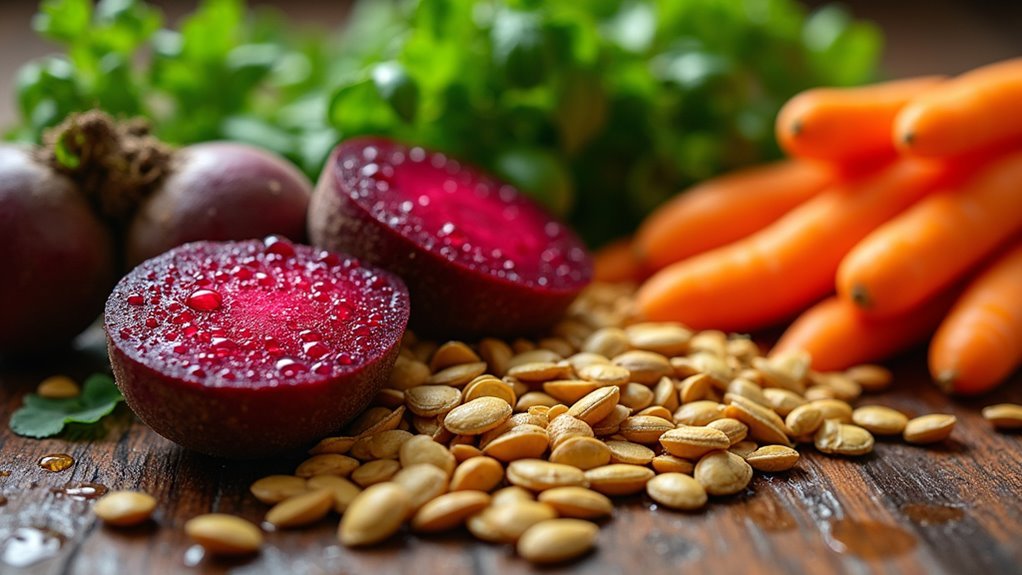
You need five essential nutrients to build healthy blood cells: vitamin B12 for DNA formation during cell division, folate (B9) for DNA synthesis, iron as hemoglobin’s fundamental component, vitamin C to enhance iron absorption, and vitamin B6 for hemoglobin synthesis. B12 and folate deficiencies cause anemia with oversized, ineffective cells, while iron deficiency leads to fatigue and weakness. These nutrients work together to guarantee proper oxygen transport throughout your body, and understanding their specific roles will help optimize your blood health.
Vitamin B12: The Foundation of Red Blood Cell Production

When your body produces red blood cells, it relies heavily on vitamin B12 to facilitate DNA formation during cell division. This essential vitamin guarantees your healthy blood cells develop properly and function effectively in oxygen transport throughout your system.
A vitamin B12 deficiency disrupts this critical process, leading to deficiency anemia characterized by large, ineffective red blood cells that can’t carry oxygen efficiently. You’ll need 2.4 micrograms daily, with higher amounts during pregnancy and lactation.
Since B12 primarily exists in animal products like meat, eggs, and dairy, vegans and vegetarians should consider B12 supplements to prevent deficiency.
Plant-based diets require careful B12 supplementation since this vital nutrient occurs naturally only in animal-derived foods.
Without adequate levels, you risk severe neurological complications including nerve damage and cognitive decline beyond blood-related issues.
Folate (Vitamin B9): Supporting DNA Synthesis for Healthy Blood Cells
Folate works alongside vitamin B12 as a vital partner in DNA synthesis, ensuring your red blood cells develop with the genetic material they need to function properly. Without adequate folate, you’ll develop megaloblastic anemia, producing oversized, ineffective blood cells that compromise your health.
| Life Stage | Daily Folate Need |
|---|---|
| Adults | 400 mcg |
| Pregnant women | 800 mcg |
| Adolescents | 400 mcg |
| Nursing mothers | 500 mcg |
| Children (9-13) | 300 mcg |
Folate deficiency causes fatigue and shortness of breath, while adequate intake prevents birth defects during pregnancy. You’ll find this essential vitamin in dark green leafy vegetables, legumes, nuts, and fortified cereals. Since folic acid supports rapid cell division, it’s particularly important during growth periods and pregnancy.
Iron: Essential Mineral for Hemoglobin Formation

Iron serves as the fundamental building block of hemoglobin, the protein that gives your red blood cells their oxygen-carrying power. About 70% of your body’s iron resides in hemoglobin, making it essential for transporting oxygen from your lungs to tissues throughout your body.
Iron forms the core of hemoglobin, enabling your red blood cells to carry life-sustaining oxygen throughout your entire body.
Your daily iron needs vary considerably by gender and age. Men require approximately 6 mg daily, while women aged 18-59 need around 19 mg due to menstrual losses.
Iron deficiency leads to anemia, causing fatigue, weakness, and pale skin that’ll drain your energy levels.
You can prevent iron deficiency by consuming rich dietary sources like lean meats, seafood, poultry, beans, and lentils. Fortified cereals also provide excellent iron content, helping maintain healthy blood cells and preventing anemia-related complications.
Vitamin C: Enhancing Iron Absorption and Blood Cell Development
While iron provides the foundation for healthy blood cells, vitamin C acts as its essential partner by dramatically boosting your body’s ability to absorb this critical mineral.
Vitamin C converts non-heme iron from plant foods into a more absorbable form, increasing iron utilization and reducing iron deficiency anemia risk. This process supports brain and spinal cord function by ensuring adequate oxygen transport.
Key nutrients like vitamin C also strengthen your immune system while preventing conditions that increase your risk of blood cell disorders.
Pair citrus fruits, strawberries, bell peppers, and broccoli with iron-rich foods for maximum absorption. Adults need 65-90mg daily, though folate deficiency can complicate blood cell production.
Always seek medical advice for persistent fatigue or weakness.
Vitamin B6: Supporting Hemoglobin Synthesis and Blood Health
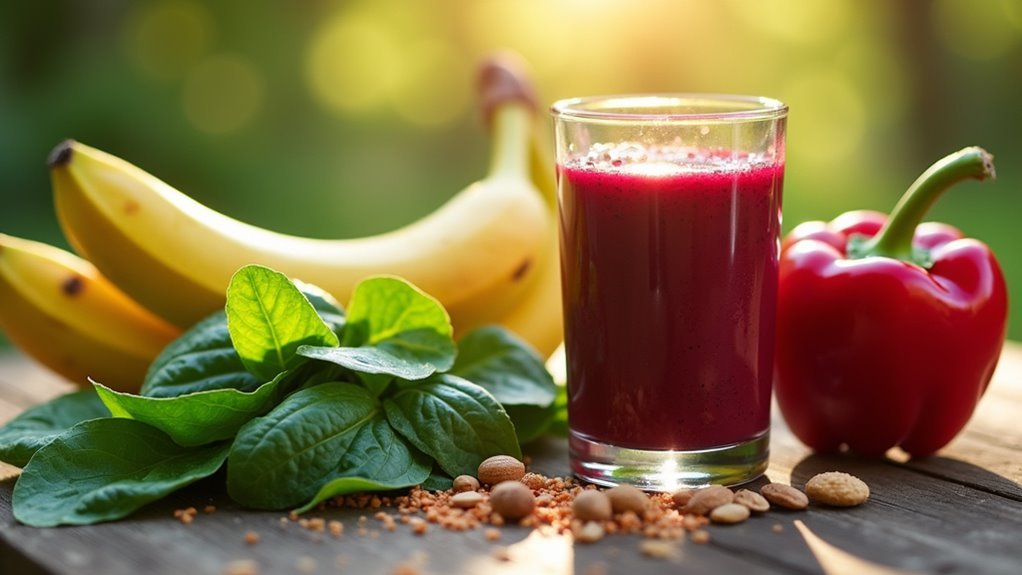
Vitamin B6 works alongside vitamin C as another key player in maintaining healthy blood cells, but its role focuses specifically on hemoglobin synthesis within your red blood cells. This essential vitamin enables your body to produce the protein that carries oxygen throughout your system. Without adequate B6, you’ll risk developing anemia, leading to fatigue, weakness, and pale skin.
| Daily B6 Needs | Amount |
|---|---|
| Adult Men | 1.3 mg |
| Adult Women | 1.3-1.5 mg |
| Pregnant Women | 1.9 mg |
| Seniors (50+) | 1.7-2.0 mg |
Your best dietary sources include poultry, fish, potatoes, chickpeas, and bananas. These foods provide the B6 necessary for ideal red blood cells production and overall blood health.
Frequently Asked Questions
What Is the Best Vitamin for Blood Cells?
You’ll find vitamin B12 is the best single vitamin for blood cells since it’s essential for red blood cell production and DNA synthesis, preventing anemia when you maintain adequate levels.
How Can I Make My Blood Cells Healthier?
You’ll make your blood cells healthier by eating iron-rich foods like lean meats and beans, consuming dark leafy greens for folate, and pairing plant-based iron with vitamin C sources.
What Helps Repair Blood Cells?
You’ll repair blood cells effectively with B12 and folic acid for DNA synthesis, iron for hemoglobin production, vitamin C to boost iron absorption, plus copper and vitamin E for protection.
What Vitamins Improve Red Blood Cells?
You’ll improve your red blood cells by taking iron, folic acid, and vitamin B12. Don’t forget vitamin C—it helps you absorb iron better. Copper also supports healthy red blood cell production effectively.


Leave a Reply