

When you drink pomegranate juice daily, you’re flooding your cardiovascular system with polyphenolic antioxidants that actively combat oxidative stress and inflammation. These powerful compounds prevent LDL cholesterol oxidation, reduce both systolic and diastolic blood pressure, and improve arterial flexibility. You’ll experience enhanced blood flow as the antioxidants protect your arterial walls from damage while reducing atherosclerosis risk. Clinical studies show participants had 50% fewer angina episodes and 17% better heart perfusion, demonstrating how this simple daily habit creates lasting cardiovascular benefits.
Antioxidant Power Against Heart Disease
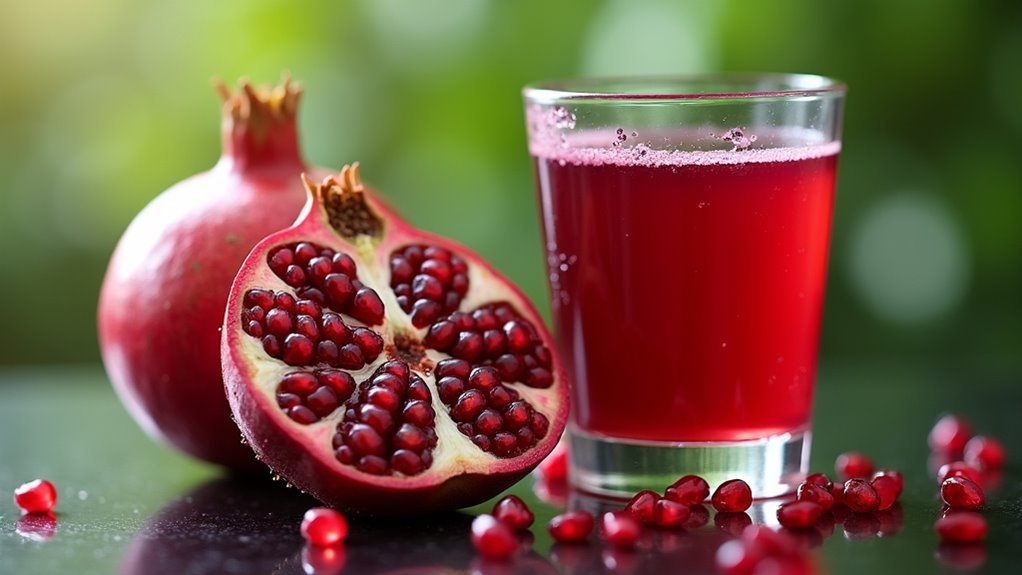
Your heart faces a constant battle against oxidative stress, and pomegranate juice emerges as a powerful ally in this fight. The polyphenolic antioxidants in pomegranate juice actively combat cellular damage that leads to heart disease development.
When you drink this ruby-red beverage regularly, you’re providing your cardiovascular system with protective effects that research can’t ignore.
Studies show pomegranate juice delivers impressive cardiovascular benefits, including a 17% improvement in myocardial perfusion for coronary heart disease patients.
Research demonstrates pomegranate juice significantly enhances heart function, showing a remarkable 17% boost in blood flow for cardiac patients.
These antioxidants work by inhibiting LDL oxidation, reducing atherosclerosis risk while lowering both systolic and diastolic blood pressure.
You’ll strengthen your heart’s defenses and improve heart health through this simple daily addition to your routine.
Blood Pressure Reduction Through Daily Consumption
While maintaining healthy blood pressure requires consistent lifestyle choices, adding pomegranate juice to your daily routine can deliver measurable cardiovascular improvements.
Clinical trials demonstrate that daily consumption of 240ml notably reduces both systolic and diastolic blood pressure measurements. The polyphenolic antioxidants in pomegranate juice work by lowering oxidative stress throughout your cardiovascular system, creating multiple pathways for heart health enhancement.
You’ll benefit from the juice’s ability to inhibit LDL oxidation, which prevents atherosclerosis development and naturally supports blood pressure reduction.
Research shows participants experienced improved myocardial perfusion and reduced angina episodes. The mechanism targets your cardiovascular system at the cellular level, where antioxidants combat inflammation and protect arterial function, making daily consumption an effective strategy for long-term heart health maintenance.
Arterial Health and Atherosclerosis Prevention

Your arteries face constant attack from oxidative stress, but pomegranate juice’s powerful antioxidants create a protective shield that fights this cellular damage.
The polyphenols in this ruby-red beverage actively reduce inflammation throughout your cardiovascular system, preventing the buildup of dangerous plaque.
You’ll experience these protective effects alongside the blood pressure benefits we’ve already discussed, creating an all-encompassing defense for your heart health.
Antioxidants Fight Oxidative Stress
Since oxidative stress wreaks havoc on your cardiovascular system by damaging arterial walls and promoting inflammation, pomegranate juice’s powerful polyphenolic antioxidants serve as your body’s first line of defense.
These antioxidants actively combat reactive oxygen species that cause oxidative damage throughout your circulatory system. When you drink pomegranate juice regularly, you’re directly reducing the harmful effects of oxidative stress on your heart health.
The polyphenolic antioxidants specifically target LDL cholesterol oxidation, preventing this dangerous process that leads to arterial damage.
Polyphenols Reduce Inflammation
As pomegranate’s polyphenols circulate through your bloodstream, they actively suppress inflammatory pathways that would otherwise damage your arterial walls and accelerate atherosclerosis development.
These powerful compounds target inflammation at its source, protecting your cardiovascular function from chronic damage that leads to heart disease.
When you drink pomegranate juice regularly, its anti-inflammatory properties work alongside antioxidants to maintain ideal arterial health.
The polyphenols specifically inhibit LDL oxidation, preventing the inflammatory cascade that triggers plaque formation.
This dual action considerably improves your heart health by reducing stress-induced ischemia and enhancing myocardial perfusion.
Clinical evidence demonstrates that pomegranate juice’s inflammation-fighting capabilities translate into measurable cardiovascular benefits, including lower blood pressure and improved blood flow throughout your arterial system.
Blood Pressure Benefits
When you consume pomegranate juice regularly, you’ll experience significant reductions in systolic blood pressure that directly benefit your cardiovascular system.
Studies demonstrate an impressive 17% average decrease when you drink it daily. The polyphenolic antioxidants work actively to inhibit LDL oxidation, preventing atherosclerosis development and supporting arterial health.
Your heart gains remarkable protection through improved myocardial perfusion, enhancing blood flow and function. The anti-inflammatory properties reduce oxidative stress in arterial walls, creating favorable conditions for cardiovascular health.
Key blood pressure benefits include:
- Significant reduction in angina episodes for coronary heart disease patients
- Enhanced arterial flexibility through antioxidant protection
- Improved overall heart function via better blood circulation
These powerful effects make pomegranate juice an excellent natural approach for maintaining healthy blood pressure levels.
Improved Blood Flow and Circulation

While cardiovascular disease remains a leading health concern worldwide, pomegranate juice offers promising benefits for enhancing blood flow and circulation throughout your body.
Research shows you’ll experience a 17% improvement in myocardial perfusion when consuming this antioxidant-rich beverage regularly. The powerful polyphenols in pomegranate juice work to inhibit LDL oxidation, directly supporting your cardiovascular health by reducing atherosclerosis risk.
You can considerably reduce angina episodes by 50% through daily consumption, while simultaneously improving your arterial function. This enhanced circulation occurs without negatively affecting your blood pressure, glucose levels, or lipid profiles.
The antioxidants target stress-induced ischemia effectively, promoting ideal heart health. By incorporating pomegranate juice into your routine, you’re actively supporting healthier blood flow throughout your entire circulatory system.
Cholesterol Management and LDL Protection
Beyond improving circulation, pomegranate juice provides targeted protection for your cholesterol levels through its unique antioxidant profile.
The polyphenolic antioxidants in pomegranate juice actively prevent LDL oxidation, a critical factor in atherosclerosis development. This cholesterol management support translates into measurable cardiovascular system benefits.
Research demonstrates pomegranate juice’s ability to improve lipid profiles while reducing oxidative stress throughout your cardiovascular system. One study showed participants experienced a 17% improvement in myocardial perfusion, indicating better heart health and reduced myocardial ischemia risk.
Key cholesterol protection benefits include:
- Direct inhibition of LDL cholesterol oxidation through powerful antioxidants
- Improved overall lipid profiles with potential LDL reduction
- Enhanced arterial health protection that supports long-term cardiovascular function
Your daily pomegranate juice consumption creates a protective barrier against cholesterol-related heart disease.
Clinical Evidence for Coronary Heart Disease Patients
Although pomegranate juice shows promise in general cardiovascular health, its most compelling evidence comes from controlled studies involving patients already diagnosed with coronary heart disease.
In a randomized, double-blind study, you’ll find that drinking 240ml of pomegranate juice daily for three months markedly reduced stress-induced ischemia compared to controls.
If you’re experiencing heart disease symptoms, you’d be encouraged to know that angina episodes decreased by 50% in the pomegranate group while controls saw a 38% increase.
The polyphenolic antioxidants in pomegranate juice inhibit LDL oxidation, improving myocardial perfusion.
This clinical evidence demonstrates that patient symptoms improved without adverse effects, making it a safe intervention for coronary heart disease management.
Frequently Asked Questions
Does Pomegranate Juice Protect the Heart?
Yes, pomegranate juice protects your heart by improving blood flow, reducing angina episodes, and lowering blood pressure. You’ll benefit from its antioxidants that prevent LDL oxidation and atherosclerosis development.
How Much Pomegranate Juice Should I Drink Daily for Heart Health?
You should drink 240 ml (about 1 cup) of 100% pomegranate juice daily for heart health benefits. However, consult your healthcare professional for personalized advice, especially if you’ve got underlying health conditions.
What Will Happen if You Drink Pomegranate Juice Every Day?
You’ll likely experience improved heart health with daily pomegranate juice consumption. You’ll reduce angina episodes by 50%, enhance blood flow, lower inflammation, and decrease stress-induced ischemia without affecting blood sugar or weight.
Can Pomegranate Juice Clear Plaque From Arteries?
Pomegranate juice can’t completely clear existing arterial plaque, but you’ll benefit from its antioxidants that help prevent new plaque formation and may slow progression of current buildup through reduced oxidation.


Leave a Reply