
You’ll boost your hemoglobin levels effectively by incorporating three dark leafy greens into your diet: spinach, kale, and Swiss chard. Spinach delivers 2.7mg of iron per 100 grams and contains vitamin C for enhanced absorption. Kale provides iron plus 53mg of vitamin C per cup to maximize nutrient uptake. Swiss chard offers 35% of your daily folate needs, essential for red blood cell maturation. These nutrient-dense greens work together to support ideal blood health and prevent iron deficiency anemia.
Spinach: The Iron-Rich Blood Builder
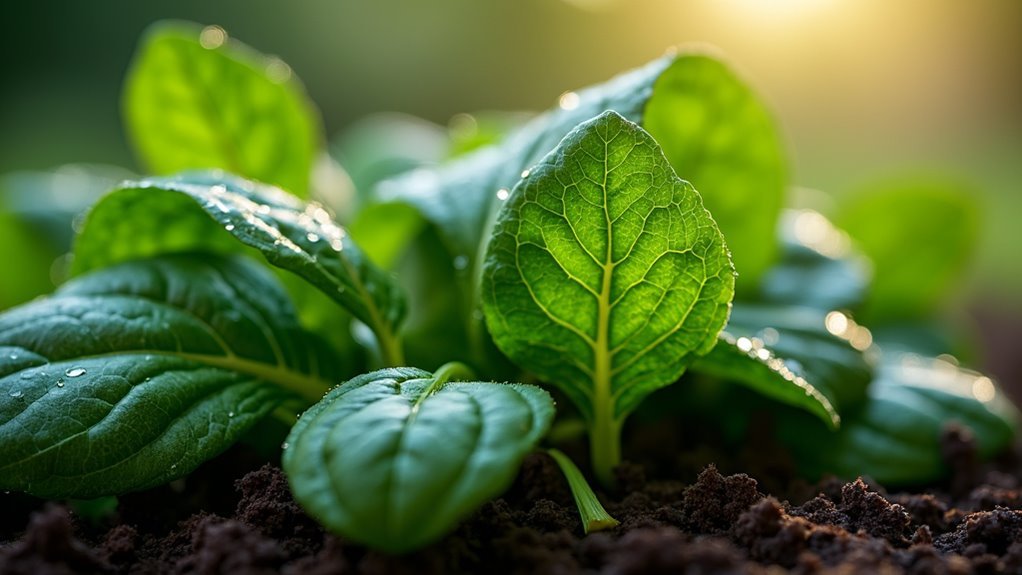
When you’re looking to naturally boost your hemoglobin levels, spinach stands out as one of the most powerful leafy greens you can add to your diet.
This nutritional powerhouse delivers approximately 2.7 mg of iron per 100 grams, providing essential support for hemoglobin production.
What makes spinach particularly effective is its vitamin C content, which helps your body absorb the non-heme iron more efficiently.
You’ll also benefit from spinach’s rich folate content, a vital nutrient that promotes red blood cells maturation and maintains healthy hemoglobin levels.
Kale: Vitamin C Enhanced Iron Absorption
While spinach gets much of the attention, kale deserves recognition as another exceptional hemoglobin-boosting green that offers a unique advantage in iron absorption.
You’ll get about 1 mg of non-heme iron per cooked cup, but kale’s secret weapon is its impressive vitamin C content—approximately 53 mg per cup. This vitamin C dramatically enhances your body’s ability to absorb the plant-based iron, making kale particularly effective for raising hemoglobin levels and fighting iron deficiency anemia.
Kale also provides folate and antioxidants that support red blood cell production and overall blood health.
When you’re making dietary changes to boost hemoglobin, combining kale with other iron-rich foods maximizes absorption and delivers the best results for your blood health goals.
Swiss Chard: Folate for Red Blood Cell Maturation

Swiss chard stands out among leafy greens for its exceptional folate content, delivering approximately 35% of your daily recommended intake in just one cooked cup. This nutrient-dense vegetable plays a significant role in red blood cell maturation and hemoglobin production, making it invaluable for maintaining healthy blood levels.
| Nutrient | Amount per Cup | Benefit |
|---|---|---|
| Folate | 35% DV | Red blood cell formation |
| Iron | Moderate levels | Hemoglobin synthesis |
| Vitamin C | High content | Enhanced iron absorption |
Folate in swiss chard prevents megaloblastic anemia, where oversized, ineffective red blood cells can’t transport oxygen properly. Combined with iron and vitamin C, this leafy green creates ideal conditions for iron absorption. If you’re dealing with low hemoglobin levels, incorporating swiss chard supports nutritional balance while promoting healthy blood cell development.
Frequently Asked Questions
What Leafy Vegetables Increase Hemoglobin Levels?
You’ll boost your hemoglobin levels by eating spinach, kale, and collard greens. These iron-rich vegetables help your body produce more red blood cells, especially when you combine them with vitamin C sources.
Which Leaf Increases Hemoglobin?
You’ll find spinach increases hemoglobin most effectively among leafy greens, containing 2.7mg iron per 100 grams. Kale and collard greens also boost levels considerably, providing essential non-heme iron for healthy blood production.
What to Eat for Increasing Hemoglobin?
You should eat iron-rich foods like red meat, beans, and lentils. Include vitamin C sources such as oranges and strawberries to enhance absorption. Don’t forget fortified cereals and seafood for additional hemoglobin support.
What Leafy Greens Are Good for Anemia?
You’ll benefit from eating spinach, kale, and collard greens for anemia. These iron-rich vegetables help boost hemoglobin production. Kale’s vitamin C enhances iron absorption, while collard greens provide folate for healthy red blood cell formation.


Leave a Reply