

You’ll maximize dark chocolate’s heart benefits by timing consumption strategically throughout your day. Morning offers peak metabolic rates and insulin sensitivity for ideal nutrient processing, while afternoon consumption provides cardiovascular support through enhanced blood flow and reduced blood pressure. Pre-workout timing boosts circulation, and post-exercise consumption aids recovery through improved muscle function. Avoid evening consumption since declining metabolic rates increase fat storage risk and caffeine can disrupt sleep-critical cardiovascular recovery processes. Strategic timing reveals chocolate’s full potential.
Morning Consumption for Enhanced Metabolic Benefits

When you consume dark chocolate in the morning, you’re capitalizing on your body’s naturally elevated metabolic rates and peak insulin sensitivity. This timing allows faster breakdown of sugars and fats while reducing fat storage risk.
Morning consumption of dark chocolate delivers an immediate energy boost and mood elevation, supporting heart health through improved blood flow.
You’ll find that enjoying dark chocolate early helps curb cravings effectively, promoting better weight management throughout your day.
The antioxidant properties work efficiently during morning consumption, contributing to cardiovascular health by regulating cholesterol levels.
This strategic timing maximizes dark chocolate’s benefits while your body efficiently processes carbohydrates, making it a suitable addition to your heart-healthy morning routine.
Afternoon Dark Chocolate for Cardiovascular Support
While morning offers metabolic advantages, afternoon dark chocolate consumption provides distinct cardiovascular benefits that complement your body’s natural rhythms.
Dark chocolate’s flavonoids enhance blood flow and lower blood pressure, making it perfect for heart health support. The afternoon timing optimizes insulin sensitivity, reducing fat storage risks and boosting metabolic health.
Here’s how afternoon dark chocolate supports your cardiovascular system:
- Combat post-lunch fatigue while delivering magnesium for muscle recovery and blood pressure regulation
- Enhance insulin sensitivity during your body’s natural afternoon rhythm for better metabolic function
- Provide antioxidants that promote long-term cardiovascular benefits when consumed as one-ounce servings
- Minimize sugar spikes when paired with balanced meals, maximizing heart health advantages
This strategic timing transforms your afternoon snack into cardiovascular support.
Pre-Exercise Timing to Boost Blood Flow
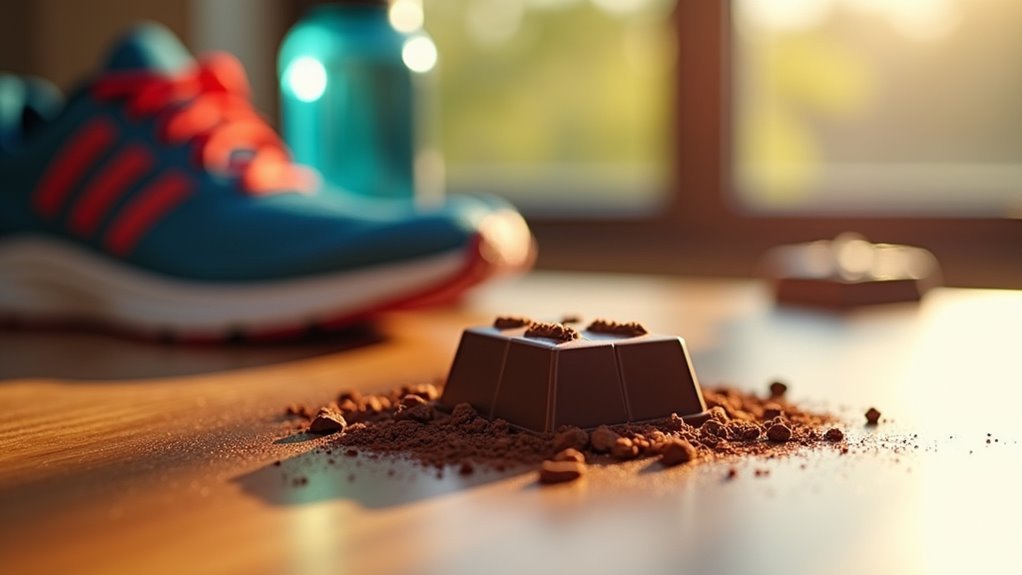
Since your body primes itself for physical activity, consuming dark chocolate about 30 minutes before exercise creates an ideal window for enhanced blood flow and performance. The flavonoids in dark chocolate improve vascular function, while magnesium supports muscle function and recovery during your pre-workout routine.
| Benefit | Component | Timeline |
|---|---|---|
| Enhanced blood flow | Flavonoids | 30 minutes before |
| Energy boost | Carbohydrates | Immediate fuel |
| Reduced oxidative stress | Antioxidants | During exercise |
You’ll experience improved mood and motivation, making your workout more effective. The antioxidants help combat exercise-induced stress, while the quick energy boost fuels your activity. This strategic timing maximizes dark chocolate’s heart health benefits, optimizing circulation and cardiovascular support precisely when your body needs it most.
Post-Workout Recovery and Heart Protection
After your workout concludes, dark chocolate becomes a powerful ally for both muscle recovery and cardiovascular protection. The post-workout period offers unique health benefits when you consume chocolate strategically. Your body’s heightened insulin sensitivity allows better sugar utilization without fat storage risks, while magnesium supports muscle function and reduces cramping.
Here’s how chocolate enhances your post-workout recovery:
- Improve blood flow – Flavonoids enhance circulation, supporting heart health after physical activity.
- Muscle recovery – Magnesium content aids muscle function and prevents post-exercise cramps.
- Energy replenishment – Natural sugars restore depleted energy levels and combat fatigue.
- Reduce stress and inflammation – Antioxidants fight exercise-induced oxidative damage.
This timing maximizes chocolate’s heart-protective properties while supporting your body’s natural recovery processes.
Evening Avoidance for Optimal Heart Health

Though chocolate offers impressive heart-health benefits throughout the day, evening avoidance can undermine these advantages and potentially harm your cardiovascular system.
Your metabolic rates naturally decline at night, reducing insulin sensitivity and making your body store chocolate’s sugars as fat rather than processing them efficiently. This leads to elevated blood sugar levels that strain your heart.
The caffeine and theobromine content in chocolate can disrupt your sleep, elevating your heart rate when it should be resting. Poor sleep interferes with essential recovery processes your cardiovascular system needs for ideal functioning.
For effective weight management and heart health, resist those nighttime chocolate cravings. The best time for chocolate consumption is earlier in the day when your metabolism efficiently processes its nutrients.
Frequently Asked Questions
What Is the Best Time to Eat Chocolate?
You’ll get the best energy boost eating chocolate in the morning when your metabolism’s highest. Afternoon consumption combats energy dips, but you should avoid evening chocolate since it’ll disrupt your sleep patterns.
Is It Better to Eat Chocolate Before or After Lunch?
You’ll benefit more from eating chocolate after lunch rather than before. It helps combat energy dips, aids muscle recovery, and when paired with your meal, prevents sugar spikes while maximizing satisfaction.
How Much Chocolate Is Good for Your Heart?
You’ll benefit from eating about one ounce of dark chocolate weekly. Choose varieties with 70% cocoa or higher for maximum heart health benefits. Don’t exceed this amount, as moderation’s vital for cardiovascular protection.
Is It Good or Bad to Eat Chocolate at Night?
You shouldn’t eat chocolate at night because it contains caffeine and theobromine that’ll elevate your heart rate, disrupt sleep, and reduce insulin sensitivity, making your body store more fat.


Leave a Reply