

Chocolate affects your blood pressure medication through two main compounds: theobromine, which can increase systolic pressure and counteract your medication’s benefits, and flavanols, which may enhance your drug’s effectiveness by boosting nitric oxide levels. Dark chocolate containing flavanols might lower your blood pressure by 2-3 mm Hg daily, potentially requiring dosage adjustments. You should consume chocolate at least two hours apart from taking your medication to avoid absorption interference. Understanding these interactions will help you optimize your treatment strategy.
Understanding Theobromine’s Impact on Blood Pressure Medications

When you consume chocolate, theobromine—the compound responsible for cocoa’s bitter taste—enters your bloodstream and can directly influence how your blood pressure medications work. This interaction creates a complex relationship with your hypertension treatment. High-dose theobromine from cocoa can actually increase your systolic blood pressure, potentially counteracting your antihypertensive medications’ effects.
However, the picture isn’t entirely negative. When you eat flavanol-rich chocolate products, you’re also supporting your endothelial function and promoting vasodilation.
These beneficial effects can complement your blood pressure medications by improving your cardiovascular health. Your individual response varies depending on the specific antihypertensive drugs you’re taking and your body’s unique reaction to theobromine, making personalized medical guidance essential.
Flavanol Content and Antihypertensive Drug Interactions
When you consume dark chocolate rich in flavanols like epicatechin and catechin, these compounds can enhance your antihypertensive medications by boosting nitric oxide levels and improving blood vessel function.
You’ll need to understand how these interactions might require adjustments to your medication dosages, as the combined effects could lead to more significant blood pressure reductions than expected.
Your doctor should monitor these potential synergistic effects to guarantee your treatment remains safe and effective.
Flavanol-Drug Interaction Mechanisms
Dark chocolate’s flavanols, particularly epicatechin, can markedly enhance your antihypertensive medications’ effectiveness by targeting the same biological pathways these drugs use to lower blood pressure.
When you consume flavanol-rich cocoa, these compounds improve your endothelial function and promote vasodilation through nitric oxide pathways—the exact mechanisms many blood pressure medications rely on. This creates a synergistic effect that can amplify your drugs’ therapeutic effects, potentially leading to greater hypertension control than either treatment alone.
However, you’ll need to exercise caution with your chocolate choices. Products high in sugar and saturated fats can undermine flavanols’ benefits.
Researchers are still investigating specific interactions between cocoa compounds and different antihypertensive drug classes to develop ideal treatment protocols for hypertension management.
Medication Dosage Adjustments
If you’re taking antihypertensive medications and regularly consume flavanol-rich chocolate, your doctor may need to adjust your drug dosages to prevent potentially dangerous blood pressure drops. Flavanol-rich cocoa can lower systolic pressure by 2.8 mm Hg and diastolic by 2.2 mm Hg, potentially creating additive effects with your medications.
| Cocoa Intake Level | Potential Dosage Adjustment |
|---|---|
| None to Light | Standard medication doses |
| Moderate (25g daily) | Monitor closely, minor adjustments |
| High (50g+ daily) | Significant reductions possible |
| Very High (75g+ daily) | Major adjustments needed |
| Inconsistent intake | Frequent monitoring required |
Your healthcare provider should monitor your blood pressure closely when adjusting cocoa intake to optimize health outcomes while preventing hypotension. This careful balance helps manage cardiovascular disease effectively while incorporating beneficial flavanols. Always seek medical advice before making significant dietary changes.
Optimal Timing for Chocolate Consumption With Blood Pressure Pills

Although chocolate offers potential cardiovascular benefits, you’ll need to carefully time its consumption around your blood pressure medications to avoid interference. The timing of chocolate consumption is essential for maintaining antihypertensive effectiveness. You should consume chocolate at least two hours apart from taking your medication to maximize therapeutic benefits while minimizing potential interactions.
Dark chocolate rich in flavanols can complement your blood pressure treatment, with studies showing 50g of daily cocoa may reduce readings by 2-3 mm Hg.
However, eating chocolate too close to medication intake could interfere with drug absorption. To optimize both chocolate’s cardiovascular benefits and your medication’s effectiveness, space them appropriately throughout your day.
Always consult your healthcare provider to develop a personalized timing strategy.
Clinical Evidence on Cocoa’s Effects During Hypertension Treatment
When researchers examined cocoa’s impact on blood pressure management, they discovered compelling evidence that supports its use alongside conventional hypertension treatment. Studies at medical centers show that dark chocolate consumption can markedly reduce both systolic blood pressure and diastolic blood pressure in patients with elevated readings.
| Study Parameter | Clinical Finding |
|---|---|
| Daily cocoa consumption (6.3g) | Systolic BP reduced by 2.9 mm Hg |
| Diastolic blood pressure effect | Decreased by 1.9 mm Hg |
| Cardiovascular risk improvement | Enhanced vasodilation via nitric oxide |
The flavanols in cocoa products enhance your medication’s effectiveness by improving blood vessel function. However, you should discuss cocoa consumption with your healthcare provider, as gastrointestinal side effects may occur. While promising for hypertension management, more research is needed to fully understand long-term cardiovascular risk benefits.
Safe Chocolate Dosages for Patients Taking Blood Pressure Medications
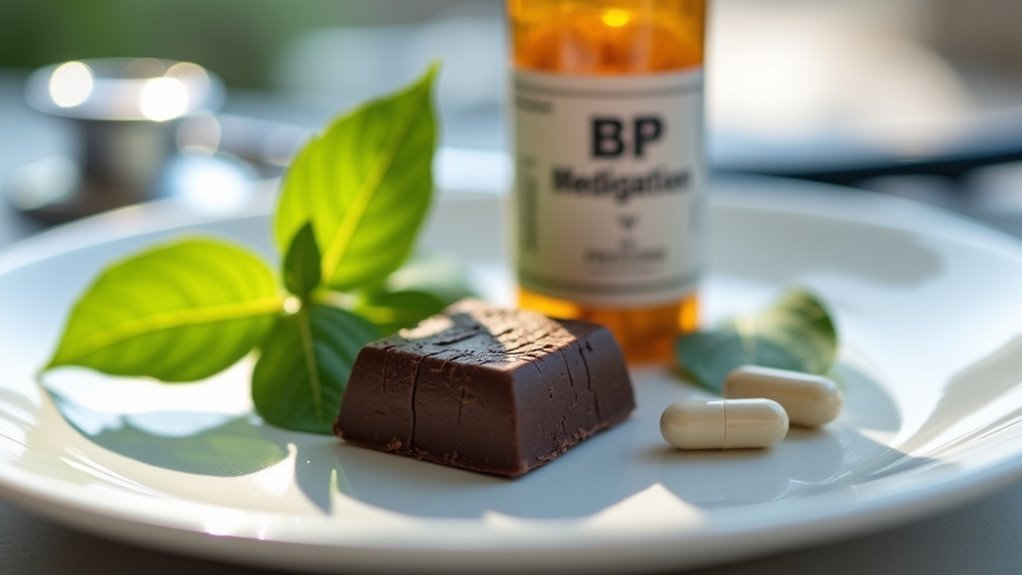
While dark chocolate offers cardiovascular benefits, determining the right amount becomes essential for patients on blood pressure medications. Your daily intake can greatly impact your hypertension treatment effectiveness.
Here’s your safe dosage guide:
- Limit to 50 grams daily – This amount provides blood pressure benefits without overwhelming your medication’s effects.
- Choose 70% cacao minimum – Higher concentrations deliver more flavanols while requiring smaller portions.
- Monitor your readings consistently – Track blood pressure changes when introducing dark chocolate into your routine.
- Time consumption strategically – Space chocolate intake away from medication dosage times to minimize interactions.
You’ll need to consult your healthcare provider before making dietary changes. They can adjust your medication regimen based on chocolate’s 2-3 mm Hg blood pressure reduction effects, ensuring effective treatment outcomes.
Monitoring Blood Pressure When Combining Chocolate With Medications
Since dark chocolate can amplify your blood pressure medication’s effects, you’ll need to establish a systematic monitoring routine to track how this combination affects your readings. The flavanols in cocoa can lower your blood pressure by 2-3 mm Hg daily, potentially enhancing your antihypertensive medications’ impact.
| Monitoring Schedule | Action Required |
|---|---|
| Daily readings | Track baseline changes with chocolate intake |
| Weekly averages | Compare against pre-chocolate consumption levels |
| Monthly patterns | Identify trends and medication effectiveness |
| Healthcare visits | Report findings to your doctor |
You should monitor consistently because individual responses vary greatly. Remember that sugar and saturated fat in some chocolate products can counteract cocoa’s cardiovascular health benefits, making careful tracking essential for your safety.
Frequently Asked Questions
Is It Okay to Eat Chocolate With High Blood Pressure?
You can eat dark chocolate with high blood pressure if it’s at least 70% cocoa and consumed moderately. Don’t exceed 50g daily, and consult your doctor first, especially if you’re taking medications.
How Quickly Does Dark Chocolate Lower Blood Pressure?
You’ll typically see dark chocolate’s blood pressure-lowering effects within a few weeks of regular consumption. Studies show systolic pressure can drop 2-3 mm Hg after consistently eating dark chocolate daily.
Does Chocolate Push up Blood Pressure?
Dark chocolate typically doesn’t push up your blood pressure. It actually contains flavanols that help lower it by 2-3 mm Hg. However, milk chocolate’s added sugars might raise it.
What Is the Number One Food That Causes High Blood Pressure?
You’ll find processed and packaged foods are the number one culprits causing high blood pressure. They’re loaded with hidden sodium that spikes your blood pressure, often exceeding recommended daily limits without you realizing it.


Leave a Reply