

To boost curcumin absorption for chronic pain relief, you’ll need to pair it with piperine from black pepper, which can increase bioavailability by up to 2,000%. Take 500-2,000mg daily divided into two doses spaced 8-12 hours apart with meals containing healthy fats like olive oil. Choose supplements with 95% curcumin extract and included piperine for maximum potency. The strategies below will help you access curcumin’s full anti-inflammatory potential.
Understanding Curcumin’s Bioavailability Challenge
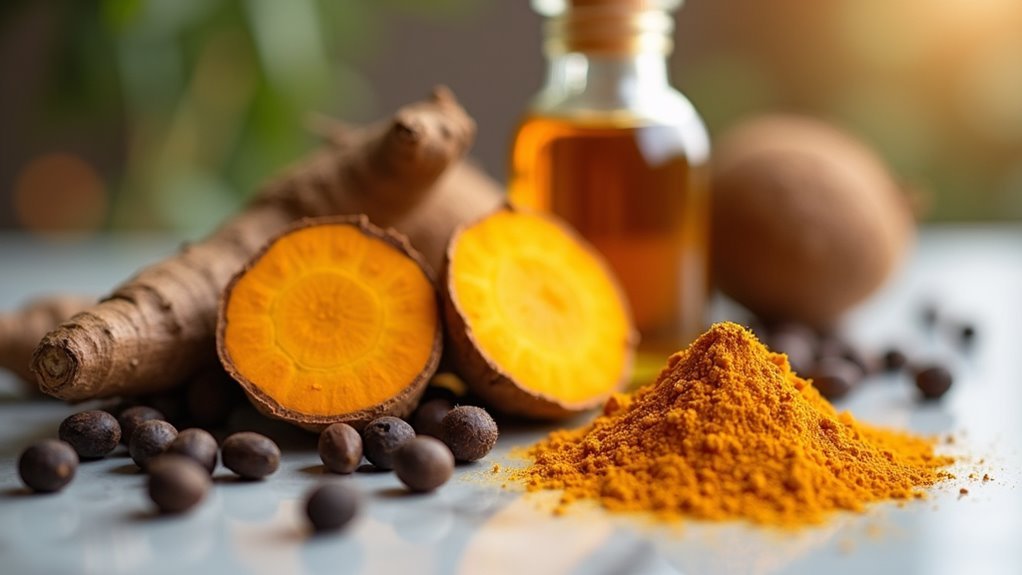
While curcumin shows remarkable promise for treating chronic pain, your body faces a significant hurdle in actually using this powerful compound.
The bioavailability challenge stems from curcumin’s unique properties – it’s fat-soluble rather than water-soluble, making absorption difficult. When you take standard curcumin supplements, only a tiny percentage enters your bloodstream because your liver rapidly metabolizes it before it can circulate effectively.
Standard curcumin supplements deliver only minimal amounts to your bloodstream due to rapid liver metabolism and poor absorption rates.
This poor absorption severely limits curcumin’s anti-inflammation benefits for chronic pain relief. Your body fundamentally flushes out most of the compound before it can work on reducing pain and inflammation.
That’s why many people don’t experience curcumin’s full therapeutic potential when taking basic supplements. Understanding this absorption barrier is vital because it explains why combining curcumin with enhancers like piperine dramatically improves results.
The Science Behind Piperine and Black Pepper Enhancement
You’ll find that piperine works through a fascinating mechanism that directly targets curcumin’s absorption barriers.
This compound from black pepper helps curcumin pass through your intestinal wall more easily while simultaneously slowing down its breakdown in your liver.
Clinical research has proven this partnership’s effectiveness, with studies showing that just 20 mg of piperine can dramatically boost your body’s ability to absorb and utilize curcumin.
Piperine’s Absorption Mechanism
When you take curcumin on its own, your body struggles to absorb and utilize this powerful compound effectively.
That’s where piperine steps in to revolutionize bioavailability. This black pepper extract works through two key mechanisms that dramatically enhance curcumin absorption.
First, piperine facilitates curcumin’s passage through your intestinal wall, allowing more of the compound to enter your bloodstream.
Second, it inhibits specific liver enzymes responsible for breaking down curcumin, fundamentally slowing its metabolism and keeping it active longer in your system.
This dual action results in higher plasma levels and prolonged anti-inflammatory effects.
When you combine 20mg of piperine with 2 grams of curcumin, you’re maximizing the health benefits by ensuring ideal absorption and sustained therapeutic activity.
Clinical Research Findings
Multiple clinical studies have validated piperine’s remarkable impact on curcumin absorption, with research demonstrating up to a 2,000% increase in bioavailability when the two compounds are combined.
When you take 20 mg of piperine with 2 grams of curcumin, you’ll experience enhanced intestinal absorption and reduced liver breakdown. Research confirms this combination amplifies their collective anti-inflammatory and antioxidant properties, delivering superior health outcomes for chronic pain management.
Key clinical findings include:
- Enhanced bioavailability – Piperine dramatically improves curcumin’s bloodstream presence
- Reduced inflammatory markers – CRP and IL-6 levels decrease considerably
- Synergistic effects – Combined compounds outperform individual supplementation
- Chronic disease management – Meta-analyses support improved outcomes for inflammatory conditions
These evidence-based results demonstrate why you should prioritize piperine-enhanced curcumin formulations for ideal chronic pain relief.
Timing Your Curcumin Intake for Maximum Effectiveness
You’ll maximize curcumin’s pain-fighting potential by strategically timing your doses throughout the day.
Taking your supplements with fat-containing meals and spacing them 8-12 hours apart guarantees steady absorption and sustained anti-inflammatory effects.
The key lies in understanding ideal dosing windows, smart food combinations, and proper supplement intervals that work with your body’s natural rhythms.
Best Daily Dosing Times
Since curcumin’s bioavailability depends heavily on proper timing, you’ll want to strategically plan your doses around meals and daily routines. Your body weight determines the ideal dosage—approximately 3 mg per kg—but when you take it matters just as much for best results.
For maximum curcumin absorption, follow these daily dosing guidelines:
- Take with a fatty meal to enhance dissolution and uptake
- Split your daily dose into two portions, spaced 8-12 hours apart
- Time doses shortly before or after meals when digestive activity peaks
- Maintain consistent timing by taking curcumin at the same hours daily
This strategic timing approach helps maintain steady curcumin levels in your bloodstream while maximizing absorption efficiency for chronic pain management.
Food Pairing Strategies
Pairing curcumin with the right foods transforms a poorly absorbed supplement into a potent therapeutic tool for chronic pain relief.
Black pepper stands as your most powerful ally, containing piperine that boosts absorption by up to 2,000%. You’ll maximize turmeric’s bioavailability by combining curcumin supplements with healthy fats like olive oil or coconut oil during meals. Since curcumin is fat-soluble, it requires a fatty environment for ideal absorption.
These food pairing strategies work best when you time your intake around meals. Taking curcumin shortly before or after eating maintains steady bloodstream levels.
You’ll enhance effectiveness further by splitting your daily dose into two servings, consumed 8-12 hours apart with fat-rich meals to guarantee consistent therapeutic benefits.
Supplement Spacing Guidelines
Although curcumin’s therapeutic potential is well-established, your dosing schedule determines whether you’ll achieve meaningful pain relief or waste your investment entirely.
Strategic spacing maximizes curcumin absorption while maintaining therapeutic blood levels throughout the day.
Follow these supplement spacing guidelines to optimize your curcumin supplement’s health benefits:
- Split daily doses: Divide your total daily intake into two separate doses of curcumin taken 8-12 hours apart.
- Time with meals: Take each dose shortly before or after fatty meals to enhance absorption.
- Include piperine: Choose supplements containing black pepper extract or add fresh black pepper to meals.
- Maintain consistency: Stick to the same timing daily to establish steady therapeutic levels.
This approach guarantees sustained pain management while preventing the rapid elimination that reduces curcumin’s effectiveness.
Combining Curcumin With Healthy Fats for Better Absorption
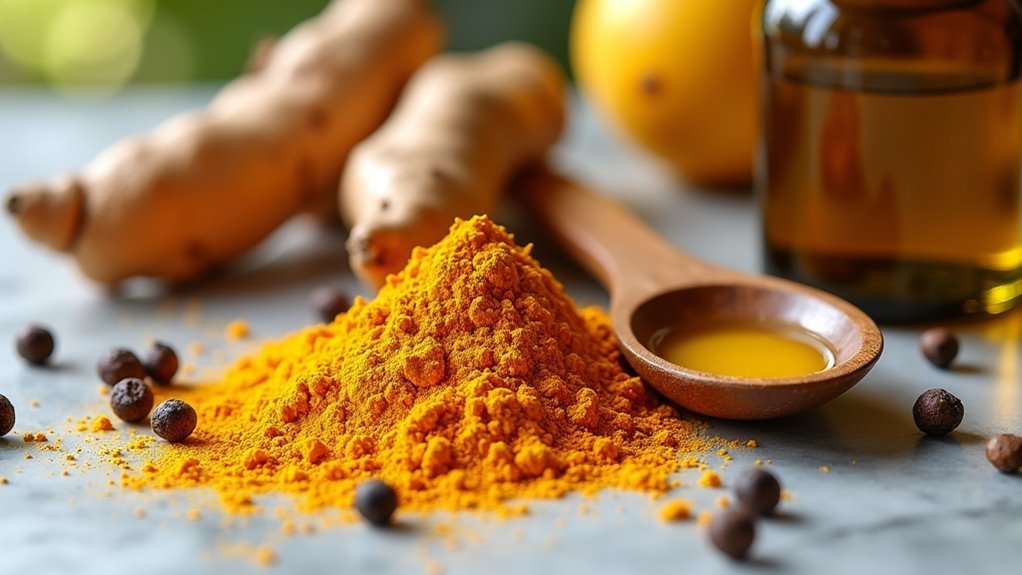
While curcumin offers powerful anti-inflammatory properties for chronic pain relief, its fat-soluble nature means you’ll need to pair it with healthy fats to access its full potential. Research shows that combining turmeric’s active compound with dietary fats can increase absorption by up to 7 times compared to taking it alone, greatly improving bioavailability.
| Fat Source | Best Pairing Method | Absorption Boost |
|---|---|---|
| Coconut Oil | Golden milk latte | Up to 7x higher |
| Olive Oil | Cooking with turmeric | Considerably enhanced |
| Avocado | Smoothie blend | Improved uptake |
When you consume curcumin with healthy fats, you’ll maintain steady bloodstream levels for prolonged anti-inflammatory effects. This simple strategy transforms curcumin from a poorly absorbed supplement into a powerful therapeutic tool for chronic pain management.
Optimal Dosage Strategies for Chronic Pain Relief
You’ll need to follow evidence-based dosing guidelines to maximize curcumin’s pain-relieving benefits while minimizing potential side effects.
Most clinical studies support taking 500-2,000 mg daily, with 1,000 mg being the sweet spot for chronic pain management.
You’ll also want to take into account when and how often you take your doses, as timing and frequency can greatly impact how well your body absorbs and utilizes this powerful compound.
Evidence-Based Dosing Guidelines
Since curcumin’s therapeutic potential depends heavily on proper dosing, understanding evidence-based guidelines becomes essential for achieving meaningful chronic pain relief.
Clinical research provides clear frameworks for maximizing curcumin absorption while maintaining safety.
Evidence-based dosing guidelines include:
- Standard therapeutic range: 500-2,000 mg daily for significant anti-inflammatory effects
- Body weight calculation: Up to 3 mg per kg (approximately 200 mg for 150 lb individuals)
- Enhanced absorption protocol: Combine with black pepper extract containing piperine for 2,000% increased bioavailability
- Timing strategy: Take with fatty meals to optimize uptake and effectiveness
While doses up to 8,000 mg daily are considered safe, you’ll achieve better results focusing on absorption enhancement rather than simply increasing dosage.
Proper timing and combination strategies prove more effective than high-dose approaches alone.
Timing and Frequency
Three critical timing factors determine curcumin’s effectiveness for chronic pain management: dosing frequency, meal coordination, and daily consistency.
You’ll maximize absorption by taking your curcumin supplements twice daily rather than a single large dose. Space these doses 8 to 12 hours apart to maintain steady blood levels throughout the day.
Take your supplements shortly before or after meals containing healthy fats. The lecithin in fatty foods greatly enhances curcumin absorption, making your dosage more effective for chronic pain relief.
Timing consistency matters just as much as frequency – establish a routine by taking your supplements at the same times each day.
This approach guarantees ideal curcumin bioavailability while maintaining therapeutic levels in your system for sustained pain management benefits.
Choosing the Right Curcumin Supplement Form
Five critical factors determine whether your curcumin supplement will effectively combat chronic pain or simply waste your money.
Five critical factors separate effective curcumin supplements from expensive placebos when targeting chronic pain relief.
When selecting high-quality products, you’ll want to focus on these essential elements that directly impact absorption and bioavailability:
- Curcumin concentration – Choose supplements containing at least 95% curcumin extract for maximum potency.
- Black pepper enhancement – Look for piperine inclusion, which boosts absorption by up to 2,000%.
- Advanced delivery systems – Consider nanoemulsion or phospholipid formulations for superior bioavailability.
- Quality verification – Check for USP-verified marks ensuring independent testing for contaminants and potency.
Recommended dosages from clinical studies range between 500-2,000 mg daily.
Your curcumin supplement should align with these proven amounts while incorporating absorption-enhancing technologies to maximize its pain-fighting potential.
Foods That Naturally Boost Curcumin Bioavailability
Beyond choosing the right supplement form, your kitchen holds powerful allies that can greatly amplify curcumin’s absorption without requiring expensive formulations.
Black pepper stands as your most potent weapon—its piperine content can skyrocket curcumin absorption by up to 2,000%. Simply adding a pinch of black pepper to turmeric-containing meals transforms bioavailability.
Healthy fats serve as another vital enhancer. Since curcumin’s fat-soluble, pairing turmeric with olive oil, coconut oil, avocado, or nut butters markedly improves uptake. Cook your turmeric dishes with these fats for ideal results.
Don’t overlook lecithin-rich foods like eggs and soy products. Their emulsifying properties help boost bioavailability further.
Dividing Daily Doses Throughout the Day
While choosing the right foods enhances curcumin absorption, timing your doses strategically can multiply these benefits even further. Dividing your daily curcumin intake into two separate doses, spaced 8 to 12 hours apart, creates more consistent blood levels for managing chronic pain effectively.
For ideal results, follow this dosing strategy:
- Split 500-2,000 mg daily into two equal portions to prevent side effects while maximizing absorption.
- Time doses with fat-containing meals to leverage lecithin’s absorption-boosting properties.
- Add black pepper containing piperine to each dose, greatly increasing bioavailability.
- Maintain consistent timing daily to guarantee steady curcumin levels in your bloodstream.
This divided approach prevents overwhelming your digestive system while maintaining therapeutic concentrations throughout the day, making your curcumin supplementation more effective for chronic pain management.
Potential Interactions and Safety Considerations
Although curcumin offers significant benefits for chronic pain management, you must understand its potential interactions and safety considerations before incorporating it into your routine.
| Risk Category | Safety Concerns |
|---|---|
| Blood Thinners | Curcumin may increase bleeding risk |
| Diabetes Medications | Can cause dangerously low blood sugar |
| High Dose Side Effects | Diarrhea, headache, nausea possible |
| Special Populations | Avoid during pregnancy/nursing |
| Allergic Reactions | Risk for Zingiberaceae family sensitivity |
Turmeric supplements require careful monitoring when combined with medications. You’ll want to consult your healthcare provider before starting, especially if you take blood thinners or diabetic medications. Take supplements with food to reduce potential side effects. If you have kidney stones, gallbladder issues, or known allergies to turmeric, avoid these interactions altogether.
Measuring Your Response to Curcumin Supplementation
Once you’ve safely incorporated curcumin into your pain management routine, you’ll need to systematically track its effectiveness.
Measuring your response to curcumin supplementation requires consistent monitoring to determine if improved absorption translates to reduced chronic pain.
Here’s how to evaluate your progress:
- Use standardized pain scales to rate your symptoms before and after starting curcumin supplementation.
- Maintain a detailed journal documenting changes in pain levels, side effects, and overall well-being.
- Monitor inflammatory markers like C-reactive protein through regular blood tests.
- Keep consistent dosage timing to establish clear correlations between supplementation and outcomes.
Be mindful that concurrent dietary changes or other supplements can influence curcumin absorption and skew your results when reviewing its impact on chronic pain management.
Frequently Asked Questions
What Increases the Absorption of Curcumin?
You’ll increase curcumin absorption by combining it with piperine from black pepper, consuming it with fatty meals, choosing enhanced bioavailability supplements, and adding digestion-supporting ingredients for maximum effectiveness.
How to Take Curcumin for Best Absorption?
You’ll maximize curcumin absorption by taking it with black pepper and a fatty meal. Split your 500-2,000mg daily dose into two portions taken 8-12 hours apart for best results.
How Can You Improve the Bioavailability of Curcumin?
You’ll dramatically improve curcumin’s bioavailability by combining it with black pepper’s piperine, consuming it with healthy fats like coconut oil, and choosing specialized supplement formulations designed for enhanced absorption.
What Is the Best Bioavailable Form of Curcumin?
You’ll find the best bioavailable curcumin forms combine 95% curcumin extract with piperine or phospholipids like Meriva. Nanoformulated supplements offer superior absorption. Take them with fatty meals to maximize effectiveness.


Leave a Reply