

Cruciferous vegetables like broccoli, kale, and Brussels sprouts heal your liver inflammation through glucosinolates—sulfur compounds your gut bacteria convert into powerful indole metabolites that directly target liver fat accumulation and chronic inflammation. These vegetables activate phase II detoxification enzymes, reduce key inflammatory markers like TNF-α and IL-6, and support beneficial gut bacteria that produce anti-inflammatory compounds. You’ll need 5-10 servings daily for measurable results, though strategic food pairings can amplify their liver-healing potential.
Understanding Non-Alcoholic Fatty Liver Disease and Its Rising Prevalence
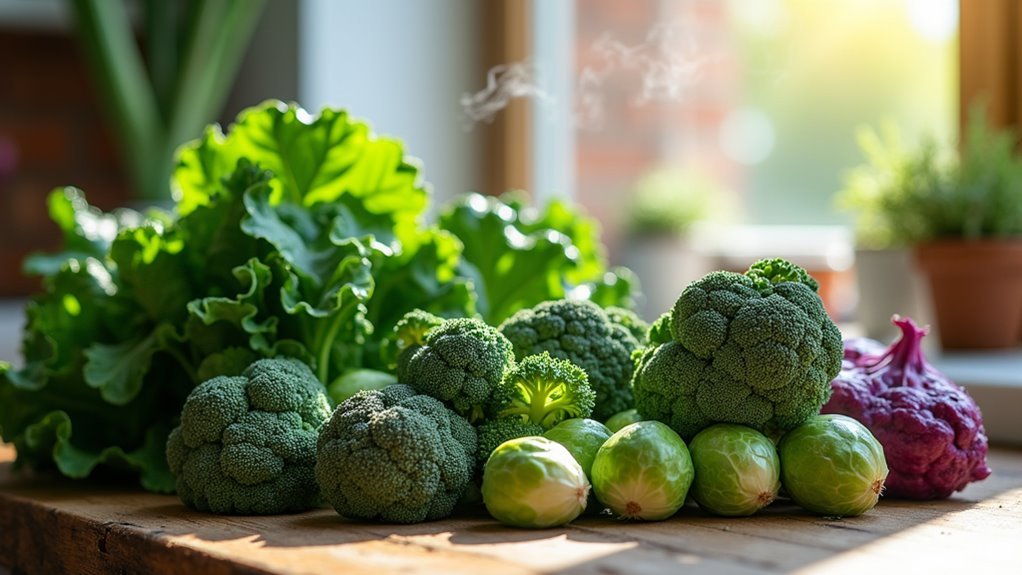
While many people associate liver disease with excessive alcohol consumption, non-alcoholic fatty liver disease (NAFLD) has emerged as one of the most common liver conditions worldwide, affecting roughly 25% of adults.
This condition involves excessive fat accumulation in your liver cells, creating a foundation for chronic inflammation that can severely compromise liver function.
If you’re dealing with obesity, your risk increases dramatically—clinical research shows you’re 7 to 10 times more likely to develop NAFLD.
The inflammation process involves macrophages that infiltrate your liver tissue, potentially progressing to cirrhosis or liver cancer.
Notably, your gut health plays an essential role in this disease progression, with beneficial bacteria producing compounds that can either protect or harm your liver depending on your overall metabolic state.
The Science Behind Indole Compounds in Cruciferous Vegetables
Your gut bacteria produce powerful compounds called indoles when they break down cruciferous vegetables like broccoli, kale, and Brussels sprouts.
These indole compounds act as natural healers for your liver, specifically targeting liver inflammation and NAFLD through their antioxidant effects.
Research reveals fascinating connections between gut health and liver function:
- Higher body mass index correlates with lower blood indole levels, suggesting obesity disrupts beneficial compound production
- Animal studies show indoles considerably reduce liver fat accumulation and inflammation, demonstrating their therapeutic role
- Indoles dampen inflammatory signals from intestinal cells, creating protective molecular pathways to your liver
This gut-liver connection highlights how your microbiota directly influences liver disease prevention and management through these powerful plant-derived compounds.
Research Findings: Lower Indole Levels Linked to Increased Liver Fat

When researchers examined 137 subjects in a groundbreaking Hepatology study, they discovered a striking inverse relationship: participants with higher body mass index consistently showed lower indole levels circulating in their blood.
This finding reveals why cruciferous vegetables play such an essential role in liver health. Clinically obese participants exhibited markedly reduced indole levels compared to lean individuals, directly correlating with increased fat accumulation in their livers.
The research demonstrates that your gut bacteria’s ability to produce indole from cruciferous vegetables directly impacts NAFLD development.
Your gut bacteria’s production of indole from cruciferous vegetables is a critical factor in preventing NAFLD progression.
Animal studies reinforced these findings, showing that indole treatment dramatically reduced liver fat accumulation and inflammation in high-fat diet models.
This evidence suggests that maintaining adequate indole levels through cruciferous vegetable consumption could prevent dangerous liver fat buildup.
Animal Studies Demonstrate Indole’s Protective Effects Against Liver Damage
Although clinical evidence provides compelling insights, controlled animal studies reveal even more dramatic proof of indole’s liver-protective capabilities. Research demonstrates that indole administration considerably reduces liver inflammation and prevents fatty liver disease development in high-fat diet models.
The protective effects work through several mechanisms:
- Reduced Fat Accumulation: Indole treatment dramatically decreases liver fat buildup in animals fed high-fat diets.
- Anti-inflammatory Action: Studies show decreased liver inflammation markers following indole administration.
- Gut-Liver Connection: Gut bacteria produce indole, creating a protective pathway between gut health and liver function.
Scientists discovered that indole influences intestinal cells to dampen inflammation linked to liver injury.
These findings emphasize indole’s therapeutic potential for managing liver damage and highlight the need for human studies exploring its role in treating non-alcoholic fatty liver disease.
Glucosinolates: The Sulfur Compounds That Power Liver Detoxification
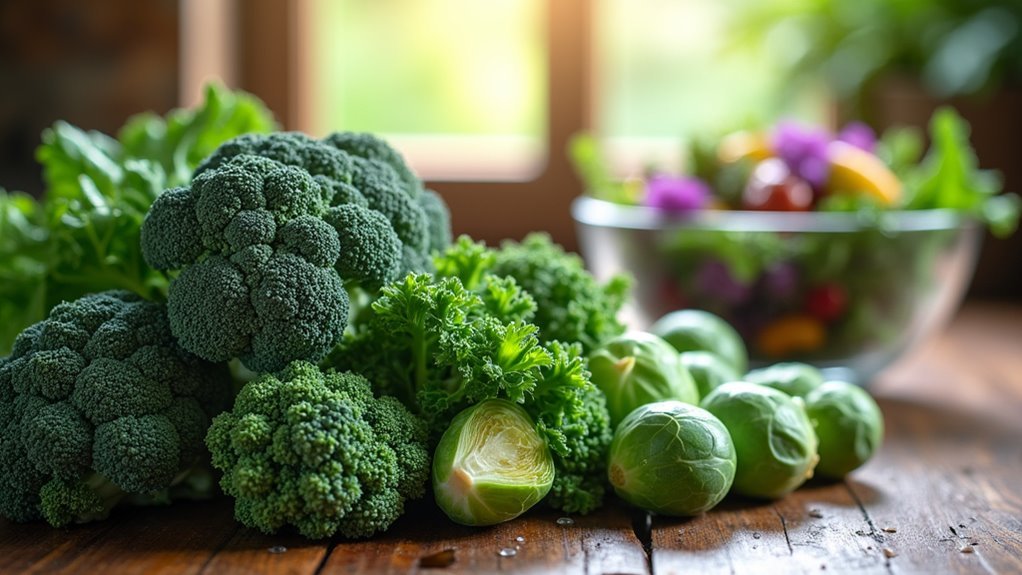
Nature’s chemistry cabinet holds a special class of sulfur-containing compounds called glucosinolates that transform your liver into a more efficient detoxification powerhouse. Found abundantly in cruciferous vegetables like broccoli and kale, these compounds remain inactive until you chew or cut them, triggering myrosinase enzyme activation.
| Glucosinolate Action | Liver Detoxification Benefit |
|---|---|
| Activates phase II enzymes | Enhanced toxin elimination |
| Produces isothiocyanates | Reduces inflammation |
| Modulates enzyme activity | Improves detoxification pathways |
| Increases glucuronidation | Faster toxin processing |
| Protects hepatic cells | Better liver health |
This activation creates powerful derivatives like isothiocyanates that specifically target your liver’s detoxification pathways. They’ll boost phase II enzymes while potentially inhibiting harmful phase I enzymes, creating an ideal environment for toxin elimination and reducing inflammation throughout your liver.
How Myrosinase Activation Transforms Inactive Compounds Into Healing Agents
The moment you bite into fresh broccoli or slice raw cabbage, you’re triggering a remarkable biochemical transformation that reveals your vegetables’ hidden therapeutic potential. This process activates myrosinase, an enzyme that converts inactive glucosinolates into powerful healing compounds.
When myrosinase springs into action, it creates bioactive isothiocyanates and indoles that directly target liver inflammation and oxidative stress. These transformed compounds don’t just support detoxification—they actively enhance your liver function by:
- Reducing fat accumulation associated with non-alcoholic fatty liver disease
- Activating phase II detox enzymes for superior toxin elimination
- Protecting liver cells from inflammatory damage
This enzymatic activation explains why fresh, properly prepared cruciferous vegetables deliver superior liver health benefits compared to cooked varieties where myrosinase activity diminishes.
Phase I and Phase II Liver Detox Pathways Enhanced by Cruciferous Vegetables
When cruciferous vegetables release their activated compounds into your system, they orchestrate a sophisticated two-phase detoxification process that transforms your liver into a more effective toxin-clearing powerhouse.
Cruciferous vegetables contain glucosinolates that enhance liver detoxification processes through dual mechanisms. These compounds modulate phase I liver enzymes like cytochrome P450, reducing toxins’ harmful effects during initial metabolism.
Simultaneously, phase II detoxification gets activated by isothiocyanates, promoting toxin conjugation and elimination. Your liver’s glucuronidation enzymes experience heightened activity, becoming more effective at detoxifying and excreting harmful compounds.
Clinical trials demonstrate that consuming 5-10 servings daily considerably boosts detoxification capacity, supporting enhanced liver function.
This dual-pathway enhancement creates ideal conditions for liver health restoration and sustained inflammation reduction.
The Gut-Liver Axis: How Intestinal Health Impacts Liver Function
Beyond your liver’s direct detoxification processes, your gut health plays a pivotal role in determining how effectively your liver can combat inflammation and maintain peak function.
The gut-liver axis represents this critical bidirectional communication pathway, where your dietary choices directly influence both systems.
When you consume cruciferous vegetables, you’re feeding beneficial gut bacteria that produce indole, a powerful compound that reduces liver inflammation and combats non-alcoholic fatty liver disease.
Here’s how this connection works:
- Your gut bacteria convert cruciferous vegetable compounds into anti-inflammatory metabolites
- Increased fiber intake promotes beneficial bacterial growth that supports liver function
- Healthy gut microbiota prevents harmful substances from entering your bloodstream
Maintaining ideal gut health through cruciferous vegetables creates a protective environment that enhances your liver’s ability to heal and function efficiently.
Anti-Inflammatory Properties of Cruciferous Vegetables for Liver Protection
While your gut microbiome sets the foundation for liver health, cruciferous vegetables deliver their most powerful protection through direct anti-inflammatory mechanisms that target liver cells themselves.
These powerhouse vegetables contain glucosinolates that convert into indole compounds, directly reducing liver inflammation and fat accumulation in your hepatic tissue.
When you consume broccoli, Brussels sprouts, and similar cruciferous vegetables regularly, you’re lowering pro-inflammatory markers throughout your system.
The fiber content in these vegetables helps prevent obesity, a major contributor to hepatic inflammation and NAFLD.
Studies show that cruciferous vegetables enhance your liver’s detoxification processes while decreasing inflammatory responses.
This anti-inflammatory action creates a protective shield around your liver, promoting ideal liver health and function.
Broccoli, Kale, and Brussels Sprouts: Top Vegetables for Liver Health
Among cruciferous vegetables, broccoli stands out as your liver’s most powerful ally due to its exceptional sulforaphane content. This powerful compound activates liver enzymes that drive detoxification processes, helping your body eliminate harmful toxins more efficiently.
Broccoli’s sulforaphane content makes it the ultimate liver detox powerhouse, activating enzymes that eliminate harmful toxins from your body.
Each of these top three cruciferous vegetables offers unique benefits for liver health:
- Broccoli delivers concentrated sulforaphane that enhances detoxification pathways
- Kale provides abundant fiber and antioxidants that combat liver inflammation and oxidative stress
- Brussels sprouts supply vitamins C and K plus anti-inflammatory compounds for optimal liver function
Regular consumption of these vegetables greatly reduces fatty liver disease risk by lowering liver fat accumulation.
Their combined anti-inflammatory properties make them essential for healing liver inflammation naturally while supporting your liver’s crucial detoxification capabilities.
Clinical Evidence: Reduced Inflammation Markers With Higher Vegetable Intake
You’ll find compelling clinical evidence showing that higher cruciferous vegetable intake directly reduces key inflammatory markers in your body.
Cross-sectional studies reveal that people consuming more of these vegetables exhibit considerably lower levels of TNF-α, IL-1β, and IL-6 – the primary markers indicating liver inflammation.
Research demonstrates you’ll need specific dosage thresholds, typically 5-10 servings daily, to achieve measurable reductions in these inflammatory compounds and activate your liver’s detoxification pathways.
Inflammatory Marker Reduction Studies
Clinical research demonstrates that cruciferous vegetables can markedly reduce inflammatory markers in your body, particularly those affecting liver health.
Cross-sectional studies reveal significant decreases in TNF-α, IL-1β, and IL-6 levels among individuals consuming higher amounts of these vegetables, showcasing powerful anti-inflammatory effects.
You’ll benefit from specific compounds that target inflammation reduction pathways:
- Sulforaphane modulates inflammatory responses while enhancing detoxification enzymes
- Indole-3-carbinol directly decreases liver inflammation through improved cellular pathways
- Phase II liver enzymes become more active, supporting natural detoxification processes
Clinical trials consistently show improved liver enzyme levels when you increase cruciferous vegetable intake.
These studies demonstrate that regular consumption doesn’t just reduce inflammatory markers—it actively supports your liver’s ability to manage inflammation naturally, contributing to the 22% reduction in total mortality observed in prospective cohort research.
Clinical Trial Dosage Requirements
While individual responses vary, research establishes that you’ll need 5-10 servings of cruciferous vegetables daily to achieve meaningful inflammation reduction in your liver.
Clinical trial data shows this intake level greatly boosts your phase II detoxification enzymes, which are essential for combating hepatic inflammation. You’ll experience notable decreases in pro-inflammatory markers like TNF-α, IL-1β, and IL-6 when consuming these amounts consistently.
The glucosinolates in cruciferous vegetables become particularly effective at this dosage range, enhancing your liver’s natural detoxification pathways.
Studies demonstrate that participants following this protocol showed improved ALT and AST enzyme levels, indicating reduced liver inflammation.
These health benefits extend beyond liver function, with research linking proper cruciferous vegetable intake to 22% lower mortality rates.
Genetic Factors That Influence Cruciferous Vegetable Metabolism
Although cruciferous vegetables offer powerful anti-inflammatory compounds, your genetic makeup greatly determines how effectively your body processes and utilizes these therapeutic substances.
Your genetic blueprint acts as the master key that unlocks—or limits—cruciferous vegetables’ healing potential in your body.
Genetic factors greatly influence your individual responses to glucosinolate metabolism, creating variations in detoxification efficacy that directly impact liver inflammation outcomes.
Your genetic polymorphisms affect three critical pathways:
- Enzyme activity levels – Variations determine how quickly you metabolize indole derivatives, influencing liver health benefits.
- Excretion rates – Some individuals rapidly eliminate isothiocyanates, requiring higher cruciferous vegetable intake for ideal therapeutic potential.
- Gut microbiota composition – Genetic influences alter beneficial compound production, affecting overall metabolism and health benefits.
Understanding these genetic variations is essential for maximizing the anti-inflammatory effects of cruciferous vegetables on your liver.
Optimal Daily Servings for Maximum Liver Detoxification Benefits
Since individual genetic variations affect how effectively you process cruciferous vegetables, determining the right daily serving amounts becomes crucial for maximizing your liver’s detoxification capacity. Research shows consuming 5-10 servings daily greatly enhances phase II detoxification enzymes, while at least one serving per meal maintains ideal liver function and reduces inflammation.
| Serving Goal | Vegetables | Benefits |
|---|---|---|
| 1-2 servings | Broccoli, kale | Basic liver support |
| 3-4 servings | Add Brussels sprouts | Enhanced detoxification |
| 5-6 servings | Include cauliflower | Ideal enzyme activity |
| 7-8 servings | Add cabbage, bok choy | Maximum inflammation reduction |
| 9-10 servings | Full variety rotation | Complete liver optimization |
This approach guarantees you’re getting diverse antioxidants and compounds that support liver detoxification, contributing to overall wellness through your healthy diet.
Combining Cruciferous Vegetables With Other Liver-Supporting Foods
When you strategically pair cruciferous vegetables with complementary liver-supporting foods, you’ll amplify their healing potential and create powerful synergistic effects that target inflammation from multiple pathways.
Combining these vegetables with healthy fats like olive oil enhances absorption of fat-soluble vitamins vital for detoxification. Omega-3 fatty acids from fatty fish work synergistically with cruciferous compounds to reduce liver inflammation more effectively than either food alone.
Transform your balanced diet with these powerful combinations:
- Berries + Broccoli: Antioxidants and anthocyanins reduce oxidative stress while cruciferous compounds support detoxification
- Garlic + Brussels Sprouts: Sulfur compounds amplify liver protection and reduce fat accumulation
- Citrus + Cauliflower: Vitamin C enhances toxin conversion for easier elimination
These strategic pairings maximize your liver’s healing capacity naturally.
Frequently Asked Questions
How Do You Treat an Inflamed Liver Naturally?
You can treat liver inflammation naturally by eating anti-inflammatory foods, avoiding alcohol and processed foods, staying hydrated, exercising regularly, getting adequate sleep, managing stress, and consuming herbs like milk thistle and turmeric daily.
What Flushes Toxins Out of the Liver?
Your liver naturally flushes toxins through bile production and enzyme activity. You’ll boost this process by drinking plenty of water, eating fiber-rich foods, and consuming antioxidant-packed vegetables that support detoxification pathways.
Do Cruciferous Vegetables Reduce Inflammation?
Yes, you’ll reduce inflammation when you eat cruciferous vegetables. They’re packed with glucosinolates and indole compounds that lower inflammatory markers like TNF-α and IL-6, helping your body fight chronic inflammation naturally.
What Is the Super Fruit for the Liver?
Grapefruit’s the super fruit for your liver. You’ll benefit from its antioxidants naringenin and naringin, which protect liver cells and reduce inflammation. It’ll support detoxification and lower liver enzymes naturally.


Leave a Reply