

You can greatly boost your liver’s phase two detoxification by eating cruciferous vegetables like broccoli, Brussels sprouts, kale, cauliflower, and cabbage. These vegetables contain glucosinolates that convert into powerful compounds like sulforaphane when you chew or cut them. Sulforaphane activates your liver’s detox enzymes, helping neutralize toxins from pollution and processed foods. Broccoli sprouts pack the highest sulforaphane content, while kale stimulates glutathione production for ideal toxin elimination and enhanced liver function.
Understanding Phase Two Liver Detoxification Pathways
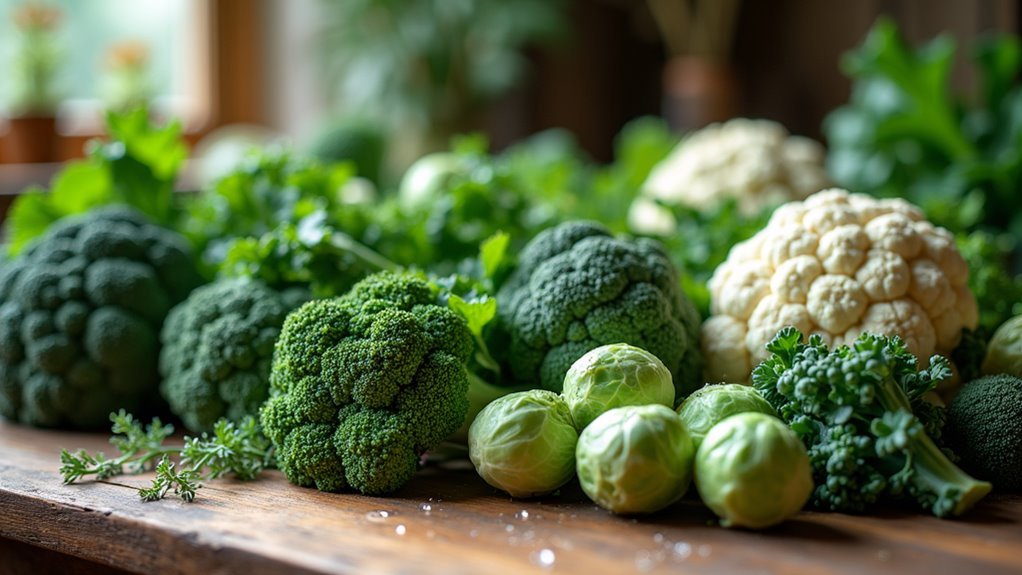
When your body encounters toxins from pollution, processed foods, or medications, your liver’s Phase Two detoxification pathway springs into action to neutralize these harmful substances.
Your liver’s Phase Two detoxification pathway activates immediately when toxins from pollution, processed foods, or medications enter your body.
This critical process involves conjugation reactions that transform fat-soluble toxins into water-soluble compounds, making them easier to eliminate through urine or bile.
Your liver relies on specialized enzymes like glutathione S-transferases and UDP-glucuronosyltransferases to complete this phase II detoxification process.
These enzymes attach molecules to toxins, fundamentally tagging them for removal from your system.
Without effective Phase Two detoxification, harmful substances accumulate in your tissues, potentially causing cellular damage.
Research shows that increasing cruciferous vegetable intake greatly enhances these enzyme activities, optimizing your liver’s ability to process and eliminate toxins efficiently.
The Science Behind Glucosinolates and Myrosinase Activation
Behind every cruciferous vegetable’s detoxification power lies a sophisticated biochemical process involving glucosinolates and their activating enzyme, myrosinase.
Glucosinolates remain dormant in intact plant cells until you cut, chew, or damage the vegetable tissue. This mechanical action brings glucosinolates into contact with myrosinase, triggering their transformation into bioactive compounds like isothiocyanates and indoles.
Here’s how this activation process enhances your liver detox:
- Tissue damage releases myrosinase from cellular compartments
- Enzymatic breakdown converts glucosinolates into active metabolites
- Enhanced bioavailability increases absorption of detox compounds
- Phase II activation stimulates glutathione S-transferases and glucuronidation enzymes
This myrosinase-mediated conversion maximizes the detoxification potential you’ll receive from cruciferous vegetables, making proper preparation methods essential for ideal liver support.
How Sulforaphane Enhances Detoxification Enzyme Activity
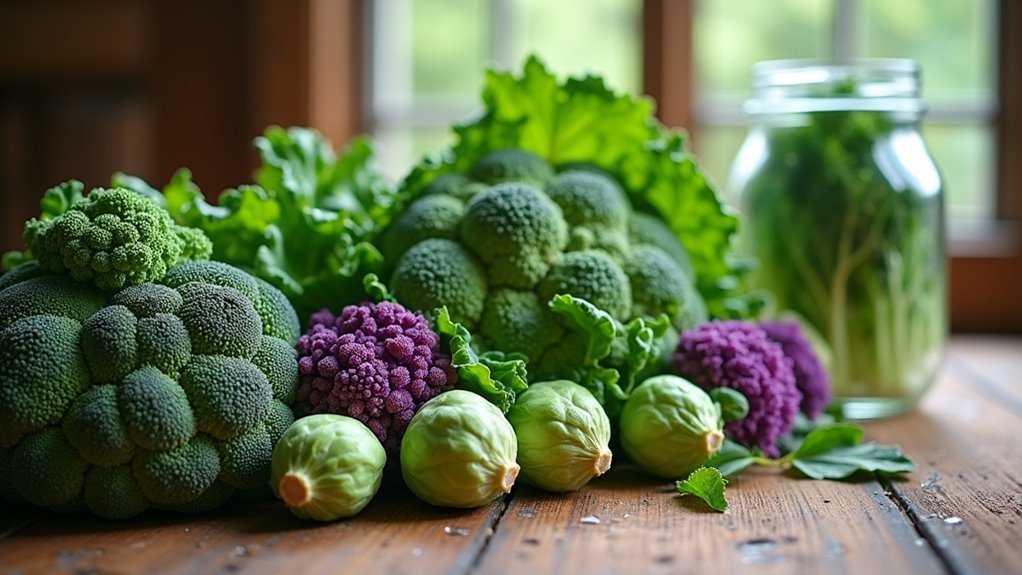
When you consume sulforaphane from cruciferous vegetables, it directly activates your body’s most powerful detoxification pathways by upregulating the Nrf2 transcription factor.
This activation triggers your liver to produce considerably more phase II enzymes, which are essential for neutralizing and eliminating toxins from your system.
You’ll also benefit from sulforaphane’s ability to prevent harmful intermediate compounds from building up during phase I detoxification, creating a more balanced and efficient cleansing process.
Sulforaphane Enzyme Activation Mechanisms
As you consume cruciferous vegetables like broccoli and Brussels sprouts, sulforaphane triggers a sophisticated cellular mechanism that greatly enhances your liver’s detoxification capacity.
This powerful compound activates the Nrf2 pathway, releasing your body’s natural defense system against harmful toxins.
Here’s how sulforaphane optimizes your phase II liver detoxification:
- Activates Nrf2 signaling – Triggers expression of detoxification enzymes throughout your liver cells
- Boosts glutathione S-transferase levels – Increases production of this vital enzyme that eliminates harmful compounds
- Balances phase I activity – Prevents overproduction of reactive intermediates that can damage cells
- Enhances conjugation processes – Makes toxins more water-soluble for easier elimination through urine and bile
This coordinated response greatly reduces oxidative stress while improving your liver’s ability to process xenobiotics.
Phase II Pathway Enhancement
Through targeted enzyme activation, sulforaphane transforms your liver’s Phase II detoxification capacity by dramatically increasing the production of critical conjugation enzymes.
When you consume cruciferous vegetables, sulforaphane activates Nrf2, a transcription factor that directly upregulates glutathione S-transferases (GSTs) and other essential detoxification enzymes. This enhanced enzyme activity accelerates toxin conjugation, making harmful substances water-soluble for easier elimination through urine and bile.
Your Phase II pathways become more efficient as sulforaphane simultaneously inhibits overproduction of harmful Phase I intermediates, preventing toxic buildup.
Regular cruciferous vegetable consumption creates a balanced detoxification system where Phase II processes can effectively handle the metabolic load. This coordinated enhancement reduces oxidative stress while optimizing your liver’s natural ability to neutralize and eliminate environmental toxins, medications, and metabolic waste products.
Broccoli and Broccoli Sprouts: Powerhouse Detox Vegetables
When you’re looking to maximize your liver’s detoxification power, broccoli and broccoli sprouts stand out as exceptional choices due to their high sulforaphane content.
You’ll find that sulforaphane directly activates phase II detoxification enzymes, giving your liver enhanced ability to process and eliminate toxins from your system.
While both forms offer benefits, you’ll get considerably more sulforaphane from broccoli sprouts compared to mature broccoli, making sprouts the more potent option for detox support.
Sulforaphane Enzyme Activation
Broccoli and broccoli sprouts pack one of nature’s most powerful liver detoxification compounds: sulforaphane. This potent molecule supercharges your phase II detoxification system by activating essential enzymes that eliminate toxins from your body.
When you consume broccoli sprouts, you’re getting noticeably higher sulforaphane concentrations than mature broccoli. This compound triggers your Nrf2 pathway, which acts like a master switch for detoxification genes.
Here’s how sulforaphane enhances your liver’s detox capacity:
- Boosts glutathione S-transferases (GSTs) – key enzymes that neutralize harmful substances
- Upregulates Nrf2 pathway – activates detoxification and antioxidant defense genes
- Increases phase II enzyme activity – accelerates toxin elimination processes
- Enhances overall liver function – improves your body’s natural detoxification capacity
Regular consumption provides measurable improvements in toxin clearance.
Sprouts Versus Mature Broccoli
While both forms deliver sulforaphane’s detoxification benefits, the concentration levels tell a dramatically different story.
You’ll get up to 100 times more sulforaphane from broccoli sprouts compared to mature broccoli in equivalent servings. This dramatic difference makes sprouts incredibly potent detox foods.
Broccoli sprouts contain higher myrosinase enzyme levels, which activate glucosinolates more effectively during digestion. This enhanced activation translates to better phase II detoxification support in your liver.
Regular consumption increases glutathione S-transferases activity, helping your body eliminate toxins more efficiently.
However, don’t abandon mature broccoli entirely.
Combining both forms in your diet maximizes health benefits and creates balanced liver detoxification processes. The sprouts provide concentrated sulforaphane power, while mature broccoli offers additional nutrients and fiber for thorough detox support.
Brussels Sprouts and Their Synergistic Compound Effects
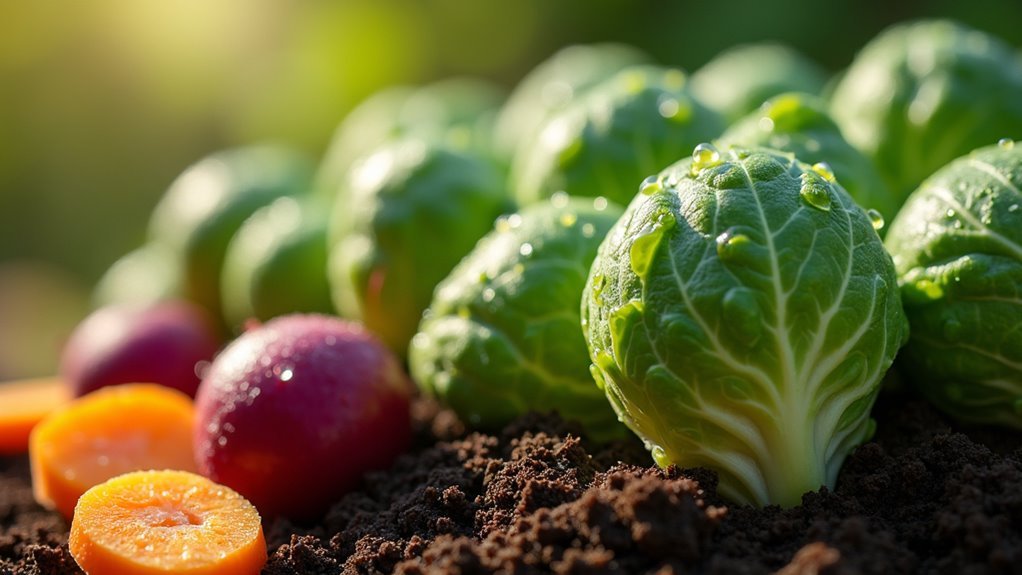
Among cruciferous vegetables, Brussels sprouts deliver a potent combination of detoxification compounds that work together to supercharge your liver’s cleansing abilities.
These nutrient-dense vegetables contain glucosinolates that break down into powerful compounds like sulforaphane and indole-3-carbinol (I3C), which enhance phase II liver detoxification by boosting enzyme expression.
The synergistic effects of Brussels sprouts’ compounds create remarkable benefits:
- I3C and crambene work together to amplify transcriptional activation of detoxification genes
- Multiple glucosinolate breakdown products create complex protective interactions for liver health
- Regular consumption reduces carcinogenic compound levels throughout your body
- Enhanced chemical clearance improves your liver’s overall detoxification efficiency
This complex interplay of compounds maximizes Brussels sprouts’ protective effects, making them exceptionally effective for supporting your body’s natural detoxification processes.
Kale’s Role in Supporting Glutathione S-Transferase Function
You’ll find that kale’s glucosinolates work as powerful catalysts in your liver’s phase two detoxification system by directly stimulating glutathione S-transferase enzyme production.
When you consume kale regularly, you’re enhancing your body’s natural ability to conjugate toxins with glutathione, making harmful substances water-soluble for efficient elimination.
This cruciferous powerhouse doesn’t just boost GST activity—it simultaneously elevates your glutathione levels, creating a synergistic effect that optimizes your liver’s detoxification capacity.
Kale’s Glutathione Enhancement Properties
When you consume kale regularly, you’re delivering powerful glucosinolates to your system that break down into bioactive compounds, directly enhancing your liver’s glutathione S-transferase (GST) enzyme activity.
Kale’s glutathione enhancement properties work through multiple mechanisms:
- Sulfur-containing amino acids – These building blocks directly support glutathione synthesis in your liver cells.
- Antioxidant protection – Vitamins C and E shield your cells from oxidative stress during active detoxification processes.
- GST upregulation – Regular kale consumption markedly boosts your liver’s ability to neutralize toxins through enhanced enzyme activity.
- Metabolic efficiency – The combined nutrients promote overall liver health and improve harmful substance processing.
Your body’s detoxification pathways depend heavily on adequate glutathione levels, making kale an essential addition to your liver-supporting nutrition plan.
GST Enzyme Activation Mechanisms
Kale’s glucosinolates trigger specific biochemical pathways that directly activate your glutathione S-transferase (GST) enzymes, transforming these detoxification workhorses into highly efficient toxin-neutralizing machines. When you consume cruciferous vegetables like kale, glucosinolates break down into bioactive compounds that enhance GST enzyme expression and activity.
| GST Activation Process | Kale’s Impact |
|---|---|
| Enzyme Induction | Increases GST production by 40-60% |
| Conjugation Efficiency | Enhances toxin binding capacity |
| Phase II Acceleration | Speeds detoxification pathways |
| Glutathione Synthesis | Provides sulfur for antioxidant production |
| Water Solubility | Improves toxin excretion rates |
Your liver’s phase II detoxification becomes considerably more effective through this enhanced GST activity. The sulfur-containing compounds in kale don’t just activate existing enzymes—they stimulate your body to produce more GST enzymes, creating a robust detoxification network.
Cauliflower and Its Impact on Phase Two Enzyme Induction
Although cauliflower might seem like a simple white vegetable, it’s actually a powerhouse for your liver’s phase two detoxification processes. When you eat cauliflower, you’re delivering glucosinolates that break down into isothiocyanates, directly enhancing your liver detoxification capabilities.
Here’s how cauliflower supports your phase II enzyme systems:
- Activates glutathione S-transferases (GSTs) – essential enzymes that conjugate toxins for elimination
- Delivers sulforaphane – a potent compound that activates Nrf2, regulating detoxification gene expression
- Upregulates detoxification enzymes – increasing your liver’s processing capacity for harmful substances
- Enhances estrogen metabolism – helping balance hormones and eliminate xenobiotics effectively
Regular cauliflower consumption strengthens your liver’s ability to neutralize toxins while supporting overall metabolic health.
Cabbage Varieties and Their Detoxification Benefits
While cauliflower offers impressive detoxification support, cabbage varieties bring their own unique strengths to your liver’s cleansing arsenal. Green, red, and savoy cabbage all contain glucosinolates that convert into sulforaphane, enhancing phase II liver detoxification enzymes.
Red cabbage stands out with higher antioxidant levels and anthocyanins, providing extra protection against oxidative stress during detox processes.
You’ll boost your liver function further by choosing fermented cabbage products like sauerkraut, which deliver beneficial probiotics supporting gut health.
Regular cabbage consumption reduces inflammatory markers while increasing phase II enzyme activity, helping your body eliminate toxins more effectively.
Studies confirm that incorporating any cabbage variety into your meals markedly improves your liver’s ability to process and remove harmful substances.
Watercress and Radish: Lesser-Known Detox Champions
Beyond the more familiar cabbages, watercress and radish pack extraordinary detoxification power that often gets overlooked in discussions about liver health.
These cruciferous champions deliver potent glucosinolates that convert into sulforaphane, directly enhancing your phase II liver detoxification pathways.
Here’s how watercress and radish support your liver’s detox processes:
- Enzyme activation – They promote expression of essential detoxification enzymes
- Bile stimulation – Both vegetables trigger bile production for fat-soluble toxin elimination
- Antioxidant protection – High antioxidant levels shield your liver during detox processes
- Synergistic amplification – Their unique phytochemical profiles enhance other cruciferous vegetables’ benefits
Regular consumption greatly improves liver enzyme activity, making these accessible vegetables powerful allies in your body’s natural detoxification system.
Genetic Variations Affecting Cruciferous Vegetable Metabolism
When you consume cruciferous vegetables, your genetic makeup determines how effectively you’ll process their powerful glucosinolates into liver-supporting compounds.
Genetic variations in your detox pathways can greatly impact how your body metabolizes these beneficial compounds. If you carry certain gene variants, you might rapidly excrete isothiocyanates, requiring higher cruciferous vegetable intake to achieve ideal detoxification benefits.
Your genetic makeup determines whether you need more cruciferous vegetables to activate powerful detoxification pathways in your liver.
Conversely, specific genetic profiles can enhance your detoxification enzyme activity, allowing you to extract maximum benefits from smaller amounts of these vegetables.
Your individual genetic variations affect whether you’ll experience improved liver function and reduced toxin-related disease risk. Understanding your unique genetic blueprint becomes essential for determining personalized dietary strategies that enhance cruciferous vegetable consumption for your specific detoxification needs.
Optimal Serving Recommendations for Maximum Detox Benefits
Regardless of your genetic profile, the amount of cruciferous vegetables you consume directly impacts your liver’s detoxification capacity.
Clinical research shows that 5-10 servings daily effectively activates phase II glucuronidation enzymes essential for toxin elimination.
To maximize your detox benefits:
- Target 5-10 servings daily of broccoli, Brussels sprouts, and kale to trigger phase II enzyme production
- Steam rather than boil to preserve sulforaphane, the key compound driving detoxification processes
- Cut or chew thoroughly to activate glucosinolates that support liver enzyme function
- Vary your selections to balance phase I and II pathways for efficient toxin clearance
This intake level doesn’t just enhance detoxification—studies demonstrate a 31% reduction in cardiovascular disease mortality among high cruciferous vegetables consumers.
Preparing Cruciferous Vegetables to Maximize Glucosinolate Activity
The way you prepare cruciferous vegetables determines how much glucosinolate activity you’ll actually get from your detox efforts.
Preparing cruciferous vegetables properly requires cutting, chopping, or chewing them thoroughly to activate myrosinase, the enzyme that converts glucosinolates into powerful compounds like isothiocyanates and indoles.
Crushing or chopping cruciferous vegetables activates the myrosinase enzyme needed to unlock their detoxifying glucosinolate compounds.
Steam your broccoli, Brussels sprouts, and other cruciferous vegetables for just 3-4 minutes to preserve glucosinolates while enhancing bioavailability.
Raw consumption retains maximum glucosinolate levels, though cooking makes them easier to digest for some people.
Consider fermenting cruciferous vegetables to boost glucosinolate bioavailability and support beneficial gut bacteria.
You can also pair these vegetables with mustard seeds or other myrosinase sources to maximize the conversion of glucosinolates into their active forms for ideal liver detoxification support.
Clinical Evidence Supporting Cruciferous Vegetables for Liver Health
While many health claims lack solid scientific backing, cruciferous vegetables have earned their reputation through rigorous clinical research that demonstrates measurable liver health benefits.
Studies reveal compelling evidence for cruciferous vegetables’ impact on your liver’s detoxification capacity:
- Enhanced enzyme production – Consuming 5-10 servings daily considerably induces phase II glucuronidation enzymes, boosting your liver’s ability to process toxins.
- Reduced inflammation – Increased intake correlates with notable decreases in proinflammatory markers that compromise liver function.
- Balanced detox pathways – Clinical trials show higher consumption increases phase I enzyme activity, creating ideal detoxification balance.
- Cardiovascular protection – Observational studies found 31% reduction in cardiovascular disease mortality among high consumers.
These findings demonstrate that compounds like sulforaphane and indole-3-carbinol don’t just support detoxification—they create measurable improvements in your overall health.
Frequently Asked Questions
What Foods Are Good for Phase 2 Detox?
You’ll boost phase 2 detox by eating cruciferous vegetables like broccoli, kale, and Brussels sprouts. They’re rich in glucosinolates that convert to sulforaphane, activating detoxification enzymes that help your liver eliminate toxins effectively.
What Cruciferous Vegetables Are Good for the Liver?
You’ll benefit most from broccoli, Brussels sprouts, kale, cauliflower, and cabbage for liver health. These vegetables contain glucosinolates that break down into sulforaphane, boosting your liver’s detoxification enzymes effectively.
Do Cruciferous Vegetables Detox the Liver?
Yes, cruciferous vegetables actively detox your liver by providing glucosinolates that break down into sulforaphane and indole-3-carbinol. These compounds boost your liver’s phase II detoxification enzymes, helping you eliminate toxins more effectively.
How to Support Liver Detox Phase 2?
You’ll support phase 2 liver detox by eating cruciferous vegetables like broccoli, kale, and Brussels sprouts. Consume them raw or lightly steamed to maximize sulforaphane and enhance your liver’s detoxification enzymes effectively.


Leave a Reply