

You’ll supercharge your liver’s detoxification when you eat cruciferous vegetables like Brussels sprouts, broccoli, and kale. These powerhouse vegetables contain glucosinolates that break down into indole compounds during digestion, specifically indole-3-carbinol. These indoles activate your liver’s phase II detoxification enzymes, helping eliminate toxins more efficiently while supporting hormonal balance. Research shows higher indole levels correlate with better liver health and reduced fatty liver disease risk. Discover which preparation methods maximize these liver-protecting benefits.
Understanding Indole Compounds in Cruciferous Vegetables

When you bite into broccoli or chew kale, your digestive system breaks down compounds called glucosinolates into powerful phytochemicals known as indoles.
These cruciferous vegetables deliver indole-3-carbinol, a prominent compound that actively supports liver detoxification by stimulating your body’s natural detoxifying enzymes.
You’ll boost your phase II detoxification processes when you regularly consume these vegetables, enhancing your body’s ability to eliminate harmful toxins.
Indoles also promote hormonal balance by converting estrogen into non-toxic products, which reduces cancer risk.
Your gut microbiota plays an essential role in producing these beneficial compounds, making a healthy diet rich in cruciferous vegetables vital for ideal liver function and overall detoxification support.
How Indoles Support Liver Detoxification Pathways
As your liver processes toxins daily, indoles act as powerful regulators that fine-tune your body’s detoxification machinery. These compounds from cruciferous vegetables enhance your liver’s natural detoxifying enzymes, creating a balanced approach to metabolism and elimination.
Indole-3-carbinol specifically targets your liver’s dual enzyme systems, inhibiting phase I while activating phase II enzymes for ideal toxin clearance.
| Detoxification Benefit | Indole Action |
|---|---|
| Enhanced enzyme activity | Stimulates natural detoxifying processes |
| Improved glucuronidation | Activates phase II liver enzymes |
| Reduced inflammation | Supports healthy inflammatory responses |
| Better toxin elimination | Balances metabolism pathways |
Your liver health improves notably when you consume 5-10 daily servings of cruciferous vegetables, maximizing indoles’ anti-inflammatory effects and boosting your body’s detoxification capabilities for thorough wellness.
Research on Indoles and Non-Alcoholic Fatty Liver Disease

Emerging research reveals a compelling connection between indole levels and non-alcoholic fatty liver disease (NAFLD), with studies showing that people with higher BMIs consistently have lower blood concentrations of this essential compound.
In a Chinese study of 137 participants, researchers found that reduced indole levels directly correlated with increased fatty liver accumulation, highlighting the therapeutic potential of cruciferous vegetables for liver health.
Animal studies demonstrate even more promising results. When researchers administered indole to subjects on high-fat diets, they observed significant reductions in liver fat and inflammation.
These findings suggest that indole’s anti-inflammatory properties, particularly in intestinal cells, may influence liver function through gut microbiota pathways. Current research focuses on understanding these mechanisms to develop targeted dietary interventions for NAFLD management.
Top Cruciferous Vegetables Rich in Indole Compounds
Given the proven benefits of indole compounds for liver health, you’ll want to focus on the cruciferous vegetables that pack the highest concentrations of these powerful compounds.
Brussels sprouts lead the pack with an impressive 237mg of glucosinolates per 100g, making them your top choice for liver detox support.
Kale follows with 89mg per 100g, perfect for smoothies and salads.
Broccoli provides 62mg per 100g and offers maximum nutritional benefits when consumed raw or lightly steamed.
Cabbage varieties deliver 59mg per 100g and work well in coleslaw or soups.
Cauliflower rounds out your options with 43mg per 100g.
These cruciferous vegetables containing indole compounds will effectively support your liver’s natural detoxification processes.
Optimizing Indole Benefits for Enhanced Liver Function
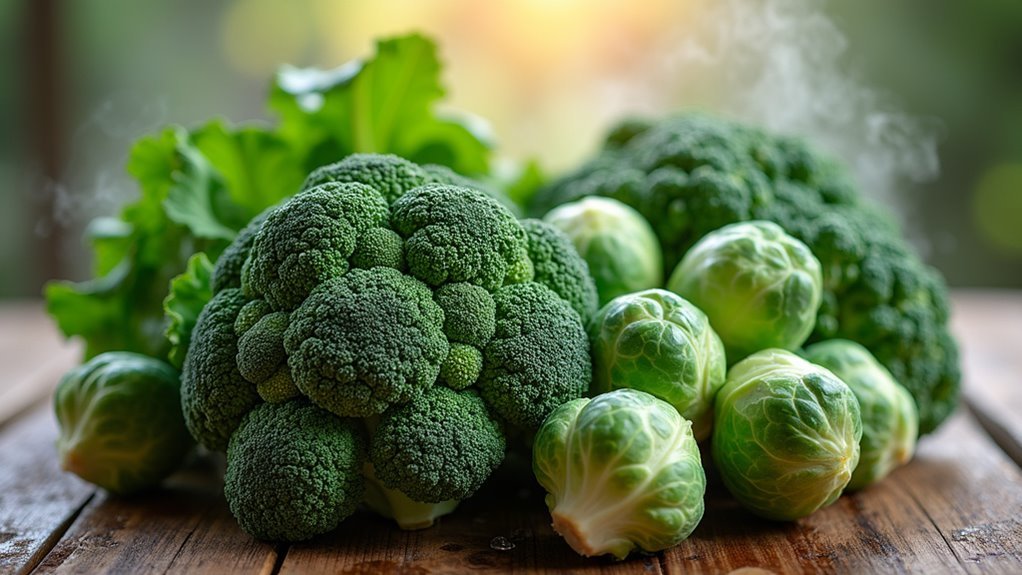
While eating cruciferous vegetables provides valuable indole compounds, you’ll maximize their liver-boosting potential by implementing strategic consumption practices that enhance absorption and bioavailability.
You should aim for variety in your cruciferous vegetables selection, rotating between broccoli, kale, and Brussels sprouts throughout the week. This approach creates a dose-response relationship that supports ideal liver detoxification through enhanced phase II enzyme activity.
Raw or lightly steamed preparations preserve indole-3-carbinol content better than overcooking. You’ll also benefit from pairing these vegetables with healthy fats to improve nutrient absorption.
Supporting your gut microbiota through consistent cruciferous consumption creates a synergistic effect that reduces liver inflammation while promoting efficient toxin elimination. Regular intake builds cumulative health benefits, strengthening your body’s natural detoxification capacity and overall liver function through sustained indole compound exposure.
Frequently Asked Questions
Do Cruciferous Vegetables Detox the Liver?
You’ll boost your liver’s detoxification when you eat cruciferous vegetables. They contain glucosinolates that activate phase II detox enzymes, helping you eliminate toxins more effectively and reducing inflammation throughout your body.
What Cruciferous Vegetables Are Good for the Liver?
You’ll boost liver detoxification by eating broccoli, Brussels sprouts, cabbage, and kale. These vegetables contain indole-3-carbinol, which activates your liver’s phase II detox enzymes for efficient toxin elimination.
What Is the Best Vegetable to Cleanse Your Liver?
You’ll find broccoli’s the best vegetable for liver cleansing. It’s packed with glucosinolates that convert to indole-3-carbinol, directly supporting your liver’s detoxification processes and helping eliminate toxins more effectively.
What Flushes Toxins Out of the Liver?
Your liver naturally flushes toxins through its two-phase detoxification process. Phase I enzymes modify toxins, while phase II enzymes make them water-soluble for elimination through bile and urine.


Leave a Reply