

You can reduce digestive inflammation by taking 1-3 grams of fresh ginger and 300-4,000 mg of curcumin daily through teas, smoothies, or supplements. Combine turmeric with black pepper and healthy fats like olive oil to boost absorption by 2000%. Try golden milk with coconut milk, ginger, turmeric, and black pepper, or brew ginger-turmeric tea with honey and lemon. Take with meals for better absorption and consult your healthcare provider if you’re on blood thinners. There’s much more to optimizing your anti-inflammatory protocol.
Understanding How Ginger and Turmeric Reduce Digestive Inflammation
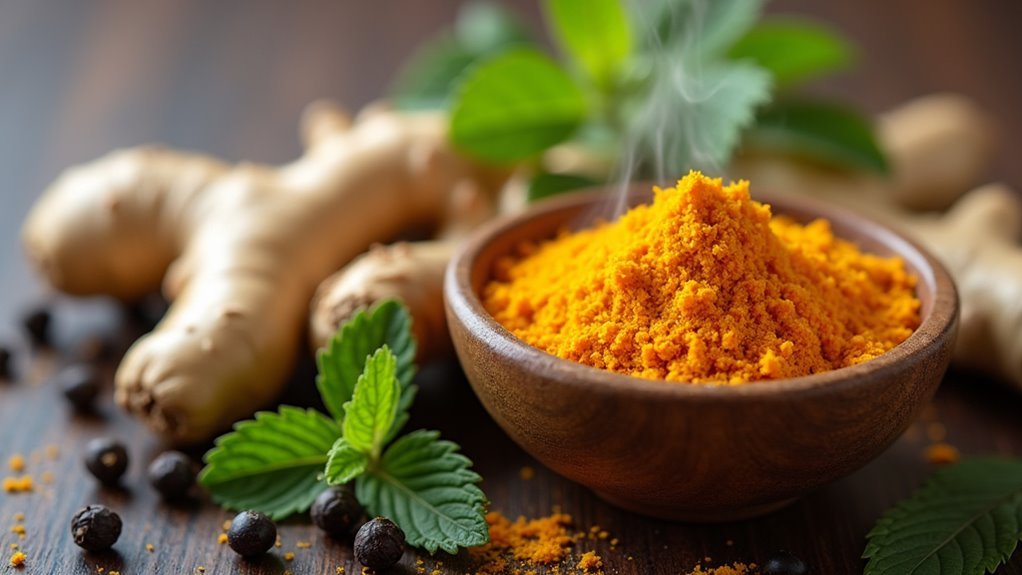
When digestive inflammation disrupts your daily comfort, ginger and turmeric offer powerful relief through their scientifically-proven compounds.
Ginger’s gingerol delivers potent anti-inflammatory properties that soothe your digestive tract and reduce inflammation linked to gastritis and inflammatory bowel disease.
Meanwhile, turmeric’s curcumin decreases inflammation markers and alleviates ulcerative colitis and Crohn’s disease symptoms by modulating your gut’s inflammatory responses.
These compounds work synergistically to enhance your gut health.
Curcumin inhibits pro-inflammatory cytokines, reducing digestive system inflammation while promoting healing.
Ginger stimulates digestive enzyme secretion, helping you digest food more efficiently and reducing bloating.
Regular consumption improves gut motility and lessens inflammation-related digestive issues, creating inclusive relief for your digestive inflammation concerns.
Active Compounds: Gingerol and Curcumin for Gut Health
Understanding these anti-inflammatory effects requires examining the specific active compounds that make ginger and turmeric so effective for digestive health.
Gingerol, ginger’s primary active compound, promotes digestive enzyme secretion, enhancing your body’s ability to break down food and alleviate gastrointestinal discomfort. This compound also effectively reduces nausea, providing relief from digestive inflammation symptoms.
Gingerol enhances digestive enzyme production, improving food breakdown while reducing nausea and gastrointestinal discomfort naturally.
Curcumin, turmeric’s powerful anti-inflammatory component, targets digestive inflammation by decreasing key inflammatory markers like CRP and IL-6. You’ll find this particularly beneficial if you’re dealing with conditions like ulcerative colitis or Crohn’s disease, as curcumin can reduce inflammation throughout your digestive tract.
Regular consumption of both compounds supports ideal gut health by combining gingerol’s digestive enzyme enhancement with curcumin’s potent anti-inflammatory properties, creating a thorough approach to gastrointestinal wellness.
Best Forms of Ginger and Turmeric for Digestive Relief
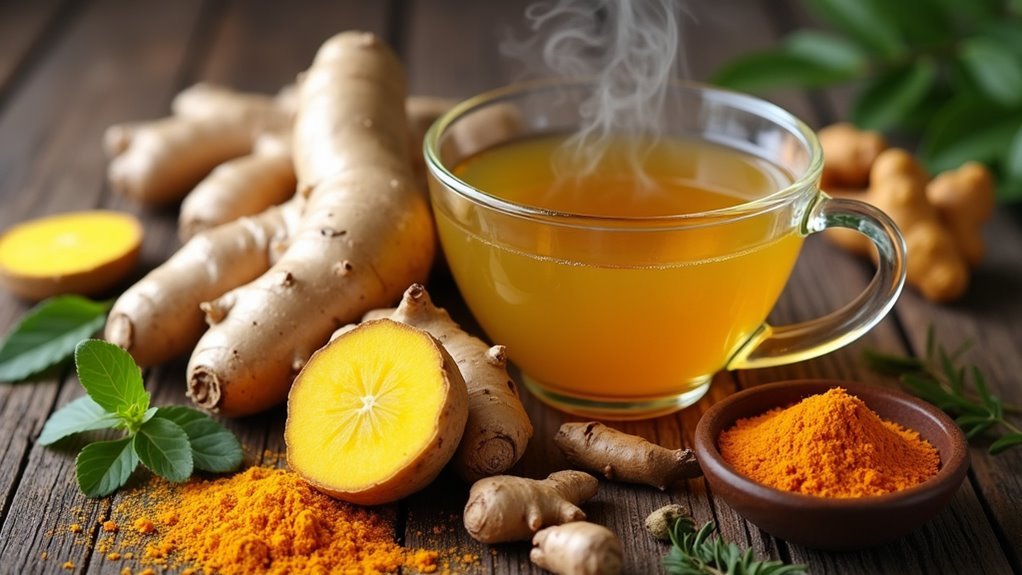
Choosing the right form of ginger and turmeric directly impacts how effectively these powerful compounds address your digestive inflammation.
You’ll find several options that support digestive health through different delivery methods.
Three most effective forms for digestive relief:
- Fresh preparations – Add 1-3 grams of fresh ginger or turmeric to teas and smoothies for immediate anti-inflammatory benefits and to reduce nausea naturally.
- Powdered spices – Incorporate ginger powder and turmeric powder into daily cooking through soups, stews, and curries for consistent intake of these anti-inflammatory spices.
- Targeted supplements – Choose ginger supplements (1-2 grams) for digestive support or turmeric extract with piperine for enhanced curcumin supplementation, boosting absorption by 2000%.
Combined formulations offer synergistic effects for maximum digestive comfort.
Optimal Dosing Guidelines for Anti-Inflammatory Effects
You’ll need to follow specific dosing guidelines to maximize ginger and turmeric’s anti-inflammatory benefits while avoiding potential side effects.
Getting the timing and absorption strategies right can greatly impact how well your body utilizes these compounds for digestive relief.
Understanding safe daily limits guarantees you’ll experience therapeutic effects without risking gastrointestinal discomfort or other unwanted reactions.
Recommended Daily Dosages
When targeting digestive inflammation, proper dosing becomes essential for achieving therapeutic benefits from ginger and turmeric. You’ll need specific recommended daily dosages to maximize their anti-inflammatory effects.
For effective therapeutic effects, follow these guidelines:
- Curcumin: Take 300-4,000 mg daily, with higher doses providing stronger anti-inflammatory action for inflammation conditions.
- Ginger: Consume 1-3 grams per day through capsules, fresh grated root, or liquid extracts.
- Absorption enhancement: Combine curcumin with fats or piperine to improve bioavailability.
Since curcumin absorbs poorly alone, you’ll want to take it with meals containing healthy fats.
Remember that specific combined dosing guidelines don’t currently exist, so consult your healthcare provider to determine ideal dosages based on your individual needs and avoid potential medication interactions.
Absorption Enhancement Strategies
Since curcumin’s poor absorption can greatly limit its anti-inflammatory benefits, you’ll need strategic absorption enhancement strategies to maximize bioavailability.
Adding black pepper to your turmeric markedly boosts curcumin absorption by up to 2000% due to piperine’s enhancement properties. You can achieve this by combining a pinch of black pepper with turmeric in cooking or choosing supplements that include piperine.
Consuming ginger and turmeric with healthy fats like coconut oil, olive oil, or avocado further improves absorption.
Taking these spices with meals enhances their effectiveness against digestive inflammation while reducing potential stomach irritation.
Consider preparing golden milk with coconut milk, fresh ginger, and turmeric with black pepper for ideal health benefits and bioavailability enhancement.
Safety and Timing
Proper dosing becomes critical for achieving anti-inflammatory benefits while avoiding potential side effects from ginger and turmeric supplementation.
For ideal safety of ginger, stick to 1-3 grams daily, while turmeric requires 1,000-4,000 mg of curcumin for digestive inflammation relief. The timing of your ginger turmeric supplements matters greatly for maximizing health benefits.
Consider these essential dosage guidelines:
- Take with meals to reduce gastrointestinal discomfort and enhance absorption
- Start with lower doses (300 mg curcumin, 1 gram ginger) and gradually increase
- Monitor for interactions if you’re taking blood thinners or other medications
Always consult a healthcare provider before beginning supplementation, especially if you have existing health conditions.
Proper timing and dosage guarantee you’ll experience anti-inflammatory effects without compromising your safety.
Enhancing Absorption: Pairing With Black Pepper and Healthy Fats
You’ve learned the proper dosing, but absorption matters just as much as the amount you consume.
Black pepper’s piperine can boost curcumin absorption by up to 2000%, transforming how effectively your body utilizes turmeric’s anti-inflammatory compounds.
Since curcumin is fat-soluble, you’ll also need to pair these spices with healthy fats like olive oil or avocado to maximize their bioavailability in your digestive system.
Piperine Absorption Enhancement
Although turmeric contains powerful curcumin compounds that fight digestive inflammation, your body struggles to absorb them effectively on its own.
That’s where black pepper’s piperine comes in as a game-changer for your ginger turmeric routine.
Piperine can dramatically boost curcumin absorption by up to 2000%, transforming your supplement’s effectiveness.
Here’s how this enhancement works:
- Blocks breakdown enzymes – Piperine prevents your liver from rapidly metabolizing curcumin
- Increases intestinal absorption – It enhances curcumin uptake through your digestive tract
- Elevates serum levels – Studies show considerably higher curcumin concentrations in your bloodstream
This powerful combination doesn’t just improve absorption – piperine itself provides additional anti-inflammatory health benefits.
When you pair ginger turmeric with black pepper, you’re maximizing your body’s ability to utilize these therapeutic compounds for digestive inflammation relief.
Fat-Soluble Curcumin Benefits
Beyond black pepper’s absorption-boosting properties, curcumin’s fat-soluble nature opens another pathway to enhance your ginger turmeric benefits.
Since curcumin requires fat for optimal absorption, you’ll want to pair your turmeric with healthy fats like olive oil or coconut oil. This combination greatly enhances curcumin’s anti-inflammatory effects against digestive inflammation.
When you combine both strategies—adding piperine through black pepper and including healthy fats—you’re creating the ideal conditions for curcumin bioavailability.
Studies show this dual approach leads to higher plasma levels of curcumin, optimizing its therapeutic potential for your digestive issues.
Consider incorporating turmeric into fat-rich meals or choosing supplements specifically formulated with both piperine and healthy fats for enhanced absorption and effectiveness.
Preparing Fresh Ginger Turmeric Tea for Daily Use
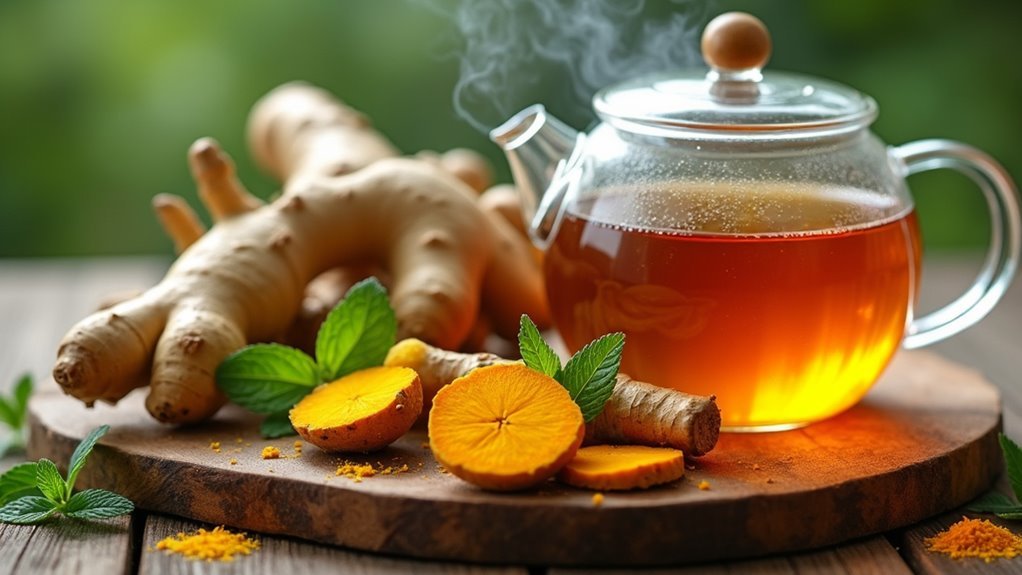
Since fresh ginger turmeric tea offers a potent daily remedy for digestive inflammation, you’ll want to master this simple preparation method that takes just 15 minutes from start to finish.
This anti-inflammatory powerhouse combines fresh ginger and turmeric to deliver exceptional health benefits for your digestive system.
Here’s your step-by-step preparation:
- Boil and infuse: Heat 2 cups water in a saucepan, then add ½ teaspoon each of chopped fresh ginger, ground turmeric, and cinnamon.
- Simmer properly: Maintain medium-low heat for 10 minutes to extract maximum anti-inflammatory compounds.
- Finish and serve: Strain into a glass, stir in 1 tablespoon honey, and add a lemon wedge.
This ginger turmeric tea provides concentrated inflammation-fighting compounds that support digestive health when consumed daily.
Adding Ginger and Turmeric to Smoothies and Meals
You’ll find that incorporating ginger and turmeric into your smoothies and meals offers a delicious way to combat digestive inflammation while maximizing their therapeutic benefits.
Whether you choose fresh roots or convenient powdered forms, understanding the right amounts and timing can make all the difference in how well your body absorbs these powerful compounds.
Let’s explore how to optimize your daily intake and enhance absorption so you’re getting the most anti-inflammatory punch from every sip and bite.
Fresh Vs Powdered Forms
Two distinct forms of ginger and turmeric offer different advantages when you’re targeting digestive inflammation. Fresh ginger and turmeric contain higher concentrations of active compounds like gingerol and curcumin, making them more potent for therapeutic effects.
However, powdered forms provide convenience and versatility in cooking.
Here’s how to maximize health benefits from each form:
- Fresh varieties deliver superior potency with vibrant flavor – use 1-3 grams of fresh ginger daily for ideal digestive support.
- Powdered turmeric offers cooking convenience, but pair it with black pepper to boost curcumin absorption by up to 2000%.
- Both forms work effectively in various dishes, from smoothies to soups, allowing you to consistently incorporate these powerful anti-inflammatory ingredients into your routine.
Optimal Daily Dosing Amounts
Three key dosing guidelines can help you safely incorporate ginger and turmeric into your daily routine for digestive inflammation relief.
Start with 1-3 grams of ginger daily, which you can add to smoothies or meals to reduce nausea and support digestive health. For curcumin health benefits, aim for 300-4000 mg from turmeric sources.
A practical approach involves using 1 teaspoon of fresh grated ginger combined with 1/2 teaspoon of ground turmeric in your daily meals.
When cooking, 1/2 to 1 teaspoon of turmeric provides approximately 1-3 grams per serving.
For enhanced absorption, add black pepper to your turmeric. This daily dosing strategy can effectively manage digestive inflammation over time, though you should consult your healthcare provider before starting therapeutic supplement doses.
Absorption Enhancement Techniques
While proper dosing provides the foundation, maximizing absorption guarantees you get the full anti-inflammatory benefits from ginger and turmeric.
These absorption enhancement techniques dramatically improve bioavailability of curcumin and gingerol for digestive inflammation relief.
Transform your daily routine with these powerful combinations:
- Add black pepper to any turmeric dish – just a pinch increases curcumin absorption by up to 2000%
- Include healthy fats like avocado or coconut oil in smoothies containing ginger and turmeric to boost compound absorption
- Combine with vitamin C-rich ingredients such as citrus fruits to amplify anti-inflammatory effects
Blend these spices into smoothies with fruits and vegetables, or cook them in warm soups and stews alongside fatty foods.
This approach guarantees maximum therapeutic impact against digestive inflammation.
Timing Your Intake for Maximum Digestive Benefits
When you take ginger and turmeric matters just as much as how much you consume. Timing your intake strategically maximizes their anti-inflammatory effects and targets digestive inflammation most effectively.
Take ginger and turmeric before meals to stimulate digestive enzyme secretion, priming your system for ideal absorption. Morning consumption kickstarts your metabolism and digestive function for the entire day.
Pre-meal ginger and turmeric consumption optimizes digestive enzyme production and establishes robust metabolic function throughout your day.
You’ll experience immediate relief by taking ginger during or after meals when dealing with nausea or digestive discomfort.
For sustained results, incorporate both spices consistently into daily meals rather than sporadic use. This approach delivers cumulative benefits that build over time, providing lasting relief from chronic digestive inflammation.
Remember to pair turmeric with fat or piperine to enhance curcumin absorption considerably.
Potential Side Effects and Safety Considerations
Despite their natural origins and therapeutic benefits, ginger and turmeric aren’t risk-free and can cause adverse effects in certain individuals. You should be aware of potential side effects before incorporating ginger and turmeric supplements into your routine.
Common adverse reactions include:
- Digestive Issues – Gastrointestinal discomfort, heartburn, diarrhea, rashes, and headaches may occur, especially at high doses.
- Drug Interactions – Both herbs interact with blood thinners, requiring extra caution if you’re taking anticoagulant medications.
- Special Populations – Pregnant or breastfeeding women need limited safety data considerations and should consult with healthcare providers first.
High doses of curcumin can worsen nausea in cancer patients, emphasizing why you must follow recommended dosages carefully.
When to Consult Healthcare Providers About Supplementation
Given these potential complications, you’ll need professional medical guidance in specific situations to guarantee safe and effective supplementation.
You should consult a healthcare provider before using ginger or turmeric if you’re pregnant, breastfeeding, or taking anticoagulant medications, as these supplements can increase bleeding risk.
Those with diabetes, liver disease, or gallbladder conditions must seek medical advice since these herbs affect blood sugar levels and bile production.
Individuals with diabetes, liver disease, or gallbladder conditions require medical consultation due to these herbs’ effects on blood sugar and bile production.
If you’re considering high doses of curcumin for digestive inflammation, discuss this with your doctor to prevent gastrointestinal discomfort and medication interactions.
Always contact your healthcare provider immediately if you experience adverse effects or notice interference with existing treatments, ensuring your supplementation remains safe and beneficial.
Frequently Asked Questions
How to Take Turmeric for Stomach Inflammation?
You’ll need 300-4000mg of curcumin daily for stomach inflammation. Take turmeric supplements with black pepper to boost absorption by 2000%, or add fresh turmeric to teas and curries regularly.
Is Turmeric and Ginger Good for Stomach Inflammation?
Yes, you’ll find turmeric and ginger excellent for stomach inflammation. They’re both powerful anti-inflammatory spices that reduce digestive discomfort, promote healing, and support gut health when consumed regularly together.
How Much Turmeric Should I Take for Inflamed Gut?
You’ll want to start with 300-1,000 mg of curcumin daily for gut inflammation. Take it with black pepper or fats to boost absorption. Always consult your doctor first, especially if you’re taking medications.
Is It Better to Take Turmeric and Ginger at Night or in the Morning?
You’ll benefit from taking turmeric and ginger with morning meals to boost metabolism and digestive enzymes, though nighttime consumption can help reduce inflammation and promote better sleep for digestive comfort.


Leave a Reply