

You’ll maximize your low-carb energy by starting mornings with MCT-enhanced coffee for sustained fuel without crashes. Time your MCT intake 15-20 minutes before workouts to boost fat burning and endurance. Choose oils high in caprylic acid (C8) for fastest ketone conversion, and start with one teaspoon daily, gradually increasing to 1-2 tablespoons. Combine MCT oil with other healthy fats like avocado to enhance nutrient absorption and appetite control. These strategies will unleash MCT oil’s full potential for your goals.
Start Your Morning With Mct-Enhanced Coffee for Sustained Energy

While most people reach for their regular cup of coffee each morning, you can transform this daily ritual into a powerful energy-boosting experience by adding one tablespoon of MCT oil.
This creates “Bulletproof coffee” that enhances both energy levels and cognitive function throughout your day. MCT oil rapidly converts into ketones, providing immediate fuel for physical and mental activities while supporting your low-carb diet goals.
You’ll notice increased feelings of fullness and reduced cravings, making it easier to maintain your high-fat eating plan.
Research shows MCTs promote fat oxidation during exercise, so your morning coffee can boost workout performance later.
Pair this MCT-enhanced coffee with a low-carb breakfast to maximize ketosis support and sustained energy.
Time Your MCT Oil Intake Around Workouts for Maximum Fat Burning
When you consume MCT oil 15-20 minutes before your workout, you’re setting yourself up for enhanced fat burning and sustained energy throughout your training session.
Taking MCT oil 15-20 minutes before exercise optimizes fat burning and delivers sustained energy for superior workout performance.
This timing allows rapid absorption and conversion into ketones, providing a quick source of energy that outperforms traditional carbohydrate fuels.
Studies demonstrate that MCT oil considerably increases fat oxidation during exercise, making it ideal for low-carb diets focused on weight management.
You’ll experience improved endurance without the crash associated with high-carb pre-workout options.
For best fat utilization, incorporate MCT oil into your pre-workout shake or snack.
This strategic timing enhances energy levels while promoting sustained performance throughout workouts, helping you burn more fat as fuel and supporting your fitness goals.
Choose the Right MCT Oil Type for Your Low-Carb Goals
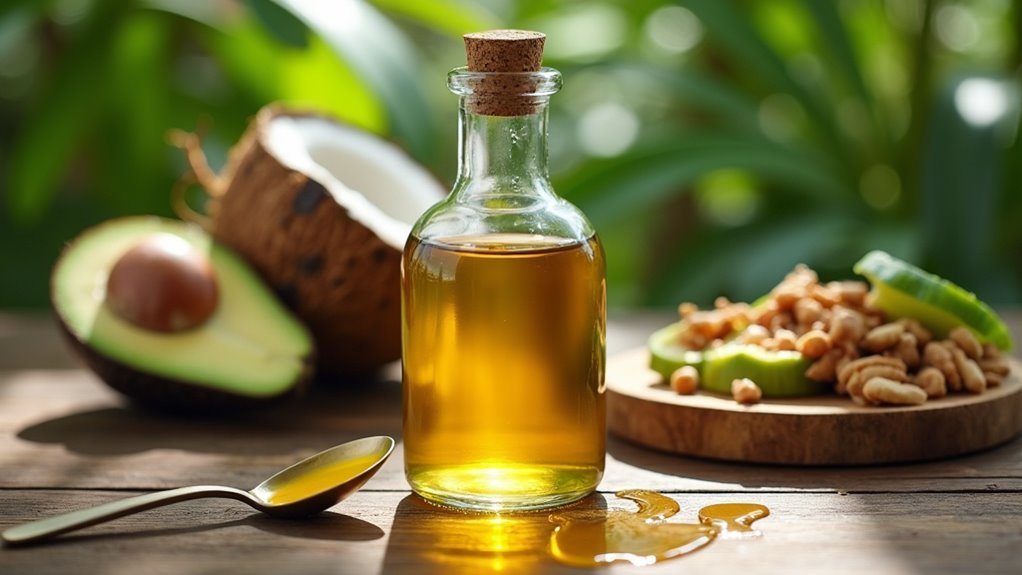
Beyond timing your intake properly, selecting the right type of MCT oil makes a significant difference in how effectively you’ll achieve your low-carb objectives. You’ll want to prioritize oils high in caprylic acid (C8) for rapid ketone conversion and immediate energy support. Here’s what to look for:
| MCT Type | Metabolic Speed |
|---|---|
| Caprylic Acid (C8) | Fastest conversion |
| Capric Acid (C10) | Quick energy |
| Lauric Acid (C12) | Slower metabolism |
| Coconut-derived | Higher purity |
| Third-party tested | Verified quality |
Avoid MCT oils mainly containing lauric acid, as they won’t provide the immediate boost your low-carb diet demands. Choose coconut oil-derived medium-chain triglycerides over palm oil for superior quality and purity. Always verify third-party testing to confirm concentration effectiveness.
Gradually Increase Your Daily MCT Dosage to Avoid Digestive Issues
Since your digestive system needs time to adapt to processing medium-chain triglycerides efficiently, you’ll want to start with just one teaspoon of MCT oil daily. This initial dosage helps you assess tolerance while minimizing gastrointestinal discomfort.
Gradually increase by one teaspoon every few days until reaching your target daily dosage of 1-2 tablespoons. Taking MCT oil with meals improves fat absorption and reduces digestive issues.
Monitor your body response carefully throughout this process. If you experience cramping, diarrhea, or bloating, lower your intake immediately.
Your maximum daily intake shouldn’t exceed 4-7 tablespoons to prevent adverse effects while maintaining energy-boosting properties.
Combine MCT Oil With Other Healthy Fats for Better Nutrient Absorption
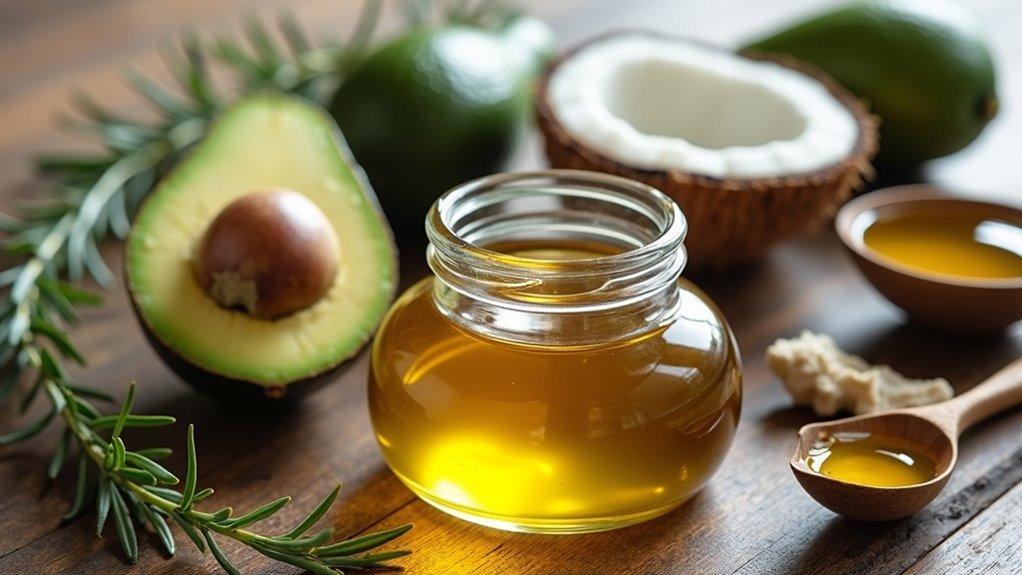
While MCT oil delivers impressive benefits on its own, pairing it with other healthy fats creates a nutritional powerhouse that maximizes your body’s ability to absorb essential vitamins and minerals.
Combining MCT oil with avocado oil or olive oil enhances fat-soluble vitamins absorption (A, D, E, K), promoting superior nutrient absorption throughout your system.
Pairing MCT oil with avocado or olive oil creates a powerful synergy that supercharges your body’s absorption of essential fat-soluble vitamins.
This strategic pairing provides balanced energy production through MCT oil’s rapid digestion alongside slower-burning healthy fats. You’ll experience improved blood sugar levels and enhanced satiety, making low-carb adherence effortless. The combination stimulates peptide YY and leptin release, delivering powerful appetite reduction effects.
Moreover, coconut oil-derived MCTs work synergistically with other fats to accelerate your shift into ketosis, optimizing fat burning and sustained energy production while maximizing nutritional benefits from every meal.
Frequently Asked Questions
Is MCT Oil Good for a Low Carb Diet?
Yes, MCT oil’s excellent for your low-carb diet. You’ll get quick energy as it converts to ketones, boosts fat burning, increases fullness, and helps maintain stable blood sugar without spiking insulin levels.
Does MCT Oil Help With Fatigue?
Yes, MCT oil helps combat fatigue by rapidly converting into ketones that fuel your body and brain. You’ll experience sustained energy levels, reduced tiredness during workouts, and improved mental clarity throughout the day.
How Much MCT Oil Should You Take a Day on Keto?
You should start with 1 teaspoon daily and gradually increase to 1-2 tablespoons for ketosis support. Advanced users can consume up to 4-7 tablespoons, but increase slowly to avoid digestive issues.
What Is the Downside of MCT Oil?
You’ll face gastrointestinal issues like diarrhea and cramping from high doses. MCT oil can raise LDL cholesterol, trigger overeating, cause weight gain from excess calories, and potentially lead to fatty liver disease.


Leave a Reply