

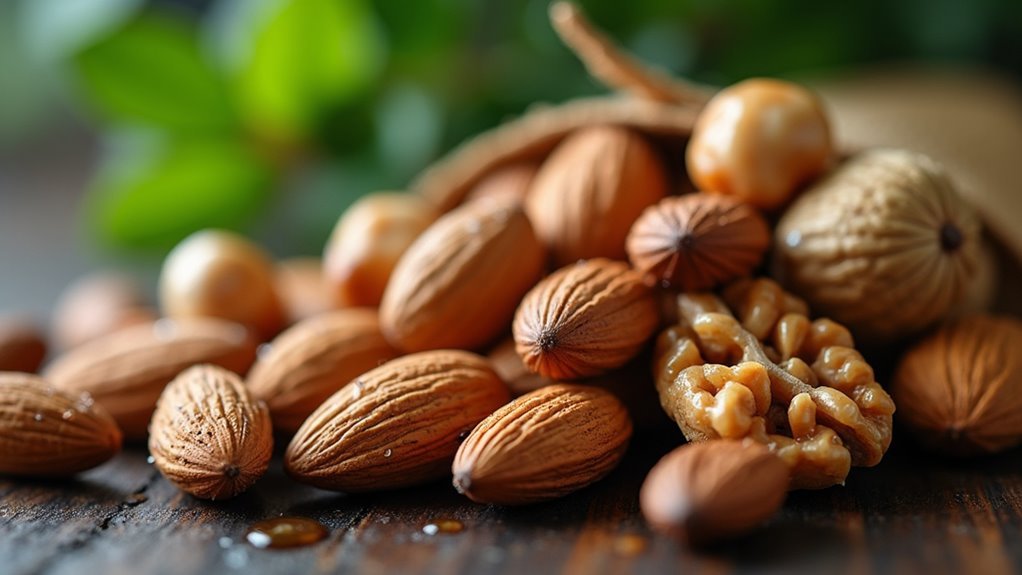
You’ll find exceptional nerve repair benefits in cobalamin-enriched nuts like almonds, which provide 1.1 micrograms of vitamin B12 per quarter-cup, and walnuts that combine omega-3s with B12 for myelin restoration. Cashews deliver 0.7 micrograms per ounce while Brazil nuts offer selenium that enhances B12 utilization. Pistachios, pecans, hazelnuts, and macadamia nuts also contribute essential cobalamin alongside healthy fats that support neural function. Proper preparation techniques and consistent consumption will reveal their full therapeutic potential.
The Science Behind Cobalamin and Nerve Regeneration
When your nervous system sustains damage, cobalamin—commonly known as Vitamin B12—becomes one of your body’s most essential allies in the repair process. This crucial vitamin drives nerve regeneration by synthesizing myelin, the protective sheath that wraps around nerve fibers and enables efficient signal transmission.
Without adequate cobalamin levels, your nerve health deteriorates rapidly, leading to impaired function and degenerative conditions.
Cobalamin also produces red blood cells that deliver critical oxygen to damaged nerve tissues, supporting your neurological health.
Research confirms that proper supplementation enhances your body’s nerve repair mechanisms, reducing neuropathy symptoms and accelerating recovery from nerve damage.
Almonds: Vitamin B12 Powerhouse for Neural Protection
You’ll find almonds pack an impressive amount of vitamin B12 that directly supports your nerve repair processes.
These nutrient-dense nuts create a protective barrier around your neural membranes while delivering the cobalamin your damaged nerves need to regenerate.
When you consume just a handful daily, you’re providing your nervous system with consistent B12 levels that enhance both immediate function and long-term neural health.
Almond B12 Content
Among the many nuts you can choose for nerve health, almonds stand out as an exceptional source of vitamin B12, delivering this essential nutrient in a convenient, shelf-stable package.
You’ll find that almonds provide substantial vitamin B12 levels that directly support healthy nerve cells and maintain peak nerve function.
The vitamin B12 content in almonds helps your body produce myelin, protecting nerve pathways from damage. This protection translates into enhanced cognitive function and reduced risk of nerve damage over time.
Key benefits of almond’s B12 content include:
- Supports myelin production for nerve protection
- Enhances energy metabolism in nerve cells
- Reduces neurological inflammation
- Improves overall brain function
- Prevents vitamin B12 deficiency symptoms
Regular almond consumption guarantees consistent B12 intake, promoting your overall health while specifically targeting nerve repair and maintenance.
Neural Membrane Protection
Since neural membranes form the foundation of healthy nerve communication, almonds deliver the vitamin B12 your body needs to maintain their structural integrity and ideal function. This essential vitamin supports myelin production, creating protective sheaths around your nerves that prevent deterioration and enhance signaling efficiency.
| Benefit | Impact on Nerve Health |
|---|---|
| Myelin Production | Shields nerves from damage |
| Membrane Integrity | Improves signal transmission |
| Inflammation Reduction | Protects against neural stress |
When you consume almonds regularly, you’re providing your nervous system with vital B12 alongside healthy fats and antioxidants. This combination works synergistically to reduce inflammation while strengthening neural membranes. You’ll experience better cognitive function and protection against numbness or tingling associated with nerve damage.
Daily Consumption Benefits
Understanding these protective mechanisms becomes even more valuable when you consider the practical advantages of making almonds a daily habit.
Regular daily consumption of almonds delivers consistent Vitamin B12 support for ideal nerve health and repair processes. Your cognitive function benefits greatly from this routine, as almonds provide approximately 1.1 micrograms of Vitamin B12 per quarter-cup serving.
This reliable plant-based source helps prevent deficiency while supporting red blood cell production essential for nerve repair.
Daily consumption offers these key advantages:
- Enhanced neural protection through consistent Vitamin B intake
- Reduced inflammation supporting nerve pain relief
- Improved cognitive function and mental clarity
- Steady red blood cell production for ideal circulation
- Convenient integration into any balanced diet plan
This simple dietary addition transforms your approach to maintaining long-term nerve health.
Walnuts: Omega-3 and Cobalamin Combination for Brain Health
When you’re looking to support your brain health naturally, walnuts offer a powerful combination that’s hard to beat. These nutrient-dense nuts contain both omega-3 fatty acids and vitamin B12, creating an ideal partnership for nerve health.
The omega-3s work alongside cobalamin to repair and maintain myelin sheaths, which are vital for efficient nerve signal transmission.
You’ll benefit from walnuts’ ability to reduce inflammation and oxidative stress in your nerve tissues. This dual-action approach enhances cognitive function while protecting your brain from cellular damage.
When you incorporate walnuts into your regular diet, you’re providing your nervous system with essential nutrients that promote nerve regeneration and overall neurological wellness, making them an excellent choice for long-term brain health maintenance.
Cashews: Creamy Nuts Rich in Nerve-Supporting B12

You’ll find cashews pack an impressive amount of vitamin B12, making them excellent allies for nerve health and repair.
These creamy nuts don’t just taste great—they’re actively working to support your nervous system’s function and help combat B12 deficiency symptoms like fatigue and nerve damage.
When you’re looking to boost your cobalamin intake naturally, cashews offer a convenient and versatile option that fits easily into snacks, meals, and nut butter spreads.
Cashew B12 Content
Cashews stand out among tree nuts for their remarkably creamy texture and impressive vitamin B12 content, making them a powerhouse food for nerve health and repair. When you’re seeking natural sources of Vitamin B12, cashews deliver approximately 0.7 micrograms per ounce, supporting ideal nerve function while providing essential healthy fats and protein.
- Each one-ounce serving contributes meaningfully to your daily B12 requirements
- Rich in healthy fats that enhance nutrient absorption and overall wellness
- Versatile enough to incorporate into salads, smoothies, and snacks effortlessly
- Particularly valuable for those following a vegetarian diet or vegan lifestyle
- Combines easily with other B12-rich foods for thorough nerve support
Including cashews in your balanced diet guarantees you’re nourishing your nervous system with this essential cobalamin while enjoying their naturally satisfying crunch.
Nerve Repair Benefits
Because your nervous system requires consistent B12 support for ideal repair and maintenance, cashews deliver targeted nutrition that directly benefits nerve health through their unique combination of cobalamin and complementary minerals. You’ll experience enhanced nerve transmission when magnesium works alongside Vitamin B12 to improve cellular communication pathways.
| Nerve Repair Benefits | How Cashews Help |
|---|---|
| Nerve Function | B12 maintains myelin sheath integrity |
| Red Blood Cells | Supports oxygen delivery to nerves |
| Cognitive Function | Enhances neurotransmitter production |
| Muscle Function | Magnesium aids nerve-muscle communication |
| Energy Production | Essential nutrients combat B12 deficiency fatigue |
Regular consumption supports your body’s ability to prevent neurodegenerative diseases while alleviating weakness symptoms. These nerve repair benefits make cashews an excellent choice for maintaining superior neurological health through concentrated essential nutrients.
Pistachios: Green Gems Packed With Cobalamin Benefits
Treasure awaits in every handful of pistachios, as these vibrant green nuts deliver a surprising punch of cobalamin alongside their satisfying crunch. You’ll get approximately 0.3 micrograms of Vitamin B12 per ounce, supporting essential nerve health and repair processes.
These green gems offer multiple advantages for your neurological system:
- Rich healthy fats that enhance cobalamin absorption and reduce inflammation
- Powerful antioxidants that protect against nerve degeneration and oxidative stress
- Enhanced nutrient utilization through improved B vitamin synergy
- Cognitive function support from phytonutrients combined with cobalamin
- Fiber content that promotes overall health while supporting nerve repair
You’ll find pistachios particularly effective because their vibrant color indicates high phytonutrient levels, creating ideal conditions for cobalamin benefits and long-term neurological protection.
Pecans: Buttery Texture With Vitamin B12 for Nerve Repair

You’ll find pecans offer impressive vitamin B12 levels that directly support your body’s nerve regeneration processes.
These buttery nuts contain compounds that help repair damaged nerve fibers while protecting the myelin sheath surrounding your nerves.
Following specific daily consumption guidelines guarantees you’re getting ideal B12 benefits without overdoing your caloric intake.
Pecan Vitamin B12 Content
Pecans offer a delightful combination of rich, buttery flavor and essential nutrients that support nerve health and repair. While they provide modest amounts of Vitamin B12, you’ll benefit from their extensive nutritional profile that enhances nerve function through multiple pathways.
- Vitamin B12 content: Supports healthy nerve function and aids cellular repair processes
- Healthy fats: Contribute to brain health and optimize cognitive performance
- Antioxidant properties: Protect nerve cells from oxidative damage and inflammation
- Magnesium richness: Essential for proper nerve transmission and muscle function
- Versatile nutrition: Easy incorporation into daily meals for consistent nutrient intake
You can rely on pecans to supplement your Vitamin B12 intake, especially when combined with other nutrient sources.
Their magnesium content further amplifies nerve health benefits, making them valuable for extensive neurological support.
Nerve Regeneration Benefits
Beyond basic nutritional support, pecans actively promote nerve regeneration through their concentrated vitamin B12 content and complementary nutrients.
When you consume pecans regularly, you’re providing your body with essential components that rebuild damaged myelin sheaths protecting nerve fibers. This vitamin B12 works alongside healthy fats and antioxidants found in pecans to reduce inflammation and oxidative stress that typically hinder nerve repair processes.
You’ll notice improvements in cognitive function as these nutrients support neurotransmitter synthesis and enhance signal transmission between nerve cells.
The antioxidants in pecans combat free radicals that damage nerve tissues, while the healthy fats facilitate cellular membrane repair.
Daily Consumption Guidelines
Twenty-eight grams of pecans daily provides the ideal balance between therapeutic benefits and practical consumption for nerve repair support. This nutrient-dense serving delivers approximately 19% of your daily recommended intake of Vitamin B12, essential for peak nerve function.
The healthy fats and antioxidants in pecans enhance their therapeutic potential while supporting cognitive health.
- Consume one ounce (28 grams) daily as part of your balanced diet
- Include pecans in breakfast cereals, yogurt, or salads for easy integration
- Space consumption throughout the day to maximize Vitamin B12 absorption
- Combine with other B-vitamin rich foods to enhance nerve regeneration
- Monitor your overall caloric intake since pecans are calorie-dense
This measured approach guarantees you’ll receive consistent Vitamin B12 support without overwhelming your system.
Brazil Nuts: Selenium and B12 Synergy for Neurological Function
When you’re seeking a natural powerhouse for nerve repair, Brazil nuts deliver an exceptional combination of selenium and Vitamin B12 that creates a unique synergy for neurological function.
Each Brazil nut contains 68-91 micrograms of selenium, far exceeding the daily requirement of 55 micrograms. This selenium enhances your body’s ability to utilize Vitamin B12 for peak nerve health.
Each Brazil nut delivers 68-91 micrograms of selenium, significantly surpassing daily requirements while enhancing your body’s Vitamin B12 utilization for optimal nerve function.
The Vitamin B12 in Brazil nuts maintains your myelin sheath, protecting nerve fibers and ensuring effective signal transmission. This dual action supports cognitive functions while promoting overall neurological wellness.
When you incorporate Brazil nuts into your balanced diet alongside other B12-rich foods, you’re contributing to improved mood regulation and reducing your risk of neurodegenerative diseases through this powerful selenium-B12 partnership.
Hazelnuts: Heart-Shaped Healers With Cobalamin Content
Hazelnuts earn their reputation as heart-shaped healers through their impressive nutritional profile, delivering approximately 0.1 micrograms of Vitamin B12 per 100-gram serving alongside a powerful array of complementary nutrients.
These versatile nuts support your neurological health through their unique combination of cobalamin, healthy fats, and antioxidants that work synergistically to enhance nerve function.
You’ll benefit from hazelnuts’ extensive approach to cognitive function and mood regulation:
- Essential Vitamin B12 for nerve repair and maintenance
- Heart-healthy monounsaturated fats reducing inflammation
- Powerful antioxidants protecting neural pathways
- High fiber content supporting overall wellness
- Versatile preparation options from raw to roasted
Incorporating hazelnuts into your daily routine provides sustained neurological support while delivering exceptional flavor and nutritional density for ideal brain health.
Macadamia Nuts: Premium Source of B12 for Nerve Health
Macadamia nuts stand out as a premium nutritional powerhouse, delivering exceptional cobalamin content alongside their signature buttery richness that makes nerve health support both effective and enjoyable.
You’ll benefit from their abundant Vitamin B12, which maintains ideal nerve function and accelerates nerve repair processes throughout your body.
These creamy nuts pack healthy monounsaturated fats that boost cardiovascular wellness while supporting nerve maintenance.
Rich in heart-healthy monounsaturated fats, macadamia nuts deliver dual benefits for both cardiovascular health and optimal nerve function maintenance.
You’re also getting powerful antioxidants that shield your nerve cells from oxidative damage, creating thorough protection for your nervous system.
Their high fiber content enhances your dietary health by improving nutrient absorption, maximizing the benefits of their cobalamin content.
The versatile texture of macadamia nuts makes them easy to incorporate into meals, snacks, and desserts, ensuring you’ll consistently receive their nerve-supporting nutrients.
How to Maximize Cobalamin Absorption From Nuts
Since cobalamin absorption depends heavily on proper preparation and food combinations, you’ll need strategic approaches to access the maximum nerve-healing potential from your enriched nuts.
Strategic preparation methods notably enhance nutrient uptake and cobalamin absorption:
- Pair with vitamin C sources – Combine nuts with citrus fruits, berries, or bell peppers to boost B12 bioavailability.
- Soak overnight – Reduce phytic acid levels that block mineral absorption by soaking raw nuts before consumption.
- Add healthy fats – Include olive oil, avocado, or coconut oil to enhance fat-soluble vitamin absorption.
- Choose raw nuts – Avoid high-temperature processing that degrades cobalamin content.
- Diversify varieties – Rotate between almonds, walnuts, and cashews for extensive nerve repair support.
These techniques guarantee you’re maximizing every gram’s therapeutic potential.
Frequently Asked Questions
Which Nut Is Best for Nerve Repair?
You’ll find walnuts are your best choice for nerve repair. They’re packed with omega-3 fatty acids and Vitamin B12, which reduce inflammation and support myelin sheath maintenance essential for healthy nerve function.
Which Nut Contain the Most B12?
You’ll find almonds contain the most B12 among nuts, providing significant amounts per serving. They’re followed by walnuts, which also offer substantial cobalamin levels along with omega-3s for enhanced nerve support.
What Nuts Are Best for the Nervous System?
You’ll find walnuts and almonds are top choices for nervous system health. Walnuts provide omega-3s that reduce inflammation and support nerve regeneration, while almonds offer healthy fats essential for nerve-impulse transmission.
What Is the Best Vitamin to Repair Nerve Damage?
You’ll find Vitamin B12 is the best vitamin for repairing nerve damage. It’s essential for maintaining myelin sheaths around nerve fibers and promoting proper nerve regeneration when you’re dealing with neurological issues.


