

Chili peppers boost your metabolism naturally through capsaicin, a compound that triggers thermogenesis and increases your calorie-burning rate by 4-8%. When you eat spicy foods, capsaicin activates brown fat tissue, enhancing fat oxidation and helping you burn an extra 50-100 calories daily. It also suppresses your appetite by reducing ghrelin production and slowing gastric emptying, leading to decreased calorie intake. Understanding the best varieties and consumption methods can maximize these metabolic benefits.
The Science Behind Capsaicin and Thermogenesis
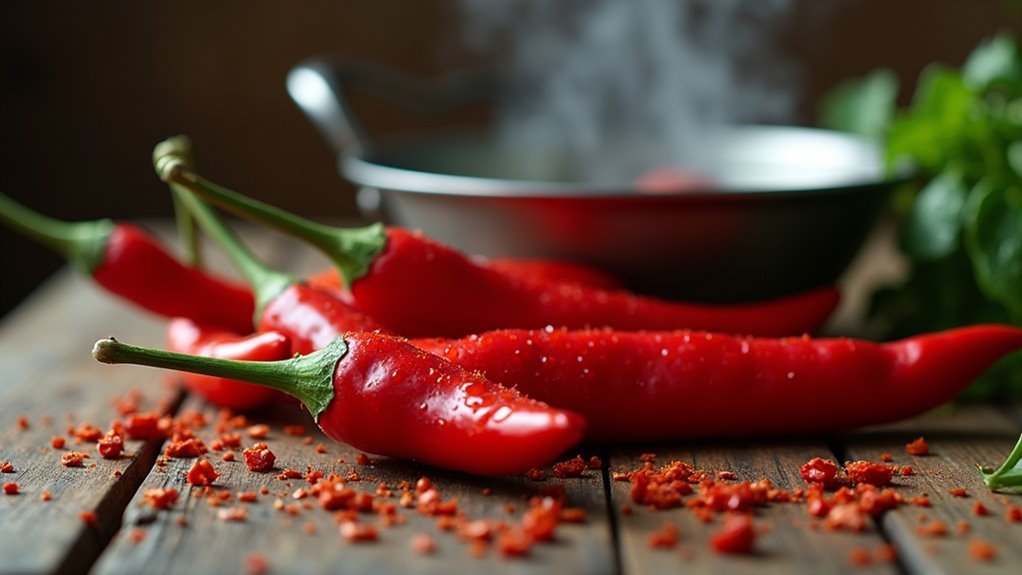
When you bite into a spicy chili pepper, you’re not just experiencing a fiery sensation—you’re triggering a complex metabolic process that can boost your body’s calorie-burning potential. The active compound responsible for this effect is capsaicin, which directly stimulates thermogenesis in your body.
This heat production process forces your metabolism to work harder, increasing your overall energy expenditure.
Research shows that capsaicin can elevate your metabolic rate by 4% to 8%, meaning you’ll burn an additional 50 to 100 calories daily. Even consuming small amounts—like one jalapeño—produces measurable effects.
The compound enhances lipid oxidation, particularly in brown fat tissue, which specializes in burning calories for heat. This natural thermogenic response makes capsaicin a powerful metabolic enhancer.
How Chili Peppers Increase Energy Expenditure
When you eat chili peppers, capsaicin immediately triggers thermogenesis in your body, causing you to burn 4% to 8% more energy throughout the day.
This process enhances your fat oxidation capabilities, particularly targeting metabolically active brown fat tissue that’s more efficient at burning calories.
You’ll experience an overall increase in your metabolic rate that can persist with regular consumption, creating a sustained boost to your daily energy expenditure.
Capsaicin Boosts Thermogenesis
Since capsaicin triggers thermogenesis in your body, you’ll experience a noticeable increase in heat production that directly elevates your energy expenditure.
This powerful compound activates your metabolism by boosting your metabolic rate approximately 4% to 8%, resulting in an additional 50 to 100 calories burned daily.
When you consume capsaicin, it enhances lipid oxidation, particularly targeting brown fat tissue that’s specifically designed for burning calories.
This process creates sustained fat burning and increased energy expenditure throughout your day.
You’ll also notice reduced appetite and calorie intake since capsaicin slows gastric emptying and promotes fullness.
For maximum thermogenic benefits, combine regular capsaicin consumption with balanced nutrition and exercise, creating an effective weight management strategy that naturally amplifies your body’s calorie-burning potential.
Enhanced Fat Oxidation
Beyond simply increasing heat production, capsaicin actively transforms how your body processes and burns fat for fuel. This powerful compound enhances fat oxidation, particularly targeting brown fat tissue that’s responsible for burning calories. When you consume chili peppers, capsaicin triggers your metabolism to preferentially use stored fat as an energy source rather than relying solely on glucose.
| Fat Oxidation Factor | Without Capsaicin | With Regular Capsaicin |
|---|---|---|
| Brown Fat Activity | Baseline | Notably Enhanced |
| Fat Burning Rate | Standard | 4-8% Increase |
| Daily Calorie Burn | Normal | +50-100 Calories |
| Triglyceride Levels | Variable | Reduced |
| Energy Source Priority | Mixed | Fat-Preferred |
This enhanced fat oxidation process improves your lipid profile by lowering triglycerides while simultaneously boosting your body’s natural fat-burning capabilities throughout the day.
Metabolic Rate Increase
The fat-burning benefits you experience from capsaicin stem from a fundamental boost to your metabolic rate that extends well beyond meal times.
When you consume chili peppers, capsaicin triggers thermogenesis, causing your internal body temperature to rise and your system to burn additional calories throughout the day.
Research shows this metabolic enhancement can increase your energy expenditure by 4% to 8%, which translates to meaningful calorie burning:
- Daily calorie boost: You’ll burn an extra 50 to 100 calories per day
- Extended duration: The metabolic rate increase continues hours after eating
- Cumulative effect: Regular consumption amplifies these benefits over time
This sustained elevation in your metabolic rate makes capsaicin a valuable tool for weight management when combined with proper diet and exercise.
Nutritional Profile of Metabolism-Boosting Chili Varieties
When you’re choosing chili peppers to boost your metabolism, you’ll find significant variations in their nutritional profiles that directly impact their effectiveness.
Different varieties contain varying levels of capsaicin, with jalapeños offering 6-10 mg per pepper while habaneros pack a more powerful punch at 100,000 to 350,000 Scoville Heat Units.
You’ll also benefit from essential vitamins like C and A, plus fiber and antioxidants that support your overall metabolic health beyond just the thermogenic effects.
Essential Vitamins and Minerals
While capsaicin gets most of the spotlight for metabolism enhancement, chili peppers pack an impressive array of essential vitamins and minerals that support your body’s fat-burning machinery.
These micronutrients work synergistically with capsaicin to maximize your metabolic processes.
Your body benefits from three key nutritional components:
- Vitamin C – Enhances fat metabolism and thermogenesis while strengthening immune function
- Vitamin A – Supports cellular metabolism and energy production for ideal metabolic efficiency
- Potassium – Regulates muscle function and fluid balance, maintaining metabolic health
The fiber content in chili peppers also promotes digestive health and satiety, helping you manage weight more effectively.
These vitamins and minerals create a thorough nutritional foundation that amplifies capsaicin’s metabolism-boosting effects, making chili peppers a powerhouse for natural metabolic enhancement.
Capsaicin Content Variations
Different chili varieties deliver vastly different amounts of capsaicin, which directly impacts their metabolism-boosting potential.
You’ll find that habaneros and Scotch bonnets pack the most metabolic punch, containing 100,000 to 350,000 Scoville Heat Units compared to jalapeños’ modest 2,500 to 8,000 SHUs. This means hotter chili peppers can boost your metabolism more effectively than milder varieties.
However, you don’t need to torture your taste buds – consuming just one jalapeño daily provides 6-10 mg of capsaicin, enough to enhance your metabolic rate and regulate appetite.
Bell peppers, while nutritious, contain minimal capsaicin and won’t deliver the same metabolism benefits as their fiery counterparts.
Fiber and Antioxidants
Beyond capsaicin’s heat, chili peppers deliver a powerful nutritional profile that amplifies their metabolism-boosting effects. You’re getting substantial fiber content that supports digestive health while promoting satiety, helping you naturally reduce calorie intake.
The antioxidants in these peppers, including flavonoids and carotenoids, combat oxidative stress and inflammation that can hinder metabolic function.
Here’s what makes chili peppers metabolically advantageous:
- High fiber content promotes satiety and supports healthy digestion
- Antioxidant compounds reduce inflammation and oxidative stress
- Low-calorie density provides nutrients without excess calories
Popular varieties like jalapeños and habaneros exemplify this nutritional efficiency. They’re packed with vitamin C for collagen synthesis and metabolic support, while their fiber keeps you satisfied longer.
Combined with capsaicin’s thermogenic properties, these nutrients create a thorough metabolic enhancement.
The Role of Capsaicin in Fat Oxidation
Capsaicin acts as a metabolic catalyst, triggering your body’s natural fat-burning mechanisms through targeted thermogenesis.
When you consume chili peppers, capsaicin directly stimulates brown adipose tissue, which burns calories to generate heat and enhance fat oxidation. This process boosts your metabolism by 4% to 8%, helping you burn an additional 50 to 100 calories daily without extra effort.
The compound specifically targets fat stores, breaking them down more efficiently than normal metabolic processes.
Your body’s enhanced fat oxidation continues for hours after consuming capsaicin, creating a sustained metabolic advantage.
This natural mechanism doesn’t just increase calorie burn—it preferentially uses fat as fuel, making capsaicin particularly effective for weight management and improving your overall metabolic health through consistent, targeted fat burning.
Brown Fat Activation Through Spicy Foods

When you consume spicy foods, you’re activating one of your body’s most powerful calorie-burning systems: brown adipose tissue.
Unlike regular white fat that stores energy, brown fat burns calories to generate heat through thermogenesis. Capsaicin triggers this metabolic powerhouse by stimulating your sympathetic nervous system.
Here’s how spicy foods enhance your metabolism:
- Sympathetic activation – Capsaicin stimulates nerve pathways that directly communicate with brown fat cells.
- Lipid oxidation – Your brown fat begins breaking down stored fats for immediate energy conversion.
- Heat production – This process generates warmth while burning 50-100 additional calories daily.
You’ll also benefit from capsaicin’s ability to convert white fat into metabolically active brown fat, creating more calorie-burning tissue throughout your body.
Appetite Suppression Mechanisms in Chili Peppers
When you eat chili peppers, capsaicin directly targets your body’s hunger signals by reducing ghrelin production, which naturally decreases your appetite throughout the day.
You’ll also experience slower gastric emptying, meaning food stays in your stomach longer and keeps you feeling full for extended periods.
This powerful combination typically leads to consuming about 200 fewer calories daily without consciously restricting your food intake.
Ghrelin Hormone Reduction
Although you mightn’t realize it while savoring that spicy kick, your body’s hunger signals are actively being suppressed when you eat chili peppers.
Capsaicin directly targets ghrelin, the hormone that tells your brain you’re hungry. When capsaicin enters your system, it reduces ghrelin production, effectively turning down your body’s appetite-suppressing mechanisms.
This hormonal shift creates measurable results in your eating habits:
- Reduced daily calorie intake – You’ll consume approximately 200 fewer calories per day
- Diminished hunger sensations – Lower ghrelin means less frequent appetite signals
- Decreased unhealthy cravings – Strategic ghrelin reduction helps you resist processed snacks
Gastric Emptying Delay
Beyond reducing hunger hormones, capsaicin creates another powerful appetite suppression effect by slowing down your digestive process. When you consume chili peppers, capsaicin deliberately delays gastric emptying, keeping food in your stomach longer than usual. This extended retention triggers prolonged feelings of fullness that naturally reduce your desire to eat more.
| Gastric Emptying Effect | Result |
|---|---|
| Delayed stomach emptying | Extended satiety feelings |
| Prolonged food retention | Reduced meal frequency |
| Enhanced fullness signals | 200-calorie daily reduction |
| Natural portion control | Smaller serving sizes |
The delayed gastric emptying doesn’t just make you feel full—it fundamentally changes your eating patterns. You’ll find yourself naturally consuming smaller portions because the heat and spice sensation compounds with the physical fullness, creating a powerful one-two punch against overeating.
Caloric Intake Decrease
Since capsaicin actively suppresses your appetite through multiple biological pathways, you’ll naturally consume fewer calories throughout the day without consciously restricting your food intake.
This powerful compound reduces ghrelin levels, the hormone that triggers hunger signals, creating sustained appetite suppression effects.
Research demonstrates you can expect significant caloric intake reductions when incorporating chili peppers into your meals:
- Daily calorie reduction: You’ll consume approximately 200 fewer calories per day on average
- Enhanced satiety: Gastric emptying slows down, prolonging your feelings of fullness after eating
- Craving resistance: You’ll resist high-calorie processed snacks more effectively
The thermogenic properties that boost metabolism work synergistically with appetite suppression, creating a dual-action approach to weight management that doesn’t require willpower alone.
Metabolic Rate Changes From Regular Chili Consumption
When you consistently include chili peppers in your diet, your body’s metabolic rate increases by approximately 4% to 8%, which translates to burning an additional 50 to 100 calories each day without any extra effort.
This boost comes from capsaicin, the compound that gives chili peppers their heat. Capsaicin enhances thermogenesis, causing your body to produce more heat and expend energy even while you’re resting.
You’ll notice these effects become more pronounced when you combine regular chili consumption with physical activity and whole foods.
Over time, your body develops improved fat oxidation capabilities, particularly in brown fat tissue. This metabolic enhancement makes chili peppers a valuable long-term ally in maintaining healthy weight management through natural, sustainable dietary changes.
Anti-Inflammatory Properties That Support Weight Management

The metabolic benefits of chili peppers extend far past calorie burning through their powerful anti-inflammatory effects. When you consume chili peppers regularly, capsaicin actively combats inflammation throughout your body, creating an environment that supports effective weight management.
Chronic inflammation disrupts your metabolic processes and promotes weight gain, but capsaicin helps restore balance.
Here’s how these anti-inflammatory properties benefit your weight management goals:
- Reduced visceral fat accumulation – Capsaicin targets dangerous belly fat linked to inflammatory responses.
- Improved lipid profiles – Lower triglycerides and enhanced fat oxidation support metabolic health.
- Prevention of obesity-related inflammation – Regular consumption helps avoid metabolic disorders that lead to weight gain.
Comparing Different Chili Pepper Types for Maximum Benefits
Although all chili peppers contain capsaicin, you’ll maximize your metabolic benefits by choosing varieties strategically based on their heat levels and capsaicin concentrations.
Habaneros and Scotch bonnets pack the strongest punch at 500,000 to 1 million SHUs, delivering peak capsaicin for serious metabolic enhancement. If you’re building tolerance, cayenne peppers offer excellent fat-burning potential at 40,000 to 100,000 SHUs.
Jalapeños provide gentler entry points at 5,000 to 25,000 SHUs while still boosting metabolism. Red varieties contain higher vitamin C levels, supporting both metabolic function and immune health through additional antioxidants.
You’ll achieve superior results by incorporating multiple chili peppers into your meals, creating diverse flavor profiles while maximizing capsaicin intake for enhanced weight management benefits.
Optimal Dosage and Frequency for Metabolic Enhancement
Understanding which peppers pack the most metabolic punch means little without knowing how much and how often to consume them for real results.
The ideal capsaicin dosage for metabolism enhancement is surprisingly achievable through everyday eating habits.
Research shows you’ll need just 6-10 mg of capsaicin daily to boost your metabolism by 4-8%, burning an extra 50-100 calories.
Here’s your action plan:
- Daily intake: Consume one jalapeño pepper’s worth of capsaicin (6-10 mg)
- Frequency: Include chili peppers in meals several times weekly
- Timing: Eat capsaicin before meals to reduce appetite and calorie intake
Combining Chili Peppers With Other Metabolism-Boosting Foods
While chili peppers deliver impressive metabolic benefits on their own, you’ll amplify these effects by strategically pairing them with other metabolism-boosting foods.
Combine them with protein-rich options like lean meats or eggs to maximize the thermic effect of food, which burns 15-30% more calories during digestion compared to carbohydrates or fats.
Protein paired with chili peppers creates a powerful thermic effect, burning up to 30% more calories during digestion.
Add chili peppers to fiber-packed beans and legumes for enhanced satiety and appetite control.
Pair them with green tea to supercharge fat oxidation during workouts.
When you include healthy fats like avocados or nuts, you’ll improve nutrient absorption while supporting metabolic functions.
For maximum impact, try combining chili peppers with ginger—both ingredients work synergistically to increase energy expenditure and support weight management goals.
Potential Risks and Considerations for High Chili Intake
Despite chili peppers’ metabolism-boosting advantages, consuming them in excessive amounts can trigger several unwanted side effects that might derail your health goals.
While these fiery peppers offer impressive health benefits, you’ll need to practice moderation to avoid complications.
Excessive chili pepper consumption can lead to:
- Digestive distress – You might experience heartburn, gastritis, or diarrhea, especially if you’re unaccustomed to spicy foods.
- Throat irritation – Capsaicin can cause swelling and burning sensations in your throat.
- Symptom aggravation – If you have IBS or acid reflux, high intake could worsen your condition.
To maximize chili peppers’ benefits while minimizing risks, limit yourself to no more than half a cup daily.
This approach guarantees you’ll reap metabolic advantages without overwhelming your digestive system.
Cooking Methods That Preserve Capsaicin Content
Three simple cooking techniques can help you maximize capsaicin retention while preparing chili peppers for metabolism-boosting meals. Quick high-heat methods like stir-frying and sautéing minimize nutrient loss while enhancing flavor. Steaming preserves more natural compounds compared to boiling, which leaches out valuable nutrients.
| Cooking Method | Capsaicin Retention | Additional Benefits |
|---|---|---|
| Stir-frying/Sautéing | High | Enhanced flavor |
| Steaming | Very High | Preserves nutrients |
| Roasting | High | Adds smoky taste |
You can also try roasting peppers for smoky flavor while maintaining capsaicin levels, but don’t overcook them. Microwaving for short durations effectively preserves capsaicin through quick cooking without prolonged heat exposure. Avoid long cooking times and high moisture environments to maintain the health benefits of chili peppers, ensuring capsaicin remains intact for maximum metabolic impact.
Long-Term Effects of Chili Pepper Consumption on Body Weight
You might expect that regularly eating chili peppers would help you maintain a healthy weight over time, but research suggests the opposite may be true.
Your body’s metabolic response to capsaicin can change with sustained consumption, potentially reducing its fat-burning effectiveness as you develop tolerance.
Studies show that frequent chili pepper eaters actually face a 55% greater risk of obesity, indicating that long-term consumption doesn’t deliver the weight management benefits you’d anticipate.
Sustained Weight Management Benefits
While many weight loss strategies provide only temporary results, incorporating chili peppers into your regular diet can offer sustained metabolic benefits that support long-term weight management.
The capsaicin in these fiery peppers creates lasting changes that work continuously to support your metabolism and weight goals.
Here’s how chili peppers provide sustained benefits:
- Enhanced Fat Oxidation: Capsaicin promotes your body’s ability to burn stored fat for energy, creating a more efficient metabolic process over time.
- Improved Satiety Control: Regular consumption slows gastric emptying, helping you feel fuller longer and naturally reducing your overall calorie intake.
- Better Food Choices: Adding chili peppers makes healthy meals more enjoyable, reducing cravings for processed foods while encouraging nutritious eating habits that support lasting weight management success.
Metabolic Adaptation Over Time
As your body adapts to regular chili pepper consumption, remarkable metabolic changes begin to unfold that can greatly impact your long-term weight management success.
Over time, capsaicin’s thermogenic effects create lasting improvements in your metabolism, with studies showing a consistent 4% to 8% boost in metabolic rate. This translates to burning an additional 50 to 100 calories daily without extra effort.
Your body’s fat-burning capacity also evolves, particularly in brown fat tissue, which becomes more efficient at energy expenditure.
Regular capsaicin intake helps regulate your insulin levels and reduces inflammation, creating ideal conditions for sustained weight loss.
While individual results may vary, these cumulative metabolic adaptations work together to support your long-term weight management goals naturally.
Frequently Asked Questions
Do Chilli Peppers Speed up Metabolism?
Yes, you’ll experience a metabolism boost from chili peppers due to capsaicin. You can burn an extra 50-100 calories daily and increase fat oxidation by 4-8% when you consume them regularly.
What Is the Pepper Trick for Weight Loss?
You’ll add capsaicin-rich chili peppers to your meals, boosting metabolism by 4-8% and burning 50-100 extra calories daily while suppressing appetite and reducing cravings for processed snacks effectively.
What Spice Makes Your Metabolism Faster?
Capsaicin in chili peppers accelerates your metabolism by 4-8%, burning extra calories through thermogenesis. You’ll experience increased heat production, enhanced fat oxidation, and reduced appetite, making it nature’s most effective metabolism-boosting spice.
Does Chilli Pepper Burn Belly Fat?
Chili peppers can help you burn belly fat by boosting your metabolism up to 8%, increasing daily calorie burn by 50-100 calories, and reducing visceral fat when you maintain a calorie-controlled diet.


Leave a Reply