
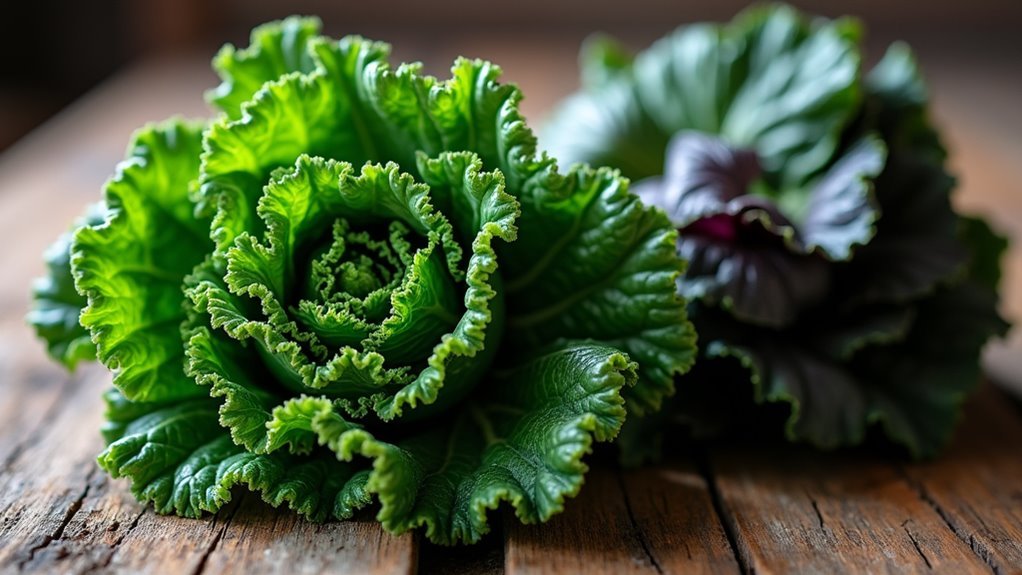
You’ll find kale, collard greens, and bok choy are exceptional calcium sources that outperform many dairy products. Kale offers 177 mg of calcium per cup with an impressive 40% absorption rate, while collard greens deliver 270 mg plus nearly 800 mcg of bone-strengthening vitamin K. Bok choy provides 158 mg of highly bioavailable calcium that’s easily absorbed by your body. These versatile greens support bone health, reduce inflammation, and offer plant-based nutrition that’ll transform your wellness approach.
Kale: The Calcium Absorption Champion
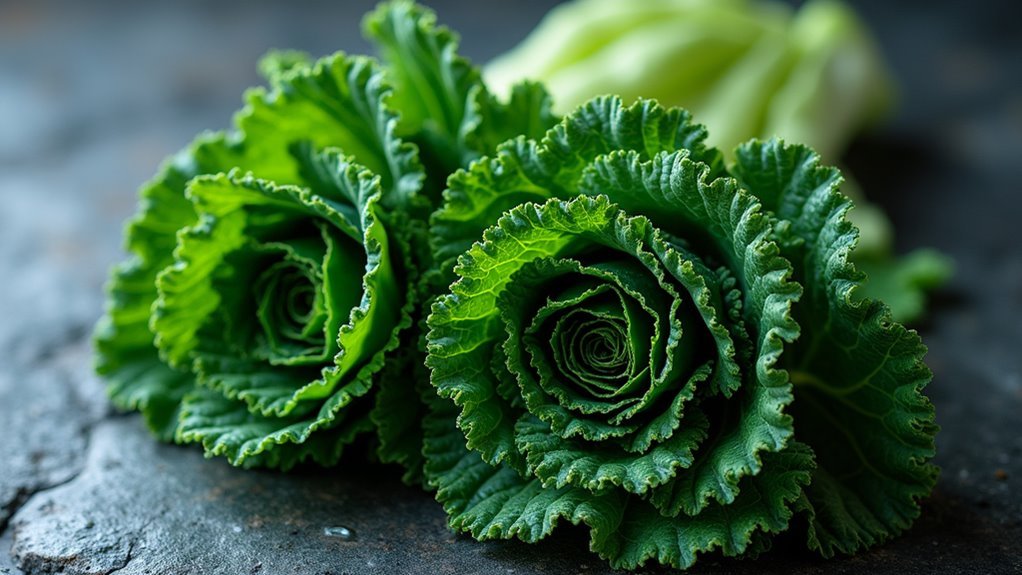
When you’re searching for plant-based calcium sources, kale stands out as an exceptional choice with its remarkable 40% calcium absorption rate. This makes it one of the most efficient leafy greens for meeting your daily recommended intake. One cup of cooked kale delivers approximately 177 mg of calcium, providing substantial nutritional value.
Beyond calcium, kale’s nutrient-dense profile includes vitamin K, which works synergistically to support bone health by improving calcium metabolism.
You’ll also benefit from powerful antioxidants like lutein and beta-carotene that enhance overall wellness.
Whether you enjoy kale raw in salads or cooked in soups and stir-fries, you’re maximizing your calcium absorption while supporting a balanced diet that prioritizes plant-based nutrition.
Collard Greens: Vitamin K Powerhouse for Bone Health
While kale earns recognition for its calcium absorption benefits, collard greens deserve equal attention as a bone health powerhouse that delivers an impressive 270 mg of calcium per cooked cup—matching the calcium content found in Greek yogurt.
What sets collard greens apart is their extraordinary vitamin K content—nearly 800 mcg per cup, providing over 800% of your daily needs. This vitamin K is vital for maintaining calcium balance and preventing osteoporosis.
| Nutrient | Amount per Cup | Bone Health Benefit |
|---|---|---|
| Calcium | 270 mg | Direct bone mineralization |
| Vitamin K | 800 mcg | Enhances calcium absorption |
| Potassium | 222 mg | Reduces calcium loss |
Beyond bone health, you’ll benefit from abundant antioxidants and fiber that combat inflammation and support digestion, making collard greens essential for extensive health benefits.
Bok Choy: Asian Green With Bioavailable Calcium
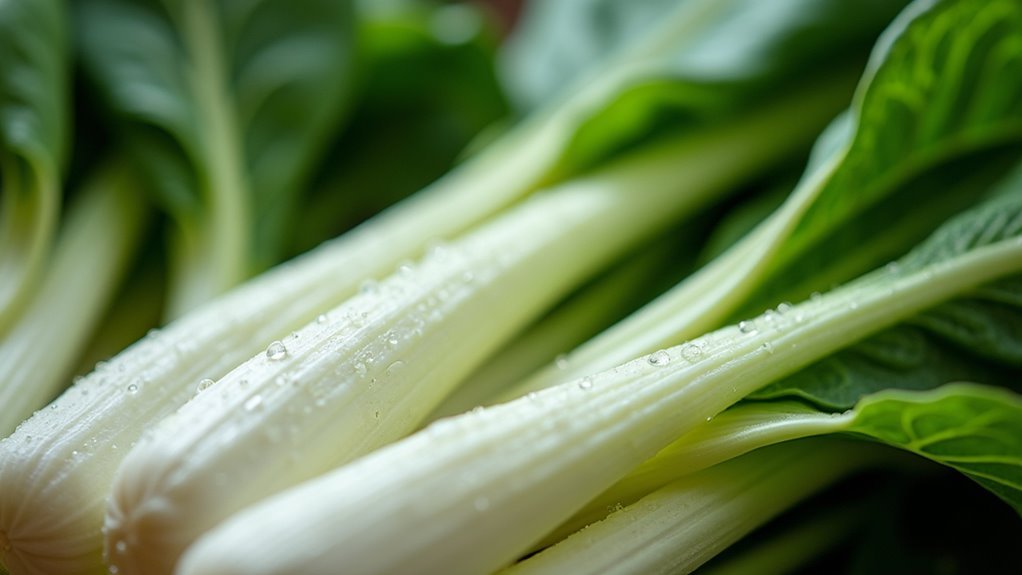
Though bok choy might appear delicate with its pale stems and dark green leaves, this Asian vegetable packs a serious calcium punch—delivering 158 mg of highly bioavailable calcium per cooked cup. Your body can easily absorb this calcium, making bok choy an exceptional source for meeting daily requirements without dairy.
Beyond calcium, you’ll benefit from vitamins A, C, and K while consuming minimal calories. Cooking actually enhances calcium absorption, so steam or stir-fry your bok choy to maximize nutrients.
This versatile green seamlessly fits into any meal plan, whether you’re following a plant-based diet or simply diversifying your calcium sources.
You’ll find bok choy’s mild flavor complements various dishes while supporting your overall health and bone strength through superior calcium bioavailability.
Frequently Asked Questions
Which Leafy Greens Have the Most Calcium?
You’ll find collard greens pack the most calcium at 270mg per cooked cup, followed by spinach at 245mg, then kale at 177mg. However, spinach’s oxalic acid reduces calcium absorption considerably.
What Are the Healthiest Dark Greens?
You’ll find collard greens and kale are the healthiest dark greens. They’re packed with highly absorbable calcium, vitamins A, C, and K, plus essential minerals that support bone health and immune function effectively.
How Can I Get 1200 Mg of Calcium a Day From Food?
You’ll reach 1200mg daily by combining fortified plant milk (300mg), calcium-set tofu (350mg), cooked collards (270mg), and almonds or chia seeds. These whole foods provide easily absorbed calcium without supplements.
What Plant Has the Highest Calcium?
You’ll find collard greens contain the highest calcium among plants, providing 270 mg per cooked cup. They’re your best choice since you’ll absorb more calcium from collards than other leafy greens.


Leave a Reply