
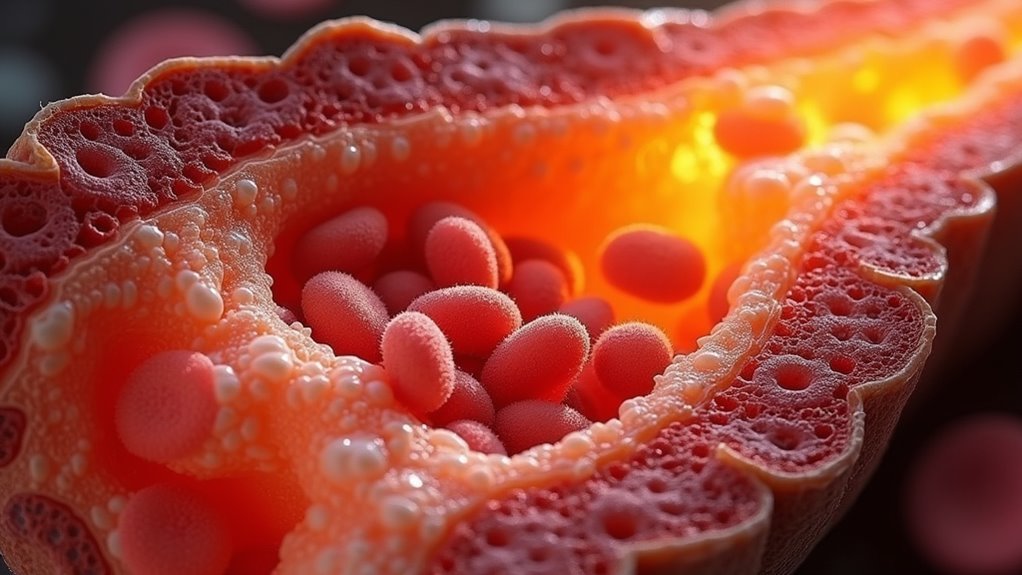
Bone marrow nutrients directly fuel your blood production by providing essential building blocks for healthy cells. You’ll get vitamin B12 and folate for red blood cell formation, iron for hemoglobin synthesis, and high-quality protein that breaks down into amino acids needed for oxygen transport. Healthy fats create the perfect environment for stem cell division, while collagen and glycine support blood vessel integrity and reduce inflammation. Understanding these nutrient pathways will reveal ideal strategies for maximizing your body’s blood-building potential.
Essential Nutrients Found in Bone Marrow for Blood Cell Formation

While most people think of bone marrow as simply the soft tissue inside bones, it’s actually a nutritional powerhouse that contains essential compounds your body needs to produce healthy blood cells.
Bone marrow delivers vitamin B12, which prevents anemia by ensuring proper red blood cells formation and maturation. You’ll also find abundant iron, a vital hemoglobin component that enables oxygen transport throughout your body.
The riboflavin present supports both red blood cell production and energy metabolism. Additionally, folate facilitates DNA synthesis and cell division, particularly important for generating new blood cells.
Collagen provides structural support for blood cell formation while maintaining bone health. These nutrients work together, making bone marrow an invaluable source for ideal blood production and overall circulatory system function.
How Iron and B Vitamins Support Red Blood Cell Development
Iron serves as the cornerstone of red blood cell development, forming the essential core of hemoglobin that carries oxygen throughout your body.
You’ll need 18 mg daily if you’re a woman, or 8 mg if you’re a man to maintain proper red blood cells production.
Vitamin B12 works alongside iron by supporting DNA synthesis during cell formation. Without adequate B12, you’ll develop megaloblastic anemia with large, dysfunctional cells.
Folate partners with B12 in this process, requiring 400 micrograms daily for peak cellular division.
Riboflavin enhances iron metabolism while supporting energy production.
A balanced diet combining iron-rich foods like red meat and beans with B vitamin sources such as leafy greens maximizes your bone marrow’s blood-forming efficiency.
Protein’s Role in Hemoglobin Synthesis and Oxygen Transport

Your body can’t produce hemoglobin without adequate protein, as amino acids serve as the essential building blocks for this oxygen-carrying molecule.
When you consume protein-rich foods, your system breaks down these proteins into amino acids that directly support the formation of globin chains within your red blood cells.
This process guarantees your blood can efficiently capture oxygen in your lungs and deliver it throughout your tissues during both rest and physical activity.
Protein Building Blocks
Although many people focus on iron when thinking about blood health, protein serves as the fundamental building block for hemoglobin synthesis and efficient oxygen transport throughout your body.
Your bone marrow relies on adequate protein intake to manufacture the four protein subunits that form each hemoglobin molecule. These subunits bind iron atoms, enabling your blood cells to carry up to four oxygen molecules per hemoglobin unit.
You’ll need approximately 46-56 grams of protein daily to support ideal blood production. High-quality protein sources like lean meats, fish, dairy, legumes, and nuts provide essential amino acids your bone marrow requires.
This protein foundation doesn’t just build hemoglobin—it also supports enzyme and hormone production necessary for red blood cell development, ensuring your circulatory system functions efficiently.
Hemoglobin Formation Process
Hemoglobin formation begins when your bone marrow combines the protein globin chains you’ve consumed with iron-containing heme groups to create functional oxygen-carrying molecules.
This sophisticated process requires specific nutrients working together to produce healthy red blood cells that’ll efficiently transport oxygen throughout your body.
Your bone marrow relies on these essential components for ideal hemoglobin synthesis:
- Iron for creating heme groups that bind oxygen molecules
- Vitamin B6, B12, and folate for red blood cell maturation
- Adequate protein intake providing necessary amino acids
- Proper nutrient absorption supporting cellular development
- Sufficient vitamin C enhancing iron bioavailability
When you’re deficient in any of these nutrients, your bone marrow can’t produce adequate hemoglobin levels, leading to anemia and compromised oxygen delivery to your tissues.
Oxygen Delivery Mechanisms
Once oxygen enters your lungs, hemoglobin’s protein structure determines how effectively it’ll capture and transport these essential molecules throughout your circulation.
Your bone marrow produces red blood cells containing hemoglobin molecules that comprise 33% of each cell’s weight. Each hemoglobin molecule contains four heme groups with iron at their center, enabling direct oxygen binding.
When you breathe, iron-containing heme components grab oxygen molecules in your lungs, while globin protein chains maintain structural stability during transport. This coordinated system guarantees efficient oxygen delivery to every tissue in your body.
Without adequate iron and amino acids for protein synthesis, your hemoglobin can’t function properly, compromising oxygen transport and leading to fatigue, weakness, and reduced cellular energy production throughout your system.
Stem Cell Nourishment Through Healthy Fats and Adiponectin

Your bone marrow’s stem cells depend on healthy fats and adiponectin hormone to fuel their transformation into crucial blood cells.
These essential fatty acids create an ideal microenvironment that supports rapid stem cell division and the daily production of billions of red and white blood cells.
When you consume nutrient-rich bone marrow, you’re providing conjugated linoleic acid and other beneficial fats that reduce inflammation and enhance your body’s blood-forming processes.
Adiponectin Hormone Benefits
Fat cells throughout your body produce adiponectin, a powerful hormone that’s essential for blood cell production in your bone marrow.
This remarkable hormone creates ideal conditions for your stem cells to thrive and multiply effectively.
Adiponectin delivers several key benefits for your blood production:
- Enhanced stem cell function – Promotes proliferation and differentiation of hematopoietic stem cells
- Improved insulin sensitivity – Regulates glucose levels and supports metabolic health
- Reduced chronic inflammation – Creates a healthier bone marrow environment
- Better fatty acid breakdown – Enhances energy metabolism for cellular processes
- Diabetes prevention – Lowers risk through improved blood sugar management
Healthy fats in your bone marrow facilitate adiponectin production, establishing a beneficial cycle where proper nutrition supports hormone production, which then enhances your body’s ability to generate new blood cells efficiently.
Essential Fatty Acids
While your body produces many nutrients internally, essential fatty acids must come from your diet—and bone marrow provides some of the most bioavailable forms for stem cell nourishment.
These vital fats support your stem cells’ development and function in blood production by maintaining cell membrane integrity. When your cell membranes remain healthy, stem cells involved in hematopoiesis operate most efficiently.
Bone marrow’s conjugated linoleic acid offers anti-inflammatory properties that enhance your blood cell production environment. This creates favorable conditions for your stem cells to thrive and multiply effectively.
Additionally, these essential fatty acids work synergistically with other bone marrow compounds to promote metabolic health. By consuming bone marrow, you’re providing your body with concentrated nutrients that directly support your blood production systems and overall cellular function.
Stem Cell Development
Beyond supplying essential fatty acids, bone marrow delivers adiponectin—a powerful hormone that directly enhances your stem cell development and function.
This hormone creates an ideal environment for stem cells that produce your blood components while maintaining the health of your bone marrow tissue.
Adiponectin transforms your bone marrow environment through:
- Reducing inflammation that can damage healthy bone marrow cells
- Improving insulin sensitivity to support cellular energy metabolism
- Enhancing stem cell proliferation and differentiation processes
- Maximizing the production of red and white blood cells
- Maintaining the structural integrity of hematopoietic stem cell niches
When you consume bone marrow, you’re providing your body with concentrated adiponectin and supporting nutrients that directly nourish these crucial stem cells, ensuring efficient blood cell production.
Collagen and Glycine Benefits for Blood Vessel Health
As the foundation of your blood vessel architecture, collagen serves as the primary structural protein that maintains arterial and venous integrity throughout your circulatory system. This crucial protein guarantees your vessels remain elastic and strong, directly supporting ideal blood flow and circulation.
Glycine, a key amino acid from collagen breakdown, contributes to hemoglobin synthesis, enhancing your body’s oxygen-carrying capacity. When you supplement with collagen, you’re actively promoting blood vessel healing and reducing vascular disease risks.
| Nutrient Component | Primary Blood Vessel Benefit |
|---|---|
| Collagen Protein | Maintains vessel elasticity and structural integrity |
| Glycine Amino Acid | Supports hemoglobin synthesis for oxygen transport |
| Anti-inflammatory Properties | Protects vessels from chronic inflammation damage |
| Vascular Healing Factors | Enhances circulation and blood production efficiency |
Both collagen and glycine possess anti-inflammatory properties that protect your blood vessels from oxidative stress, ultimately supporting enhanced blood production.
Phosphorus and Mineral Support for Bone Marrow Function
Phosphorus serves as a fundamental mineral that directly powers your bone marrow’s blood-producing machinery through its role in cellular energy production and genetic material synthesis.
This essential nutrient works synergistically with calcium to maintain the structural integrity of your bones, creating an ideal environment for blood cell formation.
Your bone marrow depends on adequate phosphorus levels to function effectively:
- ATP production – Fuels energy for hematopoietic stem cell proliferation and differentiation
- DNA/RNA synthesis – Enables genetic material formation vital for new blood cells
- Bone strength – Partners with calcium to maintain sturdy bone structure housing marrow
- Cellular metabolism – Supports biochemical processes essential for healthy blood production
- Marrow environment – Enhances overall conditions for ideal blood cell manufacturing
Without sufficient mineral support from phosphorus, you’ll experience weakened bones and compromised bone marrow function, potentially leading to reduced blood cell production and increased anemia risk.
Anti-Inflammatory Compounds That Optimize Blood Production
While chronic inflammation can severely disrupt your bone marrow’s blood-producing capacity, the natural anti-inflammatory compounds found within bone marrow itself create a perfect internal environment for hematopoiesis.
Glycine, an amino acid abundant in bone marrow, delivers potent anti-inflammatory properties that directly enhance your marrow’s health and support efficient blood production.
You’ll also benefit from conjugated linoleic acid (CLA), which reduces inflammation and improves your marrow’s environment for red blood cells and white cell formation.
The collagen present supports your overall health while reducing inflammatory stress throughout your body.
Regular bone marrow consumption helps lower systemic inflammation levels, creating ideal conditions for your bone marrow to produce healthy blood cells consistently and effectively.
Dietary Strategies to Maximize Bone Marrow Nutrient Absorption
To maximize your body’s absorption of bone marrow’s powerful nutrients, you’ll need to strategically combine specific foods that work synergistically with the marrow’s natural compounds.
Strategic food pairing unlocks bone marrow’s maximum nutritional potential by creating powerful synergistic combinations that enhance your body’s natural absorption processes.
Strategic pairing enhances nutrient uptake and supports ideal blood cell production. You’ll want to focus on these key combinations:
- Iron-rich foods with vitamin C sources – Pair red meat or legumes with citrus fruits and bell peppers to boost iron absorption.
- Vitamin B12 foods alongside folate sources – Combine fish and dairy with leafy greens for enhanced red blood cell maturation.
- Healthy fats with fat-soluble vitamins – Include avocados and nuts to support nutrient transport and bone marrow energy.
- Timing your meals – Space iron and calcium intake to prevent absorption interference.
- Fresh, whole foods over processed – Choose unprocessed options to maximize bioavailability.
These combinations enhance your bone marrow’s blood-producing capabilities.
Frequently Asked Questions
Does Bone Marrow Help With Blood Production?
Yes, your bone marrow directly produces blood cells through hematopoiesis. It’s where you’ll find stem cells that create red blood cells, white blood cells, and platelets, generating billions daily for your body’s needs.
What Are the Benefits of Bone Marrow Nutrition?
You’ll gain essential B12 for red blood cell formation, riboflavin and iron for energy production, plus collagen supporting blood vessel integrity. Glucosamine reduces inflammation while healthy fats sustain your body’s blood production processes.
How to Increase Blood Production in Bone Marrow?
You’ll boost bone marrow blood production by eating iron-rich foods, getting adequate B12 and folate, exercising regularly to stimulate EPO hormone, staying hydrated, and avoiding alcohol or harmful medications.
What Is the Role of Bone Marrow in Blood Cell Production?
Your bone marrow serves as your body’s blood factory, producing billions of red blood cells, white blood cells, and platelets daily through hematopoiesis, ensuring you’ve got adequate oxygen transport, immune defense, and clotting capability.


Leave a Reply