
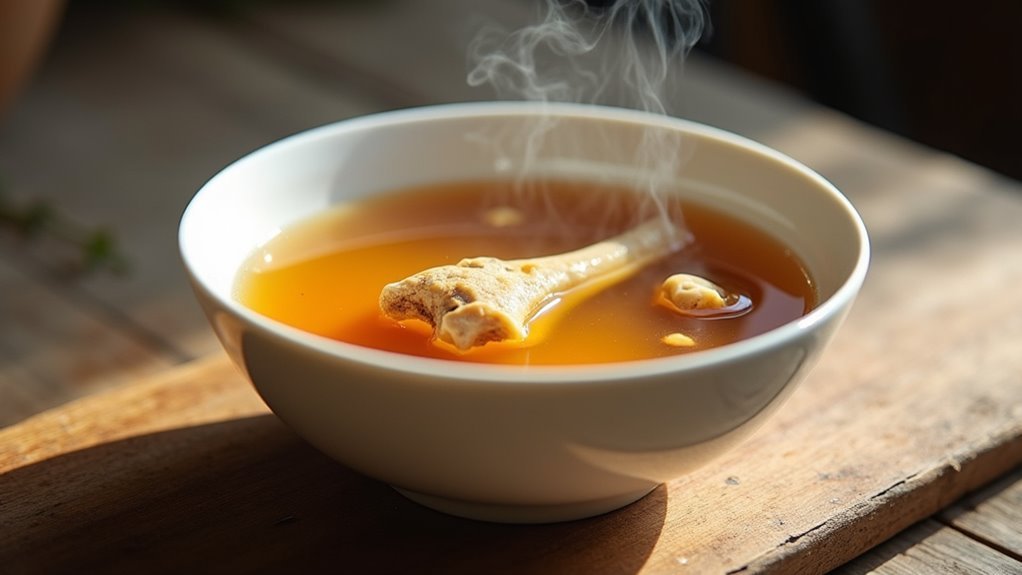
Type 2 collagen from bone broth specifically targets your cartilage tissue, providing essential amino acids like glycine and proline that support joint repair and reduce inflammation. You’ll get the best results by simmering chicken bones for 12-24 hours with apple cider vinegar to extract maximum collagen. Clinical studies show 40mg daily can reduce joint pain by 40% and improve function within six months. This natural approach helps counteract age-related collagen decline while promoting cartilage regeneration. Continue exploring to discover ideal timing strategies and safety considerations.
What Is Type 2 Collagen and How Does It Differ From Other Types

Type II collagen stands as the cornerstone of healthy cartilage, forming roughly 90% of the tissue that cushions your joints and keeps them moving smoothly.
Type II collagen forms 90% of cartilage tissue, serving as the essential foundation for smooth joint movement and cushioning.
Unlike Type I collagen that strengthens your skin, bones, and tendons, type II collagen specializes in maintaining joint integrity and elasticity. This distinction matters because your cartilage faces unique demands—it must absorb shock while allowing flexible movement.
You’ll find type II collagen primarily sourced from chicken breastbone cartilage, contrasting with other collagen types derived from bovine hides or fish scales.
When you’re dealing with joint pain or stiffness from osteoarthritis, type II collagen offers targeted support. Studies demonstrate its effectiveness in improving joint function and reducing pain, making it specifically valuable for cartilage deterioration issues.
The Science Behind Bone Broth as a Natural Source of Type 2 Collagen
You’ll find that bone broth’s cartilage-repairing power stems from Type 2 collagen’s unique triple-helix structure, which matches exactly what your joints need for ideal function.
When you simmer chicken bones, skin, and cartilage for extended periods, you’re extracting this specific collagen along with its accompanying amino acids like glycine and proline.
This cartilage-specific protein delivers targeted benefits that other collagen types simply can’t match for joint health.
Type 2 Collagen Structure
Understanding the molecular architecture of Type II collagen reveals why bone broth stands in this way a powerful ally for cartilage health.
Type II collagen forms a unique triple-helix structure composed of three intertwined protein chains, creating exceptional tensile strength and flexibility that’s essential for cartilage function. This specialized structure is mainly built from glycine and proline amino acids, which you’ll find abundantly in bone broth derived from chicken cartilage and bones.
The triple-helix configuration allows cartilage to withstand compression while maintaining elasticity in your joints. When you consume bone broth, you’re providing your body with the specific amino acid building blocks needed to support type II collagen synthesis and maintain this vital structural framework.
Bone Broth Production Methods
The traditional art of creating bone broth transforms animal bones and cartilage into a nutrient-dense liquid through an extended simmering process that releases the collagen matrix within.
You’ll need to simmer chicken bones for 12-24 hours to extract maximum type II collagen, while beef bones require 24-48 hours due to their denser structure.
The slow cooking breaks down connective tissues, allowing collagen fibers to dissolve into the liquid along with essential amino acids like glycine and proline.
You should maintain a gentle simmer rather than a rolling boil to preserve the integrity of the type II collagen molecules.
Adding acidic ingredients like apple cider vinegar helps draw minerals from the bones, enhancing the bone broth’s nutritional profile and collagen content.
Cartilage-Specific Protein Benefits
While your body produces its own collagen, the type II collagen found in bone broth offers distinct advantages for cartilage repair that your natural production can’t always match.
This specific protein type provides the exact building blocks your cartilage needs to maintain its structure and function.
The Type II collagen in bone broth delivers glycine and proline, amino acids that directly support new cartilage synthesis.
Unlike other collagen types, Type II collagen specifically targets joint tissues, helping reduce inflammation while promoting damaged cartilage repair.
When you consume bone broth regularly, you’re supplying your joints with concentrated nutrients that enhance connective tissue health.
This targeted approach means improved joint cushioning, reduced stiffness, and better mobility over time.
Your cartilage receives precisely what it needs for ideal repair and maintenance.
Understanding Cartilage Structure and the Role of Type 2 Collagen
When you examine cartilage at the cellular level, you’ll discover it’s a remarkable connective tissue that acts as your body’s natural shock absorber in joints.
This flexible tissue consists primarily of Type II collagen, which comprises approximately 90% of cartilage’s structure and provides essential support and cushioning between your bones.
Type II collagen contains high concentrations of glycine and proline, amino acids that maintain cartilage integrity and elasticity.
As you age, your body’s natural production of this important protein declines, leading to joint deterioration and conditions like osteoarthritis.
Research demonstrates that Type II collagen supplementation can considerably improve joint function and reduce pain.
Bone broth, especially from chicken bones, offers a natural source of this crucial protein, supplying the building blocks your cartilage needs for repair and maintenance.
How Age and Injury Affect Natural Collagen Production in Joints

As you age past 30, your body’s natural collagen production drops by about 1% each year, directly impacting your joint health and cartilage integrity.
This decline becomes even more pronounced when you experience injuries, as your damaged tissues demand more collagen for repair than your body can efficiently produce.
The combination of aging and injury creates a challenging cycle where your joints need more support precisely when your natural collagen synthesis is at its weakest.
Age-Related Collagen Decline
Once you reach age 25, your body’s natural collagen production begins a steady decline of approximately 1% each year, creating a compounding effect that greatly impacts your joint health over time. This reduction becomes particularly noticeable in your knees and hips, where cartilage relies heavily on specific collagen type structures for proper function.
| Age Range | Collagen Loss | Joint Impact |
|---|---|---|
| 25-40 | 15-30% decline | Mild stiffness |
| 40-60 | 35-50% decline | Noticeable pain |
| 60+ | 50%+ decline | Severe limitation |
Injury Impact on Cartilage
While your body’s collagen production naturally decreases with age, injuries create an additional burden that can greatly accelerate cartilage deterioration in your joints.
When you experience joint trauma like ligament tears or fractures, the delicate balance between cartilage collagen synthesis and breakdown becomes severely disrupted. Your body’s diminished repair capacity means injuries take longer to heal, and cartilage damage becomes more permanent.
Chronic inflammation from these injuries further inhibits your collagen production, creating a destructive cycle where damaged cartilage can’t properly regenerate.
This compounds the natural age-related decline, where you’re already producing 30-50% less collagen by age 60. The result is accelerated cartilage degradation, increased joint stiffness, and heightened pain that greatly impacts your mobility and quality of life.
Clinical Research on Type 2 Collagen for Osteoarthritis Relief
Research into undenatured type II collagen (UC-II) has produced compelling evidence for osteoarthritis relief, with clinical trials demonstrating significant pain reduction and improved joint function comparable to traditional treatments like glucosamine.
When you take 40 mg of UC-II daily, you’ll likely experience meaningful improvements. Studies show participants reported 40% better joint function and decreased pain levels within six months.
A thorough meta-analysis of 41 studies confirms that type II collagen supplementation effectively promotes cartilage repair while reducing osteoarthritis symptoms.
You’ll benefit from collagen’s ability to enhance anti-inflammatory compound production, which further supports joint health. The research consistently shows that UC-II alleviates joint stiffness and provides notable pain relief, making it a promising natural approach for managing your osteoarthritis symptoms.
Comparing Bone Broth vs. Collagen Supplements for Cartilage Repair

How do bone broth and collagen supplements stack up when you’re looking to repair cartilage damage?
While bone broth provides beneficial Type I and III collagen for overall health, it doesn’t deliver the concentrated Type II collagen your joints specifically need for cartilage repair.
Here’s how collagen supplements outperform bone broth for cartilage health:
- Targeted formulation – UC-II collagen supplements contain undenatured Type II collagen that directly supports cartilage repair.
- Higher potency – You’ll get 2.5-15 grams of concentrated collagen per serving versus minimal amounts in bone broth.
- Clinical backing – Studies show significant joint pain reduction and improved function with collagen supplements.
If you’re seeking faster, more pronounced cartilage repair benefits, collagen supplements offer superior bioavailability and targeted delivery for joint health.
Optimal Dosing and Timing for Type 2 Collagen Effectiveness
You’ll need to follow specific daily dosage guidelines to maximize Type II collagen’s cartilage repair benefits from bone broth.
The recommended 40 mg daily intake should be taken consistently on an empty stomach each morning for ideal absorption.
You can expect to see noticeable improvements in joint health after 4-6 months of regular supplementation.
Daily Dosage Guidelines
Determining the right dosage of Type II collagen can make the difference between modest improvements and significant cartilage repair benefits.
Research shows that undenatured Type II collagen like UC-II requires just 40 mg daily, while hydrolyzed forms need substantially more.
Here’s what you need to know about proper dosing:
- Undenatured Type II collagen: Take 40 mg once daily on an empty stomach for ideal absorption.
- Hydrolyzed collagen: Consider 2.5 to 15 grams daily depending on your specific joint health goals.
- Timeline: Maintain consistent use for 4-6 months to see significant cartilage repair improvements.
You’ll want to consult your healthcare provider to personalize your dosage based on your individual needs and monitor potential side effects during supplementation.
Timing for Results
Understanding proper dosage sets the foundation, but knowing when to expect results helps you stay committed to your cartilage repair journey.
You’ll likely notice initial improvements in joint pain and flexibility within two weeks of consistent Type II collagen supplementation. However, don’t expect dramatic changes overnight—patience is key.
For meaningful symptom management, particularly with osteoarthritis, you’ll need at least three months of regular use.
The most significant benefits typically emerge after four to six months of daily supplementation. To maximize effectiveness, take your Type II collagen at the same time each day, which supports ideal absorption and collagen production.
Making Homemade Bone Broth Rich in Type 2 Collagen
Creating nutrient-dense bone broth at home requires selecting the right chicken parts and following a precise simmering process to maximize Type II collagen extraction.
You’ll want to choose bones with plenty of connective tissue, particularly joints, necks, and feet. These parts contain the highest concentrations of Type II collagen essential for cartilage repair.
Here’s your step-by-step approach:
- Combine chicken bones with skin and cartilage in a large pot or slow cooker.
- Add 2 tablespoons of apple cider vinegar to help extract minerals and collagen from the bones.
- Simmer for 24-48 hours on low heat to thoroughly break down the collagen into bioavailable forms.
The extended cooking time breaks down tough connective tissues, releasing valuable amino acids and Type II collagen into your broth for maximum joint health benefits.
Selecting Quality Commercial Bone Broth Products for Maximum Benefits
When you’re shopping for commercial bone broth, you’ll need to scrutinize ingredient lists to guarantee you’re getting high-quality sources like grass-fed or pasture-raised animals without artificial additives.
The processing method matters considerably—slow-simmered broths retain more beneficial compounds than quickly processed alternatives that sacrifice nutrition for convenience.
You should also investigate the company’s sourcing practices and look for third-party certifications that verify collagen content and overall product quality.
Ingredient Quality Standards
The quality of commercial bone broth varies dramatically, and choosing the right product can mean the difference between genuine cartilage repair benefits and wasted money.
You’ll need to scrutinize ingredient labels carefully to guarantee you’re getting therapeutic-grade bone broth that actually delivers Type II collagen for joint health.
Focus on these three critical quality markers:
- Animal sourcing – Select products from grass-fed or pasture-raised animals for superior collagen content.
- Vinegar inclusion – Look for vinegar in ingredients, which extracts essential minerals and collagen during cooking.
- Additive-free formulation – Avoid products containing artificial preservatives or additives that compromise nutritional value.
Always verify the product explicitly contains Type II collagen and check third-party testing certifications plus customer reviews to confirm effectiveness.
Processing Method Impact
Although manufacturers may claim their bone broth supports cartilage repair, processing methods dramatically affect whether you’ll actually receive therapeutic benefits.
You’ll want to choose products made through slow simmering at low temperatures, as this gentle approach preserves delicate type II collagen structures that high-heat methods destroy. The best commercial options typically simmer for 12-24 hours, allowing proper extraction without nutrient degradation.
Check that your chosen brand uses bones and connective tissues specifically rich in type II collagen, as these provide ideal cartilage repair compounds.
Avoid products made with pressure cooking or rapid extraction methods, which compromise collagen integrity. Quality producers will highlight their slow-cooking process on labels, indicating they understand how processing directly impacts therapeutic value.
Sourcing and Transparency
Beyond processing methods, sourcing quality becomes equally important when selecting commercial bone broth products that’ll actually support cartilage repair. You need transparency about where and how the bones are sourced to guarantee maximum nutritional benefits.
When evaluating commercial bone broth options, prioritize these sourcing factors:
- Grass-fed, pasture-raised animals – These provide superior nutrient density and quality compared to conventionally raised livestock.
- Clear sourcing documentation – Brands should openly share their farming practices and animal welfare standards.
- Third-party certifications – Look for independent testing that verifies quality standards and confirms absence of harmful additives.
Additionally, check ingredient lists for vinegar, which extracts collagen and minerals effectively. Choose products that specifically identify Type II collagen content, as it’s particularly beneficial for cartilage repair and joint health support.
Combining Type 2 Collagen With Other Joint-Supporting Nutrients
How can you maximize the joint-supporting benefits of Type II collagen from bone broth?
You’ll get enhanced results by combining type II collagen with complementary nutrients that work synergistically for ideal cartilage repair.
Pairing chondroitin sulfate with type II collagen provides essential building blocks for cartilage, ligaments, and tendons.
Adding glucosamine further supports cartilage structure and joint lubrication, potentially reducing osteoarthritis symptoms.
The amino acids glycine and proline in type II collagen work best when you include vitamin C, which is vital for collagen synthesis and repair.
You can also incorporate omega-3 fatty acids to reduce joint inflammation, improving mobility and reducing pain.
Consider adding antioxidants like curcumin to combat oxidative stress and inflammation that contribute to joint degradation.
Safety Considerations and Potential Side Effects of Type 2 Collagen
While Type II collagen from bone broth offers promising joint health benefits, you should understand its safety profile before incorporating it into your routine. Research shows that Type II collagen supplements are generally safe for short-term use, with doses up to 40 mg daily for 24 weeks producing no significant adverse effects in controlled studies.
However, you should be aware of these important safety considerations:
- Gastrointestinal effects – You might experience stomach discomfort or digestive issues when starting supplementation.
- Limited long-term data – There’s insufficient research on prolonged use, so exercise caution with extended consumption.
- Special populations – Avoid Type II collagen during pregnancy, breastfeeding, or if you have existing collagen allergies.
Athletic Recovery and Performance Benefits of Type 2 Collagen
Athletes who subject their joints to intense training demands will find Type II collagen from bone broth particularly valuable for recovery and performance enhancement.
You’ll experience significant reductions in joint pain and inflammation when supplementing with Type II collagen, directly improving your recovery times after strenuous exercise.
Taking 40 mg of undenatured Type II collagen daily can enhance your athletic performance by promoting cartilage repair and reducing joint stiffness.
You’ll recover faster from injuries and feel less joint soreness following intense activity.
Since Type II collagen supports your body’s natural collagen production, which declines with age, you’ll maintain excellent joint function throughout your athletic career while preserving peak performance levels.
Long-Term Joint Health Maintenance With Regular Collagen Intake
Since your body’s natural collagen production decreases by approximately 1% each year after age 25, establishing a consistent Type II collagen routine becomes essential for preserving joint health throughout your lifetime.
Regular supplementation with 40 mg of undenatured type II collagen delivers measurable benefits for long-term joint maintenance. Clinical trials spanning 4-6 months demonstrate significant improvements in joint function and pain reduction, particularly for osteoarthritis sufferers.
Your commitment to daily collagen intake supports three critical areas:
- Cartilage regeneration – Provides essential building blocks for ongoing repair and maintenance
- Bone mineral density – Particularly beneficial for postmenopausal women at osteoporosis risk
- Connective tissue support – Maintains overall joint structural integrity as you age
Consistent type II collagen supplementation effectively counteracts age-related collagen decline, promoting sustained mobility and joint longevity.
Tracking Progress and Measuring Cartilage Repair Success
Establishing your regular collagen routine represents just the beginning of your joint health journey—measuring actual progress guarantees you’re achieving meaningful cartilage repair results.
You can track improvements through pain reduction and decreased stiffness, with studies showing 95% of users experiencing significant relief within two weeks of starting type II collagen supplements.
Use functional assessments like the WOMAC index to quantify joint improvements objectively.
MRI and ultrasound imaging provide visual evidence of cartilage thickness changes and structural integrity improvements.
Document your daily activities and quality of life changes through patient-reported outcome surveys.
Longitudinal studies confirm that consistent type II collagen use over six months produces measurable cartilage health enhancements, creating a clear trajectory of recovery you can monitor and celebrate.
Frequently Asked Questions
Can Type 2 Collagen Rebuild Cartilage?
You can’t completely rebuild cartilage with type 2 collagen, but it’ll stimulate your body’s collagen production and may help repair existing cartilage while reducing joint pain and stiffness over time.
Is Bone Broth Good for Cartilage Repair?
You’ll find bone broth supports cartilage repair through its Type II collagen content. It provides essential amino acids like glycine and proline that help rebuild cartilage tissue and reduce joint inflammation effectively.
Is Type 2 Collagen in Bone Broth?
You’ll find Type II collagen in chicken bone broth made from bones, skin, and cartilage. Regular bone broth typically contains Type I and III collagen, so you’ll need chicken-specific broth for Type II.
What Is Collagen Type 2 Good For?
You’ll benefit from type 2 collagen’s joint health support, reducing arthritis pain and stiffness while improving cartilage function. It also enhances skin hydration, boosts elasticity, and strengthens your body’s connective tissues naturally.


Leave a Reply