

You’ll maximize knee repair by choosing grass-fed bones and simmering them for 12-24 hours to extract Type II collagen. Add apple cider vinegar to release minerals, then consume 1-4 servings daily for ideal cartilage support. Combine your bone broth with whey protein to enhance connective tissue production, and store portions in your freezer for consistent use. Remember to limit caffeine intake since high consumption impairs collagen synthesis. These fundamentals will set you up for the deeper strategies ahead.
Choose High-Quality Bones From Grass-Fed Animals for Maximum Collagen Content
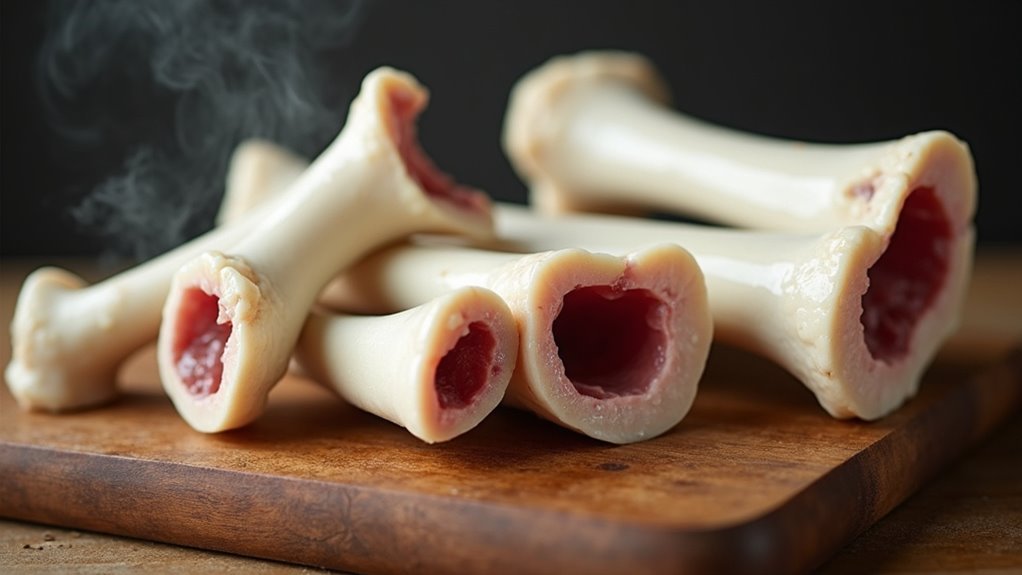
When you’re making bone broth specifically for knee repair, you’ll want to start with high-quality bones from grass-fed animals.
These bones contain superior nutrient profiles compared to conventionally raised animals, delivering more omega-3 fatty acids and antioxidants that enhance anti-inflammatory properties.
Grass-fed bones provide Type II collagen, which directly supports cartilage repair in your knees. This high quality sourcing guarantees you’re getting bone broth protein that’s free from harmful chemicals and heavy metals.
Collagen supplements help, but creating your own broth from grass-fed joints and feet maximizes gelatin yield.
You’ll extract more beneficial compounds that specifically target knee health, making your homemade broth far more effective than store-bought alternatives.
Simmer Bones for 12-24 Hours to Extract Type II Collagen for Joint Health
You’ll need to simmer your high-quality bones for 12-24 hours to properly extract the type II collagen that’s essential for knee repair.
This extended cooking time breaks down the collagen into gelatin, making it easier for your body to absorb the amino acids needed for joint maintenance.
The slow extraction process maximizes the joint health benefits, giving you a nutrient-dense broth that can reduce inflammation and support knee flexibility.
Optimal Simmering Time Duration
Although many people rush the bone broth process, you’ll achieve maximum collagen extraction by simmering your bones for 12-24 hours. This ideal simmering time guarantees you’re breaking down connective tissues completely, releasing type II collagen that’s vital for collagen synthesis and knee repair.
You can’t shortcut this process – anything less than 12 hours won’t extract sufficient nutrients like glucosamine and chondroitin that support joint health.
During extended simmering, the bones release gelatin that transforms your broth into a nutrient-dense healing elixir. Adding vinegar helps draw out minerals more effectively.
The bone broth made through this lengthy process becomes rich in bioactive compounds that reduce joint discomfort and improve mobility. Remember, patience during cooking translates to better therapeutic benefits for your knees.
Type II Collagen Extraction
Type II collagen represents the most abundant protein in knee cartilage, and you’ll extract maximum amounts by focusing on chicken feet, necks, and backs during your bone broth preparation.
Start simmering these animal bones for 12-24 hours to break down collagen structures effectively. Add two tablespoons of apple cider vinegar to your pot—it’ll leach minerals and enhance type II collagen extraction from connective tissues.
During extended simmering, you’ll notice your broth developing a gelatinous consistency when cooled, indicating successful collagen breakdown.
This concentrated broth delivers natural glucosamine and chondroitin compounds essential for joint health. Regular consumption supports cartilage repair and reduces osteoarthritis symptoms, improving knee mobility while alleviating degenerative joint pain naturally.
Joint Health Benefits
Beyond extraction techniques, the joint health benefits from properly simmered bone broth become apparent through consistent consumption. You’ll receive type II collagen that comprises 90% of cartilage, directly supporting cartilage repair and reducing joint discomfort. The glucosamine and chondroitin naturally present work together to reduce inflammation, particularly benefiting osteoarthritis conditions.
| Component | Function | Daily Impact |
|---|---|---|
| Type II Collagen | Cartilage structure | Enhanced flexibility |
| Glucosamine | Joint lubrication | Improved mobility |
| Chondroitin | Inflammation control | Reduced pain |
| Combined nutrients | Bone health support | Overall joint maintenance |
Regular intake of 1-4 servings daily enhances your body’s collagen levels, promoting better joint health and mobility. Studies confirm significant discomfort reduction in osteoarthritis patients, demonstrating bone broth’s effectiveness for joint repair and long-term maintenance.
Add Apple Cider Vinegar to Break Down Bones and Release Minerals
Many bone broth enthusiasts overlook one essential ingredient that can greatly enhance their broth’s nutritional value: apple cider vinegar.
When you add apple cider vinegar to your bone broth recipe, you’ll create an acidic environment that breaks down bones effectively, helping release minerals like calcium, magnesium, and potassium into your broth.
The vinegar’s acidity also enhances collagen and amino acid extraction from bones and connective tissues during simmering. This simple addition considerably improves your broth’s nutritional profile while boosting nutrient absorption in your body.
You’ll want to use about 2 tablespoons per gallon of water – this creates ideal conditions for mineral extraction without overpowering the taste.
The result is richer, more flavorful bone broth with enhanced health benefits for knee repair.
Consume 1-4 Servings Daily for Optimal Knee Cartilage Support

Once you’ve prepared nutrient-rich bone broth with proper mineral extraction, you’ll need to consume it consistently to support your knee cartilage effectively.
To maximize benefits for knee cartilage health, consume 1-4 servings daily of your homemade bone broth. Each serving delivers essential type II collagen directly to your joints, providing the building blocks your cartilage needs for repair.
The glucosamine and chondroitin in bone broth work synergistically with amino acids like glycine and proline to enhance collagen synthesis. This combination promotes healing in damaged knee cartilage while reducing joint discomfort.
Studies show that individuals with knee osteoarthritis experience improved mobility with consistent intake. For best results, choose grass-fed sources and maintain regular consumption patterns rather than sporadic use.
Combine Bone Broth With Whey Protein to Enhance Connective Tissue Production
While bone broth provides excellent collagen support on its own, you’ll amplify your knee repair efforts by combining it with whey protein. This powerful combination creates complementary amino acid profiles that enhance connective tissue production more effectively than either ingredient alone.
Combining bone broth with whey protein creates superior amino acid synergy that maximizes connective tissue repair beyond what either provides alone.
Here’s why this pairing works:
- Complete protein synergy – Whey protein’s high leucine content supports muscle synthesis while bone broth delivers glycine and proline for connective tissue health.
- Enhanced collagen synthesis – Studies show combining both proteins improves collagen production in muscles and joints.
- Reduce inflammation – Both ingredients work together to minimize inflammatory responses that hinder knee recovery.
- Optimal dosing – Consume 1-4 servings of bone broth with one serving of whey protein daily for maximum connective tissue support.
Store and Freeze Bone Broth in Small Portions for Consistent Daily Use

You’ll maximize your bone broth’s benefits by storing it properly and freezing individual portions for daily consumption.
Smart storage methods keep your broth fresh while making it convenient to maintain consistent intake for knee repair.
Strategic freezing portion strategies guarantee you’re never without this healing elixir when your joints need it most.
Proper Storage Methods
Three fundamental storage principles will maximize your bone broth’s therapeutic benefits for knee repair: refrigeration timing, freezing methods, and proper reheating techniques.
These proper storage methods guarantee you’ll maintain peak nutrient quality in your homemade bone broth.
Follow these essential steps:
- Refrigerate immediately – Store fresh bone broth for maximum 3-4 days before transferring to freezer
- Freeze bone broth strategically – Use ice cube trays or silicone molds for convenient daily portions
- Protect with airtight containers – Minimize air exposure using freezer bags or sealed containers to prevent freezer burn
- Label everything – Date all containers to use oldest batches first
When you’re ready to consume, reheat gently on the stove or microwave.
Avoid rapid boiling to preserve the collagen and nutrients essential for knee repair.
Freezing Portion Strategies
Smart partitioning transforms your bone broth storage into a sustainable daily routine that supports consistent knee repair.
These freezing portion strategies maximize convenience while preserving collagen content essential for joint health.
Freeze broth in ice cube trays to create 1-2 ounce portions you’ll use daily.
Once frozen, transfer cubes to labeled resealable bags or airtight containers with dates for ideal freshness tracking.
For larger needs, portion broth into quart-sized containers that’ll thaw easily for weekly meals.
Always leave expansion space when freezing to prevent messy spills.
Your frozen bone broth maintains its knee repair benefits for 3-6 months when stored properly.
This systematic approach guarantees you’ll have perfectly-sized portions ready whenever your joints need collagen support.
Monitor Caffeine Intake as High Consumption Can Impair Collagen Synthesis
While bone broth collagen offers significant benefits for knee repair, your daily caffeine habits can dramatically undermine these efforts. When you consume 5-6 cups daily, you’re actively impairing collagen synthesis that’s essential for joint health. This excessive intake reduces muscle size and tendon adaptations, slowing your recovery from knee injuries.
Monitoring caffeine intake becomes essential for enhancing your collagen supplementation results:
- Limit consumption to 1-2 cups per day maximum
- Track your intake using a daily log or app
- Time caffeine consumption away from collagen supplements
- Choose lower-caffeine alternatives like green tea or herbal options
If you’re older with existing knee issues, you’ll experience even more reduced benefits from collagen when caffeine consumption remains high. Moderating your intake helps maximize collagen production for ideal knee repair.
Frequently Asked Questions
What Type of Collagen Is Best for Knee Cartilage Repair?
You’ll want Type II collagen for knee cartilage repair since it comprises 90% of cartilage. Undenatured Type II collagen (UC-II) works best, considerably reducing knee pain and improving joint function better than other supplements.
Is Bone Broth Good for Bad Knees?
Yes, bone broth’s excellent for bad knees. You’ll get type II collagen, glycine, and proline that repair connective tissues and reduce inflammation. It contains glucosamine and chondroitin that support joint health and improve mobility.
Can Bone Broth Rebuild Cartilage?
Bone broth can’t completely rebuild cartilage, but you’ll benefit from its type II collagen, glycine, and proline that support cartilage repair and synthesis, potentially slowing damage and improving joint function.
Can Collagen Heal Knees?
Collagen can help heal your knees by supporting cartilage repair and reducing inflammation. You’ll likely experience less pain and improved joint function when you consume collagen regularly through supplements or bone broth.


Leave a Reply