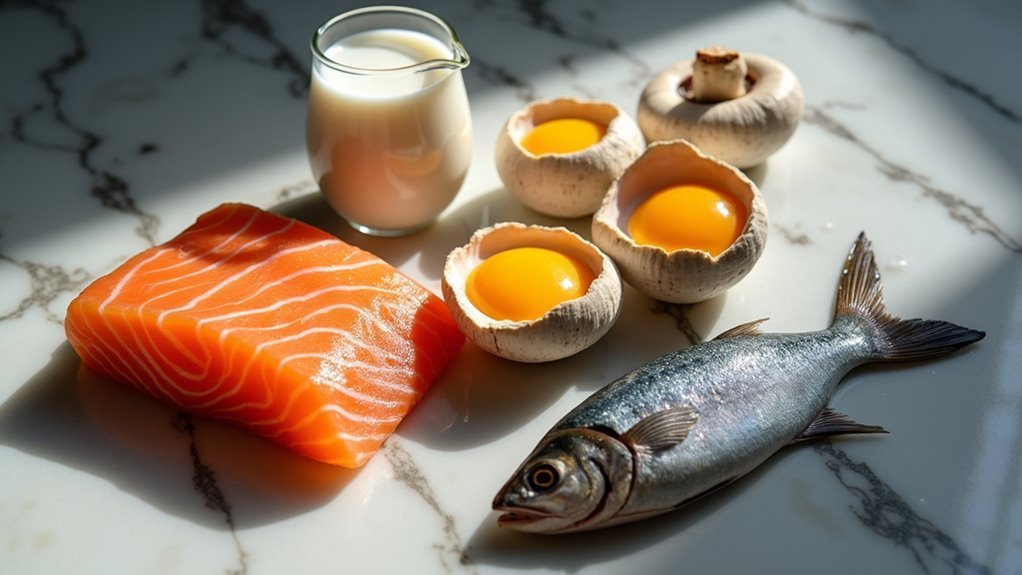
You can strengthen your muscles by incorporating five key vitamin D-rich foods into your diet. Wild-caught salmon provides up to 924 IU per serving, while fortified dairy and plant-based milks offer 120-205 IU per cup. Free-range egg yolks contain about 41 IU each, and UV-exposed mushrooms deliver an impressive 1,100 IU per cup. Don’t overlook cod liver oil, which packs 450 IU in just one teaspoon. These options will transform your muscle function and overall strength.
Fatty Fish: Salmon, Mackerel, and Sardines for Maximum Vitamin D

When you’re looking to maximize your vitamin D intake for stronger muscles, fatty fish deliver some of the highest concentrations of this essential nutrient.
Wild-caught salmon provides an impressive 556 to 924 IU of vitamin D per 3.5-ounce serving, while farmed Atlantic salmon contains around 441 IU.
Wild-caught salmon delivers up to 924 IU of vitamin D per serving, significantly outperforming farmed varieties for muscle-building nutrition.
Mackerel offers 643 IU of vitamin D in the same serving size, making it exceptionally nutrient-dense for muscle health.
Even canned sardines contribute 193 IU, providing an affordable and convenient option.
These fatty fish don’t just support your daily vitamin D requirements—they’re packed with omega-3 fatty acids that enhance calcium absorption and muscle function.
Regular consumption strengthens your muscles while supporting overall health through this powerful nutrient combination.
Fortified Dairy and Plant-Based Milk Alternatives
While fatty fish reign supreme for natural vitamin D content, fortified dairy products and plant-based milk alternatives provide accessible, everyday options that’ll consistently boost your muscle-supporting nutrient intake.
Fortified dairy like milk and yogurt delivers about 120 IU of vitamin D per cup, supporting muscle strength alongside calcium for ideal muscle function.
Plant-based milk alternatives offer even more, providing 185-205 IU per cup, making them excellent fortified options for vegans or those with lactose intolerance.
Fortified cereals add another 100 IU per serving when combined with these beverages.
This calcium-vitamin D combination works synergistically to enhance muscle function and prevent weakness, ensuring adequate vitamin D intake for stronger muscles regardless of your dietary preferences.
Egg Yolks From Free-Range and Vitamin D-Enhanced Hens

Though many people overlook them, egg yolks from free-range and vitamin D-enhanced hens pack a concentrated punch of muscle-supporting nutrients that can greatly boost your daily vitamin D intake. Each large egg yolk delivers approximately 41 IU of vitamin D, making them valuable dietary sources for muscle strength development.
Vitamin D-enhanced eggs come from hens fed vitamin D-rich diets or exposed to UV light, considerably increasing their vitamin D content compared to standard eggs.
You’ll find these eggs particularly beneficial if you have limited sun exposure. Since eggs rank among the few natural foods containing vitamin D, incorporating free-range or vitamin D-enhanced varieties into your meals supports muscle function and overall health while providing an effective way to boost vitamin D levels naturally.
UV-Exposed Mushrooms as Plant-Based Vitamin D Sources
Few people realize that UV-exposed mushrooms represent the only plant-based source of vitamin D, making them invaluable for vegetarians and vegans seeking muscle-strengthening nutrients.
UV-exposed mushrooms produce vitamin D2 when exposed to sunlight, offering an excellent non-animal source for stronger muscles. Here’s what you need to know:
UV-exposed mushrooms offer plant-based eaters a powerful vitamin D2 boost for enhanced muscle strength and overall health.
- UV-treated cremini mushrooms contain up to 1,100 IU per cup, providing 139% of your daily value
- Morels deliver 136 IU per cup, contributing 17% of your daily value
- Commercial mushrooms typically lack vitamin D unless specifically UV-treated during growth
- Plant-based diets benefit considerably from incorporating these vitamin-rich fungi
- Vitamin D intake becomes easier when you boost meals with UV-exposed varieties
You’ll find these mushrooms essential for maintaining adequate vitamin D levels while following plant-based eating patterns.
Cod Liver Oil for Concentrated Vitamin D Supplementation
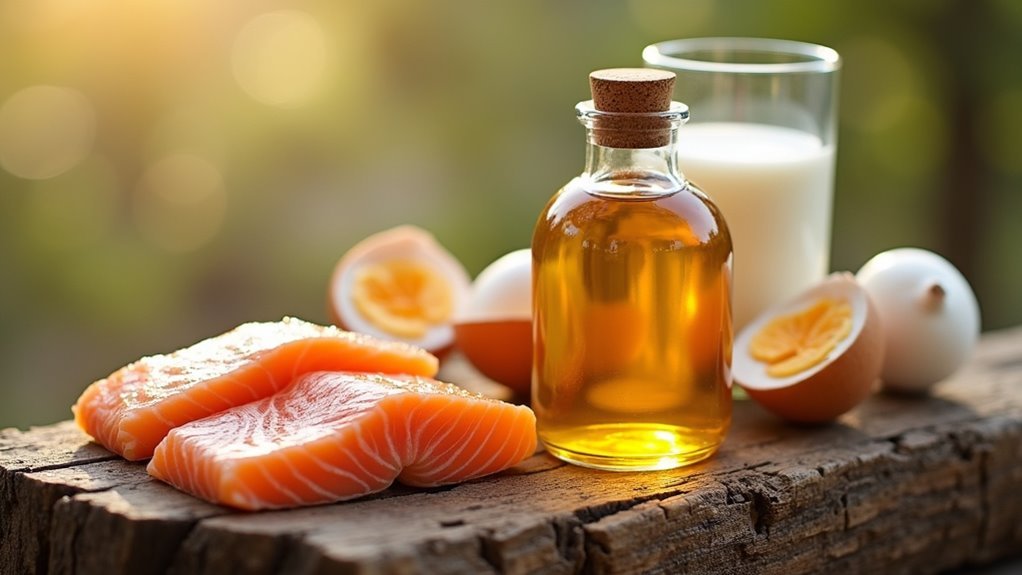
Single teaspoon of cod liver oil delivers 450 IU of vitamin D, providing over half your daily requirement in one concentrated dose.
This supplementation option offers exceptional health benefits beyond vitamin D, including omega-3 fatty acids that support heart and brain function. You’ll find cod liver oil particularly valuable if you don’t consume fish regularly, as it provides a concentrated source of essential nutrients in minimal serving sizes.
During autumn and winter months when sun exposure decreases and natural vitamin D production drops, you can rely on cod liver oil to maintain adequate levels.
This concentrated supplementation supports muscle function and overall strength development. The impressive daily value percentage makes it an efficient choice for meeting your vitamin D needs while supporting ideal muscle health year-round.
Frequently Asked Questions
Does Vitamin D Increase Muscle Strength?
Yes, vitamin D can increase your muscle strength. If you’re deficient, supplementing will likely improve your muscle function and physical performance. You’ll see better results when your vitamin D levels reach adequate ranges.
Which Food Is Highest in Vitamin D?
You’ll find UV-exposed mushrooms contain the highest vitamin D levels, with certain varieties like UV-treated cremini mushrooms providing up to 1100 IU per cup, exceeding your daily requirements.
What Food Makes Muscles Stronger?
You’ll strengthen muscles by eating protein-rich foods like lean meats, fish, eggs, and legumes. Don’t forget complex carbohydrates for energy and foods high in vitamin D like fatty fish for ideal muscle function.
How Much Vitamin D per Day to Build Muscle?
You’ll need 2000-4000 IU of vitamin D daily for muscle building, especially if you’re deficient. Start with blood testing to determine your baseline levels, then adjust your dosage accordingly for ideal results.


Leave a Reply