

You can improve your sleep quality by eating magnesium-rich foods like spinach, almonds, pumpkin seeds, and bananas about one hour before bedtime. These foods help regulate GABA neurotransmitters and support melatonin production, leading to deeper sleep with fewer nighttime awakenings. Aim for your daily magnesium needs through natural sources rather than supplements – men need 400-420mg daily while women require 310-320mg. Combining these foods with tryptophan sources and healthy fats maximizes their sleep-enhancing benefits.
Understanding How Magnesium Promotes Better Sleep
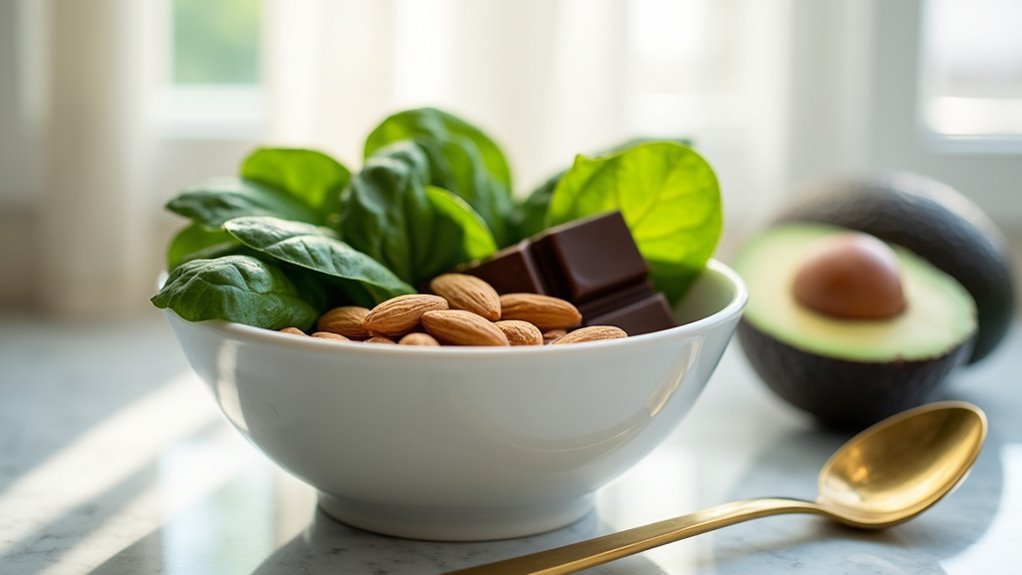
When you’re tossing and turning at night, your body might be signaling a magnesium deficiency that’s disrupting your natural sleep processes.
Magnesium plays an essential role in sleep health by regulating neurotransmitters like GABA that promote relaxation throughout your nervous system. This vital mineral directly supports melatonin production, the hormone responsible for controlling your sleep-wake cycles.
When you maintain adequate magnesium levels, you’ll experience better sleep outcomes including longer sleep duration and fewer nighttime awakenings.
Research shows magnesium supplementation greatly reduces insomnia symptoms, particularly in older adults. You can naturally boost your magnesium intake through magnesium-rich foods like spinach, nuts, and whole grains.
Foods that contain sufficient magnesium help your body achieve the relaxation needed for restorative sleep.
Top Magnesium-Rich Foods That Support Sleep Quality
Several magnesium-rich foods can considerably improve your sleep quality when you incorporate them into your daily diet.
Leafy greens like spinach pack 157 mg of magnesium per cooked cup, while kale offers 24 mg. You’ll get excellent relaxation benefits from almonds, which provide 80 mg per ounce, and cashews with 74 mg.
Whole grains are powerful sleep supporters – quinoa delivers 118 mg of magnesium per cooked cup.
Don’t overlook pumpkin seeds, containing an impressive 156 mg per ounce.
Bananas offer additional sleep-promoting compounds like tryptophan and potassium alongside magnesium.
These foods work naturally to relax your muscles and prepare your body for rest, potentially reducing your need to take melatonin supplements.
Optimal Timing and Portions for Magnesium Food Intake

Knowing which foods contain magnesium won’t maximize your sleep benefits unless you understand when and how much to consume. For better sleep, you’ll want to focus on ideal timing and proper portions of magnesium-rich foods throughout your day.
Here’s your strategy for quality sleep:
- Pre-bedtime snack timing: Consume magnesium foods one hour before bed to allow proper absorption.
- Daily portions: Adult men need 400-420 mg while adult women require 310-320 mg for balanced intake.
- Smart food choices: An ounce of pumpkin seeds provides 156 mg, while cooked spinach and bananas offer excellent evening options.
You don’t need magnesium supplementation when you time these foods correctly. A banana or small serving creates the perfect pre-bedtime snack for muscle relaxation and improved sleep quality.
Creating Sleep-Enhancing Meal Plans With Magnesium Sources
Since you’ve mastered the timing and portions of magnesium intake, you’ll want to build complete meal plans that naturally boost your sleep quality throughout the day. Your daily amount should target 310-420 mg through foods rich in magnesium across breakfast, lunch, and dinner.
| Meal | Magnesium-Rich Foods |
|---|---|
| Breakfast | Chia seed pudding, overnight oats |
| Lunch | Spinach salad, quinoa bowl |
| Dinner | Black beans, avocado, dark chocolate |
| Snacks | Sugar-free yogurt with almonds |
| Bedtime | Tart cherry juice with banana |
These meal plans guarantee consistent magnesium intake for better sleep and health. The combination of protein, carbs, and magnesium promotes relaxation throughout your system, preparing your body for restful nights.
Combining Magnesium Foods With Other Sleep-Supporting Nutrients
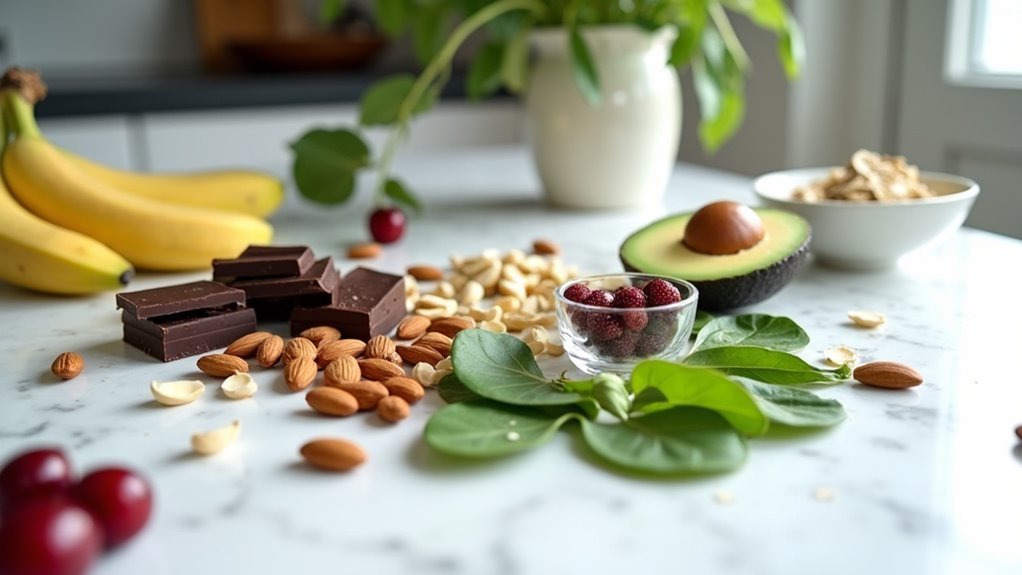
While magnesium alone provides significant sleep benefits, you’ll maximize your rest quality by pairing these foods with complementary nutrients that work synergistically.
Combining magnesium-rich foods with tryptophan food sources like turkey or dairy enhances serotonin production, directly improving sleep quality. This powerful combination creates the ideal neurochemical environment for restful sleep.
Strategic nutrient pairing amplifies magnesium’s muscle relaxation properties:
- Complex carbohydrates: Pair quinoa or whole grains with magnesium foods to stabilize blood sugar and prevent sleep disruptions.
- Healthy fats: Add avocado or nuts to enhance nutrient absorption and provide sustained energy without interfering with rest.
- Potassium-rich options: Include bananas with your magnesium sources for enhanced muscle relaxation.
Try yogurt with chia seeds an hour before bedtime—this magnesium-rich combination delivers multiple sleep-supporting nutrients simultaneously.
Frequently Asked Questions
How to Take Magnesium for Better Sleep?
You should consume magnesium-rich foods like spinach, almonds, and quinoa daily. Take a pre-bedtime snack with magnesium an hour before sleep. Consider magnesium glycinate supplements if needed, consulting your healthcare provider first.
What Is the Best Source of Magnesium for Sleep?
You’ll find almonds are your best magnesium source for sleep, providing 80mg per ounce. They’re convenient as a bedtime snack and help promote relaxation naturally through their high magnesium content.
Is 1 Banana a Day Enough Magnesium?
One banana won’t provide enough magnesium for your daily needs. You’ll get about 32mg, but you need 310-420mg daily. You should combine bananas with almonds, spinach, or other magnesium-rich foods for better sleep.
Which Food Is Good for Deep Sleep?
You’ll get deep sleep by eating turkey with quinoa, which combines tryptophan and magnesium for enhanced serotonin production. Dark chocolate or yogurt with almonds also help relax muscles and regulate sleep neurotransmitters effectively.


Leave a Reply