

You’ll maximize your daily hydration by choosing caffeine-free herbal teas like chamomile, peppermint, and rooibos that provide 99% water content without diuretic effects. Focus on varieties that offer additional therapeutic benefits—peppermint aids digestion, chamomile promotes relaxation, and rooibos delivers heart-protective antioxidants. Aim for 1-4 cups daily, using proper brewing techniques with 200°F water and steeping 5-15 minutes for ideal flavor and health properties. Strategic timing and personal preferences will help you create an effective hydration routine.
Understanding the Hydration Benefits of Herbal Teas

While many people reach for sports drinks or plain water when thinking about hydration, herbal teas offer a compelling alternative that’s both flavorful and effective. Since herbal teas contain 99% water, they’ll help you stay hydrated just as efficiently as plain water.
Herbal teas deliver exceptional hydration with 99% water content while providing delicious flavor alternatives to plain water.
You’ll appreciate that most herbal teas are naturally caffeine-free, eliminating the diuretic effects that can counteract your hydration efforts.
The hydration benefits extend beyond simple fluid replacement. When you choose herbal teas, you’re getting antioxidants that combat oxidative stress while maintaining proper fluid levels.
Many varieties like chamomile and peppermint provide additional health benefits including digestive support and calming effects. This combination makes herbal teas an excellent choice for supporting your overall health while meeting daily hydration needs.
Top Caffeine-Free Herbal Teas for Optimal Hydration
When you’re selecting herbal teas for hydration, certain caffeine-free options stand out for their superior fluid retention properties and invigorating qualities.
Each variety brings distinct flavor profiles alongside specific health benefits that enhance your overall wellness while keeping you properly hydrated.
Understanding the right brewing techniques for these teas guarantees you’ll extract maximum flavor and hydrating potential from every cup.
Best Hydrating Herbal Options
Several caffeine-free herbal teas stand out as exceptional choices for maintaining ideal hydration throughout your day.
These herbal options deliver significant benefits without caffeine’s diuretic effects, making tea consumption more effective for hydration goals.
Peppermint tea offers digestive support while providing invigorating flavor that encourages increased fluid intake.
Rooibos delivers antioxidant-rich hydration with natural sweetness and cardioprotective properties.
Chamomile creates the perfect evening beverage, promoting relaxation while contributing to your daily fluid requirements.
For daytime revitalization, lemon balm tea enhances mood and concentration without caffeine jitters.
Each option supports optimal hydration while delivering unique therapeutic benefits.
You’ll find these caffeine-free varieties particularly effective because they don’t counteract your hydration efforts through diuretic action, making every sip count toward your wellness goals.
Flavor Profiles and Benefits
Understanding how each herbal tea tastes and what it offers your body helps you select options that’ll keep you reaching for more throughout the day.
Herbal teas provide distinct flavor profiles alongside unique health benefits that enhance your hydration experience. Chamomile delivers gentle, honey-like notes with calming effects that prepare you for restful sleep.
Peppermint offers crisp, invigorating flavors while supporting digestion after meals. Rooibos provides naturally sweet, vanilla undertones packed with antioxidants for all-day enjoyment.
Lemon balm brings bright, citrusy flavors that may boost your mood and mental clarity. Each tea’s taste characteristics encourage consistent consumption, making hydration enjoyable rather than routine.
Choose flavors you genuinely enjoy to maintain ideal daily fluid intake.
Optimal Brewing Techniques
Since proper brewing techniques directly impact both flavor and hydration benefits, you’ll want to master the fundamentals that reveal each tea’s full potential. For ideal brewing techniques with herbal teas, use filtered water heated just before boiling and steep for 5-15 minutes to extract maximum health-promoting properties and flavors.
| Brewing Method | Benefits |
|---|---|
| Hot brewing (5-15 min) | Extracts nutrients and antioxidants |
| Cold brewing (several hours) | Creates revitalizing iced tea for summer hydration |
| Blending different teas | Personalizes flavors while maintaining benefits |
You can enhance hydration by sweetening with natural options like honey or agave syrup. Cold brewing works exceptionally well for summer rejuvenation, while mixing different herbal teas creates personalized blends that encourage consistent daily consumption.
Flavor Profiles and Personal Preferences in Tea Selection
You’ll discover that herbal teas span a wide spectrum of flavor categories, from floral and sweet to earthy and spicy, each offering distinct sensory experiences.
Your personal taste preferences should guide your selection process—whether you’re drawn to chamomile’s gentle sweetness for evening relaxation or prefer peppermint’s invigorating zest for afternoon energy.
Understanding these flavor profiles helps you match specific teas to your mood, occasion, and hydration goals throughout the day.
Understanding Flavor Categories
Five distinct flavor categories define the herbal tea landscape, each offering unique taste experiences that can transform your hydration routine.
Floral herbal blends like chamomile and hibiscus deliver delicate, aromatic notes perfect for relaxation. Minty options, particularly peppermint tea, provide invigorating coolness that awakens your senses.
Rooibos tea leads the sweet category with its naturally smooth, honey-like flavor that satisfies without added sugars. Fruity herbal teas featuring hibiscus or berry infusions offer vibrant, tangy rejuvenation ideal for active hydration.
Earthy varieties like lemon balm and sage present complex, herbaceous flavor profiles for sophisticated palates.
You’ll discover your preferences by sampling different categories, then experiment with blending techniques to create personalized combinations that perfectly match your taste cravings and hydration goals.
Matching Taste Preferences
How do you navigate the vast spectrum of herbal tea flavors to find your perfect hydration companion? When you choose herbal teas, matching your personal taste preferences guarantees consistent daily consumption and ideal hydration benefits.
| Flavor Profile | Tea Options | Taste Notes |
|---|---|---|
| Soothing & Mild | Chamomile | Gentle, calming |
| Fresh & Cooling | Peppermint | Crisp, invigorating |
| Fruity & Sweet | Hibiscus, Rooibos | Vibrant, naturally sweet |
| Earthy & Robust | Ginger, Sage | Bold, grounding |
| Customizable | Any base + honey/agave | Enhanced sweetness |
Consider experimenting with different brewing methods and blending various herbal teas to create personalized flavors. This approach keeps your hydration routine engaging while delivering consistent health benefits. Whether you prefer fruity hibiscus or earthy ginger, there’s an herbal tea that’ll match your taste preferences perfectly.
Antioxidant and Therapeutic Properties of Hydrating Herbs
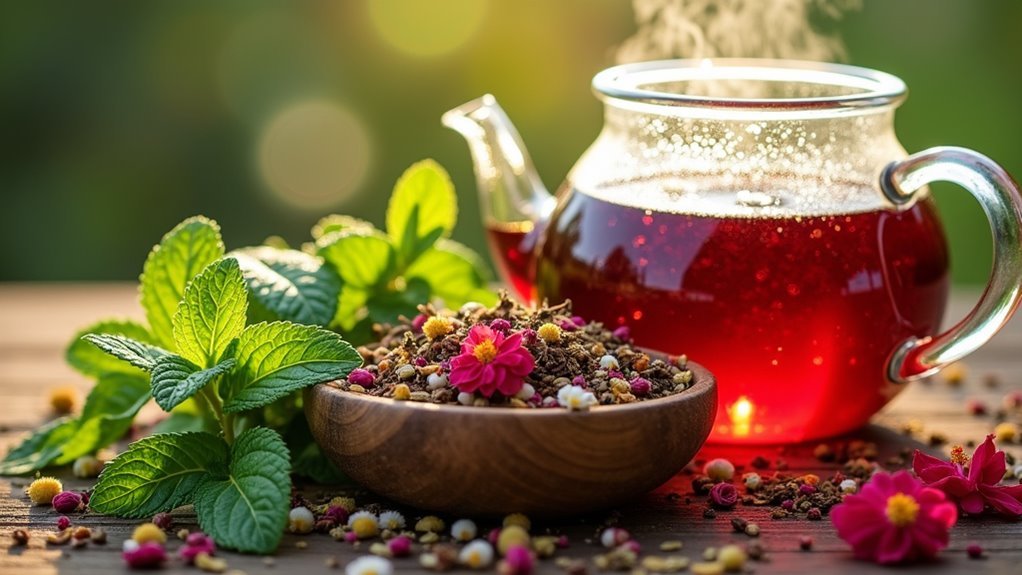
Beyond simple hydration, herbal teas deliver powerful antioxidants that fight oxidative stress and protect your cells from daily damage.
These therapeutic properties make herbal teas exceptional choices for supporting your overall wellness while meeting your fluid needs.
Chamomile offers calming effects that promote better sleep and reduce inflammation, while ginger and peppermint aid digestion and combat nausea.
Rooibos provides cardioprotective benefits through its high flavonoid content, all without caffeine’s potential drawbacks.
You’ll also benefit from mental health improvements when choosing herbs like lemon balm, which enhances mood and cognitive function.
Proper Brewing Techniques for Maximum Health Benefits
To access the full therapeutic potential of herbal teas, you’ll need to master proper brewing techniques that preserve delicate compounds while extracting maximum nutrients.
Use filtered water heated to 200°F to protect sensitive flavors and health benefits. Add one teaspoon of loose leaf or one teabag per six-ounce cup for ideal infusion.
Perfect brewing starts with filtered water at 200°F and one teaspoon of loose leaf per six-ounce cup for optimal extraction.
Steep herbal teas between five to fifteen minutes based on your taste preferences—longer steeping enhances flavor complexity and therapeutic properties.
For invigorating hydration alternatives, try cold brewing by steeping herbs in cold water for several hours.
Enhance both taste and health benefits with natural sweeteners like honey or agave syrup.
These brewing techniques guarantee you’re maximizing the nutritional value while maintaining excellent hydration throughout your day.
Daily Hydration Goals and Tea Consumption Guidelines
While most people focus solely on water intake, incorporating herbal teas into your daily routine can considerably boost your hydration goals. These caffeine-free beverages contribute positively to your daily fluid requirements without causing diuretic effects.
| Tea Consumption Level | Daily Cups | Health Benefits | Hydration Impact |
|---|---|---|---|
| Ideal Range | 1-2 cups | Antioxidants, flavor variety | Significant boost |
| Safe Maximum | 3-4 cups | Enhanced wellness support | Maximum contribution |
| Complementary Use | Throughout day | Replaces sugary drinks | Sustained hydration |
| Monitoring Needed | Personal tolerance | Caffeine sensitivity check | Balanced intake |
You’ll find that herbal teas make hydration more enjoyable while providing additional wellness support. Monitor your overall daily fluid intake, ensuring tea consumption complements rather than replaces your water intake for ideal results.
Creating Your Personal Herbal Tea Hydration Routine
How can you transform herbal tea consumption from a casual habit into a strategic hydration tool? By designing a purposeful routine that maximizes both hydration and health benefits throughout your day.
Your personal herbal tea schedule should align with your body’s natural rhythms:
Sync your tea ritual with your body’s internal clock for optimal wellness and sustained energy throughout each day.
- Morning: Start with ginger tea to ease nausea and support digestive health while establishing positive hydration habits.
- Afternoon: Choose peppermint tea to combat bloating and maintain flavorful hydration during your busiest hours.
- Evening: Wind down with chamomile tea for its calming effects and sleep-enhancing properties.
- Variety: Rotate hibiscus and rooibos teas rich in antioxidants to prevent routine monotony.
During summer months, cold-brew your herbal teas for invigorating hydration that delivers maximum flavor and wellness benefits.
Frequently Asked Questions
Which Herbal Tea Is Most Hydrating?
You’ll find chamomile tea most hydrating since it’s specifically noted for enhancing hydration while promoting relaxation. It doesn’t contain caffeine, so you won’t experience diuretic effects that decrease your body’s fluid levels.
What Herbal Tea Should You Drink Every Day?
You should drink rooibos tea daily since it’s caffeine-free and packed with antioxidants. Chamomile’s also excellent for promoting sleep and digestion, while peppermint supports digestive health throughout the day.
Does Herbal Tea Count Toward Daily Water Intake?
Yes, herbal tea absolutely counts toward your daily water intake since it’s 99% water and caffeine-free. You’ll stay hydrated without diuretic effects while enjoying flavorful variety instead of plain water.
Which Herbal Tea Has the Most Electrolytes?
Rooibos tea has the most electrolytes among herbal teas, containing potassium and magnesium. You’ll get natural hydration benefits without caffeine, plus antioxidants that support your overall wellness while replenishing essential minerals.


Leave a Reply