
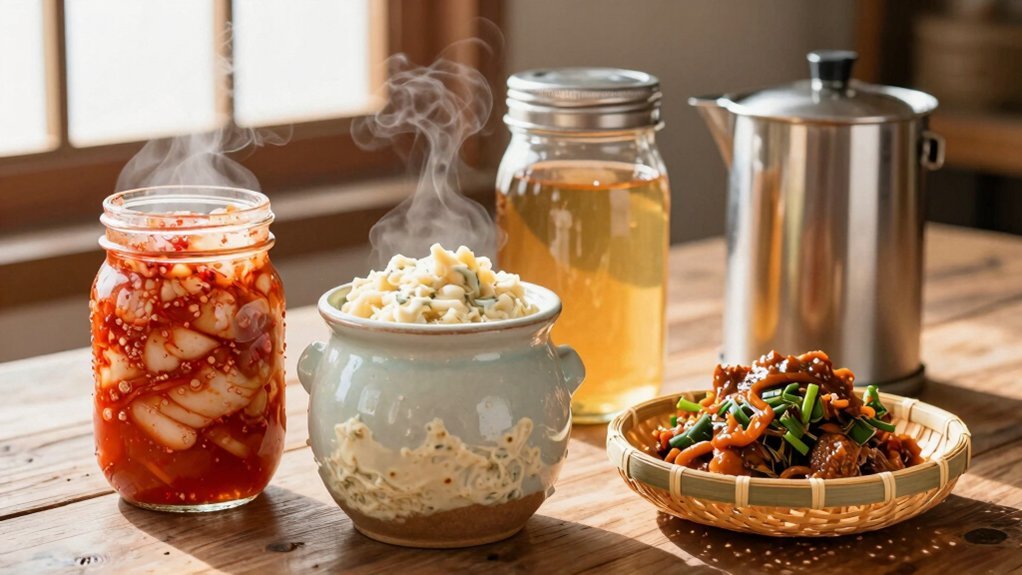
You’re looking to boost your gut health without the hassle of pricey store‑bought probiotics, and the right fermentation kit can make that happen at home. In 2026, four kits stand out for their quality, sustainability, and ease of use—each promising a different probiotic experience, from raw sauerkraut to kefir. Curious how they compare and which one fits your lifestyle best?
| Raw Organic Fermented Sauerkraut – 16oz Glass Jar (Vegan Gluten‑Free) |  | Classic Probiotic | Product Type: Ready‑to‑eat sauerkraut | Packaging Material: Glass jar | Dietary Claims: Vegan, Gluten‑Free, Non‑GMO, Probiotic | CHECK ON AMAZON | Read Our Analysis |
| Wise Goat Fermented Probiotic Gut Tonic 14oz Glass Jar |  | Spicy Gut Tonic | Product Type: Fermented gut tonic drink | Packaging Material: Glass jar | Dietary Claims: Vegan, Gluten‑Free, Non‑GMO, Probiotic | CHECK ON AMAZON | Read Our Analysis |
| Masontops Mason Jar Fermentation Kit – DIY Vegetable Fermenting Set |  | DIY Ferment Kit | Product Type: DIY fermentation kit | Packaging Material: Glass jar accessories (airlock tops, weights) | Dietary Claims: Vegan‑friendly (plant‑based), Gluten‑Free (optional) | CHECK ON AMAZON | Read Our Analysis |
| Cultures for Health Kefir Starter Kit – Natural GMO‑Free Gluten‑Free |  | Reusable Kefir Starter | Product Type: Kefir starter kit | Packaging Material: Glass jar (starter kit container) | Dietary Claims: Gluten‑Free, Non‑GMO, Probiotic | CHECK ON AMAZON | Read Our Analysis |
More Details on Our Top Picks
Raw Organic Fermented Sauerkraut – 16oz Glass Jar (Vegan Gluten‑Free)
Looking for a convenient, ready‑to‑eat probiotic boost that fits a vegan, gluten‑free lifestyle? You’ll love this 16 oz glass jar of Raw Organic Fermented Sauerkraut from Wise Goat Organics. It’s raw, never heated, and fermented in micro‑batches using wild cultures, so you get a rich spectrum of probiotics that support digestion, immunity, energy, and overall well‑being. The vegetables come from certified organic, biodynamic farms, free of pesticides, sugar, and vinegar. Packaged in glass to avoid plasticizers, it’s handcrafted in California with sustainable practices that protect the Earth and future generations. Enjoy a tangy, nutrient‑dense bite anytime.
- Product Type:Ready‑to‑eat sauerkraut
- Packaging Material:Glass jar
- Dietary Claims:Vegan, Gluten‑Free, Non‑GMO, Probiotic
- Organic Certification:Certified organic ingredients
- Probiotic Content:Live probiotic cultures from raw fermentation
- Production Origin:Handcrafted in California, USA
- Additional Feature:Wild fermentation cultures
- Additional Feature:No sugar or vinegar
- Additional Feature:Hand‑cut vegetables
Wise Goat Fermented Probiotic Gut Tonic 14oz Glass Jar
Who wants a ready‑to‑drink probiotic boost that’s both vegan and organic? You’ll love Wise Goat’s 14‑oz glass‑jar tonic, a raw organic fermented blend featuring jalapeno heat and plant‑based cultures. It’s certified organic, non‑GMO, gluten‑free, and vegan, with live probiotic microbes sourced from biodynamic farms in California. The glass jar preserves freshness and prevents contamination, while the minimally processed ingredients support digestive wellness and gut health. You get a flavorful, spicy tonic that’s locally crafted, sustainably packaged, and ready to sip for daily gut‑healing benefits.
- Product Type:Fermented gut tonic drink
- Packaging Material:Glass jar
- Dietary Claims:Vegan, Gluten‑Free, Non‑GMO, Probiotic
- Organic Certification:Certified organic ingredients
- Probiotic Content:Live active probiotic cultures
- Production Origin:Made in California, USA
- Additional Feature:Jalapeno flavor boost
- Additional Feature:Plant‑based probiotic source
- Additional Feature:Micro‑batch hand‑crafted
Masontops Mason Jar Fermentation Kit – DIY Vegetable Fermenting Set
If you want a hassle‑free way to turn ordinary mason jars into professional‑grade fermenters, the Masontops Mason Jar Fermentation Kit is the clear pick for small‑batch veggie lovers. The set supplies four silicone airlock tops, four glass pebble weights, an acacia wood tamper, and a recipe guide. You fill a regular‑mouth jar with salted veggies, add the weights, seal with the self‑burping lid, and let the airlock release gas while keeping oxygen out. No daily burping is needed, and the tamper packs dry ferments evenly. The result? probiotic‑rich sauerkraut, kimchi, pickles, or hot sauce that supports gut health, all in a 3.78‑liter glass container.
- Product Type:DIY fermentation kit
- Packaging Material:Glass jar accessories (airlock tops, weights)
- Dietary Claims:Vegan‑friendly (plant‑based), Gluten‑Free (optional)
- Organic Certification:Uses organic‑grade glass and accessories (implied)
- Probiotic Content:Enables creation of probiotic foods (user‑generated)
- Production Origin:Designed by Masontops (U.S. brand)
- Additional Feature:Self‑burping airlock lids
- Additional Feature:Acacia wood tamper included
- Additional Feature:Converts regular jars
Cultures for Health Kefir Starter Kit – Natural GMO‑Free Gluten‑Free
The Cultures for Health Kefir Starter Kit is the go‑to choice for anyone who wants a natural, GMO‑free, gluten‑free way to brew probiotic‑rich kefir at home. You’ll mix the freeze‑dried cultures with milk, water kefir, or coconut milk, then enjoy plain kefir, a fruit‑infused drink, or a naturally carbonated bottle. Each batch takes 24‑48 hours, and the cultures stay potent, losing no nutrients or health benefits. The kit’s gluten‑free, non‑GMO ingredients support gut health and even heart wellness. Plus, you get a 155‑page ebook packed with recipes, articles, and how‑to videos to keep you experimenting.
- Product Type:Kefir starter kit
- Packaging Material:Glass jar (starter kit container)
- Dietary Claims:Gluten‑Free, Non‑GMO, Probiotic
- Organic Certification:Certified organic ingredients
- Probiotic Content:Live kefir cultures (probiotic)
- Production Origin:Produced in USA (Cultures for Health)
- Additional Feature:155‑page recipe ebook
- Additional Feature:Reusable starter culture
- Additional Feature:24‑48‑hour batch cycle
Factors to Consider When Choosing Fermented Food Kits for Homemade Gut-Healing Probiotics
When you pick a kit, check how many probiotic strains it offers, because diversity boosts gut health. Make sure the fermentation process is straightforward and the ingredients meet high quality standards, so you can trust the results. Finally, look at safe packaging and flexible kit sizes that fit your kitchen and lifestyle.
Probiotic Strain Diversity
A diverse mix of probiotic strains in a kit expands the range of beneficial microbes you introduce to your gut, offering broader digestive support and more targeted health benefits. When you compare kits, look for those that list multiple cultures or blends, because they usually contain a wider spectrum of lactic acid bacteria and yeasts. This variety helps probiotics survive different pH and sugar conditions, boosting resilience. If the packaging shows “live active cultures,” you know the strains stay viable through fermentation, even if the exact species aren’t disclosed. Plant‑based or raw vegetable ferments often bring unique, non‑dairy strains that can complement dairy cultures. Higher strain diversity can enhance immune function and ecosystem balance, though it may also influence flavor and fermentation speed. Choose a kit whose diversity matches your health goals and taste preferences.
Fermentation Method Simplicity
Looking for a hassle‑free way to turn veggies into probiotic powerhouses? You’ll want a kit that eliminates extra steps. Choose ones with waterless airlocks or simple weights and tampers so you don’t have to constantly monitor pressure or burp containers. Kits that turn ordinary mason jars into fermenters keep equipment minimal and ideal for small batches. Clear, step‑by‑step guides with visuals let you follow the process without guesswork, reducing troubleshooting. Pre‑measured salt and brine ratios, plus ready‑to‑use starter cultures, guarantee consistent results without math. Non‑motorized, hands‑on methods avoid plastic leaching and extra gear, delivering a straightforward, low‑maintenance workflow that fits busy lifestyles while still producing gut‑healing probiotics.
Ingredient Quality Standards
Choosing a kit built on strict ingredient quality standards guarantees you’re feeding your gut the purest, most potent probiotics. Look for organic certifications—like Certified Organic—to be sure the vegetables weren’t exposed to synthetic pesticides or fertilizers. Favor ingredients sourced from biodynamic or sustainably farmed growers; they protect soil health and keep farms viable long term. Make sure the kit uses raw, unheated fermentation, which preserves live cultures and maximizes probiotic activity. Check that the components are plant‑based and free of added sugars or vinegars that could skew fermentation complexity or alter the probiotic profile. Finally, confirm the product avoids plastic during fermentation, opting for glass or other non‑plastic containers to keep your gut‑friendly microbes uncontaminated.
Packaging Material Safety
When you prioritize packaging material safety, you protect both your probiotics and your health. Choose glass jars over plastic whenever possible; glass eliminates plasticizers and leaching risks that can harm delicate cultures. Look for airtight or airlock‑style lids that keep oxygen out and maintain a stable anaerobic environment, which reduces contamination and preserves viability. If a kit uses plastic components, verify they’re food‑grade, BPA‑free, and explicitly labeled safe for acidic fermentation. Inspect containers for cracks, chips, or damage—any flaw can harbor unwanted microbes and compromise hygiene. For longer storage, favor amber or opaque glass that blocks light and heat, keeping your probiotic load stable and effective. These checks ensure your kit supports a clean, potent gut‑healing process.
Kit Size Flexibility
Ever wonder how to match a kit to the batch size you need? Look for kits that support both regular and small‑mouth jars, covering 1‑quart and 1‑liter capacities. Adjustable airlocks, fermentation weights, and tamper tools let you switch jars without buying new gear. The best kits include scaling charts that keep salinity and microbial activity consistent whether you’re making a tiny batch or a full‑size batch. Check that the guide walks you through up‑sizing or down‑sizing recipes step by step, so you avoid guesswork. Finally, ensure the kit offers clear storage tips for leftovers and ongoing ferments, preserving probiotic viability when you move between jar sizes. This flexibility lets you tailor production to your household’s needs without extra hassle.
Instruction Clarity Level
Matching a kit’s size to your jars is only half the battle; the next factor is how clearly the instructions guide you through each fermentation stage. You want step‑by‑step directions that spell out prep, salt ratios, and venting procedures without guessing. Look for labeled steps that tell you exactly when to add water, how much salt to use per kilogram of veggies, and when to seal the lid for anaerobic conditions. Visual guides or diagrams cut down ambiguity, especially if you’re new to kimchi or kombucha. Precise safety notes—clean‑equipment reminders, raw‑vegetable handling tips, and temperature ranges—protect you from contamination. Finally, a troubleshooting FAQ lets you troubleshoot off‑flavors or mold quickly, keeping your gut‑healing probiotics on track.
Reusability and Sustainability
If you prioritize long‑term value, choose a kit whose components—airlocks, weights, tamper and lids—are interchangeable and dishwasher‑safe, so you can reuse the same glass jars for countless batches. Look for durable, hand‑washable parts that won’t crack after repeated cycles; this cuts waste and saves you from buying replacements. Kits that support rapid 24‑48‑hour ferment cycles let you produce probiotic loads without new equipment each round, boosting sustainability. Favor glass containers and natural lids made of wood or silicone over single‑use plastics to lower environmental impact. Finally, check the manufacturer’s reusability metrics—how many batches per set and expected component lifespan—so you can gauge long‑term eco‑efficiency and total cost.
Price‑to‑Value Ratio
Sustainable kits that let you reuse glass jars also tend to offer better price‑to‑value ratios, because the upfront investment pays off across many batches. When you compare the kit’s airlocks, weights, tamper, and recipe book to buying each piece separately, you’ll often see a sizable discount. Count how many lock tops and weights are included; a larger set means you can run several fermentations before you need extras. Look at the craftsmanship—thick glass, silicone seals, and an acacia tamper usually cost more upfront but last years, saving you replacement fees. The step‑by‑step guide and visual recipes cut trial‑and‑error time, while the reduced‑plastic design lowers waste and adds convenience. All these factors combine to boost the kit’s overall value.
Frequently Asked Questions
How Long Does Each Kit Take to Reach Peak Probiotic Levels?
You’ll see peak probiotic levels after about five to ten days, depending on the kit’s fermentation time, temperature, and starter culture strength, so monitor daily and adjust conditions for optimal results.
Can I Substitute Ingredients Without Affecting the Fermentation Process?
Yes, you can swap ingredients, but keep the same acidity, salt, and temperature ranges; otherwise the microbes might stall or produce off‑flavors, so match the kit’s specifications closely.
What Temperature Range Is Optimal for Each Kit’s Fermentation?
You’ll want 65‑75 °F for the kimchi kit, 70‑78 °F for the kombucha starter, and 68‑72 °F for the sauerkraut kit; keep temperatures steady, avoid drafts, and monitor daily.
Are the Kits Safe for Individuals With Histamine Intolerance?
Yes, you can use most kits, but check each label—some contain high‑histamine strains like kimchi or sauerkraut. Opt for low‑histamine options, like kefir or pickled cucumbers, and monitor your symptoms closely.
Do the Kits Require Any Special Cleaning or Sterilization Steps?
You’ll need to clean and sterilize all jars, lids, and utensils before each batch—wash with hot, soapy water, rinse thoroughly, then either boil, steam, or run them through a dishwasher’s sanitize cycle.

Leave a Reply