
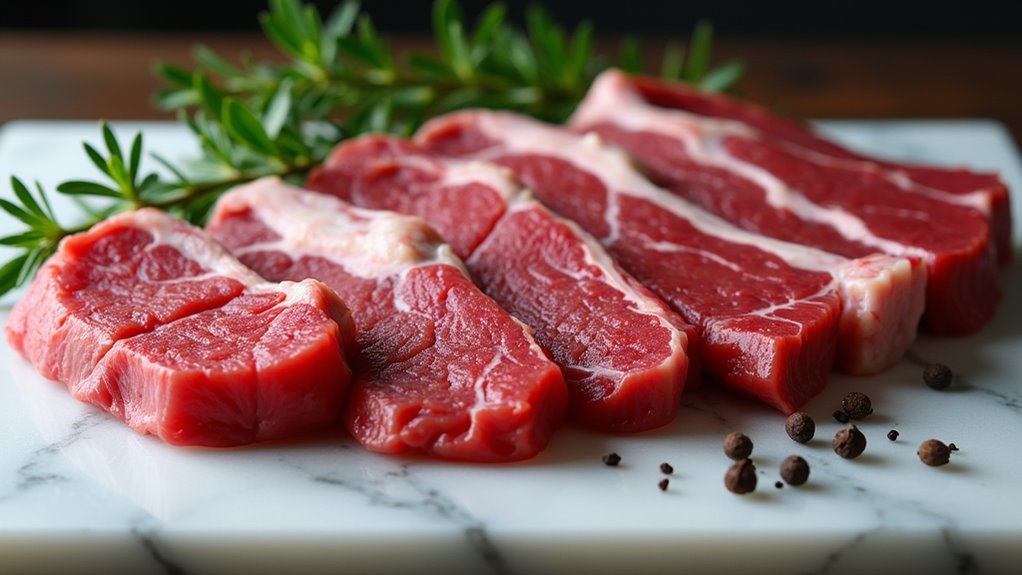
You’ll maximize zinc intake by choosing grass-fed beef and lamb, which provide up to 72% of your daily requirements per six-ounce serving. Pair these meats with vitamin C-rich foods like bell peppers or citrus to enhance absorption, while avoiding calcium-rich foods during zinc meals. Cook using grilling, broiling, or roasting to preserve nutrients, and time your consumption during lunch or dinner for ideal processing. These strategic choices will strengthen your immune defenses throughout cold season.
Choose High-Quality Grass-Fed Beef and Lamb for Maximum Zinc Content
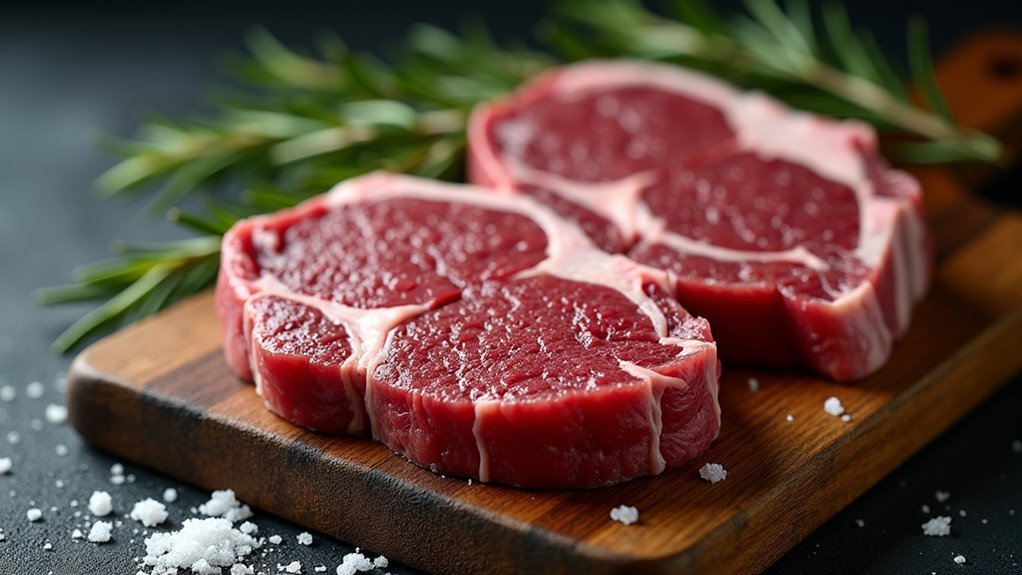
When you’re looking to maximize your zinc intake for immune support, grass-fed beef and lamb deliver considerably higher zinc levels than their grain-fed counterparts.
A six-ounce portion of grass-fed lean beef provides up to 72% of your recommended daily zinc intake, making it exceptionally powerful for boosting your immune system.
You’ll also benefit from the enhanced omega-3 fatty acids and antioxidants found in grass-fed meat, which complement the zinc content and amplify overall health benefits.
By choosing high-quality grass-fed options, you’re ensuring nutrient-dense beef that helps meet the vital 8-11 mg daily zinc requirements for teens and adults.
High-quality grass-fed beef provides nutrient-dense zinc to help teens and adults meet their essential daily requirements.
This choice supports sustainable farming practices while delivering maximum immune-supporting nutrients during colder months.
Understand Daily Zinc Requirements and Serving Sizes for Optimal Immunity
You’ll need 8-11 mg of zinc daily depending on your gender, with adult females requiring 8 mg and adult males needing 11 mg for ideal immune function.
A six-ounce serving of lean beef delivers approximately 72% of your daily zinc requirements, making it one of the most efficient ways to meet your nutritional needs.
Understanding these serving sizes helps you plan meals that consistently support your immune system throughout the year.
Daily Zinc Intake Guidelines
Understanding your daily zinc requirements forms the foundation for building a robust immune system through proper nutrition. Adult males need approximately 11 mg of zinc daily, while females require about 8 mg per day to maintain peak health. When you’re boosting your immune system, knowing these targets helps you make informed food choices.
A six-ounce portion of lean beef provides around 72% of your recommended daily zinc intake, making it a good source of zinc for meeting your nutritional needs.
If you prefer plant-based options, cooked lentils offer about 12-16% of daily values per 100-gram serving. However, oysters remain the zinc champion, delivering 300-413% of daily requirements in just six medium oysters.
Incorporating diverse zinc-rich foods guarantees adequate intake.
Optimal Serving Size Recommendations
Three key serving sizes can help you maximize zinc intake from beef and lamb while supporting your immune system effectively.
A six-ounce portion of lean beef delivers approximately 72% of your daily zinc requirements, making it an excellent source of zinc for immunity. For lamb, you’ll get about 4.5 mg of zinc from a 100-gram serving, which greatly contributes to meeting your 8-11 mg daily needs.
The best serving size depends on your other zinc sources throughout the day. If you’re incorporating legumes, nuts, and seeds, a smaller portion works well.
Zealand beef and lamb offer concentrated zinc content, so you don’t need large servings to meet requirements. Plan these proteins into your weekly meals, especially during colder months when immune support becomes essential.
Combine Zinc-Rich Meats With Vitamin C Foods to Enhance Absorption
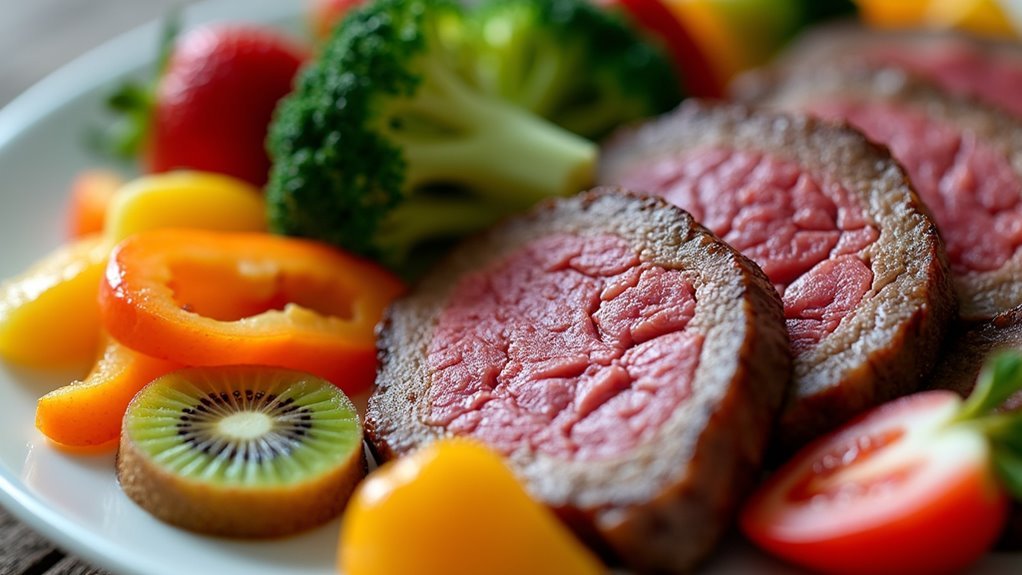
You can greatly boost your body’s zinc absorption from beef and lamb by pairing these meats with vitamin C-rich foods.
When you combine a zinc-packed steak with bell peppers, citrus fruits, or broccoli, you’ll enhance the mineral’s bioavailability and maximize immune benefits.
Smart food pairing strategies like adding tomatoes to your beef stew or serving lamb with Brussels sprouts will help you get the most from every zinc-rich bite.
Vitamin C Boosts Absorption
Beyond simply eating zinc-rich beef and lamb, you’ll maximize your mineral absorption by pairing these meats with vitamin C-packed foods.
Vitamin C transforms zinc into a more bioavailable form that your immune cells can readily utilize. When you consume zinc-rich foods alongside vitamin C sources, you’re creating ideal conditions for absorption in your digestive system.
This nutritional partnership works because vitamin C enhances the conversion process, allowing your body to uptake considerably more zinc than it would from meat alone.
Try combining your beef or lamb with bell peppers, citrus fruits, or broccoli during meals. Research shows this synergistic effect strengthens immune function, particularly during colder months when your body needs enhanced protection against seasonal challenges.
Food Pairing Strategies
While zinc-rich beef and lamb provide substantial mineral content on their own, strategic food pairing amplifies your body’s ability to absorb this essential immune-supporting nutrient.
You’ll maximize zinc absorption by combining a six-ounce lean beef portion with roasted Brussels sprouts or bell peppers. The vitamin C in these vegetables greatly enhances bioavailability, helping you utilize more of beef’s 72% daily zinc value.
Create winning combinations like grilled lamb chops with spinach salad or beef stir-fry loaded with broccoli.
Add citrus fruits, kiwifruit, or strawberries to your meat-centered meals for an extra vitamin C boost. This pairing strategy becomes especially beneficial during colder months when peak immune function matters most, ensuring your body efficiently processes zinc for stronger immunity.
Avoid Foods That Block Zinc Absorption When Eating Beef and Lamb
Although beef and lamb pack impressive amounts of bioavailable zinc, certain foods can sabotage your body’s ability to absorb this essential mineral.
You’ll want to avoid consuming calcium-rich dairy products during zinc-focused meals, as excessive calcium interferes with absorption. Space out your dairy intake by at least two hours from your beef or lamb dishes.
High-fiber foods and iron supplements also compete with zinc for absorption pathways. If you’re taking iron supplements, separate them from your zinc-rich meals.
While plant sources like whole grains and legumes are nutritious, their phytates block zinc absorption. When you’re prioritizing foods high in zinc from animal sources, minimize concurrent consumption of high-fiber vegetables and unsoaked grains to maximize your zinc uptake.
Prepare Zinc-Rich Cuts Using Cooking Methods That Preserve Nutrients
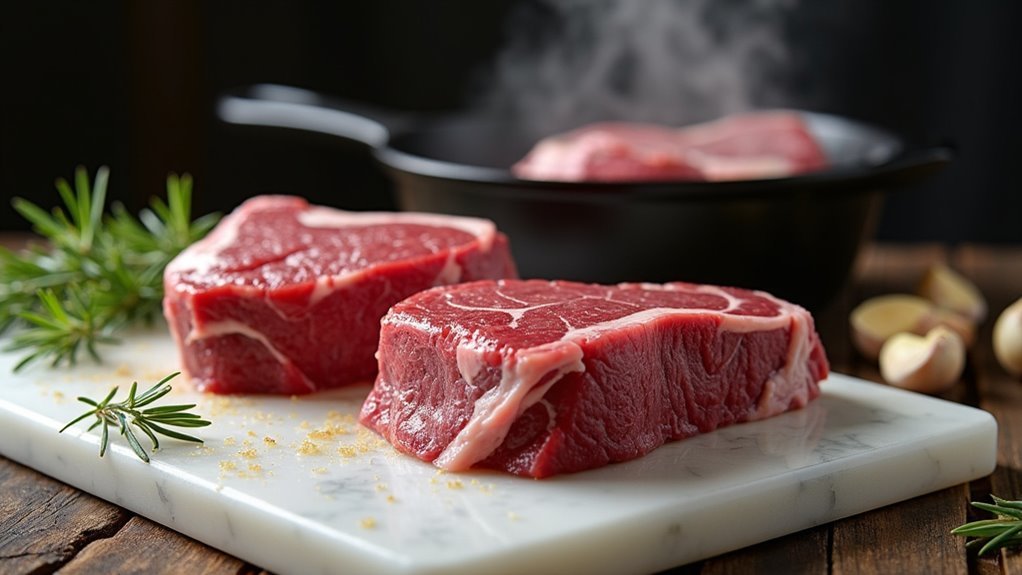
When you’re preparing zinc-rich beef and lamb cuts, your cooking method can make or break your mineral intake. Beef contains significant zinc levels that you’ll want to preserve through proper preparation.
Choose grilling, broiling, or roasting to maintain nutrient content while enhancing flavor and tenderness. For tougher cuts like lamb shoulder or beef chuck, slow cooking retains nutrients while breaking down fibers.
Avoid extended boiling, which depletes zinc levels. Instead, sauté or stir-fry for better nutrient retention. Marinades with acidic ingredients like vinegar or citrus juice boost zinc absorption during cooking.
Use a meat thermometer to reach safe temperatures—145°F for both beef and lamb—without overcooking. These methods guarantee you’re maximizing the health benefits these proteins offer your balanced diet.
Balance Animal and Plant-Based Zinc Sources for Complete Nutrition
Since your body absorbs zinc from animal sources more efficiently than plant-based options, you’ll want to create a strategic balance between both types in your diet.
Animal-based zinc sources offer superior bioavailability, but combining them with plant options creates the most effective nutritional strategy.
New Zealand beef and lamb deliver highly bioavailable zinc – a six-ounce portion provides 72% of your daily needs. However, you shouldn’t rely solely on meat sources of zinc.
Complement your animal proteins with plant-based options like lentils, chickpeas, hemp seeds, and nuts. While a 100-gram serving of cooked lentils offers just 12-16% of daily zinc requirements, combining these foods maximizes absorption.
Try beef stew with lentils or top your salads with hemp seeds alongside lean meat.
This varied approach helps you stay healthy by supporting immune function, especially during colder months when your body needs extra nutritional support.
Time Your Zinc-Rich Meals for Better Immune System Support
While your body needs zinc throughout the day, you’ll maximize immune benefits by timing your zinc-rich meals strategically. Schedule zinc-rich meals during regular meal times rather than consuming them on an empty stomach to enhance absorption. A six-ounce portion of lean beef provides 72% of your daily zinc needs, making it perfect for lunch or dinner when your digestive system processes nutrients efficiently.
| Meal Time | Zinc Source | Absorption Benefit | Immune System Support |
|---|---|---|---|
| Breakfast | Beef hash | Enhanced morning immunity | Sustained energy levels |
| Lunch | Lamb chops | Midday nutrient boost | Afternoon infection defense |
| Dinner | Beef stew | Evening immune preparation | Overnight immune function |
| Snacks | Mixed sources | Consistent zinc levels | Continuous protection |
This strategic timing reduces seasonal infection susceptibility while maintaining peak energy throughout daily activities.
Frequently Asked Questions
Is Lamb High in Zinc?
Yes, lamb’s high in zinc, providing about 4.0 mg per 100-gram serving. You’ll get 36-50% of your daily zinc needs, supporting your immune system with this highly bioavailable nutrient source.
Which Meat Has the Highest Zinc?
Oysters contain the highest zinc among meats, delivering about 33 mg per six medium oysters. You’ll get 300-413% of your daily value, making them far superior to beef, lamb, or other meat sources.
Does Lamb Have More Zinc Than Beef?
No, lamb doesn’t have more zinc than beef. You’ll get about 4.0 mg of zinc per 100 grams from lamb, while beef provides approximately 4.79 mg, making beef the richer source.
Which Organ Meat Has the Most Zinc?
Beef liver contains the most zinc among organ meats, providing 6.2 mg per 100 grams. You’ll get 56% of your daily zinc needs from this single serving, making it incredibly efficient.


Leave a Reply