

Bay leaves reduce your arthritis joint pain through powerful anti-inflammatory compounds like linalool, eucalyptol, and flavonoids that directly target immune system responses causing swelling and discomfort. These essential oils penetrate your joint tissues while antioxidants like tannins combat oxidative damage. You can prepare bay leaf tea by steeping leaves in boiling water or create topical oils for direct application to affected joints. Understanding proper preparation methods and dosages will maximize your pain relief benefits.
Understanding Arthritis and Joint Inflammation

When arthritis strikes your joints, it brings inflammation that can transform simple daily activities into painful challenges. You’re among the 54 million Americans facing this condition that causes swelling, stiffness, and persistent discomfort.
Joint inflammation occurs when your immune system mistakenly attacks healthy joint tissue, creating a cycle of pain and reduced mobility.
Your body’s defense system turns against itself, triggering a destructive inflammatory response that damages healthy joints and limits movement.
If you have gout arthritis, elevated uric acid levels trigger intense flare-ups that can leave you struggling with severe swelling. The inflammation restricts your movement and affects your quality of life considerably.
Understanding how to reduce inflammation becomes essential for managing your symptoms effectively. While traditional treatments exist, natural approaches like herbal remedies offer promising alternatives.
You’ll find that targeting the root cause of joint inflammation provides better long-term relief than simply masking pain.
Bay Leaves Chemical Composition and Active Compounds
You’ll find that bay leaves pack a powerful punch of therapeutic compounds that directly target arthritis symptoms.
Their essential oils contain potent anti-inflammatory substances like linalool, while their rich antioxidant profile includes flavonoids and tannins that combat joint damage.
These active compounds work together to reduce inflammation and protect your joints from the oxidative stress that worsens arthritis pain.
Essential Oils Content
The aromatic essence that gives bay leaves their distinctive fragrance stems from a complex array of essential oils and bioactive compounds that work synergistically to combat arthritis-related inflammation.
You’ll find eucalyptol and linalool as the primary essential oils responsible for bay leaves’ anti-inflammatory properties. These compounds directly target the inflammatory pathways that cause your joint pain, providing natural relief from arthritis symptoms.
When you use bay leaves regularly, these essential oils penetrate affected tissues and help reduce swelling around your joints. Eucalyptol specifically blocks inflammatory mediators, while linalool offers additional pain-relieving benefits.
The concentration of these oils varies depending on the leaf’s age and processing method, but fresh bay leaves typically contain the highest levels of these therapeutic compounds that’ll benefit your arthritis management.
Antioxidant Compound Properties
Protection against cellular damage forms the cornerstone of bay leaves’ therapeutic potential, with their rich concentration of antioxidant compounds working to neutralize harmful free radicals that worsen arthritis inflammation.
You’ll find catechins, linalool, and parthenolide working together to combat oxidative stress that contributes to your joint pain. These antioxidants target the inflammatory pathways responsible for arthritis symptoms, helping reduce swelling and discomfort in affected joints.
The flavonoids present in bay leaves enhance this anti-inflammatory action, while linalool provides additional benefits by lowering stress levels that can intensify pain perception.
You’re also getting hydroxyproline, an amino acid that supports collagen production for tissue repair. This extensive antioxidant profile may even inhibit cancer cell growth, supporting your overall health.
Anti-inflammatory Active Substances
Building on these protective mechanisms, bay leaves’ anti-inflammatory power stems from a complex chemical profile that directly targets arthritis-related inflammation at the molecular level.
You’ll find essential oils, flavonoids, and tannins working together to reduce joint pain considerably. These compounds don’t just mask symptoms—they actively combat inflammatory pathways that damage your joints.
Your body benefits from bay leaves’ unique composition that supports joint health through multiple mechanisms:
- Essential oils and tannins suppress inflammatory responses in affected joints
- Flavonoids work as powerful antioxidants to neutralize tissue-damaging free radicals
- Hydroxyproline enhances collagen production for stronger, more flexible joint structures
The synergistic effect of these anti-inflammatory properties creates a thorough approach to managing arthritis discomfort naturally.
Anti-Inflammatory Properties of Bay Leaves
Several powerful compounds within bay leaves work actively to combat inflammation in your arthritic joints. These anti-inflammatory compounds target the root cause of arthritis joint inflammation, providing meaningful pain relief without harsh side effects.
The essential oils linalool and parthenolide deliver particularly strong anti-inflammatory effects, directly reducing swelling and discomfort in affected areas.
You’ll benefit from bay leaves’ proven ability to manage inflammation naturally. Medical research confirms their effectiveness as a therapeutic option for arthritis symptoms.
When you apply bay leaf oil topically, it soothes inflamed tissues while delivering targeted relief to painful joints.
The antioxidant properties in bay leaves enhance their anti-inflammatory action, creating a dual approach to joint health that supports long-term comfort and mobility.
Scientific Research on Bay Leaves for Arthritis Pain
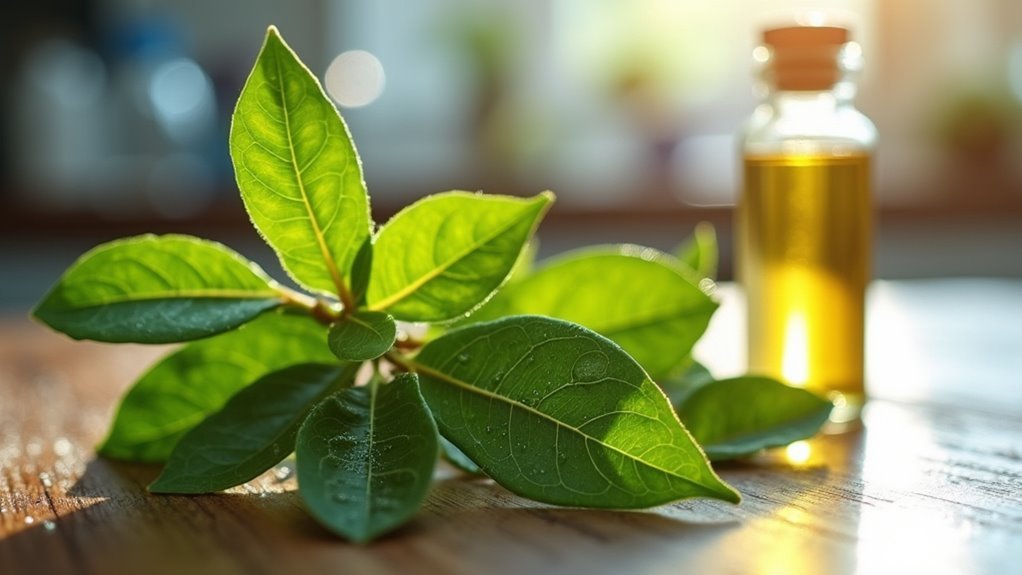
Research validates what traditional medicine has long suggested about bay leaves’ therapeutic potential for arthritis pain management.
Bay leaves contain powerful compounds like catechins and linalool that deliver potent antioxidant effects, helping combat oxidative stress in your arthritic joints. Studies demonstrate these powerful antioxidants can considerably reduce inflammation and swelling associated with arthritis conditions.
Clinical research reveals promising results for gout arthritis pain relief. One study involving bay leaf decoction showed substantial pain reduction in gout patients, establishing its effectiveness as a non-pharmacological treatment option.
- Bay leaf oil provides topical analgesic effects when applied directly to inflamed joints.
- Hydroxyproline content supports collagen production for improved joint health and cartilage repair.
- Compounds exhibit measurable anti-inflammatory properties that reduce arthritis-related swelling and discomfort.
How to Prepare Bay Leaf Tea for Joint Pain Relief
Three simple steps can transform ordinary bay leaves into a potent therapeutic tea that targets arthritis pain at its source.
First, steep one dried bay leaf in a cup of boiling water for ten minutes to extract beneficial compounds that reduce inflammation.
Second, strain the tea and add honey if you’d like to enhance the flavor while maintaining health benefits.
Third, drink this mixture three to four times daily to maximize anti-inflammatory and antioxidant effects.
You’ll consume potassium, magnesium, and vitamins that help alleviate joint pain over time.
Regular consumption may regulate cholesterol levels and improve insulin function, supporting overall joint health.
Unlike preparing bay leaf stew, this simple tea preparation requires minimal effort while delivering maximum therapeutic benefits for managing arthritis symptoms effectively.
Making Bay Leaf Oil for Topical Application

While bay leaf tea provides internal relief for arthritis symptoms, creating your own bay leaf oil offers targeted topical application that you can apply directly to painful joints.
To make bay leaf oil, combine chopped fresh bay leaves with minced garlic in a jar, then pour 100 milliliters of pure olive oil over them.
Fresh bay leaves and minced garlic infused in pure olive oil create a potent base for homemade therapeutic joint oil.
Heat the mixture using a water bath method, stirring occasionally to extract beneficial compounds. For enhanced anti-inflammatory properties, add 50 grams of beeswax during heating to improve the oil’s texture.
After cooling, strain out solid ingredients and store the filtered oil in a clean jar.
- Apply bay leaf oil to affected joints twice daily for maximum pain relief
- Use gentle water bath heating to preserve the oil’s therapeutic compounds
- Add beeswax to boost anti-inflammatory properties and create better consistency
Dosage and Application Methods for Maximum Benefits
You’ll achieve ideal arthritis relief by following specific dosage guidelines for both bay leaf tea and topical oil applications.
For tea preparation, steep one dried bay leaf in a cup of boiling water for 10 minutes and consume this remedy 3 to 4 times daily.
When using bay leaf oil topically, massage the infused mixture onto your affected joints twice daily for maximum pain reduction.
Proper Tea Preparation Dosage
Several key factors determine the effectiveness of bay leaf tea for managing arthritis joint pain, starting with proper preparation techniques.
When you take a bay leaf and prepare it correctly, you’ll maximize the health benefits for your condition. Use one dried bay leaf steeped in one cup of boiling water for exactly ten minutes to guarantee ideal extraction of beneficial compounds.
For maximum anti-inflammatory and analgesic effects, you should drink this tea three to four times daily. You can adjust the infusion strength by varying steeping time or using additional leaves based on your preference for potency.
- Always strain the tea before drinking to remove whole leaves and prevent intestinal blockage
- Add honey as a natural sweetener without compromising therapeutic properties
- Maintain consistent daily consumption for sustained arthritis relief
Topical Oil Application Techniques
Bay leaf oil offers a direct approach to targeting arthritis pain when you apply it topically to affected joints. For best results, warm a small amount between your hands before application to enhance absorption and effectiveness.
Focus on gentle circular motions during massage to stimulate blood flow and amplify the anti-inflammatory benefits. Apply the topical oil twice daily—morning and evening—for consistent pain management and improved flexibility.
Allow the oil to remain on your skin for at least 30 minutes before rinsing to maximize its analgesic properties. You can combine this treatment with warm compress therapy to further reduce discomfort.
Consistent daily application over several weeks leads to significant improvements in joint mobility and pain reduction, as supported by anecdotal evidence from regular users.
Safety Considerations and Potential Side Effects
While bay leaves offer promising benefits for arthritis relief, understanding their potential risks guarantees you’ll use them safely and effectively. You must consider several safety considerations before incorporating bay leaves into your arthritis management routine. These natural remedies aren’t suitable for everyone, and potential side effects can affect your health if you’re not careful.
Understanding bay leaf risks ensures safe, effective use in your arthritis management routine before potential side effects impact your health.
Key safety precautions include:
- Monitor blood sugar levels – Bay leaves can cause dangerous hypoglycemia, especially if you have diabetes.
- Remove whole leaves – Never consume whole bay leaves as they pose serious intestinal blockage risks.
- Avoid during pregnancy/surgery – Pregnant women, nursing mothers, and pre-surgical patients should discontinue use.
You should also watch for gastrointestinal discomfort and excessive sleepiness when using bay leaf preparations for arthritis relief.
Combining Bay Leaves With Other Natural Remedies
When you combine bay leaves with complementary natural ingredients, you’ll amplify their arthritis-fighting potential and create more effective remedies.
Take garlic as your first choice – its allicin content boosts immune function while enhancing bay leaves’ anti-inflammatory properties. You can infuse bay leaves in warm olive oil to extract beneficial compounds, then massage this mixture onto painful joints for topical relief.
Creating a balm with beeswax locks in moisture and provides a protective barrier that enhances absorption. Adding glycerin improves texture and spreadability, making application easier.
For internal benefits, bay leaf tea can improve digestion while reducing systemic inflammation. Apply these remedies twice daily for peak results, experiencing reduced discomfort and increased flexibility over time.
Frequently Asked Questions
Does Bay Leaf Help Arthritis?
Yes, bay leaves can help your arthritis. Their anti-inflammatory compounds like linalool reduce joint pain and stiffness. You’ll benefit from drinking bay leaf tea or applying bay leaf oil topically for pain relief.
What Is the Fastest Way to Relieve Arthritis Pain?
You’ll get fastest arthritis pain relief by applying warm compresses to increase blood flow and relax muscles. Combine bay leaf oil with garlic topically for enhanced anti-inflammatory effects that work quickly.
What Can You Do for Unbearable Arthritis Pain?
You can combine multiple approaches for unbearable arthritis pain: apply heat therapy, take anti-inflammatory medications, use topical pain relievers, practice gentle stretching, consider massage therapy, and consult your doctor about stronger prescription options.
What Is the Best Leaf for Arthritis?
You’ll find bay leaves are the best choice for arthritis. They contain anti-inflammatory compounds and essential oils that reduce joint pain and stiffness while providing natural antioxidant effects for relief.


Leave a Reply