
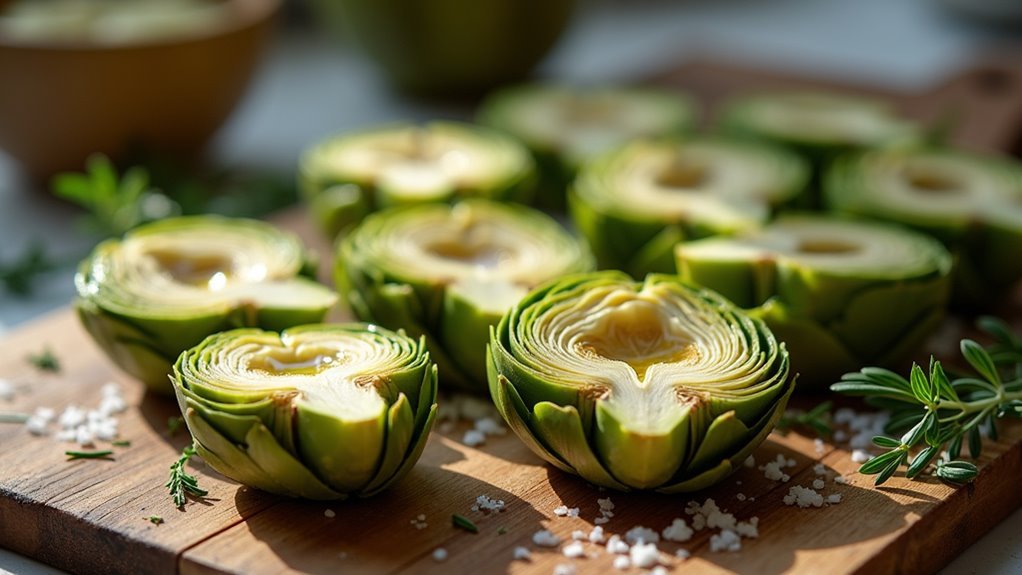
You’ll want to choose water-packed artichoke hearts with minimal additives that provide at least 2 grams of prebiotic fiber per serving. Look for non-GMO, Kosher Certified options like Reese Medium Artichoke Hearts, which deliver inulin fiber that feeds beneficial Bifidobacterium and Lactobacillus strains in your gut. Fresh artichokes offer the highest fiber content at 7 grams each, while canned varieties provide around 2 grams per serving. Continue below to discover specific brands and incorporation strategies.
How Artichoke Hearts Support Your Gut Microbiome With Prebiotic Fiber

When you’re looking to enhance your gut health naturally, artichoke hearts deliver powerful prebiotic fiber that actively feeds your beneficial gut bacteria. Each serving provides approximately 2 grams of dietary fiber, with inulin being the star component that nourishes your gut microbiome.
This prebiotic fiber promotes the growth of beneficial bacteria while supporting regular bowel movements and preventing constipation.
Your digestive system benefits considerably from artichoke hearts’ fiber content, which enhances nutrient absorption and stimulates the production of short-chain fatty acids. These compounds are essential for maintaining ideal gut health.
Additionally, the antioxidants in artichoke hearts reduce gut inflammation, creating an environment where your microbiome can thrive and function at its best.
Daily Fiber Requirements and How Artichoke Hearts Help You Meet Them
You need 25 grams of fiber daily if you’re a woman and 38 grams if you’re a man, yet most people fall short of these targets.
Each serving of Reese Medium Artichoke Hearts provides 2 grams of fiber, making them a smart choice for boosting your daily intake.
Adding artichoke hearts to your meals creates an easy path toward meeting your recommended fiber amounts while supporting your digestive health.
Daily Fiber Intake Goals
Since most Americans fall short of their daily fiber requirements, understanding these targets becomes essential for optimal health. Women need 25 grams daily while men require 38 grams to support ideal digestive function.
Artichoke hearts serve as an excellent source to bridge this gap, delivering 2 grams of fiber per serving. You’ll find that incorporating this prebiotic-rich food into your meals makes reaching your goals more achievable.
The health benefits extend beyond basic fiber intake since artichokes contain inulin, a specialized prebiotic fiber that feeds beneficial gut bacteria. This targeted nutrition approach helps you maintain digestive regularity while supporting your microbiome balance.
Artichoke Hearts Fiber Content
Nutritional powerhouses like artichoke hearts pack impressive fiber density into every serving. Each serving delivers 2 grams of fiber, making them an excellent source of fiber for your daily nutrition goals. When you’re aiming for 25-38 grams of fiber daily, every gram counts toward digestive wellness.
What sets artichoke hearts apart is their rich concentration of inulin, a specialized prebiotic fiber. This unique component doesn’t just add bulk to your diet—it actively feeds beneficial gut bacteria in your digestive system.
Unlike regular fiber that simply aids digestion, prebiotic fiber creates a prime environment for healthy microorganisms to thrive.
You’ll find that incorporating artichoke hearts into meals provides sustained satiety while supporting your gut microbiome. This dual benefit makes them particularly valuable for both digestive health and weight management goals.
Meeting Recommended Fiber Amounts
When considering daily fiber requirements, adults need substantial amounts—25 grams for women and 38 grams for men—that many struggle to achieve through typical Western diets.
Artichoke hearts offer an efficient solution for bridging this gap and supporting your gut health goals.
Regular consumption helps you reach your recommended daily intake more easily:
- A medium artichoke provides 7 grams of dietary fiber, representing 28% of women’s daily needs
- Reese Medium Artichoke Hearts deliver 2 grams per serving for convenient meal additions
- The inulin fiber specifically promotes beneficial bacteria growth in your digestive system
- Consistent intake supports weight management through increased satiety and appetite control
You’ll also reduce your risk of heart disease and diabetes while enhancing overall digestive function.
Inulin in Artichoke Hearts: The Powerhouse Prebiotic for Digestive Health
You’ll find that inulin, the star prebiotic fiber in artichoke hearts, acts as a powerful fuel source for your beneficial gut bacteria.
This specialized fiber doesn’t just pass through your digestive system—it actively feeds the good microorganisms in your gut, helping them multiply and thrive.
When you consume artichoke hearts regularly, you’re fundamentally creating an ideal environment for digestive wellness while supporting your body’s natural ability to process nutrients efficiently.
Inulin Fiber Benefits
Among nature’s most potent prebiotic sources, artichoke hearts stand out as exceptional providers of inulin fiber that’ll transform your digestive health from the inside out.
These inulin-type fructans specifically nourish beneficial bacteria in your gut microbiota, creating a thriving ecosystem that supports ideal digestive health.
When you consume artichoke hearts regularly, you’re delivering powerful benefits:
- Enhanced nutrient absorption through improved gut barrier function
- Reduced appetite and better glucose control for effective weight management
- Relief from symptoms of irritable bowel including bloating and constipation
- Stronger immune response via balanced gut bacteria populations
A single medium artichoke provides 3 grams of inulin from its total 7 grams of fiber, making it an efficient way to meet your daily prebiotic needs.
Gut Bacteria Enhancement
The inulin fiber in artichoke hearts acts as a selective fertilizer for your gut’s beneficial bacteria, specifically feeding Bifidobacterium and Lactobacillus strains that form the foundation of ideal digestive health.
When these bacteria ferment the prebiotic fiber from artichokes, they produce short-chain fatty acids that strengthen your intestinal lining and improve overall gut function.
You’ll experience enhanced bacterial diversity as the inulin passes undigested through your upper digestive tract, reaching your colon where beneficial microbes thrive.
This artichoke isn’t just a good source of fiber—it’s a targeted intervention for your microbiome.
Regular consumption creates an environment where healthy bacteria multiply rapidly, crowding out harmful pathogens and establishing optimal digestive equilibrium throughout your gut ecosystem.
Digestive System Support
While your digestive system processes countless foods daily, artichoke hearts deliver a concentrated dose of inulin that transforms how your gut handles everything you eat.
This prebiotic fiber creates a supportive environment that enhances your digestive health through multiple mechanisms. The inulin ferments in your colon, producing beneficial short-chain fatty acids that fuel your intestinal cells and reduce inflammation.
Here’s how artichoke hearts support your digestive system:
- Promotes regular bowel movements – 2 grams of fiber per serving prevents constipation
- Reduces bloating and indigestion – Improves food movement through your digestive tract
- Alleviates IBS symptoms – Prebiotic fiber helps manage digestive discomfort
- Enhances nutrient absorption – Supports peak intestinal function for better vitamin uptake
Comparing Fresh vs. Canned vs. Frozen Artichoke Hearts for Maximum Fiber Benefits
How do different forms of artichoke hearts stack up when you’re seeking maximum prebiotic fiber benefits?
Fresh artichoke hearts deliver the highest fiber content at around 7 grams per medium artichoke, making them your best choice for digestive health.
Canned artichoke hearts offer convenience but provide only about 2 grams of fiber per serving due to processing methods that reduce nutritional content.
Frozen artichoke hearts typically match canned varieties in fiber levels, though this can vary based on freezing techniques.
When prioritizing prebiotic fiber benefits, choose fresh varieties whenever possible.
If you’re using canned or frozen options, check labels for added preservatives that might affect fiber content.
While processed versions aren’t ideal, they’re still valuable additions when fresh artichokes aren’t available.
Best Ways to Incorporate Artichoke Hearts Into Your Daily Meal Plan

Where can you seamlessly add artichoke hearts to boost your prebiotic fiber intake throughout the day? Creating a strategic meal plan with artichoke hearts guarantees you’ll consistently support healthy digestion while enjoying delicious flavors.
With 2 grams of prebiotic fiber per serving, Reese Medium Artichoke Hearts make an excellent addition to various dishes.
Each serving of Reese Medium Artichoke Hearts delivers 2 grams of prebiotic fiber, making them perfect for enhancing any dish’s nutritional value.
- Salads – Toss artichoke hearts into your lunch salads for an instant fiber boost.
- Pizza toppings – Add them to homemade or store-bought pizzas for enhanced gut health benefits.
- Appetizer dips – Blend with olive oil and garlic for a nutritious snacking option.
- Pasta dishes – Mix into your favorite pasta recipes to increase fiber content effortlessly.
Roasting artichoke hearts with seasonal vegetables creates versatile side dishes that complement any meal plan while supporting your metabolic wellness goals.
Measuring Prebiotic Fiber Content: What Makes Artichoke Hearts Superior
When you compare artichoke hearts to other vegetables, their prebiotic fiber content stands out markedly due to their high concentration of inulin, a specialized fiber that feeds beneficial gut bacteria more effectively than standard dietary fiber.
| Vegetable | Total Fiber (g) | Inulin Content | Prebiotic Rating |
|---|---|---|---|
| Artichoke Hearts | 2.0 | High | Excellent |
| Broccoli | 1.8 | Low | Good |
| Asparagus | 1.2 | Medium | Very Good |
You’ll find that artichoke hearts deliver superior digestive health benefits because inulin specifically nourishes your gut microbiome. Unlike regular fiber that simply adds bulk, this prebiotic fiber enhances nutrient absorption while maintaining low calories. When you’re measuring effectiveness, artichoke hearts consistently outperform other vegetables in supporting beneficial gut bacteria growth and promoting digestive wellness.
Choosing Quality Artichoke Hearts for Optimal Beneficial Bacteria Growth
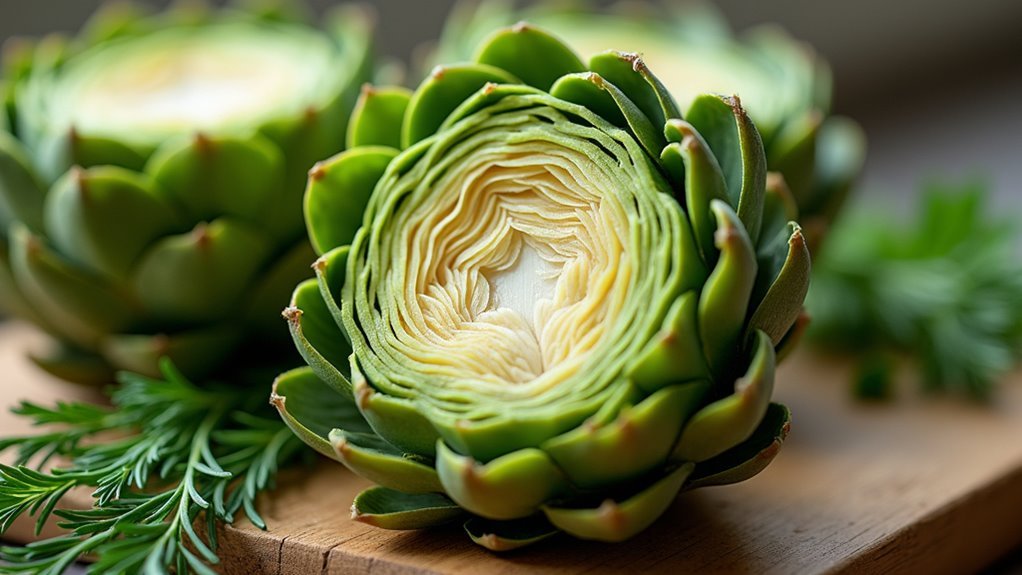
Understanding artichoke hearts’ superior prebiotic benefits means nothing if you’re selecting poor-quality products that won’t deliver ideal results for your gut health.
When shopping for artichoke hearts to maximize prebiotic fiber and support beneficial gut bacteria, focus on these quality sourcing criteria:
- Choose Non-GMO and Kosher Certified options like Reese Medium Artichoke Hearts for ethical sourcing and quality assurance.
- Select water-packed varieties with minimal additives to retain maximum nutrients and fiber content.
- Verify at least 2 grams of dietary fiber per serving to effectively promote prebiotic bacteria growth.
- Read customer reviews for texture and taste feedback to guarantee you’re getting premium products.
Consider buying in bulk to maintain consistent prebiotic fiber intake, as regular consumption is essential for enhancing your gut microbiome.
Frequently Asked Questions
Are Artichoke Hearts Prebiotic?
Yes, artichoke hearts are prebiotic. They’re packed with inulin, a prebiotic fiber that feeds your beneficial gut bacteria. You’ll get about 7 grams of fiber per medium artichoke, promoting digestive health and microbiome balance.
How Many Artichoke Hearts Should I Eat a Day?
You should eat 1 to 2 servings of artichoke hearts daily. Each serving provides about 2 grams of fiber, helping you reach your daily fiber goals while supporting gut health and digestion effectively.
Are Canned or Jarred Artichoke Hearts Better?
You’ll find jarred artichoke hearts offer better flavor and fewer preservatives than canned varieties. However, canned options provide equal fiber content at lower cost. Choose reputable brands either way for ideal prebiotic benefits.
What Food Has the Most Prebiotic Fiber?
Chicory root contains the most prebiotic fiber, with up to 47% inulin by weight. You’ll also find high amounts in Jerusalem artichokes, garlic, onions, and leeks for excellent gut health support.


Leave a Reply