
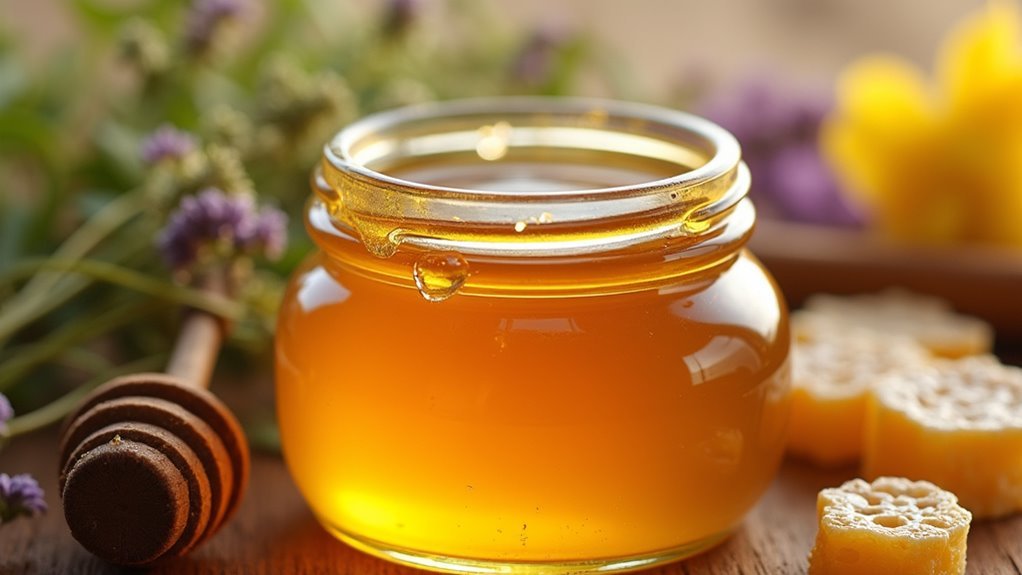
You’ll reveal raw honey’s antimicrobial power by choosing the right variety, storing it properly, and applying it correctly. Select raw Manuka honey with high UMF ratings or dark varieties like buckwheat for maximum antibacterial strength. Store your honey at room temperature in sealed, opaque containers away from light and heat above 104°F to preserve beneficial enzymes. Apply thin layers directly to wounds under sterile gauze, or take small oral doses for gut health benefits. These foundational strategies will help you harness honey’s full therapeutic potential.
Understanding Honey’s Natural Antimicrobial Mechanisms
When you examine raw honey under a microscope, you’ll discover a complex arsenal of natural antimicrobial weapons working together to combat harmful bacteria and pathogens.
Raw honey’s antimicrobial properties stem from multiple mechanisms working simultaneously. Glucose oxidase produces hydrogen peroxide, creating a sustained antibacterial effect when diluted. The honey’s high sugar concentration generates osmotic pressure that dehydrates bacterial cells, effectively halting bacterial growth.
Raw honey deploys multiple antimicrobial mechanisms simultaneously, from hydrogen peroxide production to osmotic dehydration of harmful bacterial cells.
You’ll find the acidic pH environment further inhibits pathogen survival. Specialized compounds like bee defensin-1 and methylglyoxal in Manuka honey enhance antibacterial efficacy by disrupting cell membranes.
Phenolic compounds and flavonoids contribute additional protection, with dark honey varieties containing higher concentrations of these powerful antimicrobial agents that target bacterial toxins.
Choosing the Right Raw Honey for Maximum Antimicrobial Benefits
How can you harness honey’s full antimicrobial potential when countless varieties line store shelves? Start by seeking labels specifying “raw” to verify you’re getting unpasteurized honey with intact antibacterial properties and health benefits. For maximum antimicrobial power, choose high-UMF Manuka honey, which contains concentrated methylglyoxal that delivers superior antibacterial effects.
| Honey Type | Key Features | Antimicrobial Strength |
|---|---|---|
| Raw Manuka | High MGO, UMF certified | Highest |
| Buckwheat | Dark color, rich phenolic compounds | High |
| Wildflower | Varied floral source | Moderate |
Consider darker varieties like buckwheat honey, as they’re packed with phenolic compounds that enhance antimicrobial activity. When you purchase honey, choose reputable local beekeepers or certified stores to assure purity and quality without harmful additives.
Proper Storage and Application Methods to Preserve Healing Properties

Selecting premium raw honey represents only half the equation—proper storage and application techniques determine whether you’ll preserve or destroy its therapeutic potential.
Store your high-quality raw honey at room temperature in sealed, opaque containers away from light to maintain antimicrobial properties and prevent moisture absorption. Never heat honey above 104°F, as excessive temperatures destroy beneficial enzymes and healing properties.
For wound care application methods, apply thin layers directly onto affected areas and cover with sterile gauze. This maintains ideal moisture while preventing bacterial growth.
When addressing gut health issues, take small oral doses to leverage honey’s natural prebiotics. Manuka honey offers superior antimicrobial benefits due to higher methylglyoxal concentrations, making proper storage even more critical for preserving its therapeutic compounds.
Frequently Asked Questions
Does Raw Honey Work as an Antibiotic?
Raw honey can’t replace prescription antibiotics for serious infections, but you’ll find it effectively fights bacteria like E. coli and S. aureus through its hydrogen peroxide, low pH, and antimicrobial compounds.
What Does Raw Honey Do to Your Body?
Raw honey supports your digestive health by feeding beneficial gut bacteria with prebiotics. It fights harmful bacteria in your body using natural antimicrobial compounds, while its acidic environment helps protect you from various pathogens.
Will Honey Draw Out an Infection?
Honey can help draw out infection through its osmotic properties, which pull moisture from bacteria. Its antimicrobial compounds create an unfavorable environment for pathogens, potentially supporting your body’s natural healing process.
What Are the Negatives of Raw Honey?
You’ll face risks including botulism in infants, allergic reactions with breathing issues, blood sugar spikes for diabetics, inconsistent nutritional benefits, and crystallization requiring proper storage to maintain quality.


Leave a Reply