

You’ll maximize raw honey’s antimicrobial peptide power by storing it at room temperature in amber glass containers to preserve bee defensin-1 and enzyme activity. Choose high-quality raw honey with UMF ratings, avoiding processed varieties that destroy beneficial peptides. The glucose oxidase enzyme produces hydrogen peroxide for 24-hour pathogen protection, while high osmotic pressure dehydrates harmful bacteria. Apply directly to wounds for broad-spectrum antimicrobial action. These strategies release honey’s full therapeutic potential for your health needs.
Understanding Bee Defensin-1: The Primary Antimicrobial Peptide in Raw Honey
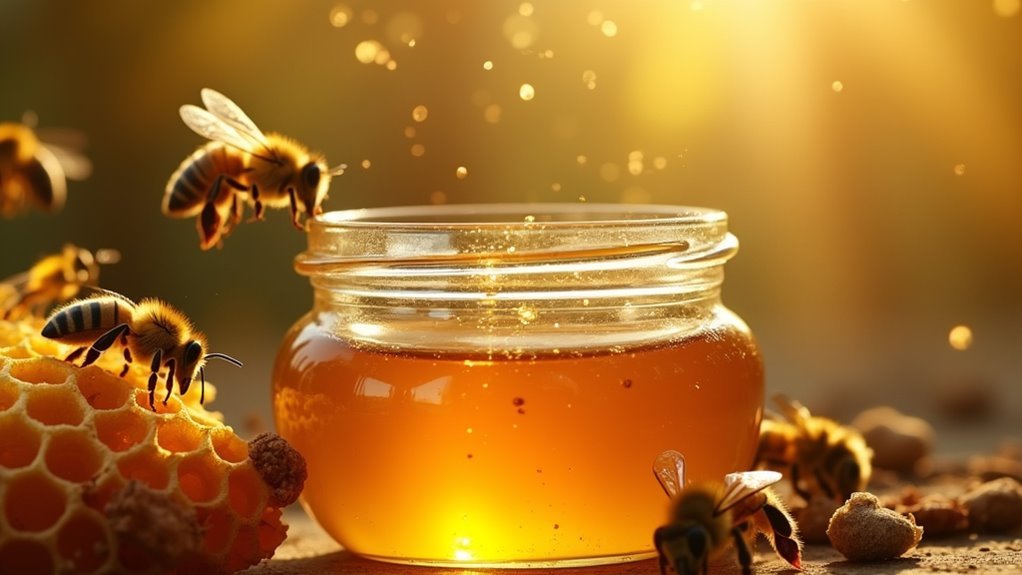
When you examine raw honey under a microscope, you’ll discover that bee defensin-1 serves as nature’s primary antimicrobial guardian, actively disrupting bacterial cell membranes to prevent microbial contamination.
Bee defensin-1 acts as honey’s microscopic sentinel, systematically dismantling harmful bacteria through precise membrane disruption mechanisms.
This powerful peptide specifically targets Gram-positive bacteria, including dangerous strains like Methicillin-resistant Staphylococcus aureus. You’ll find that bee defensin-1 doesn’t work alone—it creates synergistic effects with hydrogen peroxide and phenolic compounds in raw honey, amplifying the overall antimicrobial properties.
The concentration of this peptide varies depending on your honey’s floral source and quality. When you choose high-quality raw honey, you’re accessing greater therapeutic potential for wound treatment and infection prevention.
Understanding bee defensin-1 helps you appreciate why raw honey remains one of nature’s most effective antimicrobial substances.
How Raw Honey’s Enzyme Activity Creates Hydrogen Peroxide for Pathogen Defense
When you consume raw honey, you’re getting a natural antimicrobial powerhouse that actively produces its own pathogen-fighting compounds through enzyme activity.
The glucose oxidase enzyme in raw honey converts glucose into hydrogen peroxide, creating a slow-release antimicrobial agent that continues working for at least 24 hours after dilution.
This enzymatic process transforms your honey into an active defense system that targets harmful bacteria and other pathogens without the resistance issues you’d face with conventional antibiotics.
Glucose Oxidase Activation Process
As raw honey encounters moisture from wounds or dilution with bodily fluids, its dormant glucose oxidase enzyme springs into action, initiating a remarkable biochemical defense mechanism. This enzymatic function converts glucose into gluconic acid and hydrogen peroxide, creating sustained antimicrobial activity that protects against pathogens for over 24 hours.
| Component | Function | Duration |
|---|---|---|
| Glucose Oxidase | Catalyzes glucose conversion | Continuous when active |
| Hydrogen Peroxide | Inhibits microbial growth | 24+ hours post-dilution |
| Gluconic Acid | Maintains acidic pH levels | Sustained release |
You’ll find this natural antimicrobial process works gently yet effectively, producing hydrogen peroxide concentrations that eliminate harmful bacteria without damaging healthy tissue. The combination of enzymatic action and raw honey’s acidic environment creates an inhospitable zone where most pathogens can’t survive or proliferate.
Hydrogen Peroxide Antimicrobial Effects
The hydrogen peroxide generated through glucose oxidase activity serves as honey’s primary weapon against pathogenic microorganisms.
When you dilute raw honey, it triggers continuous hydrogen peroxide production that creates sustained antibacterial effects lasting at least 24 hours. This slow-release mechanism protects your tissue while targeting harmful pathogens effectively.
You’ll find that raw honey’s antimicrobial properties stem from this controlled hydrogen peroxide production combined with its naturally low pH.
Together, they create an environment hostile to most bacteria. The concentration varies depending on the honey’s floral source and processing methods, with raw varieties showing significant advantages over processed alternatives.
This makes raw honey particularly valuable for wound care applications where you need consistent, gentle antimicrobial action.
Optimal Storage Methods to Preserve Antimicrobial Peptide Potency
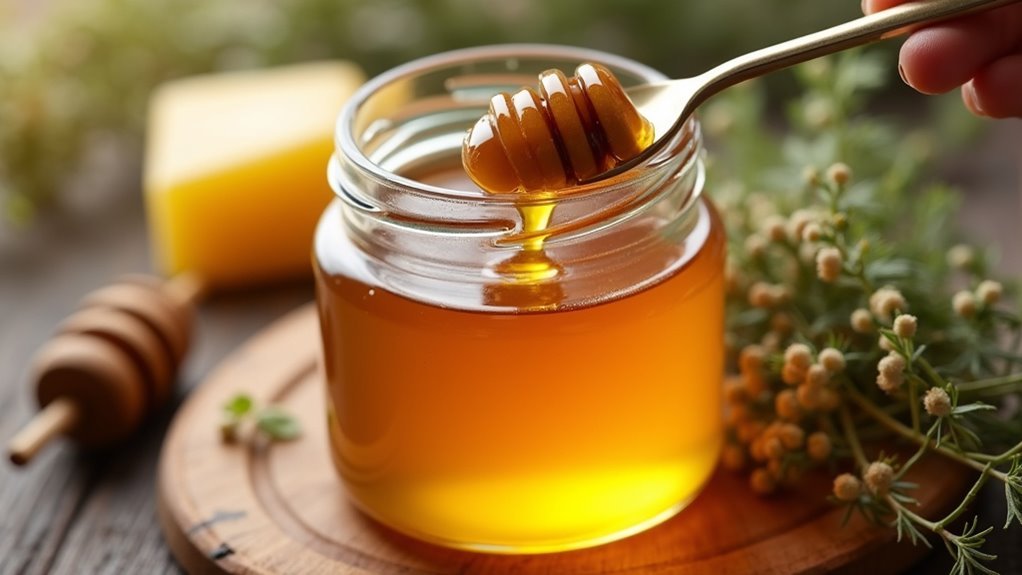
You’ll need to control three critical factors to maintain your raw honey’s antimicrobial peptide potency: temperature, light exposure, and container choice.
Store your honey at room temperature between 50-70°F, as excessive heat destroys the beneficial enzymes that create hydrogen peroxide for pathogen defense.
You’ll also want to protect it from light and moisture by choosing the right storage container and sealing methods.
Temperature Control Essentials
While raw honey’s antimicrobial prowess stems from its complex biochemistry, you’ll quickly lose these therapeutic benefits if you don’t store it properly.
Temperature control is absolutely essential for maintaining your raw honey’s antimicrobial properties. Keep it between 10-21°C (50-70°F) to preserve enzyme activity and beneficial components. Never expose honey to temperatures above 40°C (104°F), as this destroys glucose oxidase and other vital enzymes responsible for its therapeutic power.
Store your honey in opaque or amber glass containers to shield it from light degradation. Always seal containers tightly after use to prevent moisture absorption, which can trigger fermentation and spoilage.
For best effectiveness, consume your raw honey within two years, as enzyme potency naturally declines over time despite proper honey storage practices.
Light Protection Requirements
Light exposure poses one of raw honey’s greatest threats, systematically breaking down antimicrobial peptides that give this golden elixir its therapeutic punch.
You’ll preserve your raw honey’s antimicrobial properties by storing it properly and maintaining ideal storage temperature conditions.
Here’s how to protect your honey from light damage:
- Choose amber glass containers – They filter harmful UV rays that degrade antimicrobial compounds.
- Use opaque storage vessels – Dark containers block all light penetration completely.
- Store in dark pantries – Avoid countertops near windows where sunlight reaches.
- Prevent chemical composition changes – Light accelerates breakdown of beneficial enzymes.
Proper light protection extends shelf life considerably while preventing unwanted crystallization and moisture absorption issues that compromise potency.
Container Selection Guidelines
Since proper container selection forms the foundation of preserving raw honey’s antimicrobial peptides, choosing the right storage vessel directly impacts your honey’s therapeutic potency over time.
Your container selection directly affects antimicrobial properties retention. Follow these storage guidelines to prevent moisture absorption and maintain enzymatic activity:
| Container Type | Light Protection | Moisture Barrier |
|---|---|---|
| Amber Glass | Excellent | Superior |
| Dark Glass | Good | Superior |
| Opaque Plastic | Good | Moderate |
| Clear Glass | Poor | Superior |
| Metal Containers | Excellent | Good |
Choose protective containers with tight-fitting lids to create ideal storage conditions. Amber or dark glass provides superior light protection while preventing moisture infiltration. Confirm your selected vessel maintains an airtight seal, as even minimal moisture absorption can compromise raw honey’s antimicrobial effectiveness and reduce beneficial compound preservation.
Selecting High-Quality Raw Honey for Maximum Antimicrobial Benefits
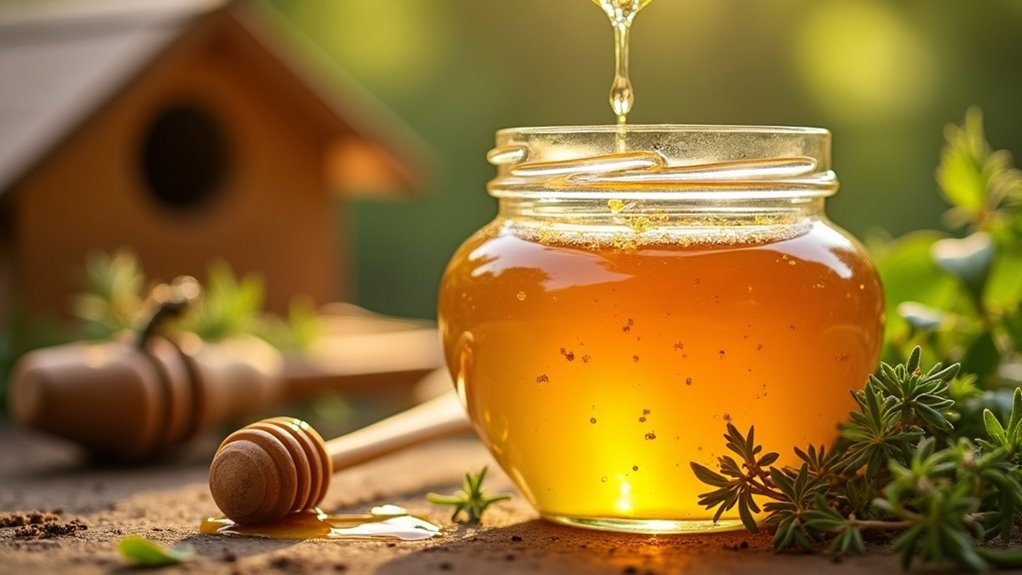
When you’re shopping for raw honey to harness its antimicrobial benefits, you’ll want to focus on varieties that pack the highest concentration of bioactive compounds.
Manuka honey stands out with its exceptional antimicrobial properties, thanks to high levels of methylglyoxal (MGO) that deliver superior antibacterial potency.
Here’s your quality control checklist:
- Verify the “raw” label – Processing destroys natural enzymes and reduces antimicrobial effectiveness
- Check for Unique Manuka Factor (UMF) ratings – This certification guarantees authentic antibacterial strength
- Choose amber glass containers – Light protection preserves bioactive compounds
- Select reputable local producers – Transparency about floral origin and geographical sourcing assures composition quality
You’ll maximize your raw honey’s therapeutic potential by prioritizing these selection criteria over price alone.
The Role of Osmotic Pressure in Raw Honey’s Bacterial Resistance
You’ll find that raw honey’s remarkable antimicrobial strength comes from its ability to create a hostile environment through osmotic pressure.
When bacteria encounter honey’s concentrated sugars, the high osmotic pressure literally pulls water from their cells, causing them to shrivel and die.
This water-stealing mechanism works because honey’s low water activity level sits well below what bacteria need to survive and multiply.
High Sugar Concentration Effects
Although bacteria thrive in environments with adequate moisture, raw honey’s exceptionally high sugar concentration creates a hostile, hypertonic environment that works against microbial survival.
This osmotic pressure draws water from bacterial cells, effectively dehydrating them and preventing reproduction.
You’ll find honey’s antimicrobial properties particularly impressive when considering these key mechanisms:
- Water activity levels drop to 0.56-0.62, well below bacterial survival thresholds
- Moisture content remains extremely low at 17-20%, starving microbes of essential water
- Osmotic stress continuously pulls water from bacterial cell membranes
- Natural preservative qualities maintain effectiveness against multidrug-resistant bacteria
This high sugar concentration doesn’t just inhibit microbial growth—it actively destroys harmful pathogens while preserving honey’s potency, making it exceptionally effective against even the most stubborn bacterial strains that resist conventional treatments.
Water Activity Mechanisms
Water activity levels in raw honey create one of nature’s most effective antimicrobial defense systems through precise osmotic control. Raw honey’s low water activity (0.56-0.62) falls well below bacterial growth requirements, creating hostile conditions for microbes. The osmotic pressure dehydrates bacterial cells by drawing out essential moisture, preventing proliferation and enhancing preservation.
| Water Activity Factor | Antimicrobial Impact |
|---|---|
| Low water activity (0.56-0.62) | Prevents bacterial survival |
| High osmotic pressure | Dehydrates microbial cells |
| Sugar concentration | Maintains long-term stability |
| Glucose oxidase enzyme | Produces hydrogen peroxide |
When you dilute honey, osmotic pressure decreases, but antimicrobial activity persists through slow-release hydrogen peroxide from glucose oxidase. This dual mechanism gives honey broad-spectrum antimicrobial properties against pathogenic bacteria, making it exceptionally effective for natural preservation and therapeutic applications.
Methylglyoxal Concentration: Why Manuka Honey Leads in Antimicrobial Power
When you’re searching for nature’s most powerful antimicrobial honey, Manuka honey stands apart due to its exceptional methylglyoxal (MGO) concentration. This potent compound reaches levels of 100-800+ mg/kg, depending on the Unique Manuka Factor (UMF) rating, delivering superior antimicrobial properties compared to regular honey.
MGO’s therapeutic value comes from its ability to combat antibiotic-resistant bacteria like MRSA, making it incredibly effective for antibacterial activity.
Here’s what makes MGO so powerful:
- Disrupts bacterial cell membranes directly
- Inhibits bacterial growth even when diluted
- Maintains effectiveness for extended periods
- Forms naturally from dihydroxyacetone in Manuka tree nectar
You’ll find that MGO’s concentration directly correlates with Manuka honey’s ability to fight harmful microorganisms, giving it unmatched antimicrobial strength.
Temperature Control: Protecting Heat-Sensitive Antimicrobial Compounds
Since honey’s antimicrobial compounds are remarkably heat-sensitive, you must handle and store your raw honey with careful temperature control to preserve its therapeutic benefits. Heating above 40°C destroys vital enzymes like glucose oxidase, which drives hydrogen peroxide production—your honey’s primary antimicrobial mechanism.
Commercial processing typically exceeds 70°C, devastating enzymatic activity and antimicrobial potency. You’ll protect these delicate compounds by maintaining proper storage at room temperature (10-21°C) in amber glass containers with tight seals.
| Temperature Range | Effect on Antimicrobial Properties |
|---|---|
| 10-21°C (Room temp) | Preserves full enzymatic activity |
| Above 40°C | Significant enzyme reduction begins |
| Above 70°C | Destroys heat-sensitive compounds completely |
Keep your raw honey away from light and prevent moisture absorption to maintain maximum antimicrobial effectiveness.
Raw vs. Processed: How Commercial Processing Destroys Peptide Activity
While raw honey contains powerful antimicrobial peptides like bee defensin-1 that provide essential antibacterial protection, commercial processing systematically destroys these significant compounds through excessive heat treatment.
When you choose processed honey over raw honey, you’re missing out on vital health benefits. High-temperature treatments above 70°C devastate the antibacterial properties that make honey naturally therapeutic.
Here’s what commercial processing destroys:
- Antimicrobial peptides – Essential compounds like bee defensin-1 get eliminated during heating
- Enzymatic activity – Glucose oxidase that produces hydrogen peroxide becomes impaired
- Overall potency – Studies show up to 50% reduction in antimicrobial effectiveness
- Natural composition – Ultra-filtration and pasteurization strip away beneficial elements
You’ll preserve maximum antimicrobial peptides by selecting raw varieties and storing them properly at room temperature.
Phenolic Compounds and Flavonoids: Secondary Antimicrobial Defense Systems
Beyond the primary antimicrobial peptides, raw honey deploys a sophisticated secondary defense system through phenolic compounds and flavonoids that amplify its pathogen-fighting capabilities. These plant-derived molecules, including gallic acid and quercetin, disrupt bacterial cell membranes and halt toxin production, effectively controlling bacterial growth.
| Component | Mechanism | Clinical Impact |
|---|---|---|
| Gallic Acid | Membrane disruption | Broad-spectrum control |
| Quercetin | Toxin inhibition | Enhanced effectiveness |
| Phenolic Complexes | Synergistic action | Biofilm penetration |
| Flavonoid Networks | Antioxidant activity | Cellular protection |
You’ll find darker honey varieties contain higher concentrations of these compounds, maximizing antimicrobial properties. Their antioxidant activity supports your cellular health while enhancing therapeutic potential. Most importantly, these compounds help antibiotics penetrate biofilms formed by resistant bacteria, making honey a valuable complementary treatment.
Practical Applications for Wound Care and Infection Prevention
When you apply raw honey to wounds, you’re harnessing centuries of proven therapeutic practice now backed by modern clinical evidence.
Raw honey’s antimicrobial properties create ideal conditions for wound care through its low pH and high osmolarity, which prevent bacterial growth while promoting infection prevention.
Raw honey’s natural acidity and osmotic pressure work together to eliminate harmful bacteria while accelerating the healing process.
You’ll find medical-grade honey particularly effective for:
- Chronic wounds – Maintains moist healing environment while reducing inflammation
- Burns and diabetic ulcers – Stimulates immune response and growth factor production
- Surgical sites – Provides broad-spectrum antibacterial activity against resistant pathogens
- First aid applications – Disrupts bacterial cell membranes through bee defensin-1 peptides
The honey’s tissue regeneration capabilities outperform conventional treatments in clinical studies, making it invaluable for modern healthcare applications.
Frequently Asked Questions
Does Raw Honey Work as an Antibiotic?
Raw honey can work as a natural antibiotic for you. It’ll effectively kill bacteria like MRSA through multiple mechanisms including hydrogen peroxide production, antimicrobial peptides, and acidic pH that disrupts bacterial membranes.
What Are the Benefits of Antimicrobial Peptides?
You’ll benefit from antimicrobial peptides’ ability to disrupt bacterial membranes, fight antibiotic-resistant infections, prevent biofilm formation, modulate immune responses, reduce inflammation, and promote tissue healing through their multifaceted therapeutic mechanisms.
Will Honey Draw Out an Infection?
Yes, honey can draw out infection through its high osmotic pressure, which pulls moisture from infected tissue. You’ll benefit from its antimicrobial peptides and hydrogen peroxide that combat bacteria while promoting healing.
What Are the Antimicrobial Peptides in Honey?
You’ll find bee defensin-1 as honey’s primary antimicrobial peptide, which disrupts bacterial cell membranes. Methylglyoxal also contributes antimicrobial properties, while phenolic compounds and flavonoids work synergistically to enhance honey’s antibacterial effectiveness against pathogens.


Leave a Reply