

You can prevent blood clots naturally by crushing garlic completely and letting it sit for 10 minutes to maximize allicin formation. Consume 1-2 raw cloves daily, keeping cooking time under five minutes to preserve active compounds. Pair garlic with olive oil, omega-3 rich fish, and citrus fruits for enhanced absorption and cardiovascular benefits. Always consult your healthcare provider before combining garlic with blood-thinning medications to monitor interactions safely. These strategic approaches reveal garlic’s full therapeutic potential.
Understanding How Allicin Prevents Blood Clot Formation

Although blood clots serve essential protective functions in your body, excessive clotting can lead to serious cardiovascular complications.
Allicin, the powerful compound found in garlic, offers natural protection against harmful blood clots through several mechanisms. When you consume garlic, allicin works to prevent dangerous clot formation by inhibiting platelet aggregation—the process where blood cells stick together.
This compound also boosts your body’s nitric oxide production, promoting healthier blood vessels and reducing clotting risks. Additionally, allicin disrupts calcium signaling pathways in your platelets, further decreasing the likelihood of unwanted clots.
While laboratory and animal studies consistently demonstrate allicin’s effectiveness, human research results remain mixed, suggesting individual responses may vary considerably.
Crushing Garlic Properly to Maximize Allicin Release
Since proper crushing technique directly determines how much allicin your garlic produces, you’ll want to master this simple but essential preparation method.
Crush garlic cloves completely rather than chopping them finely, as larger pieces hinder the enzymatic reaction needed for allicin formation. After crushing, let the garlic sit for at least 10 minutes before cooking or eating. This waiting period allows the enzyme alliinase to convert alliin into allicin effectively.
Keep cooking time under five minutes to preserve beneficial enzymes and maintain allicin’s bioavailability.
When you use nearly raw crushed garlic regularly, you’re maximizing its ability to prevent blood clots and support cardiovascular health. This proper preparation method guarantees you’re getting the full antithrombotic benefits that help inhibit platelet aggregation.
Timing Your Garlic Consumption for Optimal Blood-Thinning Effects
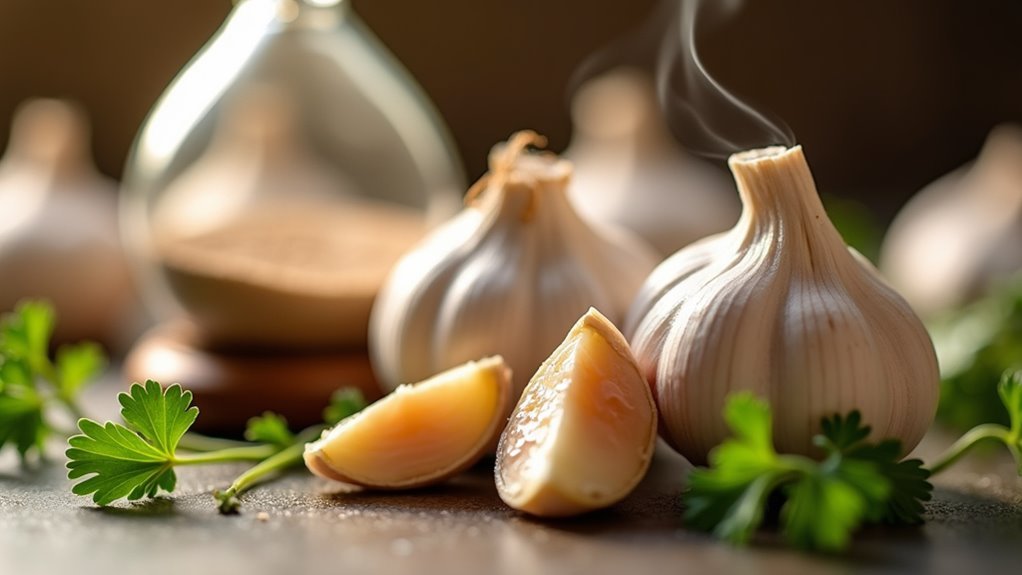
Beyond preparation techniques, the timing of when you consume garlic plays a significant role in maximizing its blood-thinning benefits. After crushing garlic, you’ll need to wait about 10 minutes before consuming it. This waiting period allows allicin to form properly, which is essential for preventing blood clots effectively.
You should consume your crushed garlic in its nearly raw state for best results. Cooking garlic for more than five minutes destroys the beneficial enzymes that help prevent clot formation.
If you’re taking anticoagulant medications, timing becomes even more critical. You’ll want to consult your healthcare provider about when and how much garlic you should consume, as consuming garlic can interact with blood-thinning medications and affect your clotting function.
Raw vs. Cooked Garlic: Which Method Preserves Anti-Clotting Properties
When you’re choosing between raw and cooked garlic for blood-thinning benefits, raw garlic delivers considerably higher levels of allicin and preserves the active compounds your body needs.
Cooking garlic for more than five minutes destroys the key enzymes responsible for anti-clotting properties, dramatically reducing its cardiovascular effectiveness.
You’ll get the maximum anti-thrombotic benefits by consuming garlic raw or adding it at the very end of your cooking process.
Raw Garlic Allicin Benefits
Although garlic offers cardiovascular benefits in various forms, raw garlic delivers markedly more potent anti-clotting properties than its cooked counterpart. When you consume raw garlic, you’ll maximize allicin production, the compound responsible for preventing blood clots.
Cooking garlic for over five minutes destroys the beneficial enzymes that create allicin, considerably reducing its cardiovascular health benefits.
To optimize raw garlic’s anti-clotting effects, crush it and let it sit for ten minutes before eating. This process allows maximum allicin formation.
The compound works by inhibiting platelet aggregation, increasing nitric oxide production, and affecting calcium signaling in platelets. These mechanisms contribute to allicin’s blood-thinning effects, enhancing your vascular health and reducing cardiovascular event risks through its powerful antithrombotic properties.
Heat Destroys Active Compounds
Heat exposure fundamentally alters garlic’s molecular structure, destroying the delicate enzymes responsible for allicin production.
When you cook garlic for more than five minutes, you’re basically eliminating its most beneficial compounds that prevent blood clots. The high temperatures break down allicin’s anti-clotting properties, making cooked garlic far less effective than its raw counterpart.
If you’re serious about maximizing garlic’s therapeutic potential, you’ll need to embrace raw consumption. Cooking destroys the platelet aggregation inhibitors that make garlic so powerful against blood clots.
Studies consistently show that raw garlic maintains considerably higher levels of active compounds compared to cooked versions. To preserve these beneficial properties, crush your garlic and let it sit for ten minutes before eating it nearly raw.
This simple step guarantees you’re getting maximum anti-clotting benefits.
Safe Dosage Guidelines for Natural Blood Clot Prevention
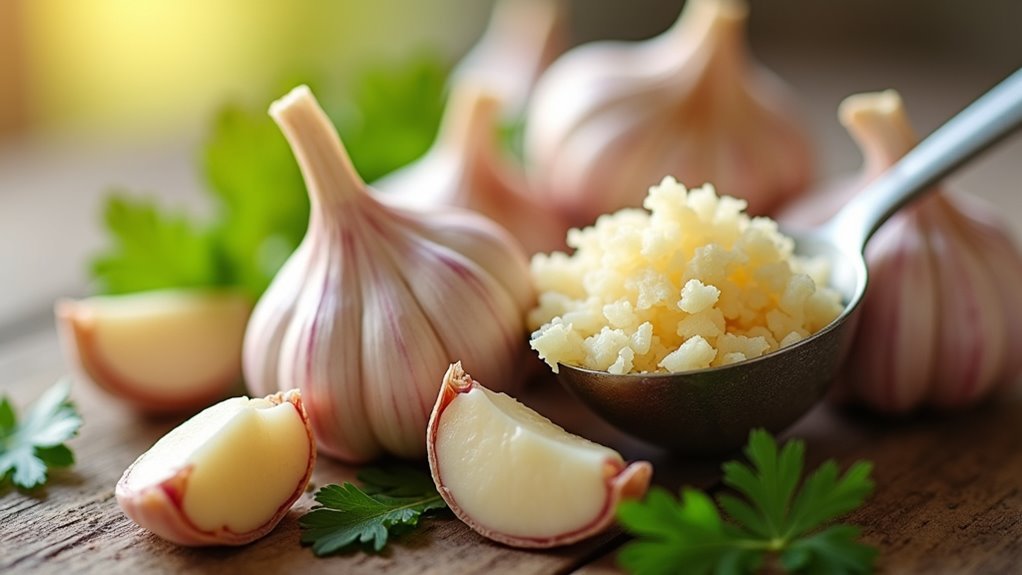
Since garlic’s blood-thinning properties can interact with medications and affect individuals differently, you’ll need to follow specific dosage guidelines to harness allicin’s benefits safely.
Consume 1-2 cloves of raw garlic daily to potentially prevent blood clots while maintaining safety. If you’re taking anticoagulant medications, approach garlic consumption cautiously to avoid excessive bleeding risks.
To maximize allicin production, crush or chop your garlic and let it sit for 10 minutes before eating. This waiting period allows enzymes to convert alliin into active allicin compounds.
Remember that individual responses to garlic vary greatly. You should consult your healthcare provider before using garlic for blood clot prevention, especially if you have existing medical conditions or take blood-thinning medications.
Combining Garlic With Other Heart-Healthy Foods for Enhanced Protection
You can amplify garlic’s blood clot prevention benefits by strategically pairing it with other heart-protective foods.
Combining garlic with omega-3 rich fish, following Mediterranean diet principles, and creating antioxidant-packed food combinations will maximize your cardiovascular protection.
These synergistic approaches don’t just add flavor to your meals—they create powerful nutritional partnerships that work together to keep your blood flowing smoothly.
Garlic Plus Omega-3s
When you combine garlic with omega-3 fatty acids, you create a powerful cardiovascular alliance that amplifies the heart-protective benefits of each nutrient. This dynamic duo works synergistically to protect your blood vessels while enhancing your cholesterol levels for ideal cardiovascular health.
Garlic’s blood-thinning properties complement omega-3s’ anti-inflammatory effects, creating enhanced protection against dangerous clot formation. You’ll find omega-3s in fatty fish like salmon and flaxseeds, which work alongside garlic to improve your endothelial function and circulation.
| Garlic Benefits | Omega-3 Benefits |
|---|---|
| Lowers LDL cholesterol | Increases HDL cholesterol |
| Reduces blood clotting | Anti-inflammatory effects |
| Supports circulation | Improves vessel health |
This combination provides extensive cardiovascular protection through multiple mechanisms, making it an excellent addition to your heart-healthy lifestyle.
Mediterranean Diet Synergy
Building on this powerful partnership, the Mediterranean diet creates an ideal framework for maximizing garlic’s cardiovascular benefits through strategic food combinations. This eating pattern naturally enhances garlic’s blood-thinning properties while providing extensive heart health protection.
When you incorporate garlic into Mediterranean-style meals, you’ll amplify its protective effects against blood clots through these key combinations:
- Garlic with olive oil – This classic pairing boosts absorption of beneficial compounds and promotes synergistic heart health benefits.
- Garlic with antioxidant-rich foods – Combining garlic with berries and leafy greens combats oxidative stress that contributes to blood clot formation.
- Garlic with legumes and nuts – This combination provides extensive anti-inflammatory and blood-thinning benefits for peak cardiovascular protection.
The Mediterranean diet’s emphasis on whole foods creates the perfect foundation for garlic’s therapeutic potential.
Antioxidant Food Combinations
While garlic provides impressive cardiovascular protection on its own, strategically pairing it with specific antioxidant-rich foods creates a synergistic effect that dramatically enhances its blood clot prevention capabilities.
You’ll maximize garlic’s benefits by combining it with berries, spinach, and nuts, which boost its ability to reduce oxidative stress and support cardiovascular health.
Adding turmeric amplifies anti-inflammatory effects while improving blood flow protection against blood clots.
Pairing garlic with omega-3-rich fatty fish creates powerful blood-thinning synergy that reduces heart disease risk.
Including citrus fruits provides vitamin C that stabilizes and enhances garlic’s antioxidants, improving absorption of beneficial compounds.
Dark chocolate paired with garlic delivers potent flavonoids that support circulation and further reduce clot formation likelihood.
Monitoring Blood Thinning Medications When Using Garlic Therapeutically
Three critical steps guarantee your safety when combining garlic supplements with blood-thinning medications.
Since garlic possesses natural anticoagulant properties through allicin, you must monitor your intake carefully when taking warfarin or heparin. The combination can considerably increase bleeding risk, requiring immediate attention.
- Consult your healthcare provider before starting therapeutic garlic use to assess potential interactions with your current blood-thinning regimen and determine safe dosage levels.
- Monitor for unusual bleeding symptoms including easy bruising, prolonged bleeding from cuts, or unexpected nosebleeds that may indicate excessive anticoagulation effects.
- Schedule regular blood tests to track your INR levels and clotting times, allowing your healthcare provider to adjust medication dosages appropriately based on garlic’s blood-thinning impact.
Frequently Asked Questions
How to Maximize Allicin in Garlic?
Crush or chop your garlic and let it sit for ten minutes before eating. You’ll maximize allicin by consuming it raw or lightly cooked, and pairing it with healthy fats improves absorption.
Can Garlic Unclog Arteries?
You can’t rely on garlic alone to unclog arteries. While it improves blood flow and reduces clot formation through allicin’s effects on platelets, you’ll need thorough cardiovascular care for arterial blockages.
Does Allicin Increase Blood Flow?
Yes, allicin can increase your blood flow. It boosts nitric oxide production, which relaxes and widens your blood vessels. You’ll also benefit from its ability to reduce platelet aggregation and improve circulation.
How to Eat Garlic for Blood Circulation?
Crush or chop garlic and wait ten minutes before eating. Consume one to two raw cloves daily in salads or dressings. You can also take aged garlic extract supplements for convenience.


Leave a Reply