

You’ll face serious health risks when combining turmeric or curcumin supplements with anti-inflammatory medications because curcumin amplifies drug effects through liver enzyme interactions that can double bleeding risks, trigger dangerous blood sugar drops, and compromise cancer treatment effectiveness. The compound affects how your liver processes medications like blood thinners, diabetes drugs, and chemotherapy treatments, potentially creating life-threatening complications. Understanding these specific interactions can help you make safer decisions about supplementation.
Blood-Thinning Medications and Increased Bleeding Risk

When you’re taking blood-thinning medications like warfarin, clopidogrel, or aspirin, adding turmeric to your routine can create a dangerous combination.
Turmeric acts as a mild blood thinner, enhancing the effects of anticoagulant medications and greatly increasing your bleeding risk. This interaction can lead to severe bleeding symptoms, including coughing up blood, blood in urine or stool, excessive bruising, and prolonged bleeding times.
While these medications help prevent blood clots, combining them with turmeric can tip the balance dangerously toward hemorrhage.
You’ll need immediate medical attention if you experience any severe bleeding symptoms. Always consult your healthcare provider before incorporating turmeric into your diet or supplement regimen, especially when taking blood-thinning medications.
Diabetes Medications and Hypoglycemia Concerns
If you’re taking diabetes medications like glyburide or insulin, turmeric’s curcumin can amplify their blood sugar-lowering effects and create a dangerous situation.
This combination greatly increases your risk of hypoglycemia, where your blood sugar drops to potentially harmful levels.
You’ll need to watch for warning signs like shakiness, dizziness, and other symptoms that signal your blood sugar has fallen too low.
Blood Sugar Lowering Effects
Although turmeric’s anti-inflammatory properties offer numerous health benefits, its natural blood sugar-lowering effects can create serious complications for people managing diabetes.
When you combine turmeric or curcumin supplements with diabetes medications like glyburide, insulin, or Ozempic, you’ll face an increased risk of hypoglycemia. This dangerous drop in blood sugar can cause shakiness, anxiety, dizziness, and confusion.
You must monitor your blood sugar levels closely if you’re considering turmeric while taking these medications. The combination can enhance your medication’s effects beyond safe levels, creating potentially life-threatening situations.
Before adding turmeric to your routine, consult your healthcare provider to assess safety and establish proper monitoring strategies. Careful dosage adjustments may be necessary to prevent adverse reactions.
Hypoglycemia Warning Signs
Recognizing hypoglycemia symptoms quickly can prevent a medical emergency when you’re combining turmeric with diabetes medications. Turmeric’s blood sugar-lowering properties can intensify your diabetes medications’ effects, creating dangerous interactions that drop your blood sugar levels too low.
You’ll need to monitor yourself closely for warning signs like shakiness, anxiety, fast heartbeat, and dizziness. These symptoms can escalate rapidly, so immediate recognition is essential. Your healthcare provider should guide you through safe turmeric use alongside medications like glyburide, insulin, or Ozempic.
- Physical symptoms: Watch for trembling hands, rapid pulse, sweating, and weakness that signal dropping blood sugar.
- Mental symptoms: Notice confusion, irritability, difficulty concentrating, or sudden mood changes as early warning signs.
- Emergency actions: Keep glucose tablets handy and contact your healthcare provider immediately when symptoms appear.
Blood Pressure Medications and Enhanced Effects
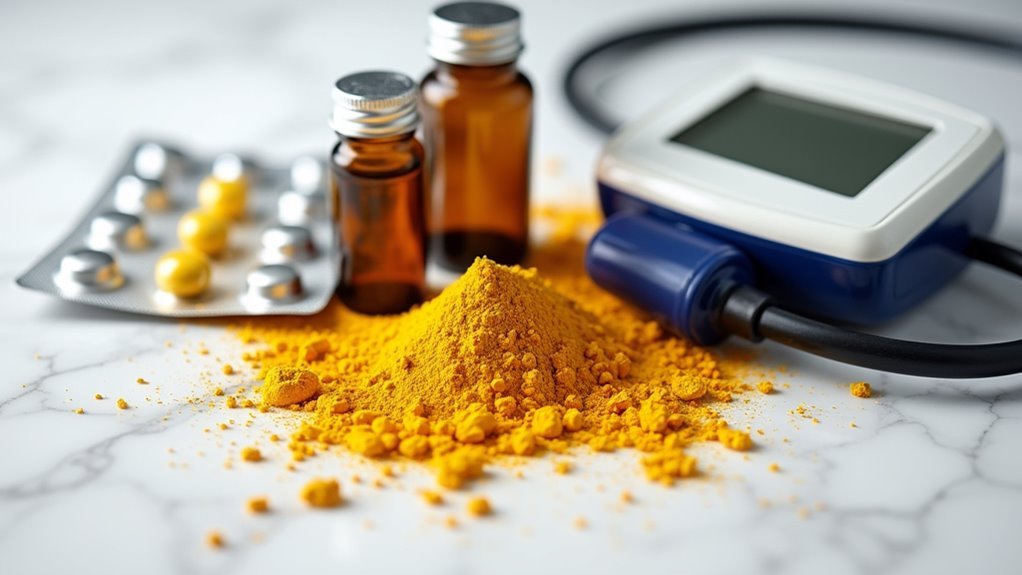
If you’re taking blood pressure medications like amlodipine or losartan, turmeric can amplify their effects in ways you mightn’t expect.
Turmeric may increase amlodipine levels in your system, potentially causing intensified side effects like stomach pain and dizziness.
When combined with losartan, turmeric can enhance blood pressure reduction so notably that you’ll need careful monitoring to prevent dangerously low readings.
Amlodipine Level Increases
When you’re taking amlodipine (Norvasc) for high blood pressure, adding turmeric to your routine can markedly increase the medication’s levels in your bloodstream.
This interaction occurs because turmeric alters how your body processes amlodipine, affecting drug absorption and metabolism. The enhanced hypotensive effects can lead to excessive blood pressure drops, causing concerning side effects like severe dizziness, fainting, and stomach pain.
You should monitor yourself carefully for these warning signs and consult your healthcare provider before incorporating turmeric supplements or high doses through food.
- Blood pressure monitoring becomes critical – Check readings more frequently to detect dangerous drops
- Pharmacokinetic changes affect drug processing – Turmeric modifies how your liver metabolizes amlodipine
- Symptom awareness prevents complications – Watch for excessive dizziness that indicates problematic interactions
Losartan Enhanced Effects
Taking losartan (Cozaar) alongside turmeric creates a potentially dangerous amplification of blood pressure-lowering effects that can push your readings below safe levels.
This interaction occurs because turmeric acts as a mild blood thinner while enhancing losartan’s primary mechanism. You’ll face increased risk of hypotension, which manifests through dizziness and muscle cramps that can seriously impact your daily activities.
Your blood pressure requires careful monitoring when combining these substances, as the enhanced effects often exceed therapeutic targets.
You shouldn’t start turmeric supplements without consulting your healthcare provider first, especially if you’re already managing hypertension with losartan.
If significant side effects develop or your blood pressure drops too dramatically, you may need to discontinue turmeric entirely to prevent dangerous interactions.
Blood Pressure Monitoring
Beyond losartan interactions, blood pressure medications across multiple drug classes create similar amplification risks when you combine them with turmeric supplements.
Turmeric can increase amlodipine levels, potentially causing stomach pain and dizziness. These drug interactions affect hypertension management by enhancing therapeutic effects while increasing side effects like muscle cramps and diarrhea.
You’ll need to monitor your blood pressure closely when using turmeric with medications. The amplified effects can complicate your treatment plan and may require dosage adjustments. Always consult your healthcare provider before starting turmeric supplements alongside blood pressure medications.
- Track daily blood pressure readings to identify dangerous drops in readings
- Document any new side effects like dizziness or gastrointestinal issues immediately
- Schedule regular check-ups to guarantee medication effectiveness remains ideal
Cancer Treatment Drugs and Altered Effectiveness

Although turmeric’s anti-inflammatory properties make it an appealing supplement for cancer patients, its interactions with chemotherapy drugs can considerably alter treatment effectiveness.
Turmeric’s anti-inflammatory benefits may appeal to cancer patients, but significant drug interactions can dramatically compromise chemotherapy effectiveness.
When you turmeric interact with cancer treatment drugs, the active ingredient curcumin can bind to estrogen receptors, potentially reducing tamoxifen’s effectiveness in breast cancer treatment.
You’ll find that curcumin may also alter how your body processes paclitaxel and docetaxel, increasing both their effects and side effects.
Large amounts of turmeric might interfere with antitumor antibiotics and topoisomerase inhibitors.
These complex drug interactions can either enhance or diminish your chemotherapy’s effectiveness depending on dosing and timing.
You must consult your healthcare provider before using turmeric during cancer treatment to avoid compromising your therapeutic outcomes.
Immunosuppressant Medications and Kidney Function
When you’re taking immunosuppressant medications like tacrolimus (Prograf), adding turmeric to your regimen can create dangerous complications that directly threaten your kidney function.
Turmeric increases tacrolimus levels in your system, amplifying side effects and potentially causing severe kidney damage. You’ll need to watch for warning signs including difficulty urinating, breathing trouble, rapid heartbeat, seizures, and unusual bleeding.
- Immediate intervention saves kidneys: Stopping turmeric quickly often reverses damage, though severe cases require medical treatment.
- Prevention beats treatment: Consulting your healthcare provider before using turmeric prevents dangerous interactions entirely.
- Regular monitoring protects you: Kidney function tests help catch problems early when taking turmeric with immunosuppressants.
Your healthcare provider can assess whether turmeric interactions pose unacceptable risks for your specific situation.
Hormonal Therapies and Reduced Absorption
If you’re undergoing hormonal therapies, turmeric’s curcumin can sabotage your treatment by binding to estrogen receptors and disrupting the delicate hormonal balance your medications work to achieve.
High doses particularly diminish tamoxifen’s efficacy, an antiestrogen medication vital for breast cancer treatment, by reducing drug levels in your body.
Curcumin’s estrogen-like effects complicate hormone therapy outcomes when you consume large amounts. Additionally, turmeric interferes with iron supplement absorption, which becomes problematic if your hormonal therapies require ideal iron levels for effectiveness.
These interactions create a double threat: reduced absorption of essential nutrients and compromised therapeutic benefits.
You shouldn’t assume turmeric supplements are harmless additions to your regimen. Always consult your healthcare provider before incorporating turmeric while receiving hormonal therapies to prevent potentially dangerous treatment interference.
Liver-Affecting Medications and Hepatotoxicity
Three major liver enzyme pathways become compromised when you combine turmeric with hepatotoxic medications, creating a dangerous cascade that can damage your liver and alter drug metabolism.
Curcumin affects CYP1A1, CYP1A2, and CYP3A4 enzymes, disrupting how your body processes medications like methotrexate. This interference increases drug concentrations in your system, amplifying toxic effects and reducing medication effectiveness.
If you’re taking liver-affecting medications, you’re at heightened risk for drug interactions and liver damage. Your healthcare provider must monitor your liver function regularly when combining turmeric with hepatotoxic drugs.
- Enzyme disruption: Curcumin alters critical liver pathways responsible for medication breakdown
- Toxicity amplification: Combined hepatotoxic effects create compounding liver damage risks
- Monitoring necessity: Regular liver function tests become essential for safe supplementation
Anti-Inflammatory Supplements and Compounded Effects
Because turmeric’s anti-inflammatory mechanisms complement other natural compounds, combining curcumin with supplements like omega-3 fatty acids, ginger, or boswellia can create synergistic effects that amplify therapeutic benefits.
You’ll find these combinations may modulate inflammatory mediators like COX-2 and NF-kB more effectively than single supplements alone, potentially reducing your need for higher pharmaceutical doses.
When you stack turmeric with other anti-inflammatory supplements, you’re creating compounded effects that can enhance pain relief while minimizing side effects associated with conventional medications.
However, you must exercise caution with these combinations, as increased bleeding risk becomes a concern. Blood-thinning effects can intensify when multiple anti-inflammatory supplements work together, requiring careful monitoring of your overall supplement regimen.
Monitoring and Safety Protocols for Combined Use
While combining turmeric curcumin with anti-inflammatory medications can offer enhanced therapeutic benefits, you must implement rigorous safety protocols to prevent potentially dangerous interactions.
Your healthcare provider should assess bleeding risk before starting this combination, as turmeric acts as a mild blood thinner alongside NSAIDs. You’ll need regular monitoring for gastrointestinal bleeding signs like blood in stool or severe abdominal pain.
Healthcare providers must evaluate bleeding risks when combining turmeric with NSAIDs due to compounded blood-thinning effects requiring vigilant monitoring.
Additionally, track your blood sugar levels closely since both turmeric and certain anti-inflammatory medications affect glucose metabolism. Regular liver function tests become essential when combining these substances due to potential hepatotoxic effects.
Your healthcare provider should make appropriate dosage adjustments based on your individual response and risk factors.
- Monitor for bleeding complications through regular blood work and physical symptom assessment
- Track metabolic changes including glucose fluctuations and liver enzyme elevation patterns
- Maintain consistent communication with healthcare providers regarding any adverse reactions or symptom changes
Frequently Asked Questions
What Medications Should Not Be Taken With Turmeric Curcumin?
You shouldn’t take turmeric curcumin with blood thinners like warfarin, diabetes medications, immunosuppressants like tacrolimus, cancer drugs including tamoxifen, or antacids such as omeprazole due to dangerous interactions.
When Is the Best Time to Take Turmeric for Inflammation?
You’ll get the best anti-inflammatory benefits by taking turmeric with breakfast daily. The fat in your meal enhances absorption, while morning timing provides sustained effects throughout your day for ideal inflammation management.
What Does Mayo Clinic Say About Taking Turmeric?
Mayo Clinic says you should use turmeric cautiously because it can interact with medications and cause gastrointestinal issues. You’ll need to consult your healthcare provider before starting supplements.
What Happens if You Take Turmeric and Ibuprofen Together?
You’ll likely experience enhanced anti-inflammatory effects when combining turmeric with ibuprofen, but you’re also increasing your risk of stomach upset, bleeding, and bruising due to both substances’ blood-thinning properties.


