
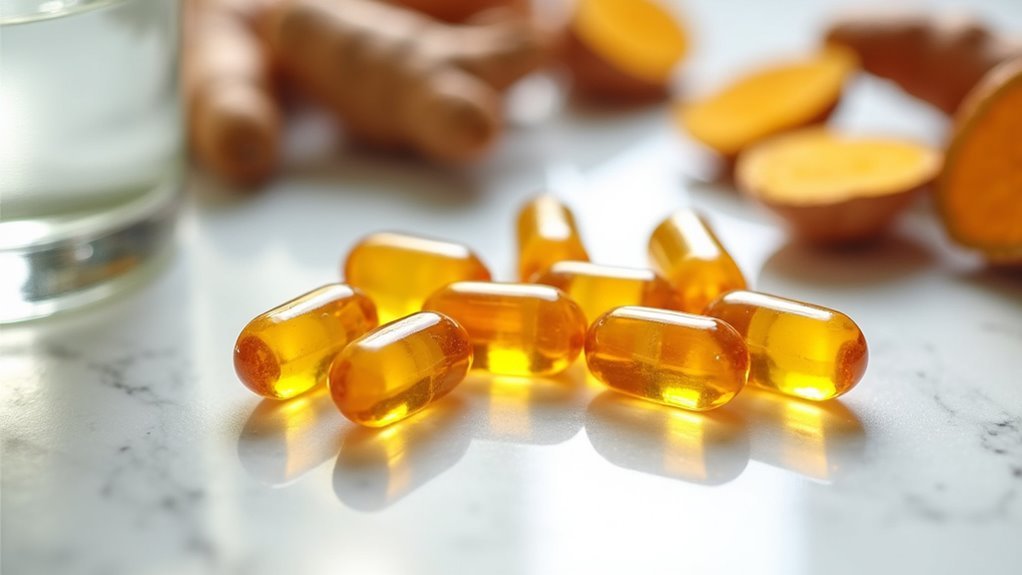
You’ll maximize autoimmune support by choosing standardized curcumin capsules with 95% concentration and piperine for enhanced absorption. Take 500-2000mg daily with fat-containing meals, splitting doses throughout the day for ideal bioavailability. Always consult your healthcare provider before starting, especially if you’re on blood-thinning medications. Monitor for gastrointestinal side effects and track inflammatory markers like CRP through regular blood work. Pair with omega-3s and antioxidant-rich foods while maintaining consistent supplementation for at least eight weeks to see significant results and discover additional strategies for thorough inflammation management.
Understanding How Curcumin Targets Inflammatory Pathways in Autoimmune Conditions
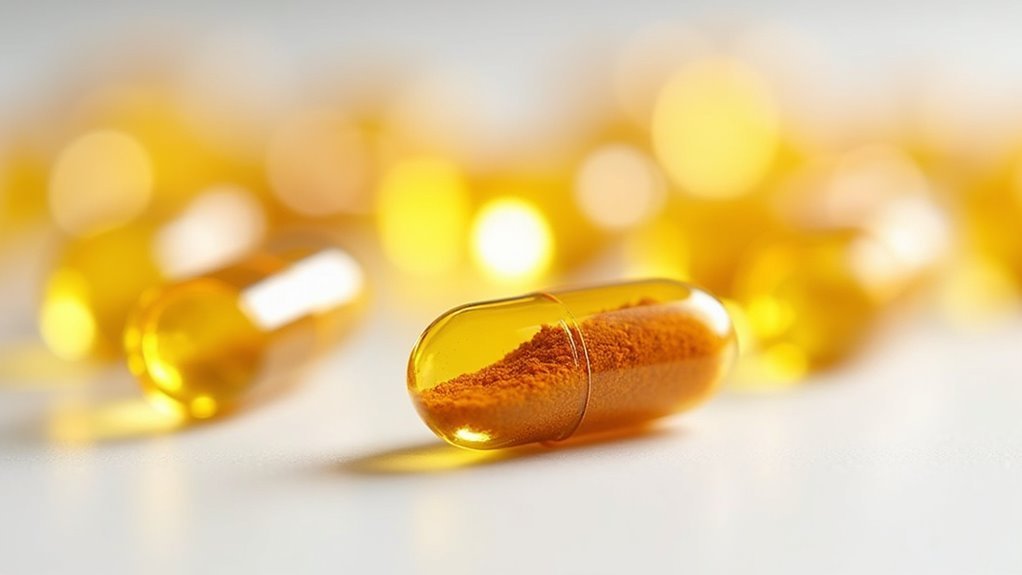
When you’re dealing with an autoimmune condition, your immune system mistakenly attacks healthy tissues through complex inflammatory pathways that curcumin can effectively interrupt.
This powerful compound from turmeric extract specifically targets pro-inflammatory cytokines like TNF-α while reducing inflammatory markers such as ESR and CRP that drive autoimmune diseases.
You’ll benefit from curcumin’s ability to enhance regulatory T cells (Tregs), which are essential for immune regulation and preventing further tissue damage.
Research shows significant improvements in disease activity scores for conditions like rheumatoid arthritis and ulcerative colitis when you use curcumin supplements.
To maximize effectiveness, choose formulations that include piperine from black pepper, as this combination dramatically improves bioavailability and allows curcumin to target inflammation more efficiently at the molecular level.
Choosing High-Quality Turmeric Curcumin Capsules Without Fillers or Additives
Since autoimmune support depends heavily on supplement purity, you’ll want to scrutinize every ingredient listed on turmeric curcumin capsule labels. Quality supplements should contain standardized extract with at least 95% curcumin concentration for maximum potency.
Avoid products with artificial colors, preservatives, or allergens that compromise effectiveness and safety. Look for third-party testing certifications confirming the absence of harmful fillers, additives, or contaminants. These certifications guarantee you’re getting clean, pure turmeric without unwanted substances that could interfere with autoimmune management.
Choose capsules containing black pepper extract (piperine) to enhance absorption by up to 2,000%. This dramatically improves curcumin bioavailability, ensuring your body actually utilizes the anti-inflammatory compounds.
Research brand reputation and customer reviews to verify the manufacturer’s commitment to producing high-quality, effective supplements consistently.
Optimal Dosage Guidelines for Autoimmune Inflammation Management
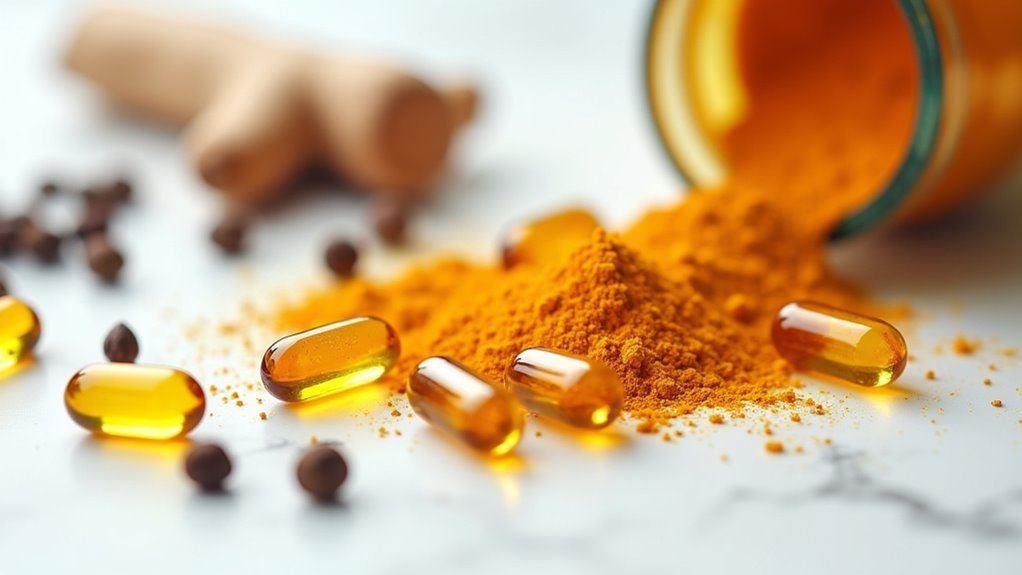
When you’re managing autoimmune inflammation with curcumin, you’ll need to establish the right daily dosage range that aligns with your specific condition and symptoms.
You should consider how often you take your capsules throughout the day, as timing and frequency can greatly impact absorption and effectiveness.
You’ll also want to track specific inflammatory response markers to determine whether your current dosage is providing the therapeutic benefits you’re seeking.
Standard Daily Dosage Ranges
Finding the right curcumin dosage for autoimmune inflammation management requires understanding that perfect daily amounts typically range from 500 mg to 2000 mg, depending on your condition’s severity and individual response.
Clinical studies show that even 1 gram daily can effectively reduce inflammation in autoimmune disease conditions like rheumatoid arthritis.
For best results with curcumin supplements, consider these key factors:
- Take supplements with black pepper extract (piperine) to increase bioavailability by up to 2000%
- Maintain consistent supplementation for 8 weeks or longer to see significant improvements
- Consult your healthcare provider to determine the appropriate dosage based on your specific health profile
Remember that finding your perfect dose takes time, and professional guidance guarantees safe, effective inflammation management.
Timing and Frequency Recommendations
Two key strategies maximize curcumin’s effectiveness for autoimmune inflammation: splitting your daily dose into multiple servings and timing them with fat-containing meals.
You’ll achieve better absorption by dividing your total dosage into two to four smaller doses throughout the day rather than taking one large amount. This approach maintains steady curcumin levels in your system, providing consistent inflammation support.
Take your supplements with meals containing healthy fats like avocado, olive oil, or nuts. Since curcumin is fat-soluble, these fats considerably enhance bioavailability.
Establish a consistent schedule by taking your doses at the same times daily. This routine helps your body maintain ideal curcumin concentrations for ongoing autoimmune support.
Consider pairing supplements with black pepper to boost absorption by up to 2,000%.
Monitoring Inflammatory Response Markers
Tracking specific biomarkers provides concrete evidence of curcumin’s anti-inflammatory effects in your body. When monitoring inflammatory response markers like C-reactive protein (CRP) and erythrocyte sedimentation rate (ESR), you’ll see measurable improvements in autoimmune inflammation levels.
Clinical studies show curcumin considerably reduces ESR levels, proving its effectiveness against chronic inflammation.
To enhance your therapeutic effects:
- Start with 500-1,000 mg daily of standardized curcumin (95% curcuminoids)
- Combine with piperine to improve absorption and maximize smaller doses
- Schedule regular blood work to track CRP and ESR changes
Regular monitoring helps you tailor your dosage to individual needs, ensuring ideal results without adverse effects.
You’ll be able to adjust your curcumin intake based on actual inflammatory marker improvements rather than guessing.
Timing Your Curcumin Intake With Black Pepper for Maximum Absorption
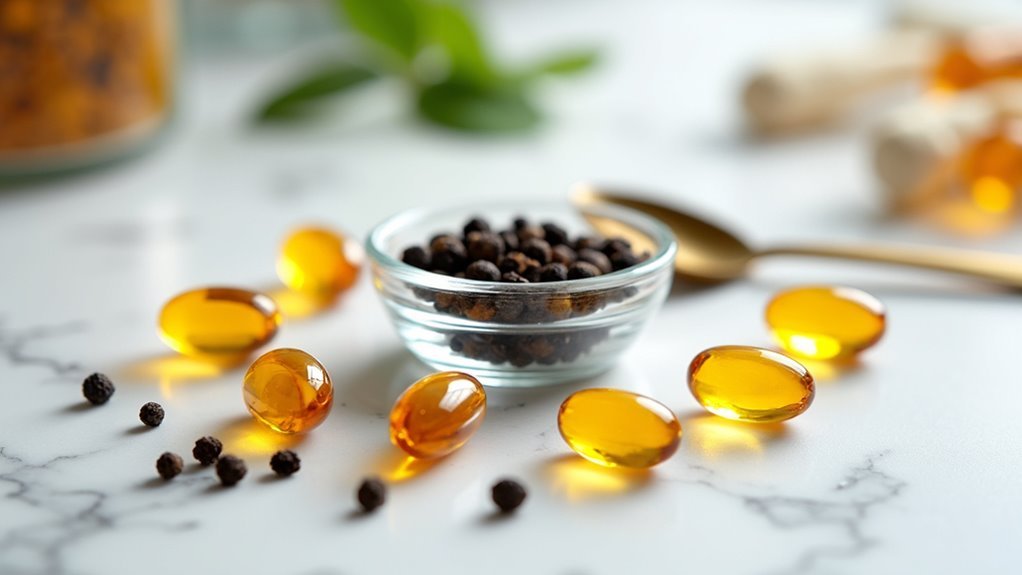
You’ll maximize your curcumin’s therapeutic potential by strategically timing your intake with black pepper, which contains piperine that can boost absorption by up to 2,000%.
The best timing strategies involve taking your capsules with fat-containing meals, as curcumin’s fat-soluble nature requires dietary fats for best bioavailability.
Black pepper’s absorption benefits work synergistically with healthy fats like coconut oil or ghee, creating the ideal environment for your body to utilize curcumin’s anti-inflammatory properties effectively.
Best Timing Strategies
When you’re ready to maximize your curcumin absorption, timing becomes your most powerful ally in releasing turmeric’s therapeutic potential. Taking curcumin capsules strategically enhances bioavailability for ideal autoimmune support.
Your best timing strategies include:
- Consume with fat-rich meals – Take capsules alongside coconut milk, ghee, or butter since curcumin requires healthy fats for proper absorption.
- Add black pepper during mealtime – This combination increases curcumin absorption by up to 2,000%, making timing essential for effectiveness.
- Establish consistent daily routines – Take capsules at the same meal times to maintain therapeutic levels in your body.
Focus on meals prepared with low-heat cooking methods under 15 minutes to preserve curcumin’s beneficial compounds.
This systematic approach guarantees you’re getting maximum therapeutic benefits from your supplementation routine.
Black Pepper Benefits
Since piperine in black pepper acts as a bioavailability enhancer, you’re fundamentally revealing curcumin’s full therapeutic potential when you combine these two powerful compounds.
Black pepper can increase curcumin absorption by up to 2,000%, transforming your supplementation strategy for autoimmune conditions.
You’ll maximize benefits by taking your curcumin capsules with meals containing black pepper and healthy fats. This timing approach guarantees peak absorption while supporting your body’s fight against inflammation.
Even small amounts of black pepper create significant therapeutic improvements.
Don’t overlook this simple pairing—it’s essential for effective autoimmune support.
Whether you’re adding freshly ground black pepper to turmeric-rich meals or confirming your supplements contain piperine, you’re dramatically enhancing curcumin’s anti-inflammatory properties and overall effectiveness.
Absorption Enhancement Methods
Strategic timing transforms how your body processes curcumin, and understanding when to take your supplements can mean the difference between minimal benefits and maximum therapeutic impact.
To enhance absorption effectively, you’ll need to combine your curcumin capsules with specific compounds that boost bioavailability.
Black pepper containing piperine increases curcumin absorption by up to 2,000%, making it essential for peak intake.
Here’s how to maximize your supplementation:
- Take curcumin capsules with meals containing healthy fats like coconut oil or ghee
- Always combine with black pepper or piperine supplements
- Consume during or immediately after eating for enhanced digestive processing
This strategic approach guarantees your body efficiently utilizes curcumin’s therapeutic compounds, delivering the autoimmune support benefits you’re seeking from your supplementation routine.
Combining Curcumin Capsules With Healthy Fats to Enhance Bioavailability
Although curcumin offers powerful anti-inflammatory properties for autoimmune support, you’ll maximize its therapeutic potential by pairing your capsules with healthy fats.
Since curcumin is fat-soluble, its bioavailability greatly increases when consumed alongside coconut oil, ghee, or olive oil. You can take your turmeric capsules with meals containing these fats rather than on an empty stomach.
Maximize curcumin absorption by taking capsules with healthy fats like coconut oil, ghee, or olive oil instead of on an empty stomach.
For ideal absorption, consider taking your curcumin capsules with a tablespoon of coconut oil or adding olive oil to your meal.
You can also consume them with avocado, nuts, or fatty fish. This simple strategy guarantees your body absorbs considerably more of turmeric’s beneficial compounds, enhancing the anti-inflammatory effects that support autoimmune health and reducing inflammation throughout your system.
Monitoring Your Body’s Response When Starting Turmeric Supplementation
When you begin taking turmeric curcumin capsules, you’ll need to carefully observe how your body responds during the initial weeks of supplementation.
Start monitoring for gastrointestinal side effects like gas or bloating, particularly at higher doses where absorption issues commonly occur.
Effective tracking strategies include:
- Keep a symptom diary – Record daily changes in inflammation levels, autoimmune symptoms, energy, mood, and joint comfort
- Schedule regular blood work – Check inflammatory markers like CRP or ESR to quantify your body’s response
- Consult your healthcare provider – Discuss dosage adjustments based on your reactions and existing health conditions
You’ll want to pay special attention to any shifts in your autoimmune symptoms and overall well-being, as these indicators help determine whether the supplementation is benefiting your condition.
Essential Safety Considerations and Medication Interactions to Know
While monitoring your body’s response helps you understand how turmeric affects you personally, you must also be aware of important safety considerations that could impact your health.
If you have autoimmune conditions, consult your healthcare provider before starting turmeric supplements, as they can affect your immune system in unexpected ways. High doses may cause gastrointestinal issues like gas, bloating, and diarrhea.
Pay special attention to medication interactions, particularly if you’re taking blood-thinning drugs, as curcumin can enhance their effects and increase bleeding risk.
You shouldn’t use these supplements if you’re pregnant, have gallstones, or stomach ulcers without professional medical advice. Always check labels for unwanted fillers and additives before purchasing.
Supporting Curcumin Benefits With Complementary Anti-Inflammatory Foods
You’ll maximize your curcumin capsules’ effectiveness by pairing them with specific anti-inflammatory foods that work synergistically with turmeric.
Adding black pepper to your meals or choosing supplements containing piperine can boost curcumin absorption by up to 2,000%, while omega-3 rich foods like salmon and walnuts complement turmeric’s inflammation-fighting properties.
Antioxidant-packed berries create powerful combinations that enhance curcumin’s bioavailability and provide additional support for managing autoimmune conditions.
Omega-3 Fatty Acids
Although curcumin capsules provide significant anti-inflammatory benefits for autoimmune support, you can amplify these effects by incorporating omega-3 fatty acids into your daily routine.
These powerful nutrients work synergistically with turmeric to reduce inflammation markers like C-reactive protein, offering enhanced protection against autoimmune diseases.
You’ll find omega-3s naturally in:
- Fatty fish like salmon, mackerel, and sardines
- Plant sources including flaxseeds and walnuts
- High-quality fish oil supplements
The combination of omega-3 fatty acids and curcumin creates a more thorough anti-inflammatory approach.
When you consume healthy fats alongside your turmeric supplements, you’ll improve curcumin absorption while supporting joint health.
This powerful duo has shown particular promise for managing rheumatoid arthritis and osteoarthritis symptoms, making it an essential strategy for autoimmune management.
Black Pepper Enhancement
The secret to maximizing your turmeric curcumin capsules lies in a simple kitchen spice you likely already own. Black pepper contains piperine, which greatly enhances curcumin absorption by up to 2,000%. This incredible boost makes black pepper essential for revealing turmeric’s full anti-inflammatory potential.
When you take your curcumin supplements, pair them with meals containing black pepper and healthy fats like coconut milk or ghee. This combination considerably improves bioavailability, supporting your autoimmune health more effectively.
You’ll also benefit from adding quercetin-rich foods like berries and onions, which work synergistically with curcumin.
Traditional curry dishes naturally combine turmeric and black pepper, offering a delicious way to enhance anti-inflammatory effects. This simple addition transforms your curcumin capsules into a more powerful therapeutic tool for managing autoimmune-related inflammation.
Antioxidant-Rich Berry Combinations
Nature’s most vibrant berries pack a powerful punch when combined with your turmeric curcumin capsules. These antioxidant-rich fruits create synergistic effects that amplify curcumin’s therapeutic potential for autoimmune support.
When you consume berries alongside your curcumin supplements, you’re maximizing absorption and enhancing anti-inflammatory responses. The vitamin C and quercetin in blueberries, strawberries, and raspberries work together with curcumin to combat oxidative stress more effectively than either nutrient alone.
Key health benefits include:
- Enhanced bioavailability – Berry compounds improve curcumin absorption in your digestive system
- Stronger immune response – Combined antioxidant properties support balanced immune function
- Reduced inflammation markers – Studies show greater inflammatory reduction compared to curcumin alone
The dietary fiber in berries also promotes gut health, creating ideal conditions for curcumin utilization while supporting your overall autoimmune management strategy.
Managing Potential Side Effects During Long-Term Curcumin Use
While curcumin offers significant benefits for autoimmune support, you’ll want to stay aware of potential side effects that can develop during extended use.
Common gastrointestinal side effects include gas and bloating, particularly when taking high doses of curcumin supplements. You might also experience acid reflux during long-term use.
If you’re prone to kidney stones, exercise caution since turmeric contains small amounts of oxalates.
Watch for allergic reactions like rashes or hives, which occur more frequently with capsules than whole turmeric. To minimize gas and bloating, gradually increase your dosage rather than starting with high amounts.
Always consult a healthcare provider before beginning curcumin supplements, especially if you have gallstones or kidney disease.
Creating a Sustainable Routine for Consistent Autoimmune Support
Building a sustainable curcumin routine requires consistency and strategic planning to maximize your autoimmune support benefits. Your turmeric curcumin capsules work best when taken at the same time daily, creating stable levels that effectively combat inflammation.
To establish lasting success:
- Optimize absorption by pairing your dosage with healthy fats and black pepper, increasing bioavailability up to 2,000%
- Maintain a balanced diet rich in antioxidant foods like fruits and vegetables to enhance curcumin’s anti-inflammatory effects
- Track your progress through symptom journaling to identify patterns and adjust your routine accordingly
Consult your healthcare provider for personalized dosage recommendations based on your specific autoimmune condition.
This all-encompassing approach guarantees you’re getting maximum therapeutic benefits while building habits that support long-term wellness and inflammation management.
Frequently Asked Questions
Does Turmeric Curcumin Help Autoimmune Disease?
You’ll find turmeric curcumin can help reduce autoimmune disease symptoms by decreasing chronic inflammation and improving immune response. Studies show it markedly lowers inflammatory markers and disease activity scores in conditions like rheumatoid arthritis.
What Is the Best Way to Take Turmeric for Inflammation?
You’ll absorb turmeric’s anti-inflammatory compounds best by combining it with black pepper and healthy fats like coconut oil. Cook it gently under fifteen minutes or drink golden milk for maximum curcumin absorption.
What Is the Best Supplement for Autoimmune Disease?
You’ll find curcumin supplements most effective for autoimmune support, especially when combined with piperine for better absorption. They’ve shown proven results reducing inflammation markers and symptoms in conditions like rheumatoid arthritis and ulcerative colitis.
How Quickly Does Turmeric Reduce Inflammation?
You’ll notice turmeric reducing inflammation within 24-48 hours, though significant effects take weeks. Clinical studies show curcumin lowers inflammatory markers like CRP within weeks of consistent daily intake.


