
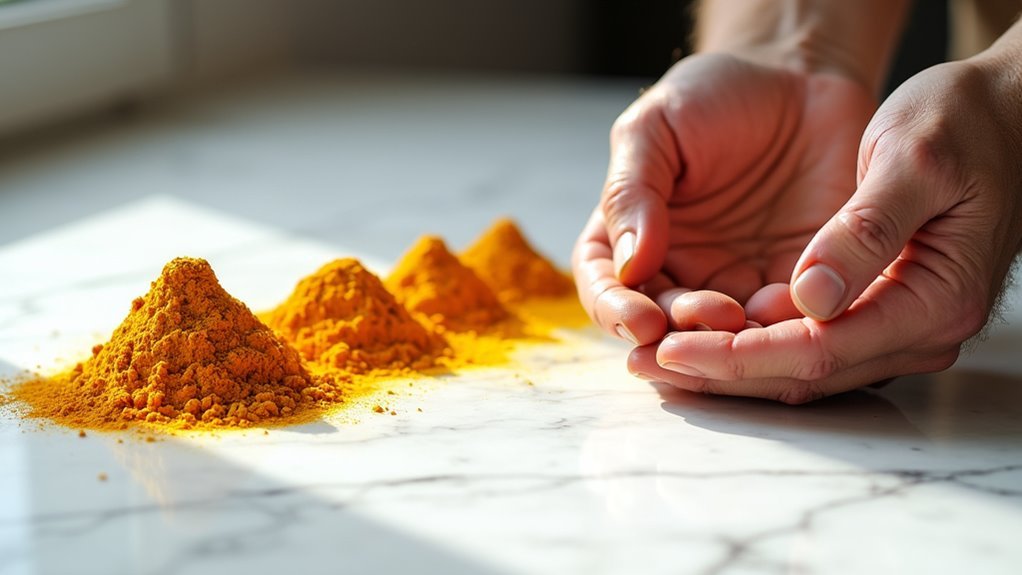
Start with 500mg of turmeric curcumin twice daily and monitor your response over several weeks. Choose high-quality extracts containing up to 95% curcumin rather than ground turmeric powder, which only contains 2-6%. Take your supplement with black pepper or healthy fats like olive oil to boost absorption by up to 2,000%. Consider your existing health conditions, especially gallbladder disease or bleeding disorders, before starting. Work with your healthcare provider to determine the ideal dosage and explore thorough strategies for maximizing arthritis relief.
Start With 500MG Twice Daily and Monitor Your Response
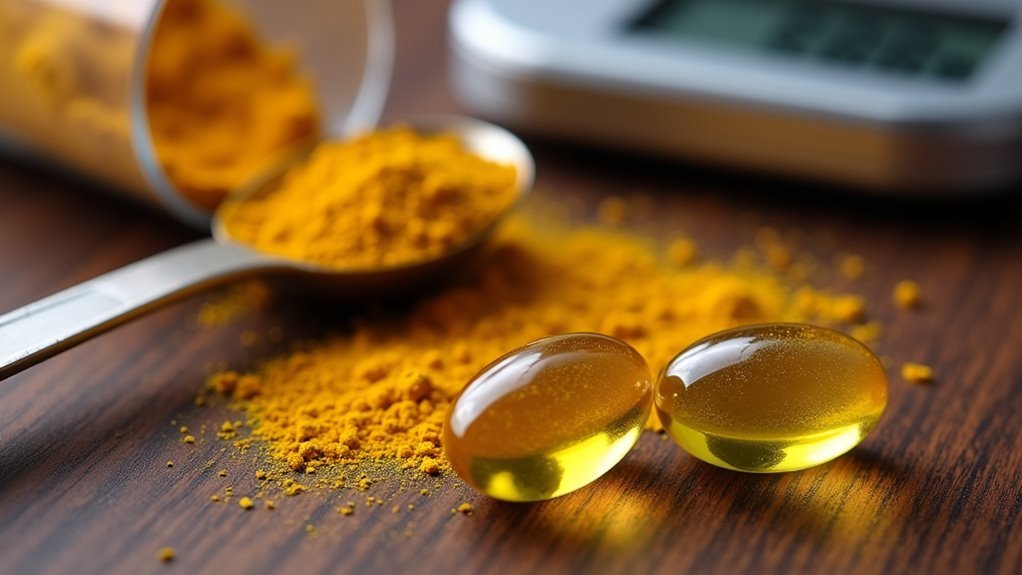
When starting turmeric curcumin for arthritis relief, begin with 500 mg twice daily to assess how your body responds to this natural anti-inflammatory compound.
This dosage allows you to evaluate curcumin’s effectiveness for your specific arthritis symptoms while monitoring for any adverse reactions. Since individual responses vary greatly, you’ll need to track improvements in pain and stiffness over several weeks.
Clinical studies demonstrate that this initial dosage can provide meaningful relief for osteoarthritis patients.
However, you must consult with your healthcare provider before beginning any curcumin regimen, especially if you have underlying health conditions or take medications.
This careful approach guarantees you’re using an appropriate dosage that’s both safe and effective for your arthritis management needs.
Choose High-Quality Curcumin Extracts Over Ground Turmeric
While ground turmeric powder contains only 2-6% curcumin, high-quality curcumin extracts deliver up to 95% of this active compound, making them far more effective for arthritis relief.
Clinical studies show these concentrated extracts provide superior results for arthritis pain compared to lower curcumin levels in ground turmeric.
Concentrated curcumin extracts demonstrate clinically proven superiority over standard turmeric powder for reducing arthritis pain and inflammation.
You’ll find curcumin supplements often include piperine or phospholipids to improve absorption, making them more bioavailable than traditional turmeric powder.
This enhanced absorption means you’re getting more therapeutic benefit from recommended dosages of 500-1,500 mg daily.
Choose third-party tested products to verify authenticity and safety while avoiding contaminants common in turmeric products.
For effective relief from arthritis symptoms, high-quality curcumin extracts consistently outperform ground turmeric.
Take With Black Pepper or Fat to Enhance Absorption
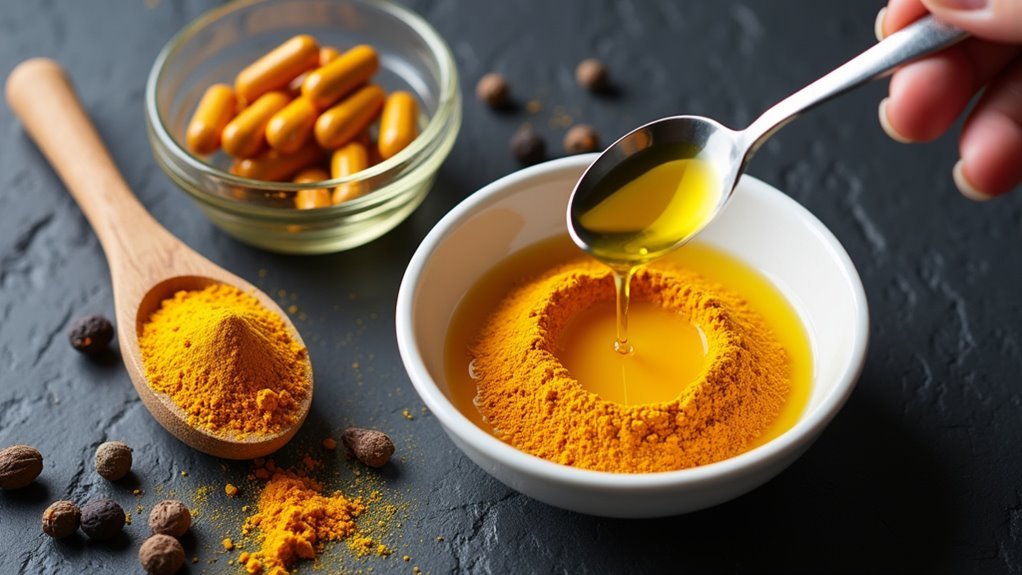
Even the highest-quality curcumin extracts won’t deliver their full potential without proper absorption strategies.
Studies have shown that combining turmeric supplements with black pepper dramatically improves curcumin absorption by up to 2,000%. The piperine in black pepper acts as your absorption enhancer, helping you access curcumin’s health benefits for reducing inflammation.
You’ll increase absorption even more when you take curcumin with healthy fats like olive oil or avocado. Since curcumin is fat-soluble, consuming it daily with meals containing fat leads to better therapeutic outcomes.
- Experience genuine pain relief instead of wondering if your supplements are working
- Feel confident you’re maximizing every dollar spent on your arthritis treatment
- Achieve best results that transform your daily mobility and comfort
Consider Your Individual Health Conditions and Medications
Before starting any turmeric regimen, you must evaluate how it might interact with your existing health conditions and current medications.
If you have gallbladder disease, avoid turmeric supplements as they’ll worsen symptoms. Those with bleeding disorders should exercise caution since curcumin slows blood clotting and increases bleeding risk.
Diabetics need to monitor blood sugar levels closely, as turmeric may lower glucose and interact with diabetes medications. If you have kidney stones, be aware that turmeric’s high oxalate content contributes to stone formation.
Pregnant or nursing women should consult healthcare providers before using supplements due to limited safety research.
Your individual health conditions determine the appropriate dosage for managing arthritis symptoms safely.
Work With Your Healthcare Provider to Adjust Dosage
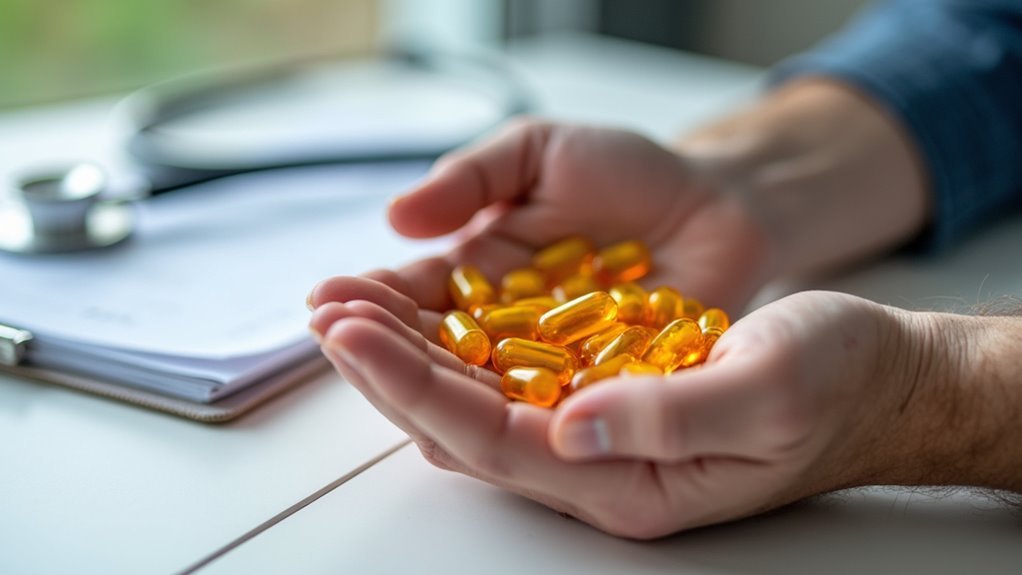
Since individual responses to curcumin vary considerably, you’ll need to partner with your healthcare provider to determine the ideal dosage for your specific arthritis condition.
Clinical trials indicate effective curcumin dosage ranges from 500-1,500 mg daily for osteoarthritis relief, but your best regimen requires personalized assessment.
Your healthcare provider will monitor your progress and make necessary adjustments based on your response and any interactions with current medications. They’ll evaluate how curcumin supplements affect your symptoms while ensuring safety with other treatments.
- Freedom from debilitating joint pain that’s kept you from enjoying life’s precious moments
- Confidence in your treatment plan knowing a medical professional guides your curcumin journey
- Peace of mind through regular monitoring that prevents dangerous medication interactions
Regular follow-ups help fine-tune your dosage for maximum arthritis relief.
Frequently Asked Questions
How Long Does It Take to See Arthritis Improvement With Turmeric Curcumin?
You’ll typically notice arthritis improvement with turmeric curcumin within 4-8 weeks of consistent daily use. However, some people experience relief sooner, while others need 2-3 months to see significant inflammation reduction.
Can I Take Turmeric Curcumin if I’m Pregnant or Breastfeeding?
You shouldn’t take turmeric curcumin supplements during pregnancy or breastfeeding without consulting your doctor first. High doses may stimulate uterine contractions or affect hormones, potentially causing complications for you and your baby.
What Are the Common Side Effects of Turmeric Curcumin Supplementation?
You’ll typically experience mild side effects like stomach upset, nausea, or diarrhea. You might also notice increased bleeding risk, especially if you’re taking blood thinners. Some people develop allergic reactions or skin rashes.
Is Turmeric Curcumin Safe for Children With Juvenile Arthritis?
You shouldn’t give turmeric curcumin to children without consulting their pediatric rheumatologist first. It can interact with medications and affect blood clotting. Your child’s doctor must approve any supplements for juvenile arthritis treatment.
Can Turmeric Curcumin Replace My Prescription Arthritis Medications Completely?
You shouldn’t replace prescription arthritis medications with turmeric curcumin without consulting your doctor first. While it’s beneficial as a supplement, it can’t match proven pharmaceutical treatments for managing arthritis symptoms effectively.


Leave a Reply