

Curcumin dramatically reduces your joint inflammation by simultaneously blocking multiple inflammatory pathways that cause pain and damage. It inhibits COX-2 enzymes like NSAIDs do, but also stops harmful cytokine release, restores balance between inflammatory and regulatory T cells, and increases glutathione levels to combat oxidative stress on your cartilage. Clinical studies show 1,500mg daily matches NSAID effectiveness without gastrointestinal side effects, making it superior for long-term joint health management and discovering ideal implementation strategies.
Understanding the Difference Between Turmeric and Curcumin
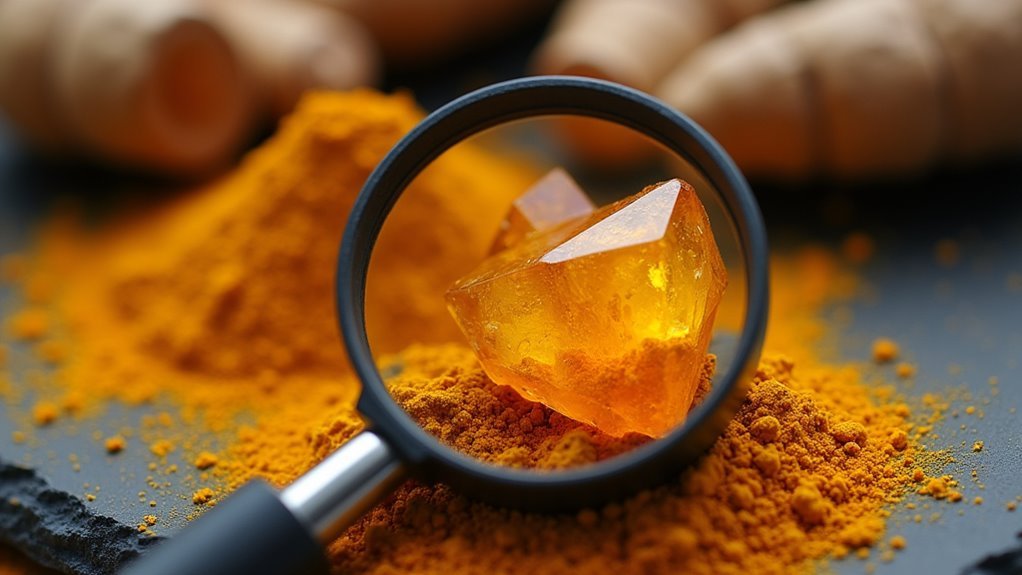
While many people use the terms interchangeably, turmeric and curcumin aren’t the same thing—and understanding this distinction can make a considerable difference in your joint health journey.
Turmeric is the golden spice you’ll find in your kitchen, but it contains only 2 to 6% curcumin, the compound that delivers the powerful anti-inflammatory properties you’re seeking.
Curcumin is the extracted, concentrated active ingredient that provides therapeutic benefits. When you’re dealing with joint inflammation, this difference matters enormously.
Ground turmeric often contains synthetic additives and contaminants that compromise its effectiveness. Meanwhile, high-quality curcumin supplements can contain up to 95% pure curcumin, delivering considerably more potent results for reducing inflammation and supporting your joint health goals.
How Curcumin Targets Inflammatory Pathways at the Cellular Level
When you consume curcumin, it directly targets your body’s inflammatory machinery at the cellular level through three key mechanisms.
It blocks COX-2 enzymes that produce inflammatory compounds, stops your cells from releasing harmful cytokines that fuel inflammation, and restores the critical balance between inflammatory and regulatory T cells.
These targeted actions work together to interrupt the inflammatory cascade before it can damage your joints.
COX-2 Enzyme Inhibition
Since inflammation at the cellular level drives joint pain and damage, understanding how curcumin targets specific inflammatory pathways becomes essential for anyone seeking natural relief.
Curcumin’s cox-2 enzyme inhibition represents one of its most powerful anti-inflammatory mechanisms. When you take curcumin, it blocks COX-2 activity—the same enzyme targeted by NSAIDs. This inhibition dramatically reduces inflammatory cytokines production, which are the chemical messengers that trigger joint inflammation and pain.
Studies demonstrate curcumin’s effectiveness in lowering inflammatory markers associated with osteoarthritis and rheumatoid arthritis. Beyond cytokine suppression, this COX-2 inhibition helps restore balance between inflammatory and regulatory T cells.
- Blocks COX-2 enzyme activity similar to prescription NSAIDs
- Reduces pro-inflammatory cytokine production at cellular level
- Restores immune system balance through T cell regulation
Cytokine Production Blocking
Beyond COX-2 inhibition, curcumin launches a targeted assault on inflammatory cytokines—the cellular messengers that orchestrate joint destruction.
When you’re dealing with osteoarthritis or rheumatoid arthritis, your body overproduces pro-inflammatory cytokines like IL-6 and TNF-alpha. These molecular troublemakers signal your immune system to attack joint tissues, creating the pain and swelling you experience.
Curcumin directly blocks these cytokines’ production at the cellular level, fundamentally cutting off the inflammation signals before they can wreak havoc.
You’ll find this particularly beneficial because these cytokines are primary drivers of chronic joint inflammation. By interrupting this inflammatory cascade, curcumin doesn’t just mask symptoms—it addresses the root cause of your joint discomfort, providing more thorough relief than traditional approaches.
T Cell Balance Restoration
While your immune system’s T cells normally work in harmony to protect your joints, inflammatory conditions disrupt this delicate balance, causing regulatory T cells to lose control over their aggressive counterparts.
Curcumin steps in to restore this critical T cell balance by targeting the molecular pathways that control inflammation. It blocks inflammatory cytokines and enzymes like COX-2 while inhibiting the NLRP3 inflammasome – a key trigger in your body’s inflammatory response.
Research shows curcumin considerably reduces inflammatory markers in rheumatoid arthritis by modulating T cell activity.
- Restores harmony between regulatory and inflammatory T cells for ideal immune function
- Blocks specific molecular pathways that trigger excessive joint inflammation
- Reduces inflammatory markers in arthritis conditions through targeted T cell modulation
The Role of COX-2 Enzyme Inhibition in Pain Relief
When your joints ache from inflammation, curcumin targets one of the key culprits behind your pain: the COX-2 enzyme. This enzyme produces inflammatory prostaglandins that directly contribute to joint pain and swelling.
Curcumin considerably inhibits COX-2, reducing these harmful compounds and decreasing inflammatory cytokines throughout your joints.
Clinical studies reveal curcumin’s pain-relieving effects match those of NSAIDs like ibuprofen for osteoarthritis patients. By blocking COX-2 expression, you’ll experience improved joint function and reduced stiffness.
This inhibition works alongside curcumin’s broader anti-inflammatory mechanisms, targeting multiple inflammatory pathways simultaneously.
Research shows this COX-2 modulation effectively lowers pain in both rheumatoid arthritis and osteoarthritis patients, making curcumin a powerful natural alternative for joint inflammation management.
Curcumin’s Impact on T Cell Balance and Autoimmune Response
When your immune system’s T cells fall out of balance, inflammatory T cells can overwhelm regulatory ones, triggering autoimmune attacks on your joints.
Curcumin steps in as a molecular mediator, blocking specific inflammatory pathways and cytokines that fuel this cellular chaos.
You’ll find that curcumin’s ability to restore T cell equilibrium represents a promising approach to preventing autoimmune-driven joint damage before it escalates.
T Cell Imbalance Origins
Since your immune system relies on a delicate balance between different T cell populations, disruptions in this equilibrium can trigger devastating autoimmune conditions that attack your joints.
When your body produces too many inflammatory Th17 cells and too few regulatory T cells (Tregs), chronic inflammation becomes your unwelcome companion. This imbalance creates a perfect storm where your immune system mistakenly targets healthy joint tissue, leading to conditions like rheumatoid arthritis and lupus.
- Genetic predisposition combined with environmental triggers can shift your T cell balance toward inflammation
- Chronic stress and poor diet disrupt normal T cell development and function
- Previous infections may program your T cells to overreact to joint tissues
Fortunately, curcumin’s unique properties help restore this critical T cell balance, reducing inflammation and protecting your joints from autoimmune damage.
Curcumin’s Regulatory Mechanisms
Curcumin acts as your body’s molecular diplomat, orchestrating a sophisticated rebalancing of T cell populations that directly counters autoimmune aggression against your joints. Curcumin’s regulatory mechanisms target the inflammatory cascade at multiple levels, blocking COX-2 enzymes and inflammatory cytokines that fuel joint destruction.
| Mechanism | Target | Result |
|---|---|---|
| T Cell Modulation | Inflammatory/Regulatory Balance | Reduced Autoimmune Response |
| Cytokine Blocking | Pro-inflammatory Markers | Decreased Joint Pain |
| Enzyme Inhibition | COX-2 Activity | Controlled Inflammation |
Clinical studies demonstrate curcumin’s anti-inflammatory effect considerably lowers disease activity in rheumatoid arthritis patients. By reducing pro-inflammatory marker expression in T cells, you’ll experience decreased joint stiffness and pain. This targeted approach helps restore immune system balance, preventing excessive inflammatory responses that damage cartilage and surrounding tissues in conditions like lupus and osteoarthritis.
Autoimmune Disease Prevention
Although autoimmune diseases develop when your immune system mistakenly attacks healthy tissues, curcumin’s targeted intervention can help prevent this destructive cascade before it gains momentum.
You’ll benefit from curcumin’s ability to restore essential balance between inflammatory T cells and regulatory T cells, directly addressing the root cause of conditions like lupus and rheumatoid arthritis.
- Cytokine Regulation: Curcumin effectively reduces inflammatory cytokines that trigger autoimmune responses, decreasing your body’s overall inflammation levels.
- T Cell Balance: You can restore proper immune cell populations, preventing the imbalance that leads to autoimmune disease development.
- Disease Activity Reduction: Research shows curcumin supplementation greatly decreases inflammation markers and disease activity in rheumatoid arthritis patients.
Curcumin’s precise targeting of immune response pathways makes it a powerful tool for preventing autoimmune flares.
Clinical Evidence: Curcumin Vs NSAIDS for Osteoarthritis Treatment
When researchers compared curcumin’s effectiveness against traditional NSAIDs for osteoarthritis treatment, they discovered compelling evidence that this natural compound can match conventional pharmaceuticals in reducing pain and inflammation.
In an extensive study involving 1,810 adults, curcumin demonstrated significant improvements in knee pain and physical function comparable to standard NSAIDs.
You’ll find the safety profile particularly impressive. While curcumin users experienced no stomach issues, 28% of diclofenac users reported gastrointestinal problems.
At doses of 1,500 mg daily, participants showed significant reductions in pain scores and inflammation markers.
A 2021 review confirmed curcumin’s pain relief efficacy matches NSAIDs while providing fewer adverse events, making it a viable therapeutic alternative for managing osteoarthritis symptoms naturally.
Optimal Dosage Guidelines Based on Research Studies
When you’re considering curcumin for joint inflammation, you’ll want to focus on dosages that clinical trials have proven effective rather than guessing.
Research consistently shows that you’ll need between 1000-2000 mg daily, with 1500 mg being the most commonly studied and effective dose.
You can’t ignore bioavailability factors though—taking curcumin with piperine increases absorption by 2000%, making this combination essential for achieving therapeutic results.
Research-Backed Dosage Ranges
Multiple clinical studies have established that curcumin dosages between 1000-2000 mg daily provide ideal anti-inflammatory effects for joint health, with 1500 mg emerging as the most frequently recommended amount for osteoarthritis symptom relief.
Research involving 1810 adults demonstrated that curcumin supplements greatly outperformed both placebos and NSAIDs in reducing knee pain.
When you combine 1500 mg of curcumin with 15 mg of piperine, you’ll boost your antioxidant activity through increased serum superoxide dismutase levels.
A thorough review of 23 studies confirmed that these dosages don’t just reduce inflammation—they also decrease your need for rescue medications during flare-ups.
- 1000-2000 mg daily: Proven effective range for osteoarthritis patients seeking joint pain relief
- 1500 mg + piperine: Optimal combination for enhanced bioavailability and antioxidant benefits
- Lower side effects: Research shows better tolerance compared to traditional NSAIDs
Clinical Trial Protocols
Since clinical trial protocols provide the most reliable framework for curcumin dosing, you’ll find that researchers consistently follow specific administration patterns that maximize therapeutic outcomes.
Randomized controlled trials demonstrate that curcumin may help reduce joint inflammation when administered at 1000-2000 mg daily, with ideal results occurring at 1500 mg. These studies reveal that twice-daily dosing (500 mg morning and evening) provides sustained anti-inflammatory and antioxidant effects throughout the day.
The 2021 review analyzing 2175 knee osteoarthritis patients confirmed these protocols’ effectiveness, showing significant pain reduction and improved physical function.
Researchers consistently incorporate piperine to enhance absorption by up to 2000%, ensuring maximum bioavailability. Clinical protocols also emphasize curcumin’s comparable efficacy to NSAIDs while producing fewer adverse events.
Bioavailability Enhancement Methods
Bioavailability enhancement methods dramatically impact curcumin’s therapeutic effectiveness, making proper supplementation strategies essential for achieving ideal joint inflammation relief.
You’ll maximize curcumin absorption through several proven approaches that transform its bioavailability from poor to exceptional.
Combining curcumin with black pepper extract containing piperine increases absorption by approximately 2,000%, making this combination the gold standard for supplementation.
You can also choose liposomal formulations that encapsulate curcumin in fat-soluble carriers for superior uptake.
- Take 1,500mg daily with piperine for optimal anti-inflammatory effects on joints
- Consume curcumin with healthy fats like olive oil or avocado to enhance absorption
- Consider liposomal curcumin supplements if you can’t tolerate black pepper
Research supports doses between 1,000-2,000mg daily for effective osteoarthritis management when proper bioavailability enhancement methods are utilized.
Bioavailability Enhancement: Why Piperine and Phospholipids Matter
While curcumin demonstrates remarkable anti-inflammatory properties in laboratory settings, your body faces a significant challenge absorbing this powerful compound effectively.
Standard curcumin consumption results in minimal plasma concentrations due to rapid metabolism and elimination, severely limiting its therapeutic potential.
Piperine changes everything. This compound from black pepper enhances curcumin bioavailability by up to 2,000%, dramatically increasing the amount reaching your bloodstream.
When you take curcumin with piperine, you’re ensuring maximum absorption where it matters most.
Phospholipids offer another breakthrough solution. They improve curcumin’s solubility and facilitate better delivery to inflamed joint tissues.
Liposomal formulations encapsulate curcumin in lipid-based carriers, further enhancing absorption and therapeutic outcomes for your inflammatory conditions.
Mechanism of Cartilage Protection and Chondrocyte Preservation
Once curcumin reaches ideal blood levels through enhanced absorption, it begins protecting your cartilage at the cellular level by targeting chondrocytes—the specialized cells responsible for maintaining healthy joint tissue.
Curcumin prevents chondrocyte apoptosis, stopping the programmed cell death that accelerates cartilage breakdown in osteoarthritis. It reduces cyclooxygenase (COX) expression, directly addressing inflammation at its source while preserving cartilage integrity.
Curcumin halts the programmed cell death of cartilage-maintaining cells, directly targeting inflammation while preserving joint tissue integrity.
The compound also suppresses the NLRP3 inflammasome and blocks inflammatory cytokines that trigger cartilage degradation.
- Antioxidant boost: Increases glutathione levels to combat oxidative stress damaging your cartilage
- Cellular protection: Prevents chondrocyte death that leads to irreversible joint deterioration
- Inflammatory balance: Modulates pro- and anti-inflammatory factors to maintain peak joint function
This multi-targeted approach explains curcumin’s remarkable effectiveness against joint inflammation.
Oxidative Stress Reduction and Glutathione Level Improvement
Beyond protecting your cartilage cells, curcumin tackles joint inflammation by greatly boosting your body’s natural antioxidant defenses.
When you supplement with curcumin, you’re enhancing your body’s ability to neutralize harmful free radicals that fuel joint inflammation. This powerful compound increases your glutathione production—one of your body’s most potent antioxidants—which directly protects your joint tissues from oxidative damage.
Research shows curcumin supplementation markedly elevates your serum levels of superoxide dismutase, another vital antioxidant enzyme.
By reducing systemic oxidative stress, curcumin helps restore the delicate balance between pro-inflammatory and anti-inflammatory cytokines in your body.
These elevated glutathione levels don’t just fight inflammation—they actively protect your cartilage from degradation while promoting overall joint health and mobility.
Side Effects Comparison: Curcumin Safety Profile Vs Traditional Medications
When you’re considering treatment options for joint inflammation, curcumin’s safety profile stands in stark contrast to traditional NSAIDs.
While up to 28% of diclofenac users experience gastrointestinal issues, 94% of curcumin users in osteoarthritis trials reported significant improvement without stomach problems.
You can safely take 1000-2000 mg daily without the cardiovascular and kidney risks associated with long-term NSAID use.
Key advantages of curcumin’s safety profile include:
- Minimal side effects – Well-tolerated even at high doses with fewer adverse reactions
- No gastrointestinal damage – Unlike NSAIDs that commonly cause stomach problems
- Long-term safety – Clinical research shows sustained use without harsh complications
Curcumin blocks inflammatory pathways effectively while maintaining an excellent safety record, making it a superior alternative for managing joint inflammation.
Quality Control and Contamination Concerns in Supplements
While curcumin offers impressive safety advantages over traditional medications, you’ll face significant quality control challenges when selecting supplements. Many turmeric products have been recalled due to lead contamination, emphasizing the critical importance of rigorous quality control in dietary supplements.
You should choose independently tested brands like Thorne and Pure Encapsulations, which undergo third-party verification for safety and authenticity. Over-the-counter supplements lack the regulatory oversight of prescription medications, creating contamination concerns with toxic metals and synthetic additives.
Ground turmeric products may contain impurities that compromise efficacy. Look for high-quality formulations containing piperine or phospholipids for enhanced bioavailability, ensuring you’re getting both safe and effective curcumin supplementation.
Long-term Benefits for Muscle Recovery and Joint Health
Although immediate anti-inflammatory effects capture most attention, curcumin’s most compelling advantages emerge through consistent long-term use for muscle recovery and joint health.
When you take curcumin regularly at 1000-2000 mg daily, you’ll experience reduced osteoarthritis symptoms including pain and stiffness. This powerful compound enhances your insulin sensitivity while reducing visceral fat, both essential for ideal joint health and muscle recovery.
Curcumin’s anti-inflammatory properties work by inhibiting inflammatory cytokines and enzymes, maintaining your joint integrity over time.
You’ll also benefit from reduced oxidative stress, which directly combats muscle fatigue and joint inflammation.
- Noticeably faster muscle recovery times after exercise with enhanced athletic performance
- Reduced osteoarthritis pain and stiffness through consistent daily supplementation
- Improved joint integrity via powerful anti-inflammatory cytokine inhibition
Frequently Asked Questions
Does Curcumin Really Reduce Inflammation?
Yes, you’ll find curcumin effectively reduces inflammation by blocking key inflammatory enzymes like COX-2 and cytokines. Clinical studies show it’s comparable to NSAIDs for reducing pain and improving function in osteoarthritis patients.
How Long Does It Take for Curcumin to Reduce Inflammation?
You’ll notice curcumin’s anti-inflammatory effects within one to two weeks of consistent use. Peak benefits typically occur after eight to twelve weeks at recommended doses of 1000-2000 mg daily.
What Does Mayo Clinic Say About Taking Turmeric?
You should consult your healthcare provider before taking turmeric supplements, according to Mayo Clinic. They recognize curcumin’s anti-inflammatory potential but warn about bioavailability issues, contamination risks, and need for more research.
How Does Curcumin Help Joints?
Curcumin helps your joints by blocking inflammatory enzymes like COX-2 and reducing pain-causing cytokines. It’s shown to decrease stiffness and pain as effectively as traditional NSAIDs while promoting healthier immune responses.


