

You’ll find the best seasonal probiotic foods by matching fermented options to nature’s cycle. Spring offers fresh kimchi and sauerkraut from cabbage and radishes, while summer delivers probiotic-rich pickles from cucumbers plus kefir with berries. Fall brings fermented root vegetables like carrots and beets, and winter provides warming miso soups and cultured dairy products. These seasonal choices restore gut balance naturally by delivering billions of beneficial bacteria when your digestive system needs specific support to maintain ideal health throughout changing seasons.
Understanding Probiotics and Their Role in Seasonal Gut Cleansing

While your digestive system works year-round to process nutrients and eliminate waste, seasonal changes can disrupt its delicate balance and leave you feeling sluggish or uncomfortable.
Probiotics offer a powerful solution by introducing healthy gut bacteria that restore microbial diversity and support optimal gut health. These live microorganisms work actively to cleanse the gut by enhancing beneficial bacteria populations while crowding out harmful pathogens.
Probiotics restore gut balance by flooding your digestive system with beneficial bacteria that naturally eliminate harmful pathogens.
Fermented foods serve as nature’s probiotic powerhouses, delivering billions of beneficial bacteria directly to your digestive system.
When you combine these probiotic-rich foods with seasonal produce, you’re creating an ideal environment for gut cleansing. The prebiotics found in fresh fruits and vegetables nourish your newly introduced probiotics, maximizing their effectiveness and promoting long-term digestive wellness throughout changing seasons.
Spring Fermented Foods for Digestive Renewal
Why not harness spring’s natural energy to kickstart your digestive renewal with fresh fermented foods?
Spring offers peak seasonal vegetables like cabbage and radishes, perfect for creating probiotic-rich kimchi and sauerkraut that’ll boost your gut health naturally.
You can transform crisp spring cucumbers into naturally fermented pickles—skip the vinegar versions since they lack live cultures essential for digestive health.
Fresh leafy greens also ferment beautifully into nutrient-dense dishes packed with beneficial bacteria.
Don’t overlook dairy-based fermented foods like kefir and yogurt made from spring milk. These probiotics support digestive health and are often better tolerated by those with lactose sensitivity.
Combine seasonal strawberries and blueberries with your kefir for a delicious prebiotic boost that maximizes spring’s gut-cleansing potential.
Summer Probiotic Powerhouses for Optimal Gut Health
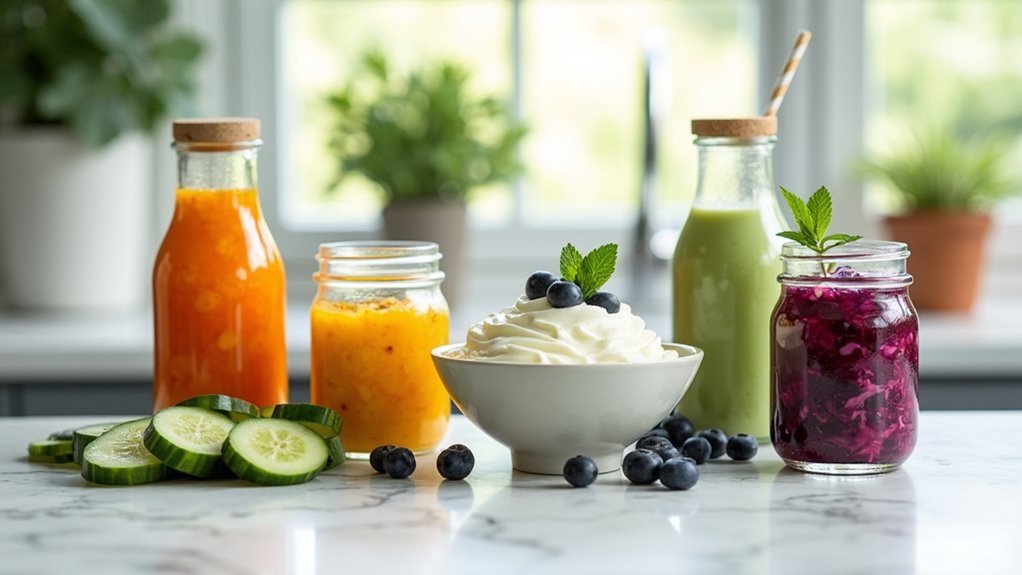
Summer’s abundance transforms your gut health journey with nature’s most potent probiotic powerhouses.
You’ll discover that summer probiotic powerhouses like berries deliver prebiotic fibers that fuel beneficial bacteria growth, optimizing your gut health naturally. These seasonal fruits including blueberries, strawberries, and raspberries provide essential nutrients while supporting digestive wellness.
Create invigorating fermented foods by making homemade yogurt and kefir during warmer months. You can easily transform fresh cucumbers and radishes into probiotic-rich pickles, adding tangy flavors to your summer meals.
Leafy greens like spinach and kale offer fiber and antioxidants that create an ideal gut environment. Meanwhile, peaches and plums contain prebiotic fibers that stimulate beneficial bacteria production.
Summer’s natural bounty provides everything you need for thorough digestive renewal and sustained gut health improvement.
Fall Fermented Vegetables for Microbiome Balance
As cooler temperatures arrive, fall’s harvest offers perfect ingredients for creating powerful fermented vegetables that’ll supercharge your microbiome balance. Seasonal produce like cabbage, carrots, and root vegetables transform into probiotic powerhouses through natural fermentation.
| Fermented Vegetable | Key Benefits |
|---|---|
| Sauerkraut | Rich probiotics, vitamin C |
| Fermented Carrots | Digestive enzymes, fiber |
| Kimchi | Live cultures, antioxidants |
| Pickled Beets | Gut cleansing, nitrates |
| Fermented Radishes | Microbiome diversity support |
These homemade fermented foods introduce beneficial bacteria into your gut, enhancing digestive health and cleansing your system naturally. Fall fermentation preserves your harvest while maximizing nutritional value. You’ll create months of probiotic-rich foods that support ideal gut health throughout winter, making this season ideal for establishing lasting microbiome balance.
Winter Cultured Foods to Support Digestive Wellness

As winter arrives, you’ll want to focus on cultured foods that provide internal warmth while delivering essential probiotics for your digestive system.
Your cold-weather arsenal should include warming fermented soup options like miso-based broths, cold-weather cultured dairy products such as kefir and yogurt, and preserved winter vegetables like sauerkraut and kimchi.
These winter-friendly fermented foods won’t just keep you satisfied during the colder months—they’ll actively support your gut health when fresh produce becomes scarce.
Warming Fermented Soup Options
Winter’s chill creates the perfect opportunity to nourish your gut with warming fermented soups that deliver both comfort and powerful probiotics.
You’ll find miso soup particularly beneficial, as its fermented soybean paste provides essential Lactobacillus bacteria while delivering protein and vitamins for gut health.
Kimchi soup offers another excellent choice, combining spicy fermented vegetables with digestive-supporting bacteria that bolster your gut microbiome.
Consider enhancing bone broth with fermented ingredients like miso or sauerkraut to maximize digestive wellness benefits.
These combinations merge collagen’s gut-healing properties with live probiotic cultures.
- Steam rising from a bowl of golden miso soup with floating green onions
- Vibrant red kimchi soup bubbling with fermented cabbage and peppers
- Rich bone broth swirled with earthy miso paste
- Warming soups supporting your internal digestive ecosystem
Cold-Weather Cultured Dairy
When temperatures drop and your body craves warming comfort foods, cold-weather cultured dairy products become essential allies for maintaining digestive wellness.
Yogurt delivers live cultures that enhance digestion, making it perfect for winter gut health support. Kefir offers even more potent probiotics than yogurt and blends seamlessly into warming smoothies.
You can incorporate cultured buttermilk into baking or use it as a creamy dressing base. Aged cheese varieties like Gouda and cheddar retain beneficial bacteria while adding comfort to winter meals.
Don’t overlook miso, a fermented soybean paste that transforms soups and stews with umami flavor while contributing digestive-supporting probiotics.
These fermented dairy options keep your gut thriving throughout winter’s chill.
Preserved Winter Vegetables
Preserved winter vegetables offer a powerhouse of probiotics that’ll keep your digestive system running smoothly during the coldest months.
These fermented vegetables like sauerkraut, kimchi, and pickles are packed with beneficial bacteria that enhance gut health and strengthen your immune system. When you consume these probiotic foods regularly, you’re supporting your body’s natural detoxification process while improving digestive health.
The fermentation process creates diverse gut microbiota that helps reduce bloating and prevents digestive disorders. You’ll find naturally fermented options at health food stores or can make them at home for maximum probiotic benefits.
- Crisp sauerkraut releasing tangy flavors that awaken your taste buds
- Vibrant red kimchi steaming with spicy, garlicky aromas
- Crunchy pickles bursting with satisfying sourness
- Colorful fermented carrots adding sweetness to savory meals
Year-Round Fermented Dairy Options for Gut Restoration
Although seasonal fermented foods offer unique benefits, year-round fermented dairy options provide consistent and reliable gut restoration support that you can access regardless of the weather or time of year.
| Dairy Option | Probiotic Strains | Key Benefits |
|---|---|---|
| Yogurt | L. acidophilus | Improves digestion |
| Kefir | Multiple strains | Lactose-tolerant friendly |
| Buttermilk | Cultured bacteria | Versatile recipes |
| Aged Cheese | Live cultures | Moderate consumption |
| Greek Yogurt | Active cultures | Higher protein |
Yogurt remains your top choice for gut health restoration, containing live cultures that enhance digestion. Kefir offers broader probiotic diversity than yogurt while being gentler on lactose-sensitive digestive systems. Buttermilk provides beneficial bacteria through cultured varieties, adding flavor to various dishes. While miso supports fermented food diversity, aged cheese like Gouda delivers probiotics through retained live cultures, supporting your gut microbiome year-round.
Creating Your Own Seasonal Fermented Foods at Home
You can take control of your gut health by creating seasonal fermented foods right in your kitchen using fresh, local ingredients available throughout the year.
Start with simple fermentation techniques that transform everyday vegetables like cabbage, carrots, and beets into probiotic-rich powerhouses through proper brining and timing.
Understanding which seasonal ingredients work best, mastering basic fermentation methods, and learning ideal storage practices will guarantee you always have gut-cleansing foods ready when you need them most.
Seasonal Ingredient Selection Guide
When you select seasonal ingredients for homemade fermentation, you’ll harness nature’s peak nutritional offerings while creating powerful probiotic-rich fermented foods that support ideal gut health.
Summer berries like blueberries and strawberries deliver prebiotics that feed beneficial gut bacteria, while root vegetables such as carrots and beets provide essential nutrients your microbiome craves.
Cruciferous vegetables and leafy greens offer exceptional fermented foods potential, preserving their nutritional value through live cultures.
- Fresh summer strawberries bubbling in glass jars, their vibrant red color deepening as beneficial bacteria work their magic
- Crisp orange carrots and deep purple beets transforming into tangy, probiotic-rich pickles
- Vibrant green cabbage leaves tightly packed, slowly becoming golden sauerkraut filled with live cultures
- Aromatic ginger root and fresh herbs infusing your seasonal probiotic foods with warming, digestive-supporting flavors
Basic Fermentation Techniques
Since mastering basic fermentation techniques transforms your kitchen into a probiotic powerhouse, you’ll want to begin with the fundamental salt-brine method that’s launched countless homemade fermented foods.
Start by dissolving sea salt in filtered water to create your brine solution. Select fresh seasonal vegetables like cucumbers, carrots, or cabbage for ideal health benefits and flavor.
Pack these fermented vegetables tightly into sterilized jars, ensuring they’re completely submerged beneath the brine to encourage beneficial probiotic bacteria growth. Use fermentation lids or loosely fitted standard lids to allow gases to escape while protecting against contaminants.
Store jars in a cool, dark location for 3-5 days, monitoring the fermentation process daily. These live microorganisms will develop the tangy flavors and gut-cleansing properties you’re seeking.
Storage and Timing
Proper storage and timing turn your fermentation efforts into long-lasting probiotic treasures that’ll support your gut health for months.
Once your vegetables complete their three-to-five-day fermentation journey, transfer them to airtight containers and refrigerate immediately. This halts the fermentation process while preserving those beneficial probiotics you’ve worked to cultivate.
Throughout fermentation, monitor your brine levels daily. Your vegetables must stay submerged to prevent spoilage and guarantee successful probiotic development. Add salted water when needed to maintain proper coverage.
- Crisp cabbage bubbling gently in mason jars on your kitchen counter
- Vibrant orange carrots floating peacefully beneath salty brine
- Ruby-red radish slices transforming into tangy fermented gems
- Refrigerated airtight containers lined up like probiotic soldiers
Perfect timing and storage maximize your fermented foods’ shelf life and health benefits.
Frequently Asked Questions
What Food Is Highest in Probiotics?
Kefir’s your best bet for the highest probiotic content. You’ll get more diverse beneficial bacteria and yeast than yogurt offers. It’s a fermented milk drink that’ll greatly boost your gut health with its potent probiotic punch.
What Is the Most Gut Healing Food?
You’ll find yogurt’s the most gut-healing food because it’s packed with L. acidophilus probiotics that directly improve your digestion and enhance your overall gut health more effectively than other options.
What Is the Number One Fruit for Gut Health?
Apples are the number one fruit for your gut health. You’ll benefit from their high pectin content, which feeds beneficial bacteria, plus their fiber promotes regular bowel movements and reduces inflammation.
Which Fruit Is High in Probiotics?
You won’t find fruits that’re naturally high in probiotics, since they don’t contain live beneficial bacteria. However, you can choose prebiotic-rich fruits like apples, bananas, and pomegranates to feed existing gut bacteria.


Leave a Reply