

You’ll need to prioritize low-FODMAP probiotic foods like plain lactose-free yogurt, raw sauerkraut, and coconut-based kefir when managing SIBO. Start with small portions—just one tablespoon of fermented vegetables—and gradually increase while monitoring your symptoms. Always read labels carefully to avoid hidden triggers like garlic, onion, or added sugars that can worsen bacterial overgrowth. Focus on specific beneficial strains like Lactobacillus and consider homemade options for better ingredient control to optimize your gut healing journey.
Understanding SIBO and Probiotic Food Compatibility
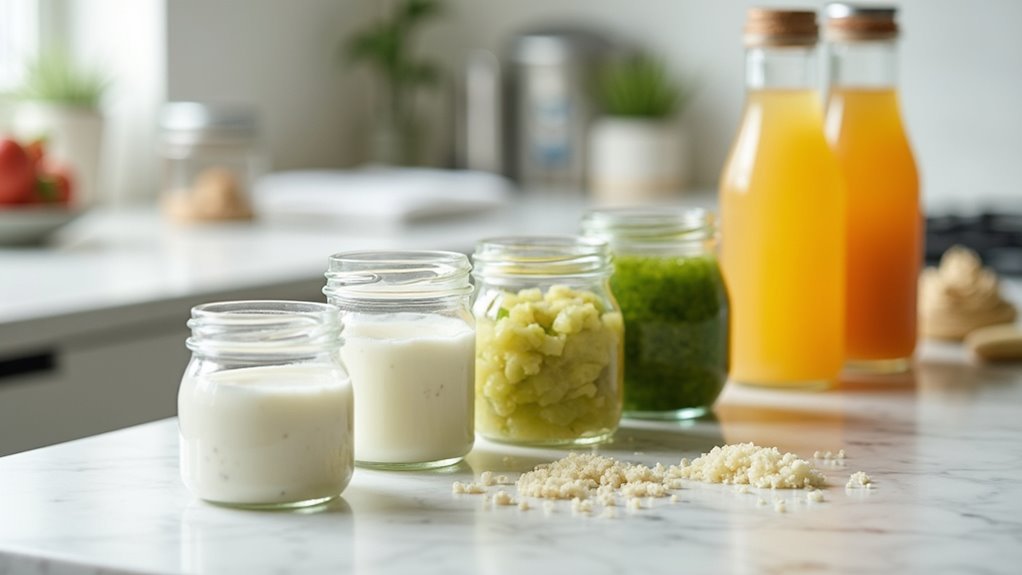
When you’re dealing with SIBO, selecting the right probiotic foods requires careful consideration of how your digestive system responds to different fermented options. Your individual tolerances play an essential role in determining which foods will support healing versus triggering unwanted SIBO symptoms.
Many fermented foods contain high FODMAP compounds that can worsen bacterial overgrowth, making your low FODMAP diet approach essential. You’ll need to focus on specific probiotic strains like Lactobacillus that align with your symptom profile rather than consuming random fermented foods.
Start with small portions to test your body’s response, as what works for others mightn’t work for you. Understanding this compatibility helps you make informed choices that support gut health without compromising your SIBO management strategy.
Essential Criteria for Selecting SIBO-Safe Probiotic Foods
When you’re selecting SIBO-safe probiotic foods, you’ll need to focus on three essential criteria that can make or break your symptom management.
You must prioritize low FODMAP options while carefully evaluating which probiotic strains work best for your specific condition.
Most importantly, you’ll need to test your individual tolerance systematically, as what works for others might trigger your symptoms.
Low FODMAP Options
Prioritizing low FODMAP probiotic foods becomes your first line of defense against triggering SIBO symptoms while still supporting beneficial gut bacteria.
You’ll want to focus on fermented options like plain kefir, lactose-free yogurt with live cultures, and fermented pickles made without garlic or onion. These probiotic foods deliver beneficial bacteria without the fermentable carbohydrates that worsen SIBO.
When shopping, look for products specifically labeled as low FODMAP to guarantee they won’t overwhelm your system.
Raw, unpasteurized varieties offer the most potent bacterial benefits since pasteurization destroys live cultures. Start slowly with small portions to gauge your tolerance before increasing intake.
Working with a knowledgeable dietitian helps you navigate these choices effectively, guaranteeing your gut health journey stays on track.
Probiotic Strain Selection
Understanding which bacterial strains work best for SIBO management transforms your probiotic food selection from guesswork into targeted therapy.
Focus on probiotic strain selection that includes Lactobacillus casei and Saccharomyces boulardii, as research demonstrates their effectiveness in reducing diarrhea and supporting digestive health without worsening SIBO symptoms.
When examining fermented foods, you’ll want products containing these specific strains while making certain they’re made from low-FODMAP vegetables.
Verify that your chosen foods contain live and active cultures by checking labels carefully – dead bacteria won’t provide therapeutic benefits.
Sauerkraut made from cabbage, certain yogurts, and quality kefir often contain beneficial strains, but always confirm the specific bacterial cultures listed on packaging before purchasing to guarantee ideal SIBO management outcomes.
Individual Tolerance Testing
Since your body’s response to probiotic foods differs from everyone else’s, you’ll need to conduct careful individual tolerance testing to identify which options support your SIBO management without triggering uncomfortable symptoms.
Start with small portions and gradually increase while maintaining a detailed food diary to track gastrointestinal reactions. This systematic approach helps you recognize patterns between specific probiotic foods and SIBO symptoms.
| Testing Phase | Portion Size | Duration |
|---|---|---|
| Initial Trial | 1-2 teaspoons | 2-3 days |
| Assessment | Monitor symptoms | 24-48 hours |
| Gradual Increase | Double portion | 3-4 days |
| Tolerance Check | Note reactions | 48 hours |
| Final Decision | Continue/discontinue | Ongoing |
Consult with a healthcare professional throughout this process to guarantee your individual tolerance testing aligns with your nutritional needs and SIBO treatment plan.
Low-FODMAP Fermented Foods for SIBO Management
When managing SIBO, you’ll find that fermented foods can be tricky territory since many contain high levels of FODMAPs that feed bacterial overgrowth.
However, choosing low-FODMAP fermented foods allows you to incorporate beneficial probiotics without triggering digestive symptoms that worsen your gut health.
Lactose-free yogurt and kefir provide excellent probiotic sources while minimizing fermentable carbohydrates.
Raw sauerkraut and kimchi made from cabbage and cucumbers offer digestive benefits, but avoid cooked versions since heat destroys their probiotic content.
Miso adds flavor and probiotics to soups without exacerbating SIBO symptoms.
Be cautious with kombucha—while it’s fermented, some varieties contain high sugar levels that can worsen bacterial overgrowth.
Always select “raw” or “unpasteurized” fermented foods to guarantee they contain live probiotics essential for supporting your digestive health.
Lactose-Free Probiotic Options for Sensitive Digestive Systems

You’ll want to focus on lactose-free options when selecting probiotic foods, as lactose can worsen SIBO symptoms and digestive discomfort.
Plant-based fermented foods like sauerkraut and kimchi offer beneficial bacteria without dairy-related triggers that might upset your sensitive system.
When choosing supplements, you’ll need to verify they’re specifically formulated without lactose while still containing active probiotic strains.
Lactose-Free Fermented Foods
Digestive sensitivity doesn’t have to mean sacrificing the gut health benefits of fermented foods. Lactose-free options like coconut yogurt and almond milk kefir deliver powerful probiotics without triggering discomfort.
These alternatives undergo fermentation processes that break down lactose while preserving live cultures essential for peak gut health.
When selecting lactose-free fermented foods for SIBO management, you’ll want products labeled “live and active cultures” to guarantee effective probiotic strains.
Coconut yogurt and almond milk kefir aren’t just lactose-free—they’re naturally low in FODMAPs, making them ideal for sensitive digestive systems.
Incorporating these fermented foods into your SIBO-friendly diet can enhance your gut’s microbial balance and potentially reduce digestive symptoms.
You’re giving your system beneficial bacteria without the inflammatory triggers that traditional dairy products might cause.
Plant-Based Probiotic Sources
Plant-based fermented foods expand your probiotic options far beyond dairy alternatives. These lactose-free choices support gut health while avoiding digestive triggers that worsen SIBO symptoms.
| Food Type | Probiotic Benefit | SIBO Consideration |
|---|---|---|
| Sauerkraut/Kimchi | Live cultures support microbiome | Choose raw, unpasteurized versions |
| Tempeh/Miso | Fermented soy provides beneficial bacteria | Select traditionally fermented products |
| Coconut Kefir | Dairy-free probiotic source | Monitor portion sizes initially |
You’ll find kombucha offers another plant-based probiotic option, though you should consume it moderately due to sugar content. When selecting these foods, prioritize raw and unpasteurized varieties to guarantee live cultures remain active. These choices provide essential probiotics without dairy-related discomfort, making them ideal for managing SIBO while supporting overall digestive wellness.
Dairy-Free Supplement Selection
Since lactose intolerance affects up to 68% of the global population, dairy-free probiotic supplements offer essential alternatives for maintaining gut health without digestive distress.
When selecting lactose-free probiotic supplements, prioritize products containing well-tolerated strains like Lactobacillus plantarum and Bifidobacterium lactis. These beneficial bacteria support digestive wellness without triggering lactose-related symptoms.
You’ll find dairy-free probiotic options in convenient capsule or powder forms, allowing flexible dosing that fits your dietary needs. Always verify labels display “live and active cultures” to guarantee effective bacterial counts.
Beyond supplements, incorporate naturally dairy-free fermented foods like sauerkraut, kimchi, and miso into your routine. Coconut yogurt and almond milk yogurt provide additional alternatives, delivering probiotics while accommodating lactose sensitivity and supporting ideal gut health maintenance.
Traditional Fermented Vegetables: Sauerkraut and Kimchi Guidelines

Two of the most popular traditional fermented vegetables, sauerkraut and kimchi, offer promising probiotic benefits but require careful consideration if you’re managing SIBO. These fermentation products contain beneficial bacteria, but their high FODMAP content can trigger digestive symptoms.
| Factor | Sauerkraut | Kimchi |
|---|---|---|
| Probiotic Content | High in lacto-fermentation bacteria | Diverse probiotic strains |
| SIBO Considerations | May cause bloating; start small | High spice content can worsen symptoms |
| Selection Tips | Choose unpasteurized, raw versions | Guarantee unpasteurized for live cultures |
| Serving Strategy | Begin with 1-2 tablespoons | Moderate portions, monitor tolerance |
You’ll need to prioritize unpasteurized versions since pasteurization destroys the beneficial bacteria. Start with small amounts and carefully monitor your body’s response to identify any SIBO-related triggers.
Kefir Selection and Preparation for SIBO Patients
While kefir offers exceptional probiotic diversity, you’ll need to navigate its selection carefully when managing SIBO. Choose dairy-free varieties like coconut or almond milk kefir to avoid lactose intolerance complications that could worsen symptoms.
Verify your kefir contains live cultures, particularly Lactobacillus and Bifidobacterium probiotic strains that restore gut balance without bacterial overload.
Start with small portions to gauge your tolerance, as fermented foods can trigger bloating in SIBO patients. Avoid flavored products containing added sugars or high FODMAP ingredients that’ll undermine your dietary efforts.
Consider making homemade kefir for complete control over fermentation time and strain selection. This approach lets you reduce sugar content while customizing probiotics to your specific needs, creating a safer therapeutic option.
Probiotic Strain Identification in Fermented Foods
You’ll need to scrutinize fermented food labels carefully since manufacturers aren’t always required to list specific probiotic strains or their quantities.
Look for products that clearly identify beneficial strains like Lactobacillus plantarum or Bifidobacterium lactis, as these particular bacteria can help reduce your SIBO symptoms more effectively than generic “live cultures.”
When you can match specific strains to your symptoms—whether it’s bloating, constipation, or digestive discomfort—you’re more likely to choose fermented foods that’ll actually support your gut healing journey.
Reading Fermented Food Labels
Since fermented food labels can be misleading, you’ll need to scrutinize them carefully to identify SIBO-safe probiotic options. Look for specific probiotic strains like Lactobacillus, Bifidobacterium, or Saccharomyces boulardii with documented health benefits. Confirm products contain at least 1 billion colony-forming units for effectiveness. Verify “live and active cultures” appear on packaging to confirm viable probiotics. Avoid products with added sugars that can worsen SIBO symptoms. Check for allergen warnings and unnecessary additives that might trigger reactions.
| Label Element | SIBO-Safe Criteria |
|---|---|
| Probiotic Strains | Lactobacillus, Bifidobacterium, S. boulardii |
| CFU Count | Minimum 1 billion |
| Culture Status | “Live and active cultures” |
| Ingredients | No added sugars or problematic additives |
Strain-Specific SIBO Benefits
Different probiotic strains offer targeted benefits that can address your specific SIBO symptoms more effectively than a one-size-fits-all approach.
When selecting fermented foods, you’ll want to match probiotic strains to your individual symptoms for ideal SIBO management.
If you’re experiencing diarrhea, look for products containing Lactobacillus casei, which helps normalize bowel movements.
For bloating and constipation issues, seek out Bifidobacterium lactis to reduce bloating and improve regularity, or Streptococcus thermophilus for better lactose breakdown.
Lactobacillus plantarum stands out for strengthening intestinal barrier integrity, making it valuable for overall gut healing.
These beneficial probiotics work best when you understand your specific symptoms and choose fermented foods accordingly, rather than randomly selecting any probiotic product.
Portion Control Strategies for Probiotic Food Integration
When introducing probiotic foods into your SIBO-conscious diet, starting with small portions becomes your most powerful tool for success.
Begin with just one tablespoon of sauerkraut or a small cup of kefir to test your tolerance without overwhelming your system.
Effective portion control means gradually increasing amounts while monitoring how your body responds. This approach prevents the bloating and gas that often accompany sudden dietary changes.
Gradual increases with careful monitoring prevent uncomfortable bloating and gas from sudden dietary shifts.
You’ll want to pause after each increase to assess whether SIBO symptoms worsen or improve.
Pair your probiotic foods with low-FODMAP options to enhance digestion and minimize symptom triggers.
Keep a detailed food diary tracking both intake amounts and reactions. This documentation helps you identify your ideal serving sizes for maintaining gut health while avoiding SIBO flare-ups.
Timing and Frequency of Probiotic Food Consumption
When you’re incorporating SIBO-safe probiotic foods into your routine, you’ll need to establish consistent daily timing that works with your body’s natural rhythms.
Your meal schedule should guide when you consume these foods, as eating them alongside regular meals can enhance digestion and nutrient absorption.
You’ll also want to track how your symptoms respond to different timing patterns, which helps you identify the most effective consumption schedule for your individual needs.
Optimal Daily Timing
Since your body’s digestive rhythms naturally peak in the morning, you’ll maximize probiotic effectiveness by consuming these foods early in the day.
This timing aligns with your gut’s natural motility patterns and supports ideal gut health throughout the day.
When incorporating probiotic foods into your SIBO management plan, consider these ideal timing strategies:
- Morning meals: Add kefir to your breakfast smoothie or enjoy fermented vegetables alongside your eggs.
- With food: Consume probiotics during meals rather than on an empty stomach for better digestion.
- Post-meal support: Use probiotics after eating to combat bloating and digestive discomfort.
- Gradual introduction: Start with small portions to monitor tolerance and prevent initial digestive upset.
Consistent timing helps establish beneficial bacterial populations while minimizing SIBO-related symptoms.
Meal-Based Consumption Patterns
Although timing matters for probiotic effectiveness, establishing consistent meal-based consumption patterns proves equally essential for managing SIBO symptoms.
You’ll find that incorporating probiotic foods at each meal helps maintain steady gut balance throughout the day. Start with small servings of fermented foods like kefir or sauerkraut during meal consumption to monitor your tolerance levels.
Your digestive health benefits when you consume these foods alongside regular meals, as this timing aids digestion and improves probiotic survival through your gastric environment.
You should personalize your frequency based on symptom response – some people thrive with daily small servings at every meal, while others need limited frequency.
Focus on moderation and listen to your body’s signals to prevent discomfort while supporting ideal digestive function.
Symptom Response Monitoring
Tracking your body’s response to probiotic foods becomes essential for successful SIBO management, as individual tolerance varies considerably.
You’ll need to monitor how different probiotic foods affect your digestive discomfort to make informed dietary choices.
Here’s your monitoring strategy:
- Daily symptom logging – Record bloating, gas, and pain levels to identify patterns between probiotic foods and your symptom responses.
- Single food introduction – Add one new probiotic food every few days to accurately assess individual impacts.
- Gradual portion increases – Start with small amounts and slowly expand to find your tolerance threshold.
- Professional consultation timing – Contact your healthcare professional immediately if symptoms worsen after introducing any probiotic food.
Track symptoms consistently to build a clear picture of what works for your unique digestive system.
Reading Labels: Avoiding Hidden SIBO Triggers in Fermented Products
When you’re selecting fermented products for SIBO management, the ingredient label becomes your most valuable tool for identifying potential triggers that could worsen your symptoms.
Start by looking for “live and active cultures” to guarantee you’re getting beneficial probiotics. However, avoid products containing added sugars or artificial sweeteners that feed harmful bacteria. Watch for high FODMAP ingredients like garlic and onion, which commonly trigger SIBO symptoms.
| Avoid | Look For |
|---|---|
| Added sugars/sweeteners | Live and active cultures |
| Garlic and onion | Minimal ingredients |
| Inulin and prebiotics | No artificial additives |
| Artificial preservatives | Natural fermentation |
Be cautious with probiotic supplements containing prebiotics like inulin, as these fermentable compounds may worsen symptoms. Review labels thoroughly for hidden triggers, additives, or preservatives that could irritate your gut or contribute to bacterial overgrowth.
Homemade Vs Store-Bought Probiotic Foods for SIBO
While store-bought probiotic foods offer convenience, making your own fermented foods gives you complete control over ingredients and fermentation processes that can make or break your SIBO management plan.
When choosing between homemade probiotic foods and store-bought options, consider these key advantages of making your own:
- Ingredient transparency – You’ll know exactly what goes into your fermented vegetables or kefir.
- Customized fermentation time – Control bacterial growth to match your tolerance levels.
- Zero hidden sugars – Avoid FODMAPs and artificial additives that trigger SIBO symptoms.
- Strain selection – Choose specific strains of bacteria that support your gut health needs.
Store-bought probiotic foods can work if you’re careful about reading labels for Lactobacillus and Bifidobacterium strains while avoiding added sugars.
Regardless of your choice, introduce fermented foods gradually to monitor your body’s response.
Monitoring Symptoms When Introducing New Probiotic Foods
Once you’ve selected your probiotic foods, your body’s response becomes the ultimate guide for what works in your SIBO management plan.
Start with small portions when monitoring symptoms from new probiotic foods, as your individual tolerance varies considerably. Keep a detailed food diary tracking timing, quantity, and any digestive changes within 24-48 hours. Watch for bloating, gas, diarrhea, or discomfort that signals intolerance.
Gradually reintroduce foods over several days, allowing time to assess immediate and delayed reactions. This systematic approach helps identify which probiotic foods support your SIBO recovery versus those that trigger symptoms.
Don’t hesitate to consult your healthcare provider or dietitian to adjust your diet based on your monitoring results, ensuring your individual plan remains effective.
Combining Probiotic Foods With SIBO Treatment Protocols
As you integrate probiotic foods into your extensive SIBO treatment plan, timing and selection become critical factors for success.
Strategic dietary changes require careful coordination with your existing protocols to maximize benefits while preventing symptom flare-ups.
Thoughtful integration of dietary modifications with current treatment protocols prevents complications while optimizing therapeutic outcomes and symptom management.
When combining probiotic foods with SIBO treatment, visualize:
- Morning kefir portions – Small servings alongside prescribed medications, creating a gentle foundation for gut microbiota balance.
- Midday yogurt timing – Low-FODMAP options consumed between antimicrobial doses to support beneficial bacteria replenishment.
- Evening fermented vegetables – Raw sauerkraut portions integrated with dinner to enhance digestive recovery.
- Weekly progress tracking – Documented symptom responses guiding dosage adjustments and food selections.
Working with a registered dietitian guarantees your probiotic foods complement rather than compete with pharmaceutical interventions, creating a harmonized approach to restoring intestinal health.
Long-Term Probiotic Food Planning for Gut Microbiome Balance
Successfully coordinating probiotic foods with your immediate SIBO treatment sets the foundation for developing a sustainable long-term strategy that maintains gut microbiome balance.
You’ll want to prioritize diverse dietary sources like kefir, sauerkraut, and kimchi, introducing them gradually to monitor your tolerance. Focus on fermented foods that are lower in FODMAPs to minimize digestive distress while restoring microbial diversity.
Regular consumption of varied probiotic foods helps maintain digestive health, but you must track symptom changes and adjust accordingly since individual reactions differ considerably.
Consider combining food-based probiotics with supplements under professional guidance, tailoring choices to your specific SIBO symptoms. This balanced, personalized approach supports long-term gut health and potentially reduces symptom recurrence through sustained microbiome support.
Frequently Asked Questions
What Is the Best Probiotic to Take if You Have SIBO?
You’ll want Saccharomyces boulardii or strain-specific options like Lactobacillus casei for diarrhea or Bifidobacterium lactis for constipation. Choose products with at least 1 billion CFU and consult your healthcare provider first.
How to Pick the Right Probiotic?
You’ll want to choose probiotics with specific Lactobacillus and Bifidobacterium strains, guarantee they’re labeled “live and active cultures,” select low-FODMAP options like kefir, and start slowly to monitor your individual tolerance.
Should You Stop Taking Probiotics if You Have SIBO?
You should generally stop taking probiotics if you have SIBO, as they can worsen symptoms by adding more bacteria to your already overpopulated small intestine. Consult your healthcare provider first.
What Foods Are Good for SIBO?
You’ll want to focus on low-FODMAP foods like rice, quinoa, carrots, spinach, chicken, and fish. Include kefir, sauerkraut, miso, and kombucha gradually, monitoring your body’s reactions carefully.


