
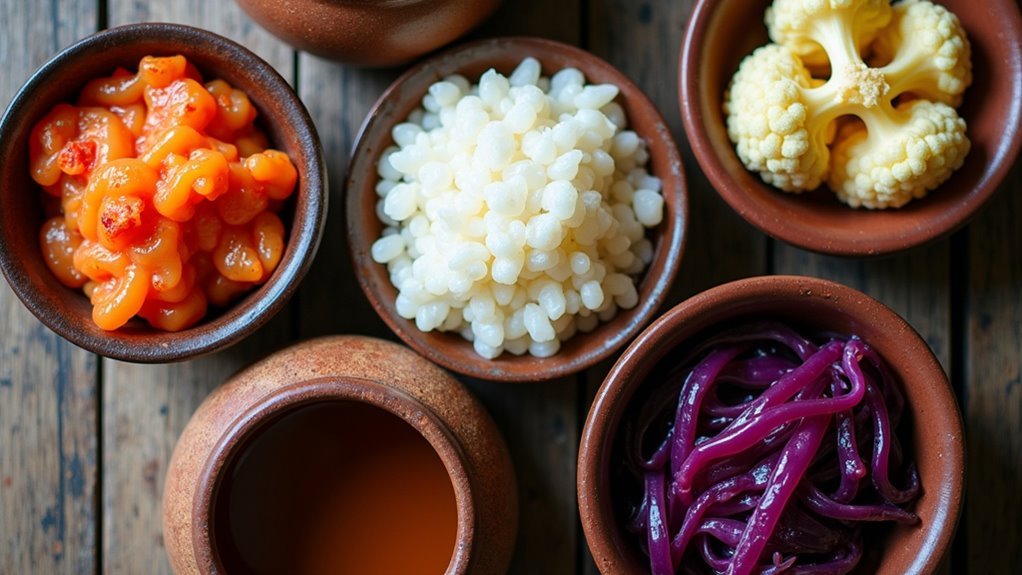
Ancient fermented foods like kefir, kimchi, sauerkraut, and miso have healed digestive systems for thousands of years by delivering powerful probiotics that restore your gut microbiome. These traditional foods transform simple ingredients into gut-healing powerhouses that enhance nutrient absorption, reduce inflammation, and strengthen immunity. You’ll find that kefir’s beneficial bacteria aid lactose digestion, while kimchi’s anti-inflammatory compounds regulate blood sugar. Sauerkraut’s lactic acid bacteria and miso’s protective compounds offer profound benefits that modern science continues to validate.
The Ancient Art of Fermentation and Gut Restoration
While modern medicine focuses on synthetic solutions, you can tap into thousands of years of wisdom through fermented foods that naturally restore your gut health.
These ancient fermented foods like yogurt, kimchi, and kefir contain powerful probiotics that’ve supported digestive health across cultures for millennia.
The fermentation process transforms ordinary ingredients into gut-healing powerhouses by breaking down complex compounds, dramatically improving nutrient absorption.
When you consume these traditional foods regularly, you’re introducing beneficial bacteria that diversify your gut microbiome and strengthen immune function.
Research confirms what ancient civilizations knew intuitively—fermented foods effectively alleviate symptoms of conditions like irritable bowel syndrome while reducing inflammation.
Kefir: the Immortal Elixir From the Caucasus Mountains
Among all fermented foods, kefir stands out as perhaps the most legendary, earning its reputation as the “immortal elixir” from the rugged Caucasus Mountains where shepherds first discovered its remarkable properties centuries ago.
From the ancient Caucasus Mountains comes kefir, the legendary immortal elixir that has captivated cultures for centuries with its extraordinary healing powers.
This fermented milk drink contains probiotics that’ll transform your gut health while delivering essential vitamins B12 and K2 in one nutrient-dense package.
You’ll find kefir’s fermentation process converts lactose into lactic acid, making it perfect if you struggle with lactose intolerance.
Within 10-24 hours, beneficial bacteria and yeast work together to create this tangy powerhouse that supports your digestion and strengthens your immune system.
Whether you’re blending it into smoothies or using it as a creamy base for soups, you’re getting centuries of ancient wisdom in every sip.
Kimchi: Korea’s Spicy Medicine for Digestive Balance

What if one fermented dish could serve as both a fiery culinary delight and a powerful digestive remedy? Kimchi delivers exactly that through its traditional fermentation process, transforming napa cabbage and radishes into a probiotic powerhouse for gut health.
This Korean staple’s anti-inflammatory ingredients—garlic, ginger, and chili pepper—create a potent medicine that enhances digestive health while reducing inflammation.
Research shows kimchi’s impressive benefits:
- Regulates blood sugar levels and lowers cholesterol for cardiovascular protection
- Boosts microbiome diversity through beneficial probiotics that strengthen immune function
- Provides vitamins A, C, and K essential for peak digestive balance
- Alleviates bloating and discomfort with natural anti-inflammatory compounds
You’re consuming centuries of fermented wisdom with every spicy bite.
Sauerkraut: Germanic Wisdom for Intestinal Health
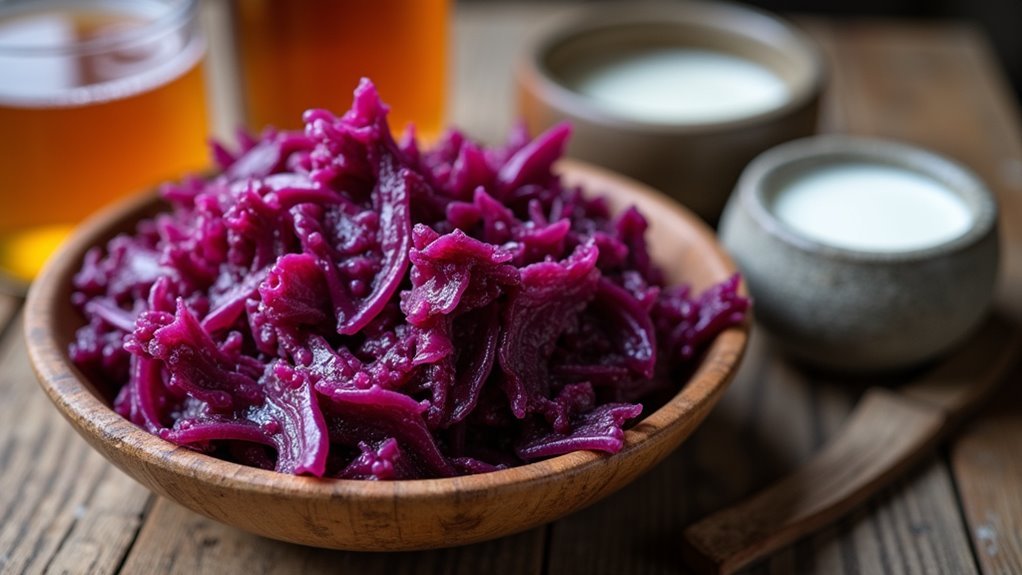
From Korea’s fermented spice to Germany’s simple yet profound creation, sauerkraut proves that the most powerful gut remedies often come from the humblest ingredients. This fermented cabbage harnesses lactic acid bacteria to transform simple vegetables into probiotic powerhouses that support your digestion and intestinal health.
| Nutrient | Benefit | Impact |
|---|---|---|
| Probiotics | Live cultures | Gut microbiome support |
| Vitamin C | Antioxidant | Immune system boost |
| Fiber | Digestive aid | Improved regularity |
| Vitamin K | Bone health | Enhanced absorption |
When you choose homemade sauerkraut, you’re getting maximum probiotic content. The fermentation process increases nutrient bioavailability, making vitamins more accessible to your body. Regular consumption of these fermented foods can reduce IBS symptoms while strengthening your immune system through improved gut health.
Miso: Japan’s Fermented Foundation for Gut Harmony
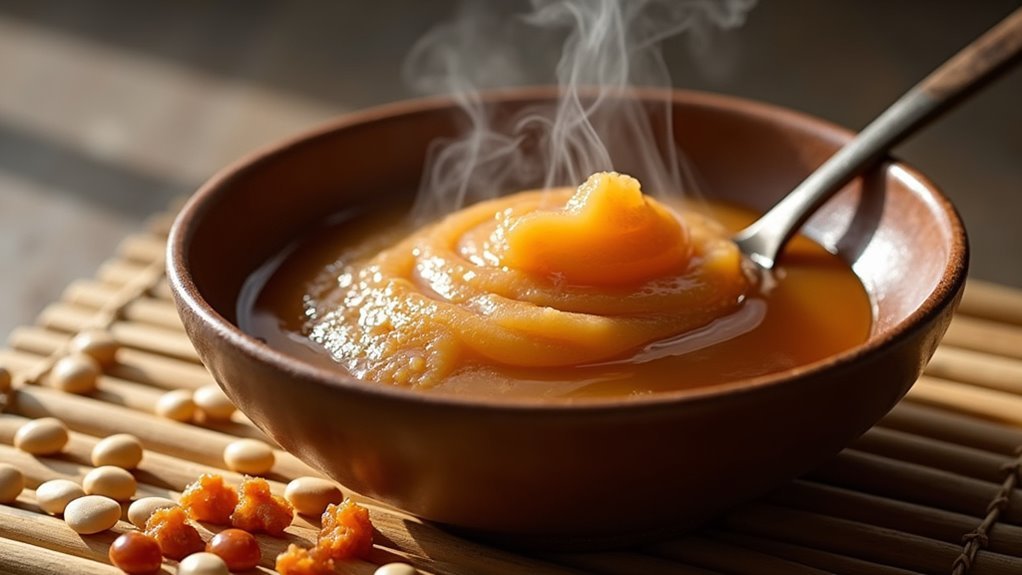
You’ll discover that miso’s remarkable 2,500-year journey began in ancient Japan, where craftsmen perfected the art of fermenting soybeans with koji mold to create this umami-rich paste.
This traditional fermentation process doesn’t just produce incredible flavor—it generates powerful probiotics that directly support your gut microbiome and digestive health.
When you incorporate miso into your diet, you’re tapping into centuries of Japanese wisdom that modern science now confirms can strengthen your immune system and reduce inflammation.
Ancient Miso Origins
For over 2,500 years, miso has served as Japan’s cornerstone fermented food, transforming humble soybeans into a powerhouse of gut-healing probiotics through ancient wisdom that’s as relevant today as it was centuries ago.
This nutrient-rich ancient food emerges from a sophisticated fermentation process using Aspergillus oryzae koji starter, creating a living ecosystem that supports your digestive health. When you understand miso’s origins, you’ll appreciate why it remains unmatched for cultivating a balanced microbiome.
Consider what makes miso extraordinary for gut health:
- Living probiotics that colonize your intestinal tract with beneficial bacteria
- Enhanced bioavailability making nutrients easier for your body to absorb
- Protective compounds that may prevent gastrointestinal disorders
- Ancient fermentation wisdom perfected over millennia
You’re connecting with generations of Japanese who understood fermented foods’ healing power.
Gut Health Benefits
When you incorporate miso into your daily routine, you’re releasing a powerful army of beneficial bacteria that transforms your digestive landscape from the inside out.
This powerhouse among fermented foods delivers Lactobacillus probiotics that actively regulate your gut microbiota, creating ideal conditions for enhanced digestion.
The fermentation process doesn’t just boost gut health—it increases bioavailability of essential B vitamins, vitamin K, and amino acids your body craves.
You’ll experience reduced symptoms of gastrointestinal disorders while strengthening your immune system through improved gut barrier function.
The traditional Japanese diet’s emphasis on miso consumption demonstrates how ancient wisdom supports modern wellness, making this fermented paste your daily ally against digestive imbalance and infection risk.
Kombucha: The Ancient Tea That Transforms Your Microbiome
Although kombucha might seem like a trendy health drink that’s recently taken over grocery store shelves, this fizzy fermented tea has been transforming people’s gut health for over 2,000 years.
This ancient drink originates from Northeast China, where the fermentation process uses SCOBY to transform sweetened tea into a probiotic powerhouse.
When you drink kombucha regularly, you’re flooding your microbiome with beneficial bacteria that can revolutionize your digestive health.
The organic acids help detoxify your liver while supporting metabolic function.
Here’s what kombucha delivers for your gut:
- Enhanced microbiome diversity through live probiotics
- B vitamins and antioxidants for cellular repair
- Anti-inflammatory compounds that reduce digestive irritation
- Blood sugar regulation through organic acid content
These remarkable health benefits make kombucha an exceptional addition to your wellness routine.
Creating Your Own Healing Fermented Foods at Home
While kombucha offers incredible benefits, you don’t need to rely solely on store-bought options to transform your gut health. You can create your own fermented foods at home using simple ingredients.
Start with sauerkraut or kimchi—just cabbage, salt, and spices fermented for several days until bubbly. Use sterilized jars and keep fermented vegetables fully submerged in brine to prevent spoilage.
Monitor fermentation at room temperature between 60-75°F, tasting periodically for desired tanginess. For fermenting foods like kombucha, incorporate probiotic-rich SCOBY or kefir grains to boost live bacteria content.
These homemade ferments provide healthy gut benefits through probiotics while giving you complete control over ingredients and health outcomes.
Frequently Asked Questions
Which Fermented Food Is Best for Gut Health?
Kefir’s your best choice for gut health because it contains the most diverse range of probiotics. You’ll get better microbiome balance and improved digestion compared to other fermented foods like yogurt or sauerkraut.
What Is the Most Gut Healing Food?
You’ll find kefir’s the most gut-healing food available. It contains the widest variety of probiotics compared to other fermented options, actively restoring your digestive balance while reducing inflammation and enhancing nutrient absorption most effectively.
How Long Does It Take to Heal Your Gut With Fermented Foods?
You’ll typically notice gut healing improvements within 4 to 6 weeks of consistently eating fermented foods. However, complete healing can take several months depending on your individual health conditions and dietary changes.
What Is the Fastest Way to Restore Gut Health?
You’ll restore gut health fastest by consuming three to four servings of fermented foods daily, pairing them with prebiotic-rich foods like garlic, staying hydrated, and eliminating processed sugars from your diet.


