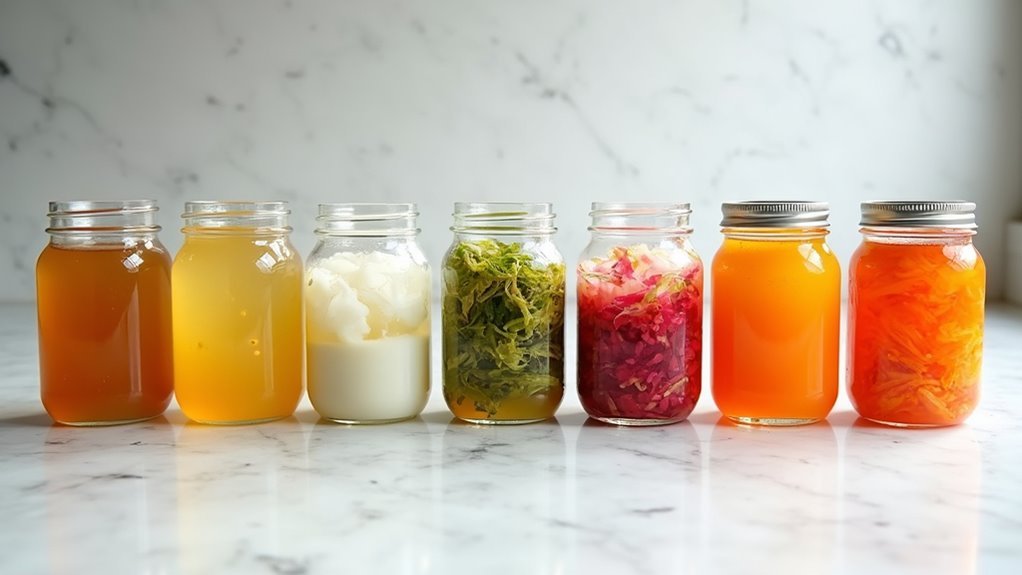
You can heal your gut with seven powerful homemade probiotic recipes that transform simple ingredients into microbiome-boosting foods. Start with fermented vegetable medley using carrots and pak choi, traditional sauerkraut, or spicy kimchi for digestive diversity. Create probiotic kefir smoothies with anti-inflammatory ingredients, cultured sourdough bread from wild yeast, and fermented pickles using salt brine solutions. These recipes develop beneficial bacteria in 3-10 days, supporting immune function and nutrient absorption while adding delicious flavors that’ll transform your kitchen into a gut-healing powerhouse.
Fermented Vegetable Medley With Carrot and Pak Choi
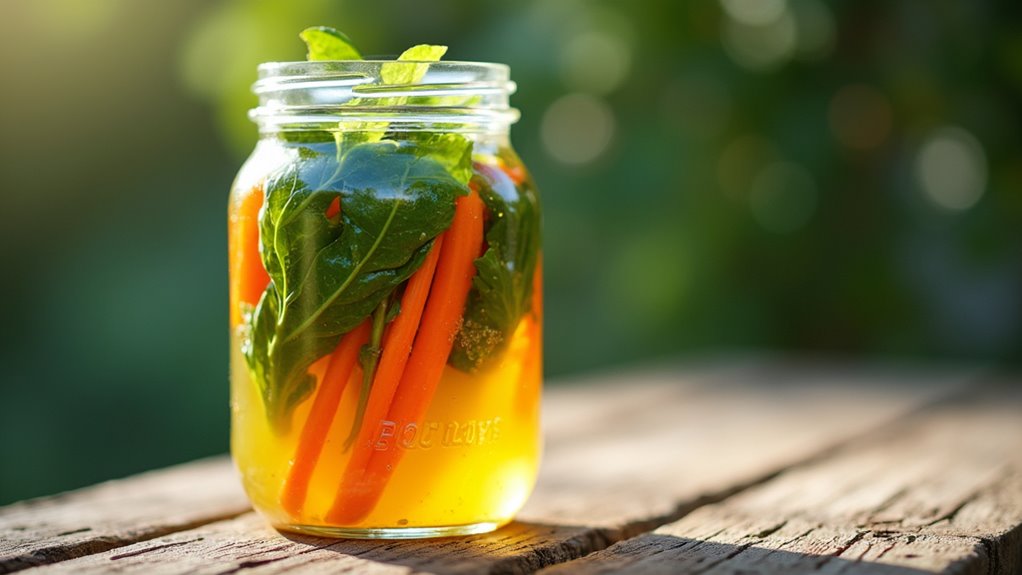
Since fermented vegetables offer one of the easiest ways to boost your daily probiotic intake, this colorful medley combines 200g of finely sliced carrots with 100g of pak choi to create a nutrient-dense powerhouse that’ll transform your gut health.
You’ll add 20g of ginger and 2 garlic cloves to your 450g vegetable mix, then incorporate 9g of salt (2% of total weight) to kickstart the fermentation process.
Creating probiotics at home becomes simple when you keep vegetables submerged underwater throughout fermentation.
Keeping your fermenting vegetables completely submerged under their own brine is the key to successful probiotic development at home.
Taste every few days until you achieve your preferred tanginess. Unlike traditional homemade sauerkraut, this fermented medley delivers diverse flavors and nutrients.
The resulting probiotic-rich liquid doubles as a healthy dressing, maximizing your gut health benefits.
Traditional Homemade Sauerkraut for Daily Gut Support
While the vegetable medley offers exciting flavor combinations, traditional homemade sauerkraut remains the gold standard for daily probiotic consumption.
You’ll need just 1 kg cabbage and 15 g salt to create this powerful fermented food that supports your healthy gut. The lactic acid bacteria naturally present transform cabbage into probiotic-packed foods within 3-10 days.
You’ll want to check daily, ensuring cabbage stays submerged and removing any surface mold. Optional juniper berries or caraway seeds enhance flavor complexity.
At only 13 calories per half-cup serving, you can incorporate sauerkraut into meals without concern.
This simple fermentation process delivers beneficial bacteria that enhance your gut microbiome diversity, supporting digestive function while providing tangy flavor that complements various dishes perfectly.
Spicy Kimchi Recipe for Microbiome Diversity
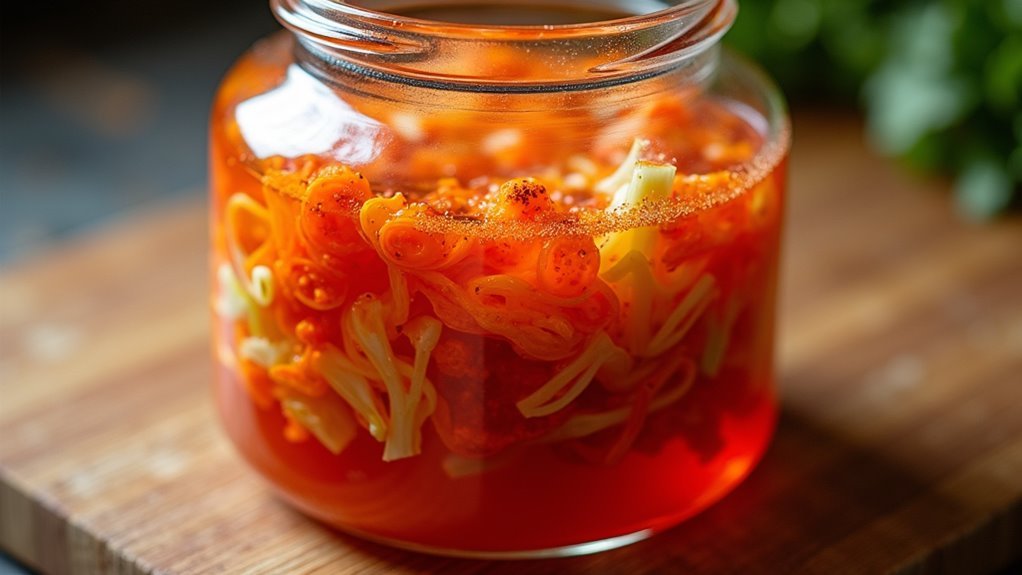
Beyond simple sauerkraut, spicy kimchi elevates your probiotic game with Korean fermentation traditions that pack serious heat and microbiome benefits.
This homemade powerhouse transforms napa cabbage and radishes into fermented vegetables brimming with beneficial bacteria that enhance gut microbiome diversity.
You’ll need garlic, ginger, and gochugaru for authentic flavor and anti-inflammatory properties.
The 4-5 day fermentation develops complex tastes while maximizing probiotic properties. Simply salt your vegetables, create a spicy paste with aromatics, combine everything, and let time work its magic.
Customize your batch with carrots or green onions to match your heat tolerance.
Regular consumption of this spicy kimchi supports digestion, reduces inflammation, and dramatically improves overall gut health through increased microbiome diversity.
Probiotic Kefir Smoothies With Anti-Inflammatory Ingredients
You’ll find that kefir smoothies offer an excellent way to combine probiotics with powerful anti-inflammatory ingredients that support your gut health.
The natural probiotics in kefir work synergistically with antioxidant-rich additions like cherries and nutrient-dense greens to reduce inflammation throughout your body.
These quick recipes let you create nutrient-packed smoothies in minutes, giving you an easy meal option that actively promotes digestive wellness.
Anti-Inflammatory Ingredient Benefits
Since inflammation can wreak havoc on your digestive system and overall health, combining probiotic foods with anti-inflammatory ingredients creates a powerful therapeutic smoothie that tackles multiple health concerns at once.
Cherries deliver anthocyanins that lower inflammatory markers while supporting exercise recovery. Spinach adds vitamin K and antioxidants that boost your immune system and combat oxidative stress.
When you include fresh fruit like cherries in your kefir smoothies, you’re providing natural compounds that actively reduce inflammation throughout your body.
Adding chia seeds introduces prebiotic fiber that feeds beneficial bacteria, creating an ideal environment for gut health. Almond butter contributes healthy fats and protein, enhancing satiety while supporting your digestive system’s overall function and inflammatory response.
Quick Kefir Smoothie Recipes
Creating nutrient-packed kefir smoothies transforms these anti-inflammatory powerhouses into delicious, convenient meals you can whip up in minutes. You’ll boost your gut health while satisfying your taste buds with these probiotic-rich combinations.
| Base Ingredients | Anti-Inflammatory Add-ins |
|---|---|
| 1 cup kefir | 1/2 cup cherries |
| 1/2 frozen banana | 1 handful spinach |
| 1 tbsp almond butter | 1/2 tsp fresh ginger |
| 1 tbsp chia seeds | 1/4 cup blueberries |
| Ice cubes | 1 tsp turmeric |
You’ll maximize fiber content and digestive benefits by incorporating seasonal produce into your smoothies. The probiotics in kefir work synergistically with anti-inflammatory ingredients to support ideal wellness. Blend everything for 60 seconds, and you’ve got a nutritious meal that’s completely customizable to your preferences.
Miso-Based Fermented Vegetable Soup
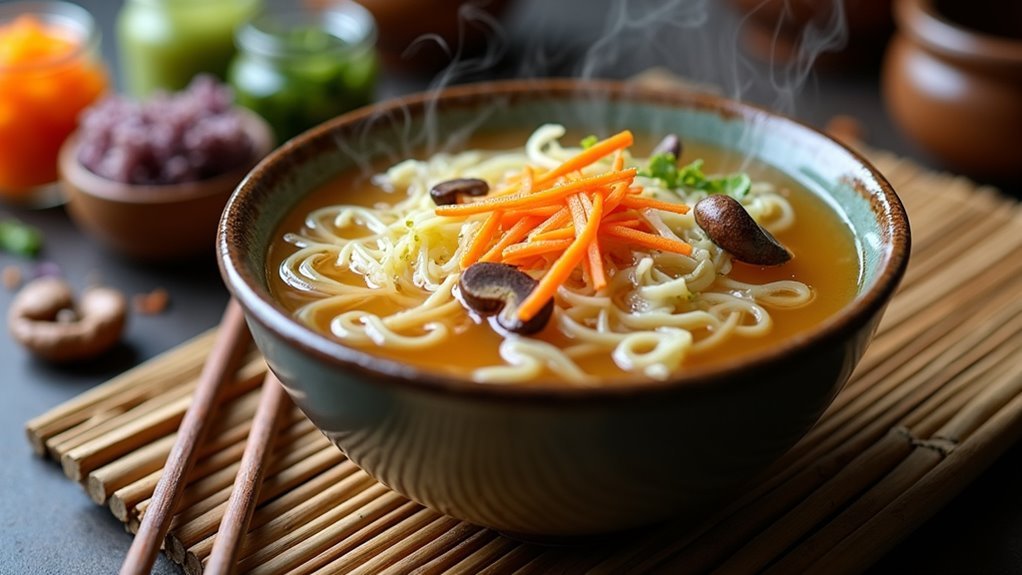
You’ll discover that miso paste brings powerful probiotics to your homemade soup while supporting digestive health through its live cultures.
When you’re preparing vegetables for this nourishing dish, dissolve the miso in heated water first, then add silken tofu and dried seaweed for ideal flavor development.
The fermentation process in miso not only creates beneficial bacteria but also enhances the bioavailability of nutrients from your added vegetables.
Miso Fermentation Benefits
When you incorporate miso into your homemade fermented vegetable soup, you’re adding a powerhouse of probiotics that’ll transform both the flavor and nutritional value of your meal. This fermented soybean paste delivers beneficial bacteria that enhance your gut health by promoting a diverse microbiome and improving digestion.
The koji mold used in miso’s fermentation process breaks down soybeans, creating that distinctive umami taste while generating valuable enzymes.
You’ll also gain essential nutrients like vitamin B12, manganese, and zinc, which support immune function. When you add miso soup to vegetables, you’re increasing their bioavailability, making nutrients easier for your body to absorb.
This fermented ingredient provides comforting warmth while delivering targeted probiotics for ideal digestive health.
Vegetable Preparation Techniques
Proper vegetable preparation forms the foundation of your miso-based fermented soup, starting with selecting fresh, crisp vegetables that’ll maintain their texture during the brief cooking process. Your choice of vegetables directly impacts both flavor and the probiotics available for gut health benefits.
Cut silken tofu into small cubes to preserve its delicate texture. Rinse dried seaweed briefly before adding to remove excess salt. Slice green onions thinly for ideal flavor distribution as garnish.
- Select firm vegetables that won’t become mushy during 3-5 minute cooking time
- Cut tofu into uniform cubes to guarantee even heating throughout
- Rinse seaweed quickly to maintain mineral content while reducing saltiness
- Prepare garnishes separately to add fresh textures and enhanced nutritional value
This fermented soup delivers beneficial bacteria while maximizing vegetable nutrients.
Cultured Sourdough Starter and Bread
While commercial yeast dominates most home kitchens, creating a cultured sourdough starter offers you a path to authentic, probiotic-rich bread using nothing more than flour and water.
Transform flour and water into living culture that creates authentic, probiotic-rich sourdough bread naturally.
You’ll harness wild yeast and bacteria from your environment to build a thriving microbial culture through daily feedings over approximately one week.
Watch for your starter to double in volume within 4-6 hours after feeding—this indicates it’s ready for baking.
The fermentation process transforms simple ingredients into sourdough bread packed with beneficial probiotics that support gut health and improve digestion.
You’ll notice enhanced nutrient absorption and develop that distinctive tangy flavor with chewy texture that makes homemade sourdough so rewarding compared to store-bought alternatives.
Fermented Pickles and Condiments for Digestive Health
Beyond bread, you can transform everyday vegetables into powerful probiotic powerhouses through simple fermentation techniques that require only salt, water, and time.
Fermented pickles made from carrots, cucumbers, and other vegetables deliver beneficial bacteria that enhance your gut health and improve digestion naturally.
Creating homemade fermented condiments like kimchi and sauerkraut takes just 4-10 days using a 4.5% salt brine solution. This concentration preserves vegetables while encouraging good bacteria growth.
These probiotics increase microbiome diversity and boost nutrient absorption.
- Use 4.5% salt concentration for ideal fermentation
- Ready to eat in 4-10 days
- Enhances flavor while providing prebiotic benefits
- Supports immune function and digestive wellness
Regular consumption of these homemade probiotics strengthens your immune system while adding delicious flavors to meals.
Frequently Asked Questions
What Is the Best Probiotic to Heal Your Gut?
You’ll find the best gut-healing probiotics in fermented foods like yogurt, kefir, and kimchi. Start with diverse strains containing at least 1 billion CFUs daily, then experiment to discover what works for your unique digestive system.
How Can I Make My Own Probiotics at Home?
You’ll start with fermented vegetables using 450g prepared carrots and pak choi, adding 2% salt by weight. Submerge them in brine using a clean weight, taste every few days, and burp jars regularly.
What Not to Combine With Probiotics?
Don’t combine probiotics with high-sugar foods, hot beverages, alcohol, or antibiotics without medical guidance. You’ll reduce their effectiveness by mixing them with processed foods containing preservatives that can kill beneficial bacteria cultures.
What Is the Fastest Way to Heal Gut Microbiome?
You’ll heal your gut microbiome fastest by eliminating processed foods, consistently eating diverse fermented foods, adding prebiotic fiber daily, managing stress levels, staying hydrated, and gradually increasing probiotic intake over several weeks.


