
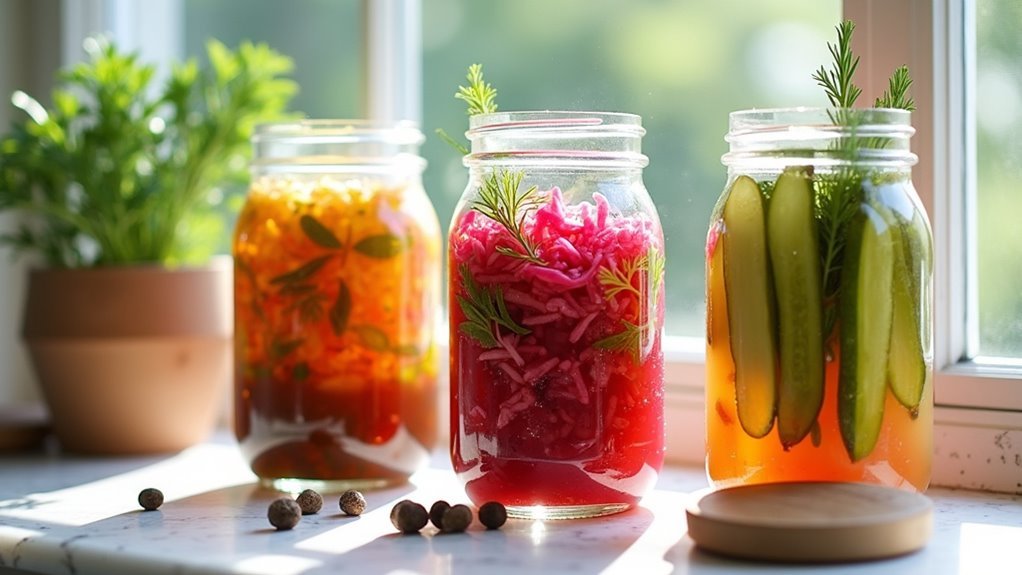
Fermented vegetables can transform your gut health by delivering 10 to 30 live microbes per serving, far outperforming commercial probiotics that lose potency over time. You’ll boost your immune system, improve metabolism, and reduce disease risks through increased fiber and polyphenol content. Choose naturally fermented kimchi, sauerkraut, or pickles with visible bubbles and no preservatives. Start with 1-2 tablespoons daily and gradually increase. The following strategies will help you maximize these powerful gut-healing benefits.
The Science Behind Fermented Vegetables and Gut Microbiome Health
Billions of microscopic organisms inhabit your digestive tract, forming a complex ecosystem that directly impacts your health, and fermented vegetables serve as powerful allies in nurturing this essential community.
When you consume fermented foods like kimchi and sauerkraut, you’re introducing 10 to 30 different types of live microbes into your system—far more diversity than most supplements offer. This microbial variety considerably enhances your gut health by creating a more robust microbiome foundation.
The fermentation process transforms ordinary vegetables into nutrition powerhouses, increasing their fiber and polyphenol content. These compounds actively stimulate beneficial gut bacteria, promoting better digestion and metabolism.
Research shows populations regularly eating fermented vegetables experience remarkable health benefits, including stronger immune function and reduced risks of obesity and neurodegenerative diseases.
Why Fermented Vegetables Outperform Commercial Probiotics
While probiotic supplements crowd pharmacy shelves with promises of better gut health, fermented vegetables deliver far superior results through their naturally complex microbial communities.
You’re getting 10 to 30 different probiotic strains in each serving, compared to the limited varieties found in commercial supplements. These naturally fermented foods don’t lose potency like pills sitting on shelves.
Fresh fermented vegetables deliver 10-30 living probiotic strains per serving while commercial supplements offer limited varieties that lose potency over time.
Korean populations consuming high amounts of fermented vegetables show remarkable health benefits that demonstrate real-world effectiveness.
Fermented vegetables supercharge your immune system and metabolic health through prebiotics and polyphenols that feed beneficial bacteria.
The fermentation process also boosts nutrient bioavailability, making these foods more nutritious than fresh vegetables or synthetic probiotics.
You’re investing in a fresh, living ecosystem rather than isolated bacterial strains.
Essential Types of Fermented Vegetables for Optimal Gut Health
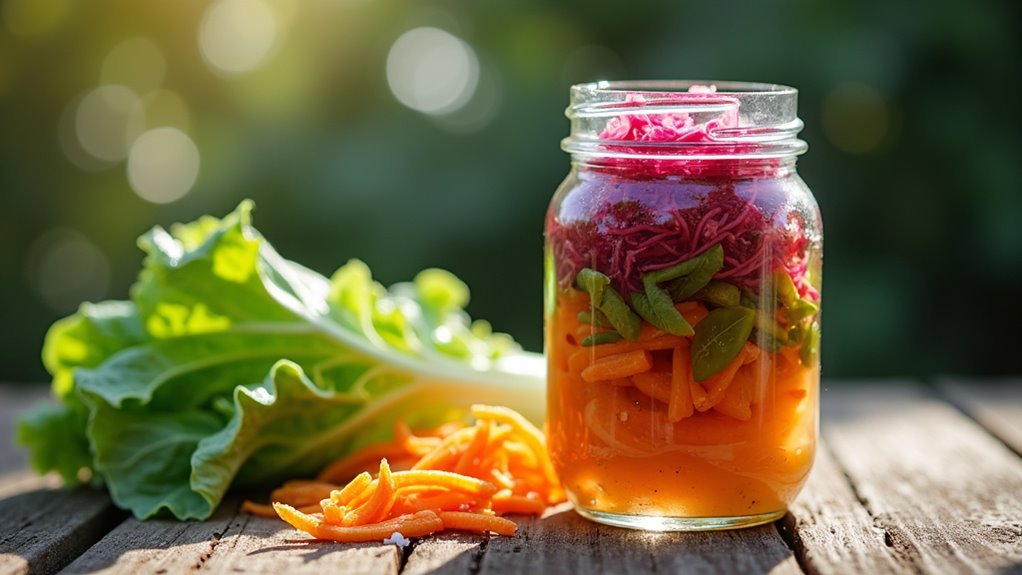
You’ll find that certain fermented vegetables pack more probiotic punch than others, with kimchi, sauerkraut, and naturally fermented pickles leading the charge for gut health benefits.
These traditional fermentation methods from cultures worldwide have created diverse options that you can either purchase from stores or craft in your own kitchen.
Understanding the differences between naturally fermented varieties and their commercial counterparts will help you make the best choices for your microbiome.
Naturally Fermented Probiotic Vegetables
Although probiotic supplements line pharmacy shelves with promises of gut health, naturally fermented vegetables deliver far superior microbial diversity that’ll transform your digestive wellness.
You’ll find kimchi, sauerkraut, and pickles packed with 10 to 30 varieties of live microbes, vastly outperforming limited strains in commercial probiotics.
These fermented powerhouses boost your immune system while enhancing nutrition through increased bioavailability of essential vitamins and minerals.
The health benefits extend beyond digestion, reducing your risk of obesity and neurodegenerative diseases through regular consumption.
When shopping, you’ll want products labeled “naturally fermented” with visible bubbles in jars—clear indicators of active fermentation.
These naturally occurring probiotics create a thriving gut microbiome that supports your overall wellness far more effectively than synthetic alternatives.
Traditional Global Fermentation Methods
Ancient cultures across the globe developed distinct fermentation techniques that created some of today’s most potent gut-healing vegetables. These traditional fermentation methods harness naturally occurring lactic acid bacteria to transform ordinary vegetables into probiotic-rich powerhouses that deliver exceptional gut health benefits.
| Region | Fermented Vegetables | Key Benefits |
|---|---|---|
| Korea | Kimchi (cabbage, radish) | Enhanced immunity, digestive support |
| Germany | Sauerkraut (cabbage) | Probiotic diversity, vitamin C boost |
| Eastern Europe | Fermented pickles | Live probiotics, mineral absorption |
You’ll find these fermented vegetables increase vitamin availability while preserving nutritional content naturally. Unlike vinegar-based pickles, traditional brining creates living cultures that support your microbiome diversity. Regular consumption of these culturally-proven foods demonstrates measurable improvements in immune function and overall digestive wellness.
Store-Bought Vs Homemade Options
While store-bought fermented vegetables offer convenience, they often fall short of delivering the gut health benefits you’re seeking. Many commercial options undergo heat-processing or use vinegar instead of natural fermentation, eliminating beneficial probiotics.
When you make homemade fermented vegetables, you’re guaranteed live cultures that support ideal gut health. Your homemade sauerkraut and kimchi can contain 10 to 30 varieties of live microbes, far exceeding most commercial probiotics. You’ll also customize flavors to match your preferences while avoiding preservatives.
- Look for “naturally fermented” labels and visible bubbles when buying store-bought options
- Homemade fermented vegetables guarantee probiotic content through controlled processes
- Popular varieties like spicy pickled vegetables enhance digestion
- Regular consumption improves gut health without commercial preservatives
Simple Home Fermentation Methods for Beginners
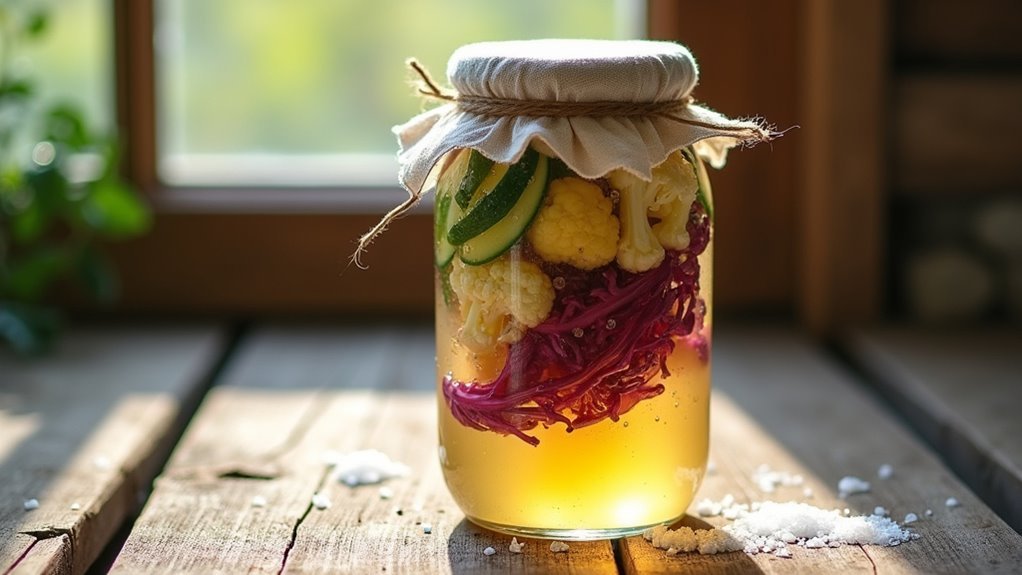
You can start your fermentation journey with basic sauerkraut, which requires only vegetables, salt, and proper packing technique.
Setting up the right equipment involves using fermentation lids or loosely fitted standard lids that allow gas to escape while keeping contaminants out.
Understanding timing is essential since most vegetable ferments develop their tangy flavor and beneficial bacteria within three to five days of active fermentation.
Basic Sauerkraut Method
Making sauerkraut at home requires just two ingredients: fresh cabbage and salt.
You’ll start by finely shredding your cabbage and mixing it with salt at a 2% concentration. This draws out moisture, creating the brine that’ll kickstart the fermentation process while keeping your cabbage submerged and protected from spoilage.
The lactic acid bacteria naturally present on cabbage will thrive, producing acids that preserve the vegetables and reveal impressive health benefits. Your sauerkraut will be ready in one to four weeks, depending on temperature and your preferred sourness level.
- Store finished sauerkraut in the refrigerator for several months
- Warmer temperatures accelerate the fermentation process
- Probiotics continue developing even after initial fermentation
- Enhanced digestibility supports ideal gut health
Essential Equipment Setup
Before diving into your first fermentation project, gather the basic tools that’ll set you up for success. This essential equipment setup doesn’t require expensive gadgets—just a few key items you’ll use repeatedly.
| Equipment | Purpose |
|---|---|
| Quart-size canning jar | Primary fermentation vessel |
| Fermentation lid or standard lid | Allows gas escape during fermentation |
| Non-reactive mixing bowl | Preparing brine solutions |
| Vegetable tamper or clean weight | Keeps vegetables submerged under brine |
| Thermometer | Monitors temperature for timing |
You’ll also need filtered water and sea salt for brine preparation. Sterilizing jars with boiling water before use prevents unwanted bacteria from interfering with fermentation. Keep your workspace clean throughout the process, as proper sanitation guarantees successful fermentation every time.
Fermentation Timing Guide
Once you’ve assembled your equipment, timing becomes your most essential factor for achieving perfectly fermented vegetables. Your fermentation time typically ranges from three to five days, depending on ambient temperature and desired tanginess.
Start by creating the proper brine concentration of 5% to 6% salt, which creates the ideal environment for beneficial lactic acid bacteria to thrive.
During the fermentation process, you’ll need to check your vegetables daily to verify they remain submerged and taste for flavor development.
Here’s your essential timing checklist:
- Pack vegetables tightly in jars and fully submerge in brine
- Monitor daily for proper submersion and taste progression
- Complete fermentation within three to five days
- Transfer to storage in refrigerator for up to one month
Step-by-Step Guide to Making Probiotic-Rich Sauerkraut and Kimchi
Two powerhouse fermented vegetables can transform your gut health while adding bold flavors to your meals.
Creating probiotic-rich sauerkraut starts with finely shredding cabbage and mixing it with salt to create a natural brine that encourages lactic acid bacteria to thrive.
For kimchi, you’ll prepare a 5% to 6% saltwater brine to soak your shredded vegetables for 24 hours before combining them with spice paste.
Pack both fermented vegetables tightly in your vessel, ensuring they’re submerged under their own juices to prevent air exposure and spoilage.
Allow 1 to 4 weeks of fermentation at room temperature, depending on your desired sourness.
Enhance flavors with garlic, chili peppers, or caraway seeds while promoting beneficial probiotic growth.
How to Select Quality Fermented Vegetables at the Store
What should you look for when shopping for fermented vegetables that’ll actually benefit your gut? Start by seeking labels marked “naturally fermented” or “raw” to guarantee live probiotics remain intact.
Always choose refrigerated options over shelf-stable varieties, since heat processing destroys beneficial microorganisms and eliminates health benefits.
Key indicators of quality fermented vegetables:
- Visible bubbles in the jar – signals active fermentation and living cultures
- No added sugars or preservatives – these ingredients inhibit probiotic growth
- Clear fermentation methods listed – transparency indicates quality production
- Multiple vegetable varieties – provides broader microbial diversity and nutrients
Check ingredient lists carefully and avoid products with unnecessary additives.
Quality brands will proudly display their fermentation methods and ingredient sourcing, guaranteeing you get maximum probiotic potential for peak gut health.
Daily Consumption Strategies for Maximum Gut Health Benefits
Now that you’ve selected quality fermented vegetables, developing a strategic daily consumption plan will maximize their gut health benefits. Start with 1-2 tablespoons daily, gradually increasing your intake to prevent digestive discomfort from sudden fiber and probiotic surges.
Incorporate fermented vegetables into every meal—add kimchi to breakfast scrambles, sauerkraut to lunch salads, or pickled vegetables as dinner sides.
Experiment with different varieties throughout the week to expose your gut to diverse bacterial strains, each containing 10-30 unique microbial species.
Pair these probiotics with high-fiber foods like whole grains and legumes to create an ideal environment for beneficial bacteria. This combination enhances your immune system function and metabolism while establishing a thriving gut microbiome that supports long-term wellness.
Frequently Asked Questions
How Long Does It Take to Heal Your Gut With Fermented Foods?
You’ll notice digestive improvements within one to two weeks of eating fermented foods daily. However, significant gut healing requires four to six weeks, while long-term benefits like strengthened immunity need several months.
Are Fermented Vegetables Good for Your Gut?
Yes, fermented vegetables are excellent for your gut. They’ll boost beneficial bacteria diversity, improve digestion, enhance nutrient absorption, and strengthen your immune system through their rich probiotic content and bioavailable nutrients.
What Is the Healthiest Vegetable to Ferment?
You’ll find cabbage is the healthiest vegetable to ferment. It’s packed with probiotics, creates nutrient-rich sauerkraut and kimchi, and delivers exceptional gut health benefits while being incredibly versatile for fermentation.
Which Fermented Vegetables Have the Most Probiotics?
Kimchi and sauerkraut top the list for probiotic content, offering billions of beneficial bacteria per serving. You’ll also get impressive probiotic counts from naturally fermented pickles and fermented carrots or beets.


