
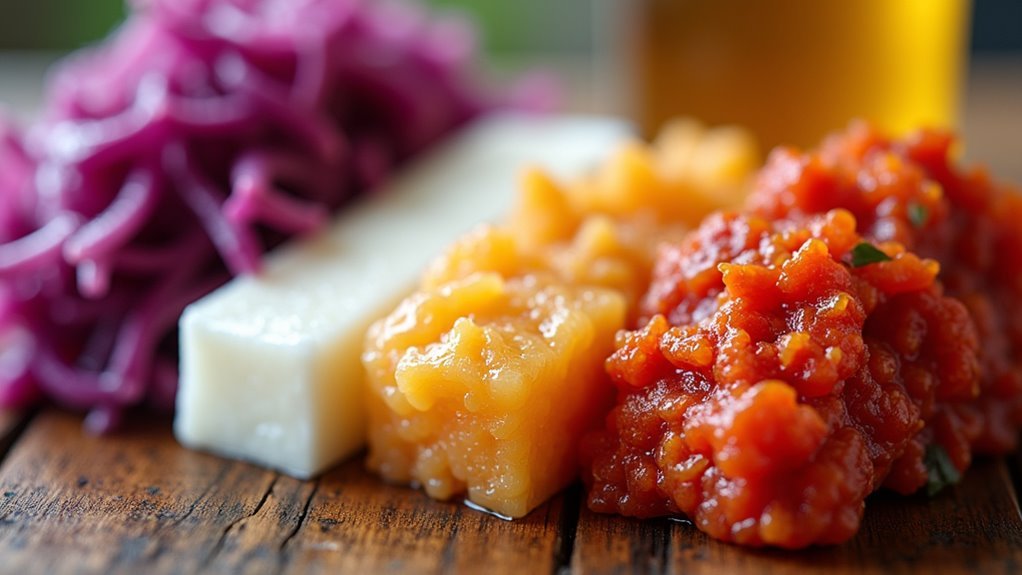
Probiotic foods restore gut balance by introducing live beneficial bacteria that directly compete with harmful microbes for resources and attachment sites in your digestive tract. These good bacteria produce antimicrobial compounds called bacteriocins that actively inhibit pathogenic growth while secreting short-chain fatty acids that nourish your gut lining and reduce inflammation. They also increase microbiome diversity, creating a robust ecosystem that resists future invasions and maintains long-term digestive health through competitive exclusion mechanisms that naturally reestablish your gut’s protective barrier.
What Are Probiotic Foods and How Do They Work?

Your daily yogurt or that tangy sauerkraut on your sandwich contains powerful allies working to transform your digestive health. Probiotic foods like kefir, kimchi, and fermented vegetables house live beneficial bacteria that directly enter your digestive tract.
These microscopic warriors don’t just pass through—they actively enhance your gut microbiome composition by introducing diverse, health-promoting microorganisms.
These beneficial microbes actively colonize your gut, establishing a thriving ecosystem that transforms digestive health from within.
When you consume these foods, you’re deploying beneficial bacteria that combat harmful microbes lurking in your system. They work by secreting protective substances and establishing a healthier bacterial balance.
The specific strains present in each food interact uniquely with your existing gut bacteria, creating a personalized restoration process that improves digestion and strengthens your immune defenses through targeted microbial support.
The Science Behind Gut Microbiome Imbalance
When your gut microbiome loses its natural diversity, harmful bacteria can quickly multiply and take over the beneficial microorganisms that normally keep you healthy.
This overgrowth creates a cascade effect that disrupts your immune system’s ability to function properly, since roughly 70% of your immune cells reside in your gut.
You’ll find that this imbalance doesn’t just affect digestion—it can trigger inflammation throughout your entire body and compromise your defense against infections and diseases.
Microbiome Diversity Loss
Although your gut houses approximately 100 trillion microorganisms that work together to maintain your health, this delicate ecosystem can easily fall out of balance. When you take antibiotics, consume processed foods, or experience chronic stress, you’re directly reducing the diversity of beneficial microbes in your digestive system.
This loss of microbial variety disrupts your gut health and weakens your body’s natural defenses. You’ll notice that decreased diversity means fewer good bacteria available to support proper digestion and immune function. Without sufficient microbial variety, harmful bacteria can multiply unchecked, leading to gastrointestinal disorders.
This imbalance also increases your risk of developing chronic conditions like obesity and diabetes. Your microbiome’s reduced complexity compromises its ability to perform essential functions that keep you healthy.
Harmful Bacteria Overgrowth
As beneficial bacteria populations decline, harmful bacteria seize the opportunity to multiply rapidly and establish dominance in your gut environment. This bacterial takeover creates dysbiosis, where pathogenic organisms overwhelm your digestive system’s natural defenses. You’ll experience uncomfortable symptoms as these harmful bacteria produce toxins and inflammatory compounds that irritate your intestinal lining.
| Dysbiosis Triggers | Harmful Effects | Resulting Symptoms |
|---|---|---|
| Processed food diet | Intestinal inflammation | Chronic diarrhea |
| Excessive antibiotics | Toxin production | Severe bloating |
| Chronic stress | Immune suppression | Inflammatory bowel disease |
| Poor sleep habits | Nutrient malabsorption | Digestive discomfort |
Fortunately, probiotics help counteract this imbalance by reintroducing beneficial bacteria that compete with pathogens for resources and space, gradually restoring your gut’s healthy ecosystem.
Immune System Disruption
Since your gut houses approximately 70% of your immune system, disruptions in your microbiome balance directly compromise your body’s ability to defend against pathogens and regulate inflammatory responses.
When harmful bacteria outnumber beneficial strains, your immune system becomes hyperactive, triggering chronic inflammation that damages healthy tissues. This dysfunction increases your susceptibility to respiratory infections, autoimmune disorders, and inflammatory conditions like IBD.
Your compromised gut barrier allows toxins to enter your bloodstream, forcing your immune system into constant overdrive. This exhausting cycle weakens your natural defenses and creates systemic inflammation.
However, you can restore proper immune function by introducing probiotic foods that replenish beneficial bacteria, rebalance your microbiome, and help your immune system distinguish between threats and healthy tissue.
How Beneficial Bacteria Outcompete Harmful Strains
When you consume probiotic foods, beneficial bacteria like Lactobacillus and Bifidobacterium employ competitive exclusion mechanisms to claim territory in your gut before harmful pathogens can establish themselves.
These good bacteria don’t just sit passively—they actively compete for the same nutrients and attachment sites that harmful strains need to survive and multiply.
Through this resource competition dynamic, probiotics create a crowded environment where pathogenic bacteria simply can’t find the space or sustenance they require to thrive.
Competitive Exclusion Mechanisms
Once beneficial bacteria from probiotic foods establish themselves in your digestive tract, they wage an ongoing microscopic battle against harmful pathogens through competitive exclusion mechanisms.
These good bacteria strategically occupy prime real estate along your gut lining, fundamentally claiming territory that harmful strains need to survive and multiply. By filling these vital niches first, probiotics deny pathogenic bacteria the adhesion sites they require to establish colonies.
Your beneficial bacteria don’t stop at space competition—they actively produce antimicrobial compounds called bacteriocins that directly inhibit harmful strains’ growth.
Additionally, these helpful microorganisms outcompete pathogens for essential nutrients, starving them of resources needed for survival.
This multi-pronged approach delivers significant health benefits by maintaining microbial balance and protecting your digestive system from harmful bacterial overgrowth.
Resource Competition Dynamics
While harmful bacteria require specific nutrients and environmental conditions to flourish, beneficial probiotic strains excel at metabolizing these same resources more efficiently, creating a nutritional squeeze that starves pathogens of what they need most.
Your gut becomes a competitive battlefield where probiotics gain the upper hand through superior resource utilization. These beneficial bacteria don’t just consume nutrients faster—they transform the entire digestive environment to their advantage.
Here’s how probiotics dominate through resource competition:
- Nutrient monopolization – Lactobacillus and Bifidobacterium rapidly consume available sugars and proteins that harmful bacteria depend on for survival.
- Attachment site occupation – Beneficial strains colonize prime real estate along your intestinal walls, blocking pathogens from establishing footholds.
- Metabolic superiority – Probiotics efficiently convert nutrients into beneficial compounds while simultaneously depleting resources that fuel pathogenic growth.
Specific Mechanisms of Gut Flora Restoration
Because your gut microbiome operates as a complex ecosystem, understanding how probiotics restore balance requires examining their specific biological mechanisms.
When you consume probiotic foods, beneficial bacteria like Lactobacillus and Bifidobacterium establish themselves in your intestinal tract through several targeted processes.
These probiotics enhance mucus production in your gut lining, creating a protective barrier that prevents harmful pathogens from adhering to intestinal walls.
Simultaneously, they produce short-chain fatty acids during fermentation, directly nourishing your gut cells and promoting cellular repair.
Most importantly, specific probiotic strains modulate your immune response, reducing inflammation while strengthening your gut’s natural defenses.
This multi-pronged approach increases microbiota diversity, creating a robust ecosystem that naturally resists pathogenic invasion and maintains long-term digestive health.
Best Natural Food Sources for Probiotic Diversity
Understanding these restoration mechanisms helps you make informed choices about which probiotic-rich foods to include in your diet.
To maximize gut microbiome diversity, you’ll want to incorporate various probiotic foods that offer different bacterial strains and benefits.
Consider these top natural sources:
- Plain Greek yogurt – Provides concentrated live cultures that directly support digestive health
- Kefir – Contains broader probiotic strain variety than yogurt, creating more diverse gut flora
- Fermented vegetables like kimchi and sauerkraut – Deliver both probiotics and prebiotics that nourish beneficial bacteria
These fermented vegetables particularly excel because they’re dual-purpose foods.
Regular consumption of diverse probiotic foods leads to significant gut health improvements, including reduced gastrointestinal symptoms and enhanced immune responses.
The Role of Fermented Foods in Microbiome Health
As fermented foods undergo their transformation process, they become powerful allies in rebuilding your microbiome’s delicate ecosystem. These foods introduce diverse probiotics that actively colonize your intestinal tract, creating a thriving community of beneficial bacteria.
The fermentation process doesn’t just add live cultures—it transforms nutrients into more bioavailable forms and generates short-chain fatty acids that directly fuel your gut lining.
Fermentation transforms nutrients into easily absorbed forms while creating beneficial compounds that nourish and strengthen your intestinal walls.
When you regularly consume fermented foods like yogurt, kefir, and kimchi, you’re increasing your microbiota’s diversity, which strengthens your overall gut health. This enhanced microbial variety helps your digestive system combat harmful pathogens more effectively while regulating digestion.
For those dealing with IBS or antibiotic-related digestive issues, fermented foods can restore bacterial balance and alleviate uncomfortable symptoms naturally.
Timing and Effectiveness of Probiotic Food Consumption
When you’re ready to maximize your probiotic food benefits, timing becomes your strategic advantage. The effectiveness of these beneficial bacteria depends heavily on when and how you consume them.
Your digestive system responds best to probiotics when you establish consistent patterns. Here’s what matters most:
- Consume with meals – Food buffers stomach acid, helping more beneficial bacteria survive their journey to your gut.
- Maintain daily consistency – Regular intake allows probiotic strains to establish and maintain proper gut balance.
- Diversify your sources – Rotating between different fermented foods provides various Lactobacillus and Bifidobacterium strains.
You’ll typically notice improvements within days to weeks of consistent consumption.
The timing and regularity of your probiotic food intake directly influence how effectively these beneficial bacteria can colonize your digestive tract and restore ideal gut health.
Supporting Probiotics With Prebiotic-Rich Foods
Perfect timing sets the foundation, but feeding your probiotics properly amplifies their impact on your gut health. Prebiotic-rich foods like bananas, garlic, and asparagus act as essential fuel for beneficial bacteria in your digestive system. These foods contain specific nutrients that probiotics need to thrive and multiply effectively.
Dietary fiber plays an important role in maintaining ideal gut balance. Rather than relying solely on probiotic supplements, you’ll achieve better results by incorporating fiber-rich prebiotic foods into your daily meals. This approach creates a synergistic effect that enhances digestive health, boosts immune function, and supports mental well-being through the gut-brain connection.
When you combine both prebiotic and probiotic foods, you’re creating an environment where beneficial bacteria can flourish naturally.
Frequently Asked Questions
How Do Probiotics Heal Your Gut?
Probiotics heal your gut by introducing beneficial bacteria that crowd out harmful microbes, strengthen your intestinal lining, reduce inflammation, and restore healthy microbial balance. They’ll also boost your immune system’s function.
Do Probiotics Help Restore Digestive Balance?
You’ll find that probiotics definitely help restore digestive balance by replenishing beneficial bacteria in your gut, reducing symptoms like bloating and gas, and strengthening your immune response against harmful microorganisms.
Do Probiotics Actually Repopulate the Gut?
You’ll find that probiotics can temporarily repopulate your gut with beneficial bacteria, but they don’t permanently colonize. They’re transient visitors that help restore balance while you’re actively consuming them regularly.
Why Do Cardiologists Warn Against Probiotics?
Cardiologists warn you against probiotics because they can cause infections in weakened immune systems, interact with heart medications, and lack FDA regulation ensuring quality and effectiveness for cardiovascular patients.


Leave a Reply