

You’ll find the best antioxidant-rich teas for cellular hydration include green tea with its EGCG catechins, black tea’s theaflavins, and white tea’s concentrated polyphenols from minimal processing. Hibiscus offers caffeine-free anthocyanins, while oolong balances green and black tea benefits through partial fermentation. Chamomile provides gentle flavonoids for evening hydration, peppermint delivers digestive polyphenols, and ginger contains anti-inflammatory gingerol. Each tea’s 99% water content supports cellular function while unique antioxidants protect against oxidative stress and enhance your body’s natural defense systems.
Green Tea: The Catechin Powerhouse for Cellular Protection
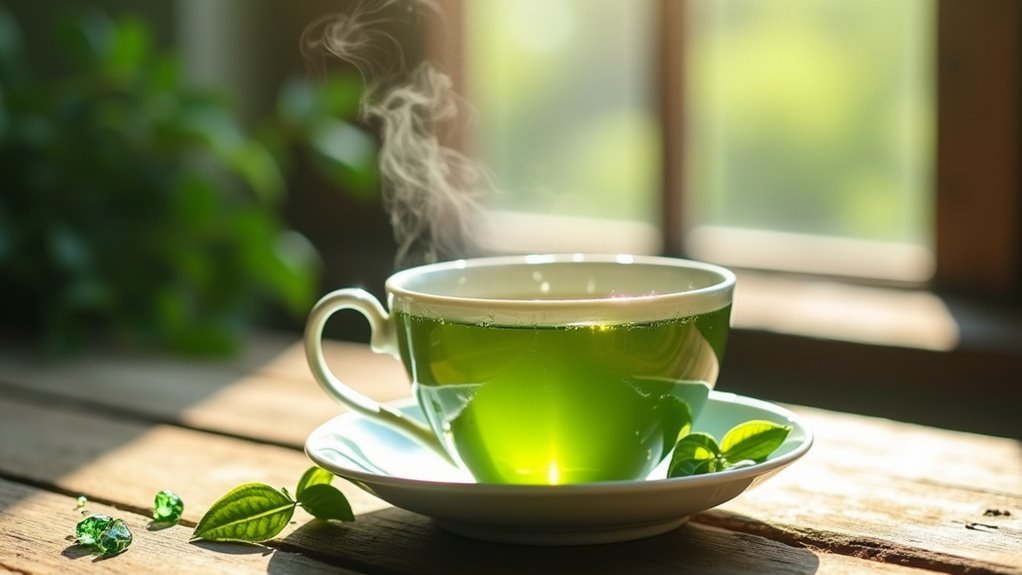
Green tea stands as nature’s most potent catechin delivery system, packing your cells with protective compounds that fight daily damage.
Nature’s cellular shield arrives in every cup, delivering powerful catechins that actively defend your body against daily oxidative stress.
You’ll find green tea contains notably more catechins than black or oolong varieties, particularly the powerful epigallocatechin-3-gallate (EGCG). These antioxidants work tirelessly to neutralize free radicals threatening your cellular health.
When you drink green tea regularly, you’re providing cellular protection while staying hydrated—it’s 99% water and offers a flavorful alternative to sugar-laden beverages.
Research shows you’ll also boost brain function and metabolic health through consistent consumption.
Beyond internal benefits, green tea supports your skin by combating UV-induced aging signs, making it a thorough wellness choice for total-body cellular defense.
Black Tea: Theaflavins and Thearubigins for Daily Hydration
With over 40% of the world’s tea consumption, black tea delivers powerful theaflavins and thearubigins that’ll transform your daily hydration routine into cellular defense therapy.
These unique polyphenols create black tea’s robust antioxidant profile, actively fighting oxidative stress throughout your body.
When you drink 2-3 cups daily, you’re reducing your risk of heart disease, stroke, and type 2 diabetes while supporting vascular health.
Theaflavins enhance cellular hydration by improving blood flow, making each sip work harder for your wellness goals.
At 47 mg of caffeine per cup, black tea provides gentle energy without compromising hydration.
You’ll increase your antioxidant intake naturally, protecting cells from free radical damage while enjoying bold, satisfying flavor that makes healthy habits effortless.
Hibiscus Tea: Anthocyanin-Rich Caffeine-Free Hydrator
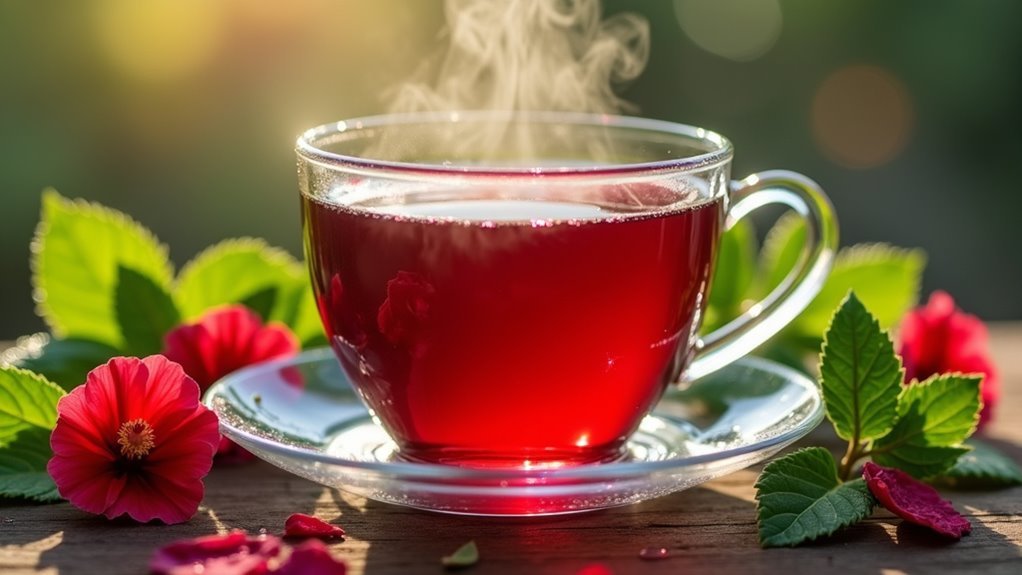
Since hibiscus tea delivers caffeine-free hydration through its stunning crimson petals, you’re getting nature’s most vibrant source of anthocyanins without any stimulants disrupting your sleep cycle.
These powerful antioxidant compounds protect your cells from oxidative damage while the tea’s natural electrolytes—calcium, magnesium, and potassium—support ideal fluid regulation throughout your body.
You’ll benefit from hibiscus tea’s impressive cardiovascular support, as regular consumption helps lower LDL cholesterol and triglyceride levels while potentially reducing blood pressure similar to medication.
The vibrant red color signals its high anthocyanin content, making each sip both visually appealing and therapeutically beneficial.
The deep crimson hue of hibiscus tea reveals its potent antioxidant power in every beautifully beneficial cup.
Whether you prefer it hot during winter months or iced for summer hydration, this versatile tea enhances your daily fluid intake while delivering substantial health benefits.
White Tea: Maximum Antioxidant Concentration With Minimal Processing
You’ll find white tea offers the highest antioxidant concentration of all teas because it undergoes minimal oxidation during processing.
This gentle treatment preserves maximum catechin levels, giving you more powerful cell-protecting compounds than green or black teas.
When you brew white tea at lower temperatures for longer steeping times, you’ll extract these valuable antioxidants without creating bitterness.
Minimal Oxidation Process
When white tea leaves undergo their gentle processing journey, they retain more beneficial compounds than any other tea variety.
You’ll discover that white tea experiences minimal oxidation compared to green or black teas, preserving its delicate cellular structure and maximizing antioxidant concentration. This careful handling maintains the natural catechins and flavonoids that combat oxidative stress in your body.
During processing, white tea leaves are simply withered and dried, avoiding the rolling and fermentation steps that reduce antioxidant potency in other varieties.
You’re getting the purest form of tea’s health benefits because this minimal intervention preserves theaflavins and other protective compounds.
The result? You’ll consume tea with the highest antioxidant levels available, supporting your cellular health while enjoying a naturally mild, invigorating beverage.
Highest Catechin Content
Among all tea varieties, white tea delivers the most impressive catechin concentration because its young buds and tender leaves undergo virtually no processing after harvest. This minimal handling preserves powerful antioxidants that combat free radicals throughout your body.
You’ll get maximum catechin benefits that support cardiovascular health by reducing cholesterol levels and improving blood circulation. The high antioxidant content also promotes skin elasticity while reducing aging signs.
Since white tea contains lower caffeine levels than other varieties, you can enjoy cellular hydration benefits any time without overstimulation. These catechins work continuously to protect your cells from oxidative stress, making white tea your most potent antioxidant choice.
You’re fundamentally drinking nature’s concentrated protection in every cup.
Gentle Brewing Methods
Since white tea’s delicate leaves require careful handling to preserve their antioxidant potency, proper brewing temperature becomes essential for extracting peak health benefits.
You’ll want to use water heated to 160-185°F rather than boiling temperatures that can destroy valuable catechins and flavonoids. These gentle brewing methods protect the tea’s minimal processing advantages while maximizing antioxidant extraction.
Steep your white tea for 4-5 minutes to achieve ideal results without bitterness. This careful approach preserves the high concentration of compounds that support cellular health and immune function.
You’ll enjoy lower caffeine levels compared to other teas while still receiving powerful antioxidants that combat free radicals. The gentle technique guarantees you’re getting maximum nutritional value from every cup.
Oolong Tea: Balanced Fermentation for Optimal Polyphenol Content
When you’re looking for tea that offers the best of both worlds, oolong’s partial fermentation process creates an ideal middle ground between green and black tea’s antioxidant profiles.
This unique oxidation level produces optimal polyphenol content while developing powerful theaflavins that aren’t found in less processed teas.
You’ll get concentrated antioxidant and anticancer properties from these theaflavins, making oolong a standout choice for maximizing your tea’s health benefits.
Partial Fermentation Process
While green tea skips fermentation entirely and black tea undergoes complete oxidation, oolong tea takes a middle path through partial fermentation that creates an exceptional antioxidant profile.
This unique oxidation process enhances oolong tea’s polyphenols while maintaining a perfect balance of flavors and health benefits.
During partial fermentation, you’ll find that oolong develops a rich concentration of theaflavins and catechins—powerful antioxidants that support your metabolic health.
The process also preserves L-theanine, an amino acid that promotes relaxation and reduces anxiety while you drink.
This moderate fermentation level gives you the best of both worlds: stronger antioxidant activity than black tea, yet more complex flavors than green tea, making oolong an ideal choice for cellular hydration.
Theaflavin Antioxidant Properties
Through oolong tea’s balanced fermentation process, theaflavins emerge as potent molecular warriors that actively combat oxidative stress in your body. These specialized antioxidants neutralize harmful free radicals that damage your cells and accelerate aging.
You’ll find theaflavins mainly in oolong tea, where they deliver stronger protective effects than many other compounds.
When you drink oolong regularly, theaflavins provide significant health benefits beyond cellular protection. They support your weight management goals by enhancing metabolism and help regulate blood sugar levels naturally.
You’ll also experience improved cardiovascular health as these antioxidants reduce inflammation and protect your heart. The combination of theaflavins with L-theanine creates a calming effect, reducing anxiety while maintaining mental clarity throughout your day.
Rooibos Tea: Aspalathin and Quercetin for Blood Sugar Support
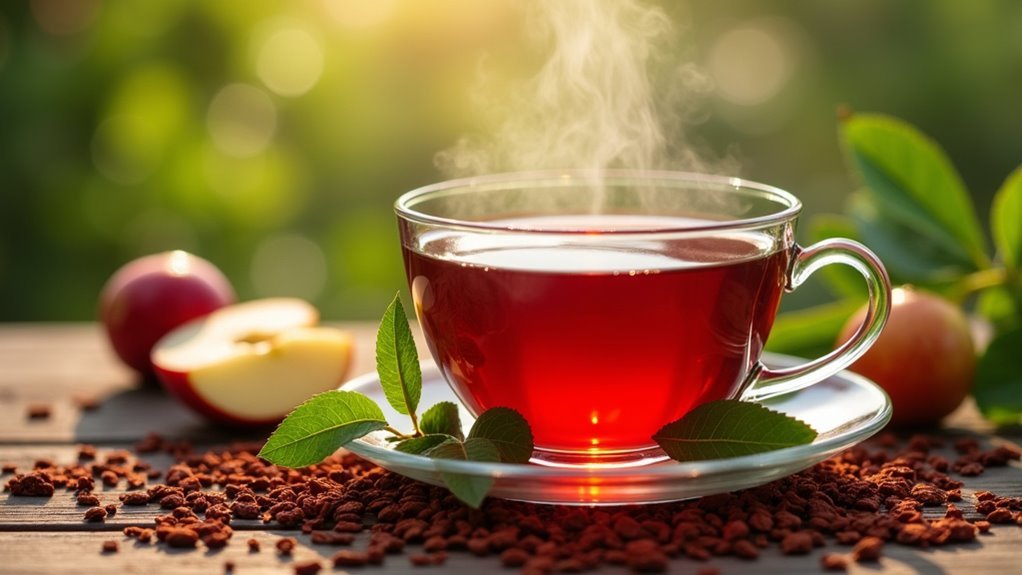
Since rooibos tea comes from the South African Aspalathus linearis plant, it offers a distinctive antioxidant profile that sets it apart from other herbal teas.
You’ll benefit from aspalathin, a unique antioxidant that supports blood sugar regulation by improving insulin sensitivity. This makes rooibos tea particularly valuable if you’re managing glucose levels naturally.
The quercetin in rooibos tea provides additional health advantages through its anti-inflammatory, anticarcinogenic, and antidiabetic properties.
You’re getting powerful cellular protection while supporting your metabolic health.
Since rooibos tea contains no caffeine, you can enjoy it throughout the day without sleep disruption.
Regular consumption delivers antioxidants that reduce oxidative stress and enhance cellular hydration, making it an excellent choice for thorough wellness support.
Chamomile Tea: Gentle Antioxidants for Evening Hydration
You’ll find chamomile tea’s gentle flavonoids provide antioxidant protection while supporting your body’s natural relaxation processes.
This caffeine-free herbal tea offers excellent evening hydration since it’s 99% water and won’t disrupt your sleep cycle.
You can enjoy chamomile’s calming antioxidant properties as part of your nighttime routine, helping prepare your body for rest while maintaining ideal hydration levels.
Calming Antioxidant Properties
When evening approaches and you’re seeking a gentle way to unwind, chamomile tea offers a perfect combination of calming antioxidants and hydration without caffeine’s stimulating effects. The key antioxidant apigenin reduces inflammation while promoting better sleep quality, making each sip work toward your relaxation goals.
You’ll find that chamomile’s calming properties extend beyond simple relaxation. Studies demonstrate its ability to lower anxiety levels, creating the ideal mental state for restful sleep. This caffeine-free beverage supports hydration throughout your evening routine without disrupting your sleep cycle.
Regular consumption strengthens your immune system and improves digestive health through powerful antioxidant action.
Whether you prefer it hot on chilly nights or cold during warmer months, chamomile tea delivers consistent calming benefits year-round.
Evening Hydration Benefits
As twilight settles and your body prepares for rest, chamomile tea becomes your hydration ally without the sleep-disrupting effects of caffeine.
This naturally caffeine-free beverage delivers evening hydration while flooding your system with powerful antioxidants like apigenin, a flavonoid that reduces inflammation and promotes relaxation.
Since chamomile tea consists of 99% water, you’re supporting your body’s fluid needs while preparing for restorative sleep.
The antioxidants work overtime during evening hours, helping repair cellular damage accumulated throughout the day.
Beyond hydration, chamomile’s soothing properties aid digestion after meals, making it the perfect nighttime companion.
You’ll enhance sleep quality while maintaining ideal hydration levels, creating an ideal foundation for cellular recovery and regeneration.
Gentle Sleep Preparation
The gentle ritual of sipping chamomile tea signals to your body that it’s time to unwind, activating a natural cascade of relaxation responses that prepare you for quality sleep. This caffeine-free beverage delivers powerful antioxidants like apigenin, which directly reduce anxiety while supporting cellular health. You’ll benefit from enhanced hydration without stimulants that disrupt sleep patterns.
| Component | Sleep Benefit | Health Impact |
|---|---|---|
| Apigenin | Reduces anxiety | Antioxidant protection |
| Flavonoids | Promotes relaxation | Combats oxidative stress |
| Water content | Supports hydration | Maintains fluid balance |
| Caffeine-free formula | Prevents sleep disruption | Natural calming effect |
| Herbal compounds | Improves sleep duration | Enhanced recovery |
Studies confirm chamomile tea’s ability to improve both sleep quality and duration, making it your ideal evening companion for restorative rest.
Peppermint Tea: Refreshing Polyphenols for Digestive Wellness
Beyond its invigorating aroma and cooling taste, peppermint tea delivers a powerful combination of polyphenols that can transform your digestive wellness routine.
These antioxidants protect your cells from oxidative stress while supporting overall health. When you sip this caffeine-free beverage, you’re targeting digestive issues like bloating and indigestion as it relaxes your gastrointestinal tract muscles.
You’ll appreciate that peppermint tea won’t disrupt your sleep patterns, making it perfect for any time hydration.
The natural menthol provides more than just a cooling sensation—it supports your respiratory health by improving airflow and reducing congestion.
This revitalizing tea offers a gentle yet effective approach to enhancing your digestive function while delivering valuable antioxidants throughout your day.
Ginger Tea: Anti-Inflammatory Compounds for Cellular Health
When you’re seeking a powerful ally against cellular inflammation, ginger tea delivers gingerol—a remarkable bioactive compound that fights oxidative stress while supporting your body’s natural healing processes.
This anti-inflammatory powerhouse strengthens your immune function while reducing chronic disease risk through regular consumption.
You’ll experience enhanced muscle recovery and reduced soreness after workouts, thanks to ginger tea’s potent anti-inflammatory effects.
Your digestive system benefits too, as it stimulates enzyme production and calms gastrointestinal inflammation.
The circulation boost you get from drinking ginger tea directly supports cellular health by improving nutrient delivery and hydration at the cellular level.
This makes ginger tea an exceptional choice for maintaining peak cellular function while enjoying a warming, therapeutic beverage.
Matcha Tea: Concentrated EGCG for Enhanced Cellular Function
Matcha tea takes antioxidant power to extraordinary levels through its unique preparation method that delivers concentrated EGCG directly to your cells.
Unlike steeped green tea, matcha’s finely ground powder dissolves completely in water, maximizing your antioxidant absorption. This vibrant green tea can contain up to 137 times more EGCG than regular varieties, creating a powerhouse for cellular function enhancement.
Here’s what makes matcha tea exceptional for cellular health:
- Concentrated EGCG delivery – Whisking powdered leaves releases maximum antioxidants straight into your system
- Enhanced metabolic support – Regular consumption boosts cellular energy production rates
- L-theanine benefits – This amino acid reduces stress while promoting focus and relaxation
- Superior hydration – Water-based preparation provides electrolytes alongside powerful antioxidants
Frequently Asked Questions
Which Tea Has the Highest Antioxidant?
You’ll find white tea has the highest antioxidant concentration among all tea types. It’s packed with catechins that effectively promote skin health and combat aging, making it your best choice for maximum antioxidant benefits.
Which Tea Hydrates You the Most?
You’ll find that herbal teas like hibiscus and rooibos hydrate you most effectively since they’re caffeine-free. Caffeine can have mild diuretic effects, so these naturally caffeine-free options provide ideal hydration.
What Drink Is the Highest in Antioxidants?
You’ll find green tea tops the antioxidant charts with its catechins, though hibiscus tea comes close with powerful anthocyanins. Cold brewing either option actually extracts more antioxidants than hot brewing methods.
What Is the Number One Healthiest Tea?
You’ll find green tea ranks as the healthiest option due to its exceptional EGCG content, which delivers powerful anti-inflammatory benefits and disease protection that surpasses most other teas available.


