
You can naturally boost your bone marrow health by consuming 1.4-1.5 grams of protein per kilogram of body weight daily from lean meats, fish, and legumes. Include 10-20 milligrams of iron from liver and leafy greens, plus essential B-vitamins from fortified cereals and spinach. Anti-inflammatory foods like berries, olive oil, and fatty fish enhance stem cell function while supporting your body’s production of over 200 billion blood cells daily. Discover specific dietary strategies that optimize this remarkable process.
Essential Nutrients for Optimal Bone Marrow Function

While your body produces billions of blood cells daily, your bone marrow can’t perform this remarkable feat without the right nutritional foundation.
Your bone marrow depends on specific nutrients to generate red blood cells and support your immune system effectively.
Your bone marrow requires targeted nutrition to effectively produce red blood cells and maintain optimal immune system function.
Protein forms the cornerstone of bone marrow health, requiring 1.4 to 1.5 grams per kilogram of body weight. Include meat, eggs, fish, and legumes in your diet to meet these demands.
Iron plays a vital role in red blood cell production, with daily needs ranging from 10 to 20 milligrams. Source iron from liver, organ meats, or vegetarian options like green leafy vegetables and nuts.
Essential vitamin requirements include folic acid and vitamin B-6, found in brown rice, spinach, and fortified cereals.
A healthy diet incorporating these nutrients optimizes your bone marrow function naturally.
Protein-Rich Foods That Support Blood Cell Production
Your bone marrow’s ability to manufacture healthy blood cells depends heavily on consuming high-quality protein sources that deliver essential amino acids.
For bone marrow transplant patients, you’ll need 1.4 to 1.5 grams of protein per kilogram of body weight to optimize blood cell production and support stem cells development.
Incorporate diverse protein-rich foods into your balanced diet, including lean meats, fish, eggs, and legumes.
These sources provide essential amino acids that fuel cellular development and platelet formation. You can enhance dietary diversity by combining poultry, dairy, and plant-based options like beans and nuts.
Don’t forget that protein works synergistically with iron and vitamins to maximize bone marrow function.
This nutrient combination guarantees your body maintains healthy blood function and overall wellness effectively.
Iron and B-Vitamin Sources for Healthy Hematopoiesis
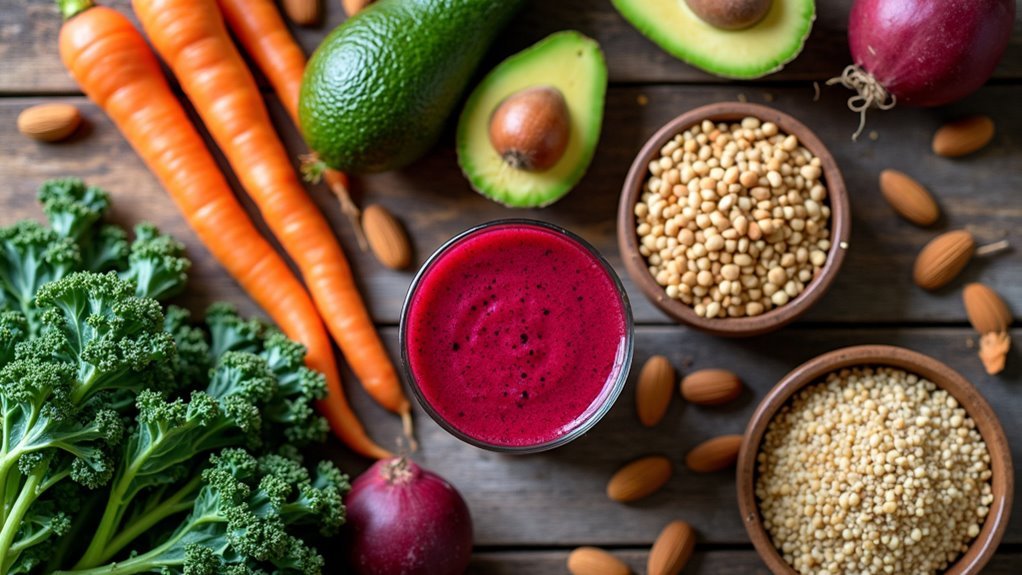
Iron deficiency can severely compromise your bone marrow’s ability to produce healthy red blood cells, making adequate daily intake of 10 to 20 milligrams essential for ideal hematopoiesis.
You’ll find excellent iron sources in liver, organ meats, and shellfish, while vegetarians can turn to nuts and green leafy vegetables.
Vitamin B-6 works alongside iron to support hemoglobin formation, requiring 1.2 to 1.4 milligrams daily from poultry, fish, and fortified cereals.
Don’t overlook folic acid’s role in blood cell production—you need 0.2 to 0.4 milligrams from brown rice, Brussels sprouts, and chickpeas.
Combining these nutrient-rich sources optimizes your bone marrow function and prevents anemia.
Anti-Inflammatory Foods That Enhance Stem Cell Activity
Beyond supporting blood cell production through proper nutrition, your bone marrow’s stem cells require an environment free from chronic inflammation to function effectively.
Anti-inflammatory properties found in tomatoes, olive oil, green leafy vegetables, nuts, and fatty fish actively reduce inflammation while promoting stem cell production and activity.
You’ll boost your bone marrow health by incorporating polyphenol-rich foods like berries and green tea, which stimulate stem cell function.
The Mediterranean diet excels at lowering markers of inflammation through its emphasis on fruits and vegetables, nuts, and healthy oils.
Coffee’s high polyphenol content provides additional protective benefits for your stem cells.
Always consult medical advice before making significant dietary changes.
Dietary Guidelines for Bone Marrow Transplant Recovery

When recovering from a bone marrow transplant, your nutritional needs shift dramatically as your body works to rebuild its blood-forming capacity and restore immune function.
You’ll need to consume 1.4 to 1.5 grams of protein per kilogram of body weight daily to support tissue recovery. Focus on iron-rich foods like liver, organ meats, and dark leafy greens to boost red blood cell production, aiming for 10 to 20 milligrams daily.
Don’t overlook folic acid—you need 0.2 to 0.4 milligrams from sources like brown rice and spinach. Include vitamin B-6 through poultry, fish, and fortified cereals.
Essential B vitamins like folic acid and B-6 from whole foods support critical blood cell formation during recovery.
Maintain a balanced diet emphasizing minimally processed foods, vegetables, fruits, whole grains, and legumes for peak recovery.
Frequently Asked Questions
How Can I Stimulate Bone Marrow Naturally?
You can stimulate bone marrow naturally by consuming protein-rich foods, iron-rich vegetables, and essential vitamins like folic acid. You’ll also benefit from regular aerobic exercise and stress management techniques.
How Do I Replenish My Bone Marrow?
You’ll replenish your bone marrow by increasing protein intake to 1.4-1.5g per kg body weight, consuming iron-rich foods daily, getting adequate folic acid and B-6, and eating anti-inflammatory foods consistently.
Which Food Is Rich in Bone Marrow?
You’ll find bone marrow in animal bones from cows, lambs, and moose. Roast these bones and extract the marrow, or add them to soups and broths for nutritional benefits.
How Do You Stimulate Bone Marrow Growth?
You’ll stimulate bone marrow growth by consuming 1.4-1.5 grams protein per kg body weight, taking iron-rich foods, getting folic acid and vitamin B-6, eating anti-inflammatory foods, and doing regular aerobic exercise.


