
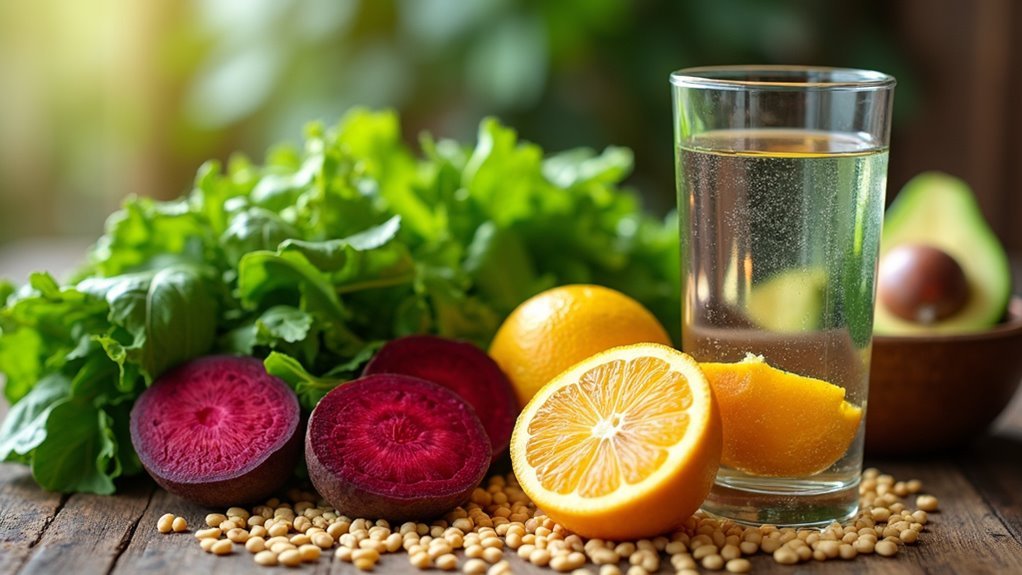
You’ll need 400 mcg DFE daily to support healthy red blood cell production through folate’s essential role in DNA synthesis. Include folate-rich foods like lentils (358 mcg per cup), asparagus, and spinach while steaming vegetables to retain up to 90% of their folate content. Pair folate with vitamin B12 for ideal blood cell formation and avoid excessive alcohol that disrupts absorption. Track your intake through food diaries and monitor levels to prevent megaloblastic anemia for thorough blood health optimization.
Understanding Folate’s Role in DNA Synthesis and Cell Division
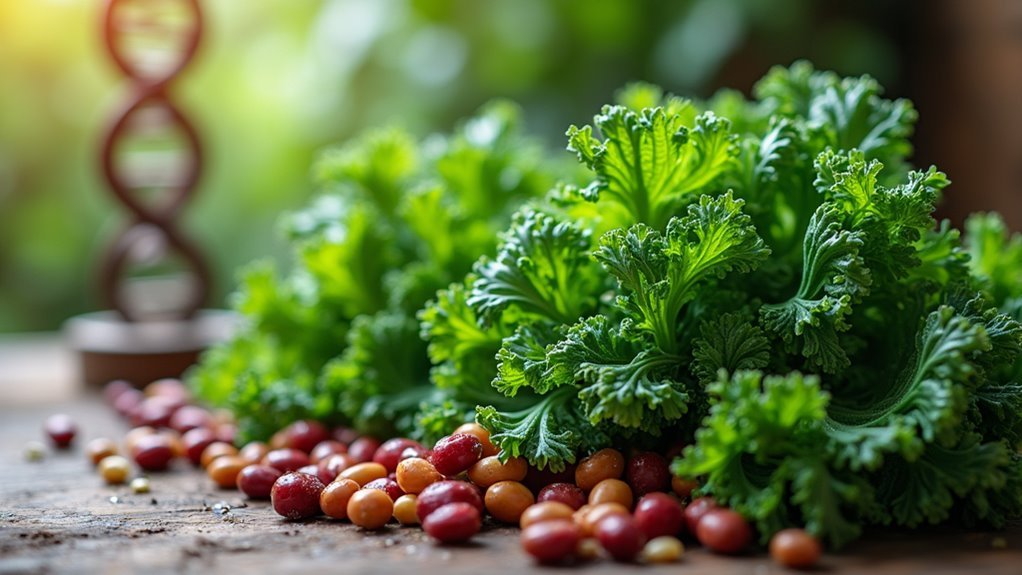
When your body creates new red blood cells, it relies heavily on folate to build the DNA foundation these cells need to function properly. Folate drives DNA synthesis by producing nucleotides, the essential building blocks your cells require for replication and growth.
Without adequate folate, your body can’t complete proper cell division, leading to megaloblastic anemia where you’ll produce abnormally large, dysfunctional red blood cells.
Insufficient folate disrupts cell division, causing your body to produce oversized, malfunctioning red blood cells that can’t transport oxygen efficiently.
You’ll need to meet your daily allowance of 400 mcg DFE to support healthy red blood cell production. If you’re pregnant, increase this to 600 mcg DFE for ideal fetal development.
When folate levels drop, your DNA synthesis becomes impaired, creating cellular abnormalities that compromise your red blood cells’ ability to carry oxygen effectively throughout your body.
Meeting Daily Folate Requirements for Optimal Blood Health
You’ll need to determine your specific daily folate requirements based on your age, pregnancy status, and lifestyle factors like alcohol consumption.
Start by identifying whether you need the standard 400 mcg DFE for adults, 600 mcg DFE if you’re pregnant, or even higher amounts if you drink alcohol regularly.
Once you know your target intake, you can begin monitoring your daily folate consumption through food sources and supplements to guarantee you’re meeting your body’s needs for healthy red blood cell production.
Calculate Your Daily Needs
How much folate do you actually need to keep your red blood cells healthy and functioning efficiently? Your Recommended Dietary Allowance depends on your life stage and circumstances. The daily value helps prevent deficiency while supporting ideal blood cell production.
| Life Stage | Daily Folate Need (mcg DFE) | Special Considerations |
|---|---|---|
| Adults | 400 | Standard requirement |
| Pregnant Women | 600 | Increased for fetal development |
| Lactating Women | 500 | Supporting milk production |
| Alcohol Consumers | 600+ | Alcohol impairs absorption |
| General Population | Under 1,000 | Upper limit from supplements |
You’ll absorb folic acid more effectively from fortified foods than natural folate. Include foods high in folate like legumes and leafy greens to maintain healthy red blood cells and prevent deficiency-related anemia.
Track Folate Intake
Monitoring your daily folate consumption guarantees you’re getting enough of this essential nutrient for healthy red blood cell formation.
Tracking your folate intake helps prevent deficiency and assures ideal blood health, especially for pregnant women who need higher amounts.
Here’s how to effectively monitor your folate consumption:
- Keep a food diary – Record leafy greens, legumes, and fortified foods you eat daily to calculate your total intake.
- Use nutrition apps – Digital tools can automatically track folate content in your meals and show progress toward daily goals.
- Read food labels – Check fortified foods like cereals and breads for folate content per serving.
- Consult healthcare providers – Regular monitoring is vital if you have absorption issues or take medications affecting folate levels.
A balanced diet with consistent tracking supports healthy red blood cells.
Incorporating Leafy Greens and Dark Vegetables Into Your Diet
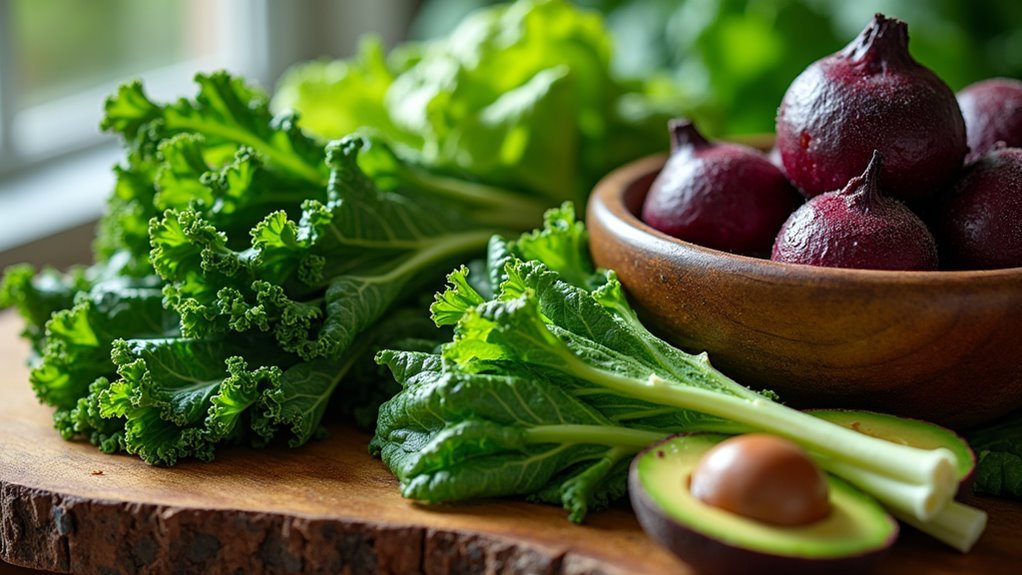
You’ll find the highest folate concentrations in specific leafy greens and dark vegetables that can easily fit into your daily meals.
Building consistent serving strategies helps you meet your folate needs without overthinking every meal choice.
The way you prepare these vegetables greatly affects how much folate your body actually absorbs.
Top Folate-Rich Greens
Why settle for synthetic supplements when nature’s most potent folate sources are sitting right in your produce aisle?
These folate-rich greens deliver the nutrients your body needs for healthy red blood cell production while providing additional vitamins and minerals.
Here are the top folate powerhouses you should add to your shopping list:
- Asparagus – Half a cup cooked provides 134 mcg (34% DV), making it the folate champion.
- Spinach – One cup raw delivers 58.2 mcg (15% DV) and blends perfectly into smoothies.
- Broccoli – Half cup cooked contains 84 mcg, while raw provides 57 mcg per cup.
- Brussels sprouts – Half cup cooked offers 47 mcg (12% DV) plus essential minerals.
These greens outperform synthetic alternatives naturally.
Daily Serving Strategies
Getting enough folate-rich greens into your daily routine doesn’t require dramatic dietary overhauls—it starts with simple, strategic additions to meals you’re already eating. You’ll maximize your folate intake by incorporating one cup of raw spinach into salads or wraps, delivering 58.2 mcg toward healthy red blood cells. Transform breakfast by blending kale into smoothies, making leafy greens virtually undetectable while boosting nutrition.
| Food | Serving Size | Folate Content |
|---|---|---|
| Lentils | 1 cup cooked | 358 mcg (90% DV) |
| Asparagus | 1 cup cooked | 134 mcg (34% DV) |
| Broccoli | 1 cup raw | 57 mcg (14% DV) |
| Brussels Sprouts | ½ cup cooked | 47 mcg (12% DV) |
| Spinach | 1 cup raw | 58.2 mcg (15% DV) |
Add legumes like lentils to soups and stews for impressive folate content. Include colorful vegetables and folate-rich foods throughout your healthy diet for ideal red blood cell production.
Cooking Methods Matter
While steaming preserves up to 90% of folate content in leafy greens, boiling can destroy nearly half of this essential nutrient that supports red blood cell formation.
Your cooking methods directly impact how much folate you’ll actually absorb from your vegetables. Smart preparation techniques help maintain the nutrient profile essential for healthy red blood cells.
Here are four effective approaches:
- Eat raw spinach and kale in salads or smoothies to retain their complete folate content.
- Lightly steam cruciferous vegetables like broccoli and Brussels sprouts for maximum nutrient preservation.
- Sauté leafy greens in small amounts of oil to enhance folate absorption through healthy fats.
- Avoid prolonged boiling which can eliminate up to 50% of folate from your vegetables.
These simple adjustments guarantee you’re getting ideal folate for red blood cell production.
Maximizing Absorption Through Proper Food Preparation Methods

Since cooking methods can dramatically affect folate content in your foods, you’ll want to choose preparation techniques that preserve these essential nutrients for healthy red blood cell formation.
Raw leafy greens in salads retain maximum nutritional value, while steaming vegetables preserves notably more folate than boiling. When cooking asparagus, steam it lightly for just a few minutes to maintain up to 90% of its folate content.
For legumes and beans, avoid overcooking by using quick soaks and shorter cooking times. Enhance folate absorption by pairing these foods with vitamin C sources like citrus fruits.
Microwaving also helps preserve folate better than traditional boiling methods, making it another excellent option for maintaining nutrient density.
Combining Folate With Vitamin B12 for Enhanced Red Blood Cell Formation
You’ll maximize your red blood cell formation by pairing folate with vitamin B12, as these nutrients work together to support DNA synthesis and cell division.
When you take high doses of folate alone, you risk masking a B12 deficiency that could lead to serious neurological problems while still leaving you anemic.
Aim for the recommended 400 mcg of folate alongside 2.4 mcg of B12 daily to guarantee you’re getting the ideal combination for healthy blood cell production.
Synergistic Blood Cell Benefits
Although folate often gets the spotlight for red blood cell health, it can’t complete the job alone—vitamin B12 serves as its essential partner in creating healthy, functional blood cells.
Together, folate and vitamin B12 create powerful synergistic benefits that prevent anemia and support peak blood formation:
- Enhanced DNA synthesis – Folate provides the building blocks while vitamin B12 guarantees proper cell division and red blood cell maturation.
- Reduced homocysteine levels – Both nutrients work together to convert harmful homocysteine, protecting your cardiovascular system.
- Prevention of megaloblastic anemia – A deficiency in either nutrient causes large, dysfunctional red blood cells that can’t carry oxygen effectively.
- Maximized oxygen transport – Your healthy diet containing both nutrients produces normal-sized, efficient red blood cells.
This partnership makes supplementing or eating foods rich in both nutrients more effective than focusing on just one.
Preventing B12 Deficiency Masking
Why might increasing your folate intake actually create a dangerous blind spot for your health? When you take high doses of folate without adequate vitamin B12, you’re masking critical deficiency symptoms that could lead to serious neurological damage.
While folate supplementation can correct the megaloblastic anemia caused by B12 deficiency, it won’t address the underlying problem affecting your nervous system.
You’ll want to monitor both vitamins carefully, especially if you’re taking more than 400 mcg of folate daily. The upper limit of 1,000 mcg exists specifically to prevent this masking effect.
Always combine folate supplementation with adequate vitamin B12 to guarantee you’re truly supporting healthy red blood cells while protecting yourself from hidden deficiency complications.
Optimal Dosage Combinations
Two essential nutrients work together as a powerhouse team for healthy red blood cell formation: folate and vitamin B12.
Getting the right combination enhances your body’s ability to produce mature, healthy red blood cells while preventing complications.
Here’s your ideal dosage strategy:
- Standard Adults: Take 400 mcg folate with 2.4 mcg vitamin B12 daily to meet the recommended daily allowance.
- Pregnant Women: Increase to 600 mcg folate while maintaining adequate B12 to prevent neural tube defects.
- Supplementation Balance: Never take folate alone—always pair with B12 to avoid masking deficiency symptoms.
- Cardiovascular Support: This combination effectively converts homocysteine to methionine, protecting your heart.
You’ll maximize red blood cell production while safeguarding against deficiencies that could compromise your health.
Choosing Between Natural Folate and Fortified Folic Acid Sources
When deciding between natural folate and fortified folic acid sources, you’ll need to weigh the bioavailability benefits against the nutritional advantages each option provides.
Fortified folic acid offers superior absorption at 85% bioavailability compared to natural sources at 50%, making it highly effective for supporting healthy red blood cells. You’ll find fortified options in processed foods like breads and cereals, which can greatly boost your dietary intake.
Fortified folic acid delivers 85% bioavailability versus 50% from natural sources, making processed foods an efficient nutritional choice.
However, natural folate from dark leafy greens, legumes, and citrus fruits provides additional nutrients and fiber.
If you have absorption issues or consume alcohol regularly, fortified sources may better meet your needs.
Consider combining both approaches while monitoring total intake, since excessive folic acid can mask vitamin B12 deficiency symptoms.
Supporting Bone Marrow Function With Folate-Rich Legumes and Beans
Your bone marrow depends on a steady supply of folate to manufacture healthy red blood cells, and legumes offer one of the most concentrated natural sources of this essential nutrient.
These powerhouse foods support DNA synthesis and proper cell division within your bone marrow while preventing anemia.
Here’s how folate-rich legumes boost your red blood cell production:
- Lentils deliver 358 mcg per cup – meeting 90% of your daily folate intake needs
- Black beans provide 256 mcg per cup – covering 64% of recommended daily values
- Kidney beans and chickpeas offer substantial folate concentrations for sustained bone marrow support
- Regular consumption creates ideal conditions for healthy red blood cell formation and overall blood health
Incorporating varied legumes into your meals guarantees consistent folate delivery to your bone marrow.
Timing Folate Intake for Maximum Blood Cell Production Benefits
Since red blood cell production occurs continuously in your bone marrow, strategic timing of folate intake can greatly enhance this essential process.
Strategic folate timing optimizes your bone marrow’s continuous red blood cell production for enhanced hematological health.
You’ll maximize absorption by taking folic acid with food, allowing your body to efficiently utilize this vital nutrient. If you’re planning pregnancy, start folate intake at least one month before conception and continue through the first trimester to prevent neural tube defects while supporting red blood cell production.
For best results, spread your folate intake throughout the day rather than consuming large amounts at once.
Whether you’re using dietary supplements or maintaining a healthy diet rich in folate, consistent daily timing matters most. Monitor your levels through regular blood tests to verify your timing strategy effectively supports healthy blood cell formation.
Avoiding Factors That Interfere With Folate Metabolism
While folate supports healthy red blood cell production, several factors can greatly interfere with your body’s ability to absorb and metabolize this crucial nutrient.
- Excessive alcohol consumption disrupts folate absorption and reduces dietary intake quality, requiring at least 600 mcg DFE daily to prevent folate deficiency.
- Certain medications like anticonvulsants and methotrexate decrease folic acid effectiveness, potentially necessitating supplementation under your healthcare provider’s guidance.
- Digestive diseases including Celiac disease and Crohn’s considerably impair folate absorption, making careful monitoring essential for maintaining adequate levels.
- Genetic variants such as MTHFR polymorphisms affect folate metabolism conversion to its active form, often requiring higher dietary sources or targeted supplementation strategies.
Understanding these interference factors helps you optimize folate utilization for healthy red blood cell formation.
Monitoring Folate Levels to Prevent Megaloblastic Anemia
Although folate deficiency develops gradually, regular monitoring safeguards the onset of megaloblastic anemia—a serious condition where your bone marrow produces abnormally large, immature red blood cells that can’t carry oxygen effectively.
Regular monitoring prevents megaloblastic anemia, a serious condition where bone marrow creates oversized, dysfunctional red blood cells unable to transport oxygen properly.
You’ll need blood tests to check your folate levels, especially if you’re pregnant, have celiac disease, or consume excessive alcohol. Watch for warning signs like fatigue, weakness, and cognitive difficulties that signal deficiency.
Adults need 400 mcg DFE daily, while pregnant women require 600 mcg DFE for healthy fetal development. Don’t ignore monitoring—folate deficiency can mask vitamin B12 deficiency, potentially causing irreversible nervous system damage.
Regular assessments safeguard your red blood cells remain healthy and functional.
Frequently Asked Questions
Does Folate Help With Red Blood Cell Production?
Yes, you’ll find that folate greatly helps with red blood cell production. It’s essential for DNA synthesis and cell division, enabling your body to create healthy red blood cells and prevent megaloblastic anemia.
How to Increase RBC Folate?
You’ll increase RBC folate by eating lentils, spinach, and asparagus daily. Aim for 400-600 mcg through fortified grains, citrus fruits, and leafy greens. Limit alcohol since it blocks absorption and reduces effectiveness.
What Helps Produce Healthy Red Blood Cells?
You’ll support healthy red blood cell production by consuming adequate folate, vitamin B12, and vitamin B6. Include folate-rich foods like lentils and spinach, plus fortified grains to maintain ideal levels for proper DNA synthesis.
How Can I Raise My Folate Levels Quickly?
You’ll raise folate levels fastest by eating lentils and kidney beans daily, adding spinach to meals, choosing fortified grains like enriched pasta, snacking on oranges, and taking a folic acid supplement.


